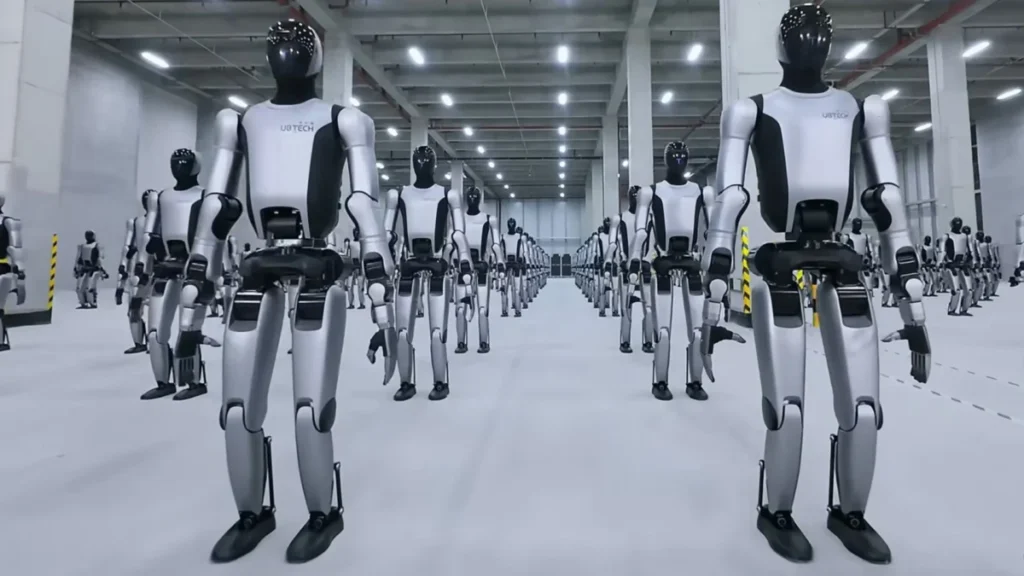
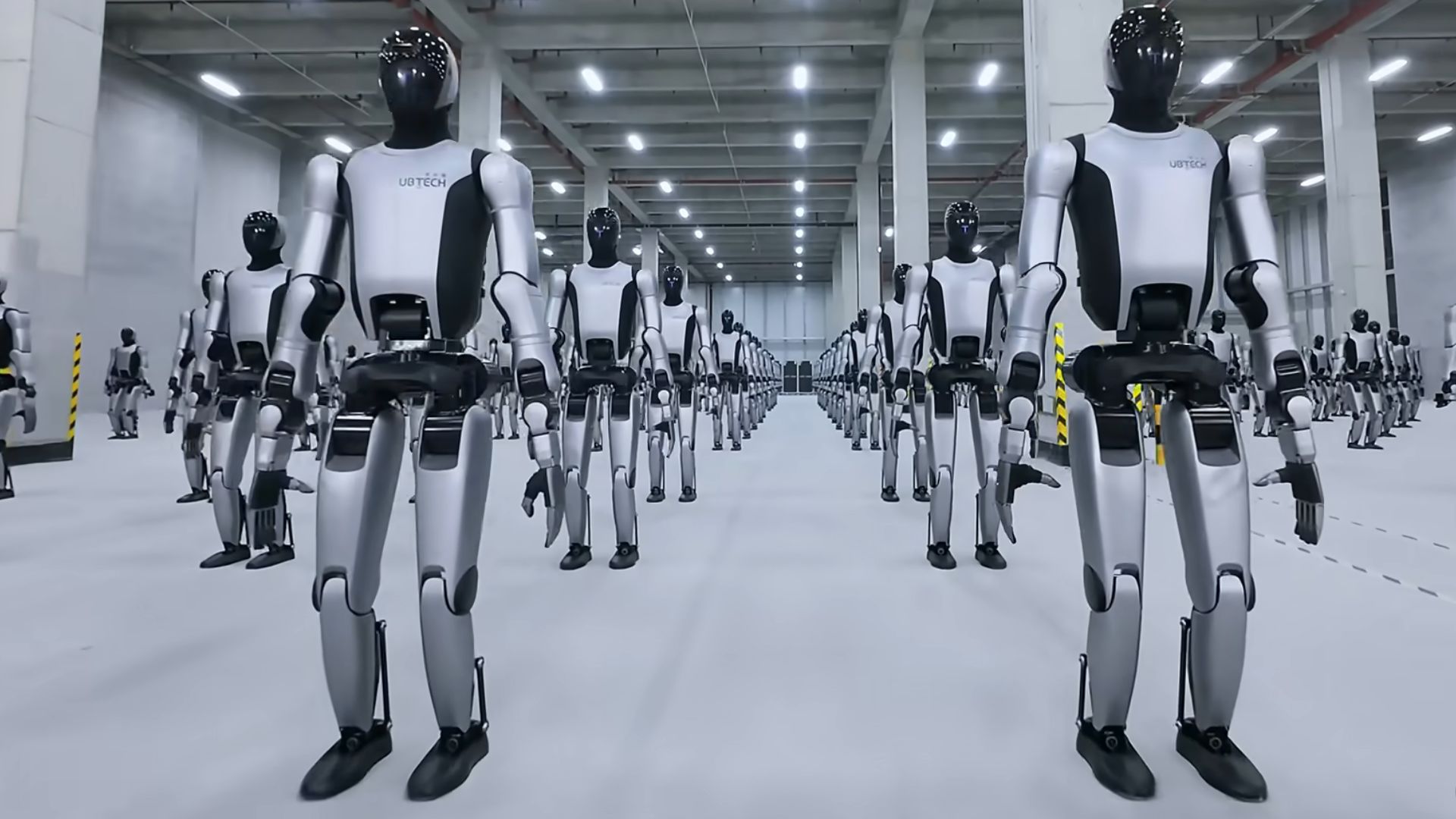
The global stage for advanced robotics is set in Beijing as the second World Humanoid Robot Games commence this week, marking a significant milestone in the evolution of artificial intelligence and bipedal locomotion. From August 22nd to 26th, the Chinese capital will host an unprecedented gathering of robotic ingenuity, with a record-breaking 2,056 humanoid machines vying for supremacy across a diverse array of challenges. This year’s event has drawn 666 teams representing 16 countries and six continents, underscoring the accelerating international pursuit of sophisticated humanoid capabilities. The games are not merely a showcase of technological prowess but a critical crucible for testing the limits of robotic design, control, and autonomous operation in scenarios ranging from athletic feats to complex real-world tasks.
The expansion of the World Humanoid Robot Games reflects a dramatic surge in interest and investment in the field. Organizers have reported a 138 percent increase in participating teams compared to the inaugural event, while robot involvement has seen an astonishing quadrupling, according to reports from China Daily. This exponential growth is indicative of the rapid advancements being made globally and the strategic importance nations are placing on leadership in humanoid robotics. The event, co-hosted by the Beijing Municipal Government and China Media Group, has also expanded its duration from three to five days, accommodating an enriched program featuring 51 distinct events and 1,301 individual matches. These competitions are broadly categorized into 30 competitive events and 21 scenario-based challenges, pushing the boundaries of what humanoid robots can achieve.
Evolution of the Games: A Timeline of Progress
The first World Humanoid Robot Games, while smaller in scale, laid the foundational groundwork for this year’s ambitious expansion. Initially featuring 26 events and 487 matches, the inaugural games served as an important proving ground for early humanoid robot designs and control algorithms. The rapid progression to the second edition highlights a concerted effort by China and participating nations to accelerate research and development in this critical technological domain.
- Inaugural Games (Previous Year): A foundational event with 26 events and 487 matches, primarily focusing on basic mobility, balance, and simple task execution. Participation was more regional, though it sparked international interest.
- August 22nd, 2026: Official opening ceremony and initial competitive sessions. The evening slate includes a 7v7 soccer exhibition, a highlight for many spectators, alongside preliminaries for the demanding 100-meter and 400-meter races, testing raw speed and agility.
- August 23rd, 2026: A packed day featuring 12 medal events across various disciplines, indicating the intensity of the competition from early stages.
- August 24th, 2026: Introduction of new strength-based challenges. Weightlifting, a new addition, will crown lightweight and heavyweight champions, demonstrating the robots’ power and structural integrity. Freestyle combat finals across 40-kilogram, 58-kilogram, and 80-kilogram weight classes will also take place, showcasing dynamic movement and strategic engagement.
- August 25th, 2026: Focus on scenario-based challenges and continued athletic events. The intricate Dexterous Hand and Integrated Five Challenges will likely see significant attention, as they represent real-world applicability.
- August 26th, 2026: Culmination of the games with the highly anticipated 5v5 soccer final and the closing ceremony, celebrating innovation and collaboration.
This structured progression over five days not only allows for a greater number of events but also provides ample opportunity for teams to demonstrate the full spectrum of their robots’ capabilities.
New Arenas of Competition: Pushing Physical and Cognitive Limits
This year’s World Humanoid Robot Games introduce several captivating new competitions that directly address key challenges in humanoid robotics. Traditional athletic events have been augmented with disciplines like long jump, weightlifting, and tug-of-war, directly testing the robots’ physical strength, dynamic balance, and robust construction. The inclusion of table tennis, a sport demanding exceptional hand-eye coordination, rapid reaction times, and precise motor control, further illustrates the ambition to push robots beyond simple locomotion into complex, interactive tasks.
Beyond the purely athletic, the scenario-based events have undergone a significant expansion, growing from six categories last year to nine this year. These scenarios are designed to simulate practical applications of humanoid robots in various real-world settings, including households, hotels, industrial facilities, emergency rescue operations, logistics, libraries, retail environments, office services, and vehicle charging stations. This holistic approach aims to accelerate the development of robots that can seamlessly integrate into human society and perform valuable functions.
Two particularly innovative challenges stand out for their focus on advanced robotic capabilities:
- The Dexterous Hand Challenge: This event is a meticulous examination of fine motor skills and perception. Robots are tasked with a series of intricate operations such including tool assembly, precise powder weighing, delicate block stacking, forceful nail driving, bottle opening, unboxing, accurate tweezer pick-up, and intricate cable connection. Success in this challenge demands breakthroughs in micro-distance vision, sophisticated motion planning, precise force control, and unparalleled operational accuracy. It simulates the delicate work often performed by human hands in manufacturing or service roles.
- The Integrated Five Challenge: This multi-faceted event requires robots to demonstrate a combination of high-level skills. Competitors must perform dexterous operations, transfer objects stably, and lift heavy loads, all while completing a 100-meter run. This challenge emphasizes the integration of various functionalities – agility, strength, stability, and fine manipulation – showcasing a robot’s holistic utility in dynamic, real-world environments.
Heightened Standards and Emphasis on Autonomy
A hallmark of the second World Humanoid Robot Games is the implementation of significantly stricter competition rules, reflecting the rapid progress in robotic capabilities and the organizers’ commitment to fostering true autonomous intelligence. Time limits for key track events have been drastically reduced: the 100-meter race now has a one-minute limit (down from three), the 400-meter race must be completed in five minutes (down from fifteen), and the 1,500-meter race now has a 15-minute cap (reduced from 40). These tightened constraints demand greater speed, efficiency, and endurance from the robotic participants.
Crucially, the games place a paramount emphasis on autonomous operation. For most track and competitive events, robots must complete tasks without any remote control, with exceptions only for the 100-meter and 400-meter obstacle races where limited remote intervention might be permitted. In scenario-based events, fully autonomous completion is rewarded with a weight coefficient of 1.0, while tasks completed with remote control are capped at a significantly lower 0.5 coefficient. This incentivizes teams to develop robust, self-sufficient AI systems capable of perceiving, planning, and executing complex actions independently.
Even in robot soccer, a popular spectator event, rules have been modified to encourage more sophisticated team play. A goal is only counted if at least two teammates have touched the ball during the build-up, moving beyond individualistic scoring to demand coordinated strategies and communication between robots. This mirrors the complexity and teamwork seen in human sports, pushing roboticists to develop more advanced multi-robot collaboration systems.
The growth in participation is also evident in cultural events like dance, which has seen an increase from 29 teams to 108. This year’s dance categories include street dance, ballroom, and cheerleading competitions, demonstrating the robots’ ability to perform intricate, expressive movements and synchronize with music, highlighting advancements in fluidity, balance, and artistic expression.
To ensure fair play and manage the expanded competition, the games boast a formidable officiating body. A total of 223 referees are on hand, including 28 international-level officials, 75 national-level officials, and 120 first-tier officials. An expanded arbitration committee has also been established to handle any disputes, ensuring the integrity and professionalism of the event.
China’s Ambition and Global Participation
The World Humanoid Robot Games serve as a potent symbol of China’s national strategy to become a global leader in artificial intelligence and robotics. The nation has poured significant resources into R&D, fostering a vibrant ecosystem of companies and academic institutions dedicated to advancing robotics. Within China, an impressive 157 enterprises and 200 universities and research institutes are participating, fielding 641 teams and a staggering 1,975 robots. Teams from 27 Chinese universities are represented, with participants hailing from 30 provinces, autonomous regions, municipalities, and special administrative regions, showcasing a broad national commitment. This extensive domestic participation reflects a top-down strategy to cultivate indigenous innovation and build a robust supply chain for robotics technologies.
However, the games are by no means an exclusively Chinese affair. The international contingent is robust, with teams from robotics powerhouses such as the United States, Germany, and Japan, all of whom have established industries and long histories of innovation in the field. Their participation provides a crucial benchmark for global standards and fosters a spirit of international collaboration and competition. Brazil, notably, is participating with a five-member squad of Robot World Cup champions, bringing with them a legacy of excellence in robot soccer and demonstrating the global reach and appeal of advanced robotics competitions. This diverse international presence elevates the competition’s credibility and highlights the universal scientific and engineering challenges humanoid robotics presents.
Broader Implications: Driving Innovation and Shaping the Future
The World Humanoid Robot Games are more than just a series of contests; they are a powerful catalyst for innovation, driving advancements that will have profound implications for industry, research, and daily life. The intense pressure of competition pushes engineers and scientists to overcome existing limitations in areas such as battery life, motor efficiency, sensor integration, AI decision-making, and robust materials. Each new challenge introduced in the games directly addresses a frontier in humanoid robotics development, whether it’s enhancing dexterity for complex manipulation or improving endurance for sustained operation.
The emphasis on autonomy is particularly significant. As robots become more independent, their potential applications multiply, from assisting in dangerous environments like disaster zones to performing routine tasks in factories and homes. The data and insights gathered from these competitions provide invaluable feedback for researchers, accelerating the iterative design and improvement cycle. Breakthroughs achieved on the competition floor often translate into real-world technological applications, benefiting various sectors from healthcare and logistics to manufacturing and space exploration.
Furthermore, these games play a crucial role in talent development. By engaging universities and research institutes globally, they inspire the next generation of engineers, computer scientists, and roboticists. Students and researchers gain hands-on experience, collaborate across disciplines, and confront real-world engineering challenges, preparing them for careers in a rapidly evolving technological landscape. The public visibility of such events also serves to demystify advanced robotics, fostering greater understanding and acceptance of these technologies within society.
The long-term implications are far-reaching. As humanoid robots become more capable and cost-effective, they are poised to revolutionize various industries. In manufacturing, they could augment human workers in assembly lines or hazardous tasks. In logistics, they could handle complex sorting and packing. In service industries, they might act as assistants in hotels or retail. Even in personal contexts, the potential for elder care or domestic assistance is immense. However, the development also sparks important discussions around ethical considerations, job displacement, and the integration of intelligent machines into human society, discussions that are critical as these technologies mature.
In essence, the second World Humanoid Robot Games represent a critical juncture in the global pursuit of intelligent, agile, and autonomous humanoid robots. By fostering intense competition, promoting international collaboration, and setting ambitious new benchmarks, Beijing is not just hosting a sporting event for machines; it is actively shaping the future of robotics and, by extension, the future of human-technology interaction. The outcomes of this week’s competitions will undoubtedly provide a rich trove of data and inspiration, propelling the field of humanoid robotics into its next exciting chapter.