Wilmington, MA – Seurat Technologies, a developer and contract manufacturer of additive manufacturing solutions, has officially begun manufacturing customer parts at production rates, marking a significant milestone for the company and its groundbreaking Area Printing technology. The company, which emerged from stealth mode in early 2021 with ambitious goals to transform metal part manufacturing, has been diligently working behind the scenes, integrating its proprietary printing process, custom-built hardware, and in-house software. This achievement signals a pivotal shift from development to scalable, industrial-scale additive manufacturing.
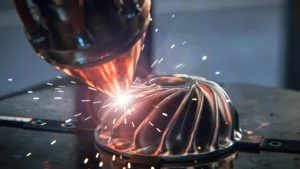
The journey to this production milestone has been characterized by meticulous development and strategic implementation. Seurat’s core innovation, Area Printing, licensed from Lawrence Livermore National Laboratory, diverges significantly from traditional powder-bed fusion methods. Instead of melting individual, micron-scale points of powder, Area Printing utilizes a pixelated laser beam to melt entire 3- to 10-millimeter "tiles" of metal powder in a single shot. This tile-based approach, reminiscent of Pointillist art, dramatically accelerates the printing process.
"It’s been very exciting for us, having those production systems really cranking away," stated James DeMuth, CEO and co-founder of Seurat Technologies, during a recent visit to the company’s Wilmington, Massachusetts headquarters. "Reaching production rate is a significant milestone for the company, one that has been hard won but signals what Seurat aims to accomplish with industrial, high-volume AM."
The Genesis of Area Printing: A Paradigm Shift in Metal Additive Manufacturing

Seurat Technologies’ foundation is built upon a unique metal 3D printing technique called Area Printing. This technology, inspired by the Pointillist art movement, leverages a pixelated pattern embedded within the laser beam to melt substantial "tiles" of metal powder, measuring between 3 to 10 millimeters, in a single application. This approach fundamentally alters the economics of powder-based additive manufacturing.
"Laser powder bed fusion cares about every point; we care about every shot," explained DeMuth. "If I’m going to fire that tile, I gotta fire that tile. I couldn’t care less what’s in the tile. So that means you get support printing for free. We get bulkiness for free." This distinction is crucial, as it means print speed is determined by the number of tiles fired per layer, not the number of individual points, a significant departure from conventional methods.
The implications of Area Printing are profound. Because the laser addresses an entire patterned area simultaneously, melting more material does not necessitate additional toolpaths, a common bottleneck in standard Laser Powder Bed Fusion (LPBF) processes. Whether a selected tile contains a single feature or hundreds, the cycle time remains largely unaffected. This efficiency allows for the production of dense, bulky structures, intricate lattices, internal channels, and custom geometries without compromising speed.
Accelerating Production: From Prototype to Commercial Output
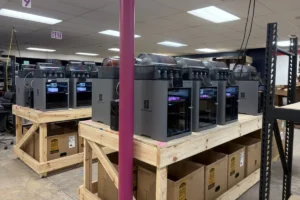
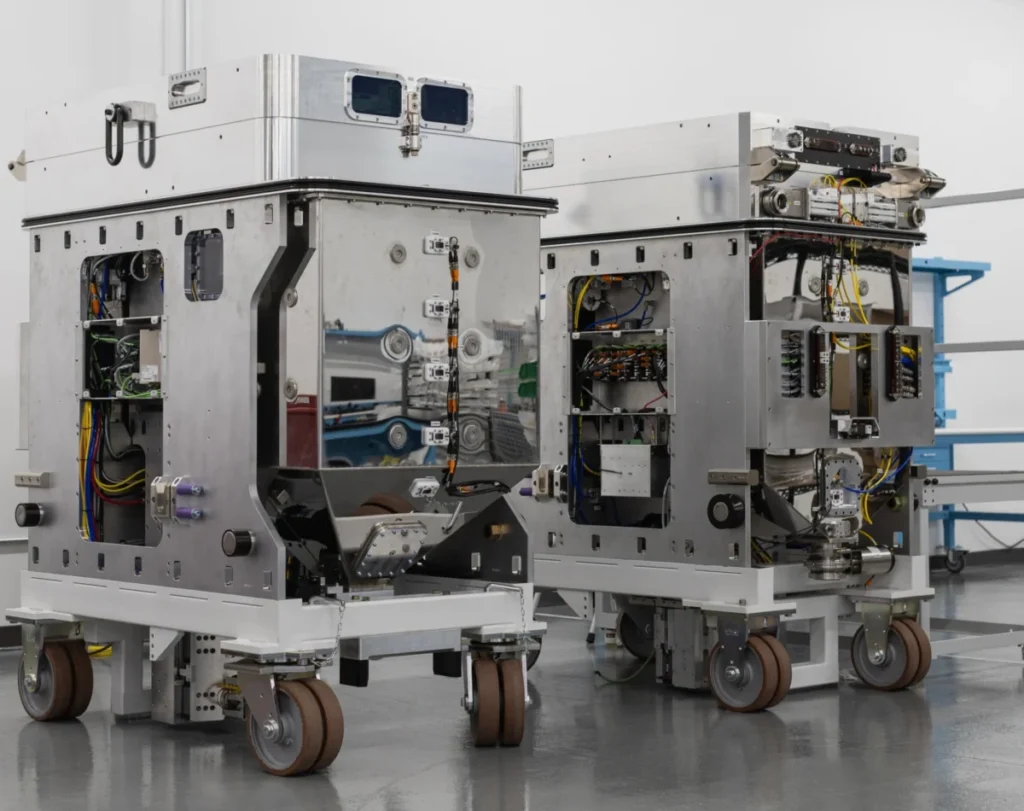
Seurat’s technological advancements are now translating into tangible production capabilities. The company has been actively developing its hardware and software ecosystem to support high-volume manufacturing. This includes not only the custom-built 3D printers but also auxiliary equipment like a sophisticated Powder Station designed for inert handling of metal powders, enabling efficient depowdering, material recapture, and preparation for subsequent prints.

The development timeline for Seurat’s production systems has seen significant improvement. After an initial 10-month commissioning period for its first Generation 1 (Gen1) production printer, which involved subsystem integration and achieving the first print, it took an additional four months to transition to manufacturing commercial parts. Crucially, the second Gen1 system demonstrated a more streamlined process, with subsystems integrated and the first print achieved in just three months, followed by commercial part production within weeks.
"The machines themselves have become more streamlined too, along with their operation," DeMuth noted. The company has successfully reduced the changeover time for its modular build cartridges – which contain the build plate, recoating mechanism, and powder – to a mere 30 minutes, with a target of halving this further through software enhancements and workflow optimizations. This efficiency is critical for high-volume production environments where minimizing downtime between jobs is paramount.
Application Wins and Economic Competitiveness
The impact of Area Printing is already being demonstrated through a variety of early customer applications. These include complex geometries such as heat exchangers with features as small as 160 microns, industrial flow components, specialized fastening hardware, and high-performance consumer products. The design freedom afforded by Area Printing is unlocking new possibilities across diverse industries.
One notable example highlighting the technology’s potential is the production of T-nuts. While mass-produced T-nuts can be acquired for as little as four cents each through high-volume stamping processes, custom or uniquely designed fasteners are significantly more expensive when manufactured conventionally. CNC machining, for instance, can cost between $1.50 to $5.00 per unit, depending on the manufacturing location. Seurat’s Area Printing technology, however, can produce these T-nuts for under a dollar each, with integrated threads and minimal post-processing. This capability makes additive manufacturing cost-effective for production volumes in the tens of thousands, a scale previously considered uneconomical for point-scanning LPBF systems.

"The machines are our first step on an incredibly scalable platform that we see as an opportunity to just directly compete with castings and forming technologies on a price-per-piece basis, using standard metal powder," DeMuth stated. This cost-competitiveness, combined with reduced lead times, positions Seurat as a compelling alternative to traditional manufacturing methods like casting, forging, machining, and stamping.
Craig Colman, Seurat’s head of marketing, elaborated on the dual benefits of Area Printing: "For this nozzle ring, we’re at the same cost, but what we’re saving them in lead time is market-changing. It’s this combination of ‘I want additive features’ and ‘I want better lead time’ while remaining cost-competitive with the conventionally manufactured part. We’re not a one-trick pony."
The Vision: Networked Manufacturing Depots
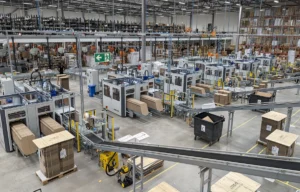
Beyond the immediate production capabilities, Seurat Technologies harbors a broader vision of establishing a network of standardized "Print Depots." These facilities, built upon the industrial production platform of Area Printing, are intended to bring dedicated and flexible manufacturing capacity closer to customers. By deploying Area Printing capacity locally, Seurat aims to enable customers to reduce tooling costs, shorten supply chains, and flexibly scale their production without the need for significant capital investment in new hardware or facilities.
This distributed manufacturing model represents a significant departure from current practices where large batches of metal parts are typically produced in centralized locations and then shipped globally. Seurat’s model envisions digital inventories of parts, with production occurring on-demand at the point of need.

"We don’t want to have customers have to choose between lowest cost and lowest risk," DeMuth remarked. "You can have a digital inventory of your parts. When you want a part made, you can print it where it’s needed." This approach not only enhances responsiveness but also offers greater logistical efficiency and resilience.
A key aspect of this vision is "fungible capacity." Seurat’s standardized platform can accommodate different materials, parts, and customers, allowing for the reassignment of qualified capacity as demand fluctuates. This flexibility stands in contrast to the dedicated infrastructure required for conventional casting or stamping processes.
"We have what we call a fungible capacity," DeMuth explained. "The same standardized platform can support different materials, parts and customers. Qualified capacity can be reassigned as demand changes, providing a level of flexibility that does not exist with dedicated casting or stamping infrastructure. Ultimately, that is how we build a truly multi-use manufacturing network."
The Road Ahead: Scaling Production and Expanding Reach
With the initial production facility now operating at capacity, Seurat is focused on operational qualification and further optimizing throughput, automation, and overall efficiency. The company is already planning the expansion of its manufacturing network, with the next Print Depot envisioned to house between 16 and 32 machines, situated in a new U.S. location.

This strategic expansion aims to solidify Seurat’s position as a leading provider of cost-effective, distributed, and adaptable metal part manufacturing solutions. By leveraging its innovative Area Printing technology and a forward-thinking networked manufacturing strategy, Seurat Technologies is poised to redefine the landscape of industrial additive manufacturing.