The Raspberry Pi Foundation, in a strategic collaboration with Google DeepMind, has intensified its global mission to foster artificial intelligence (AI) literacy among young people by addressing a critical but often overlooked barrier: the linguistic divide in educational technology. Through its flagship initiative, Experience AI, the Foundation is working with a diverse network of international partners to provide high-quality, localized resources designed to help students aged 11 to 14 engage with AI critically and responsibly. While the program has already reached millions of learners across more than 38 countries, its recent efforts in Croatia highlight the complex socio-technical challenges of translating emerging technology concepts into so-called "small languages." By prioritizing linguistic precision and cultural relevance, the initiative aims to ensure that geographical and linguistic backgrounds do not dictate a young person’s ability to navigate the rapidly evolving digital landscape.
The Challenge of the Linguistic Digital Divide
In the realm of global software development and educational outreach, languages are frequently categorized into "big" and "small" based on the size of their speaker populations and their perceived market value. "Big" languages, such as English, Spanish, Mandarin, and Arabic, typically receive the lion’s share of localization resources because they offer the highest return on investment in terms of reach. Conversely, "small" languages—those with fewer speakers or those located in regions not considered primary commercial markets—often find themselves on the periphery of technological advancement.
Croatian, a language spoken by approximately five million people globally, exemplifies this challenge. For speakers of such languages, the experience of technology is often synonymous with the experience of English. Historically, computer interfaces in Croatia remained in English long after the hardware became available, leading to a generation of users who adopted English terminology for basic functions like "copy" and "paste." This phenomenon is even more pronounced with fast-moving technologies like artificial intelligence. When terminology is not localized, English terms naturally fill the vacuum, creating a barrier to entry for those who are not proficient in English and potentially alienating educators who strive to maintain linguistic standards within their national curricula.
The Raspberry Pi Foundation’s localization coordinator, a native Croatian speaker, notes that the decision to treat Croatian not as a "small" language but simply as a language is a deliberate act of educational equity. The goal is to move beyond mere translation and toward true localization, ensuring that resources feel indigenous to the classroom rather than like a foreign import.
A Chronology of Global Expansion and Local Depth
The Experience AI program was launched to address a growing gap in secondary school curricula worldwide. While AI has become a ubiquitous part of modern life—from recommendation algorithms to generative tools—formal education has often struggled to keep pace.
- Program Inception (2023): The Raspberry Pi Foundation and Google DeepMind launched Experience AI to provide teachers with the tools, knowledge, and confidence to teach AI. The initial rollout focused on foundational concepts, including how AI models are trained and the ethical implications of their use.
- Global Partnership Network Expansion: Recognizing that a "one-size-fits-all" approach would fail, the Foundation began establishing a network of in-country partners. By 2024, this network grew to include over 38 countries, spanning from Uzbekistan to Chile.
- The Croatian Initiative (2024–2025): The Foundation partnered with the Croatian organization Suradnici u učenju (Partners in Learning). This partnership was tasked with the rigorous process of localizing the Experience AI curriculum for Croatian schools, a process that involved multiple rounds of linguistic and pedagogical review.
- Resource Launch and Teacher Training: Following the localization phase, the program moved into implementation. The first Experience AI courses in Croatian were introduced to educators, receiving immediate positive feedback for their natural flow and alignment with national standards.
Technical Hurdles: The "AI" vs. "UI" Debate
Translating terms for emerging technologies is rarely a straightforward linguistic exercise; it is a matter of cultural and pedagogical policy. In Croatia, the localization team faced a fundamental question: should they use the globally recognized English abbreviation "AI" (Artificial Intelligence) or the Croatian "UI" (Umjetna Inteligencija)?
While "AI" is ubiquitous in tech circles, using it in a classroom setting carries implications. If educators assume that all students understand English acronyms, they risk leaving behind those who do not. Furthermore, using native terminology reinforces the idea that the technology belongs to the local culture and is not just an "other" imported from the Anglosphere.
The debate extended to the pronunciation of these terms in spoken language and the translation of conceptual phrases. For instance, the term "offline activity" was replaced with the Croatian phrase "aktivnost bez računala" (activity without a computer). This change is more than semantic; it describes the nature of the activity more accurately to a Croatian speaker and removes the unnecessary technical jargon of "offline," which can be abstract for younger learners.
The Role of Subject Matter Expertise in Localization
The success of the Croatian localization was largely attributed to the collaborative model employed by the Raspberry Pi Foundation. Rather than relying solely on professional translation agencies—which might lack classroom experience—the Foundation worked with Suradnici u učenju, ensuring that the translators were also educators and subject matter experts.
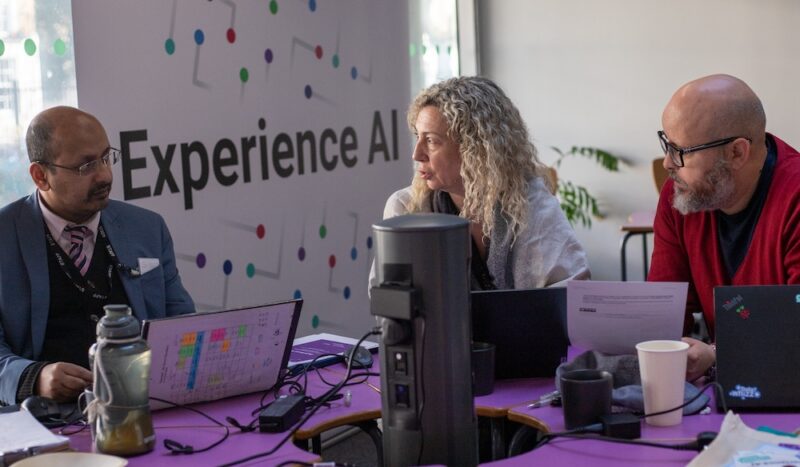
Lidija Kralj, a representative from Suradnici u učenju, emphasized that the project required a trifecta of expertise: an informatics subject expert, a Croatian language expert, and a localization expert from the Foundation who understood the nuances of the language. This team approach allowed for deep discussions on whether to adopt existing terms found in Croatian textbooks or to create new ones that better reflected modern AI concepts.
Kralj noted that as educators, they felt a responsibility to use Croatian terms where they existed. This consistency is vital for teachers who must navigate national curricula and standardized testing. If the supplementary materials from Experience AI used different terminology than the official textbooks, it would create confusion and increase the cognitive load on both students and teachers.
Supporting Data: The Reach of Experience AI
The scale of the Experience AI project underscores the massive demand for localized AI education. According to data provided by the Raspberry Pi Foundation:
- Global Reach: The program is currently active in over 38 countries.
- Linguistic Diversity: Materials have been translated and localized into more than 19 languages, including Arabic, Spanish, French, German, Uzbek, and Croatian.
- Educational Impact: The initiative aims to reach millions of young people, providing them with the foundational knowledge required for the future workforce.
- Open Access: All resources, including lesson plans, slide decks, and videos, are made available for free to educators globally, lowering the economic barrier to high-tech education.
In Croatia specifically, the response to the first localized course indicates a high level of engagement among teachers. By providing materials that "don’t read like a translation," the program has seen higher adoption rates in schools that previously struggled with English-only resources.
Broader Impact and Implications for the Future
The localization of Experience AI into "small" languages like Croatian has implications that extend far beyond the classroom. It represents a stand against "digital colonialism," where the dominant languages of the world dictate the terms of technological engagement. By empowering local communities to speak about AI in their own mother tongue, the program fosters a more inclusive global dialogue about the future of technology.
1. Promoting Critical Thinking
The core philosophy of Experience AI is to move students from being passive consumers of technology to critical evaluators. When students learn about bias in AI or the mechanics of machine learning in their native language, they are better equipped to connect these concepts to their own lives and local contexts.
2. Supporting Teachers
Teachers are often the gatekeepers of innovation in the classroom. By providing them with localized, high-quality materials that align with their existing pedagogical frameworks, the Raspberry Pi Foundation reduces the "prep-burden" on educators. This is particularly important in subjects like informatics, where the pace of change can be overwhelming.
3. Economic and Social Equity
As AI continues to reshape the global economy, AI literacy will become a prerequisite for many career paths. Ensuring that this literacy is available in a wide array of languages helps prevent a two-tier system where only those fluent in "big" languages have access to the highest levels of technical understanding.
Conclusion: A Model for Global Education
The partnership between the Raspberry Pi Foundation, Google DeepMind, and local organizations like Suradnici u učenju provides a blueprint for how global tech initiatives can achieve local impact. The Croatian case study proves that with the right combination of expertise and a commitment to linguistic equity, even "small" languages can be at the forefront of the AI revolution.
As the Experience AI program continues to expand, the focus will remain on refining these localized resources and supporting the global network of partners. The goal is clear: to ensure that every young person, regardless of the language they speak at home, has the opportunity to understand, use, and shape the artificial intelligence that will define their future. For the students in Croatia now using their own language to describe the complexities of neural networks and data training, the digital world has just become a much more accessible place.