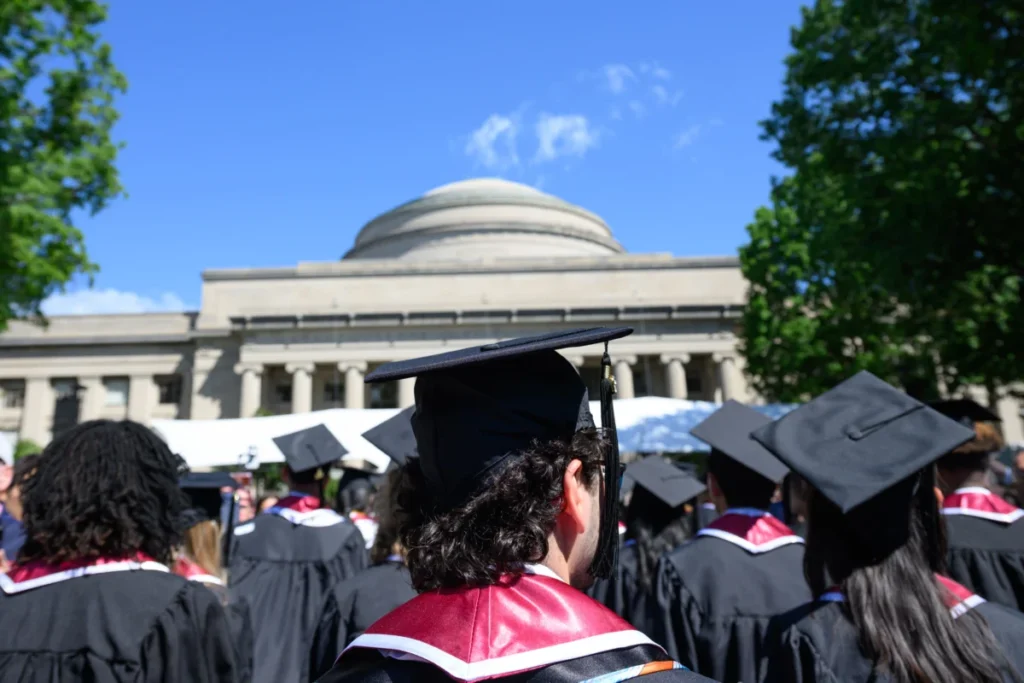
The Massachusetts Institute of Technology (MIT) has once again been crowned the world’s leading university by the QS World University Rankings, marking an extraordinary and unprecedented fifteenth consecutive year at the apex of global higher education. The official announcement of the 2027 edition of these highly anticipated rankings was made today, reaffirming MIT’s consistent excellence across a broad spectrum of academic and research endeavors. This remarkable achievement underscores MIT’s enduring commitment to innovation, scholarly rigor, and its profound impact on scientific and technological advancement worldwide.
Understanding the QS World University Rankings
The QS World University Rankings, compiled and published by Quacquarelli Symonds, a prominent global higher education analytics firm specializing in education and study abroad, serve as one of the most influential and widely referenced international university comparisons. Established in 2004, the QS rankings have evolved into a critical benchmark for prospective students, academics, university administrators, and policymakers seeking to assess institutional performance on a global scale. The comprehensive 2027 edition, detailing thousands of institutions across the globe, is now fully accessible to the public at TopUniversities.com.
The methodology employed by QS is designed to provide a holistic evaluation of universities, factoring in a diverse array of indicators that reflect various facets of institutional quality and impact. For the 2027 rankings, QS maintained its rigorous assessment across six core metrics, each weighted to reflect its perceived importance in global higher education. These include Academic Reputation, Employer Reputation, Citations per Faculty, Student-to-Faculty Ratio, International Faculty Ratio, and International Student Ratio. Each component plays a crucial role in constructing the overall score that ultimately determines a university’s global standing, offering a multi-dimensional perspective on excellence.
A Deep Dive into the Ranking Methodology
To appreciate the depth of MIT’s consistent success, it is essential to understand the specific criteria used by QS:
-
Academic Reputation (40% weighting): This is the most heavily weighted indicator, reflecting the collective opinion of over 150,000 academics worldwide. It is derived from an extensive global survey that asks academics to identify institutions they believe are producing the best work in their field of expertise. MIT’s consistent top performance here signifies its unparalleled standing and respect within the international academic community, a testament to its groundbreaking research and scholarly output across various disciplines.
-
Employer Reputation (10% weighting): This metric assesses how highly graduates from an institution are regarded by employers. Based on responses from nearly 100,000 employers globally, this survey asks recruiters to identify universities that produce the most job-ready, innovative, and effective graduates. MIT’s strong showing in this area highlights the exceptional caliber of its alumni and their significant contributions to industry, entrepreneurship, and leadership roles across sectors.
-
Citations per Faculty (20% weighting): This indicator measures the research impact of universities. It calculates the average number of citations obtained per faculty member over a five-year period, normalized across different subject areas to account for varying citation cultures. A high score here indicates that an institution’s research is frequently referenced and significantly influences the global scientific discourse. MIT’s dominance in this area reflects its prolific and high-impact research output, particularly in STEM fields, which consistently push the boundaries of knowledge.
-
Student-to-Faculty Ratio (20% weighting): This metric serves as a proxy for teaching quality and the level of individual attention students can expect. A lower ratio suggests smaller class sizes and more direct interaction between students and faculty, contributing to a richer and more personalized learning experience. MIT’s commitment to maintaining an optimal student-to-faculty ratio underscores its dedication to fostering an environment conducive to deep learning and mentorship.
-
International Faculty Ratio (5% weighting): This indicator measures the proportion of international faculty members at a university. A diverse faculty brings a wealth of perspectives, experiences, and global networks, enriching the academic environment and promoting cross-cultural understanding. MIT’s high international faculty ratio reflects its success in attracting top academic talent from around the world, fostering a truly global intellectual hub.
-
International Student Ratio (5% weighting): Similar to the international faculty ratio, this metric assesses the proportion of international students enrolled at an institution. A diverse student body enhances the learning experience through exposure to different cultures, ideas, and backgrounds, preparing graduates for an increasingly interconnected world. MIT’s appeal to students from every corner of the globe further solidifies its position as a beacon of international education and collaboration.
MIT’s Unprecedented Reign: A Chronology of Excellence
MIT’s achievement of fifteen consecutive years as the world’s top university is a feat unparalleled in the history of the QS World University Rankings. This remarkable streak began with the 2013 edition, and since then, the institution has consistently fended off fierce competition from other global academic powerhouses such as Stanford University, Harvard University, the University of Cambridge, and the University of Oxford.
Prior to its unbroken reign, MIT had already established itself as a formidable contender, consistently ranking within the top tier of global institutions. The decision by QS to introduce and refine its methodology, particularly emphasizing research output and internationalization alongside traditional academic and employer reputation, seemingly played to MIT’s inherent strengths. The Institute’s unwavering focus on pioneering research, particularly in engineering, science, and technology, coupled with its highly selective admissions process and a culture that fosters innovation, has created a virtuous cycle of excellence. Each year, securing the top spot has not merely been a repetition but a reaffirmation of a sustained strategy for academic distinction and global impact. This consistent performance speaks volumes about the institutional stability, strategic vision, and the collective dedication of its faculty, researchers, and students.
Dominance Across Key Subject Areas
Reinforcing its overall top ranking, MIT had already demonstrated exceptional departmental strength earlier this year. In March, QS announced its subject-specific rankings, where MIT was notably ranked the world’s top university in an impressive 12 of the subject areas assessed. This comprehensive excellence across specialized fields further illustrates the depth and breadth of MIT’s academic prowess beyond its general institutional reputation.
The Institute received a No. 1 ranking in the following highly competitive QS subject areas:
- Chemical Engineering: A testament to its cutting-edge research in sustainable processes, materials science, and biotechnology.
- Civil and Structural Engineering: Reflecting leadership in infrastructure innovation, urban planning, and resilient design.
- Computer Science and Information Systems: A cornerstone of MIT’s identity, driving advancements in AI, cybersecurity, and software engineering.
- Data Science and Artificial Intelligence: Underscoring its foundational contributions and ongoing leadership in these rapidly evolving fields.
- Electrical and Electronic Engineering: A traditional area of strength, continuously pushing boundaries in microelectronics, photonics, and power systems.
- Engineering and Technology: The overarching category where MIT consistently defines the future of technological innovation.
- Linguistics: Demonstrating excellence even outside its primary STEM focus, highlighting the interdisciplinary nature of modern science.
- Materials Science: Leading research in novel materials for diverse applications from aerospace to medicine.
- Mechanical, Aeronautical, and Manufacturing Engineering: Pioneering advancements in robotics, propulsion, and advanced manufacturing techniques.
- Mathematics: Fundamental to all scientific inquiry, MIT’s mathematics department remains at the forefront of theoretical and applied research.
- Physics and Astronomy: Exploring the fundamental laws of the universe, from quantum mechanics to astrophysics.
- Statistics and Operational Research: Developing advanced analytical tools and methodologies for complex problem-solving.
Beyond these twelve top positions, MIT also showcased remarkable strength by placing second in seven additional subject areas. These include Architecture/Built Environment, History of Art, Biological Sciences, Economics and Econometrics, Marketing, Natural Sciences, and Statistics and Operational Research (which appeared twice, likely due to a broader classification versus a more specific one, or an overlap in categorization). The inclusion of fields like History of Art, Biological Sciences, Economics, and Marketing underscores MIT’s robust intellectual environment that extends beyond its perceived core strengths, cultivating excellence across a wider academic spectrum. This broad appeal and high performance in diverse fields ensures that MIT attracts a multifaceted pool of talent, fostering an environment rich in interdisciplinary collaboration.
Reactions from MIT and QS Leadership (Inferred)
While specific official statements were not provided in the original announcement, the consistent nature of this achievement allows for logical inference regarding reactions from both MIT and Quacquarelli Symonds.
An MIT spokesperson, likely the President or Provost, would undoubtedly express immense pride and gratitude: "To be recognized as the world’s leading university for the fifteenth consecutive year by the QS World University Rankings is a profound honor and a testament to the relentless dedication and groundbreaking work of our entire community. This sustained achievement reflects the exceptional caliber of our faculty, the brilliant minds of our students, and the unwavering commitment of our staff to pushing the boundaries of knowledge and innovation. Our mission to advance knowledge, educate students, and bring new understanding and technologies to bear on the world’s great challenges remains our driving force, and this ranking affirms the global impact of those efforts."
Similarly, a representative from Quacquarelli Symonds, perhaps the CEO or Senior Vice President, would likely offer congratulatory remarks and insights into MIT’s enduring success: "MIT’s fifteen-year unbroken streak at the top of the QS World University Rankings is an extraordinary accomplishment, truly unprecedented in the history of our assessments. It speaks volumes about an institution that consistently excels across every metric, from academic and employer reputation to research impact and internationalization. MIT doesn’t just adapt to the future; it actively creates it. Their sustained excellence in critical fields like AI, engineering, and data science, coupled with a robust intellectual environment that nurtures diverse talents, sets a global standard for what a university can achieve in the 21st century. Their ability to attract and retain the brightest minds globally, both faculty and students, is a key differentiator that ensures their continued leadership."
Broader Impact and Implications of the Ranking
MIT’s consistent top ranking by QS carries significant implications, extending far beyond institutional bragging rights.
-
Global Reputation and Prestige: The sustained number one position cements MIT’s status as a preeminent global leader in higher education and research. This enhances its brand value, making it an even more attractive destination for the world’s brightest students, postdoctoral fellows, and leading academics seeking a platform for impactful work. This prestige also translates into greater influence in global academic discourse and policy-making.
-
Attraction of Talent: The rankings serve as a powerful magnet for top-tier talent. Prospective students, both undergraduate and graduate, are heavily influenced by such indicators when choosing where to pursue their education. Similarly, faculty recruitment benefits immensely, as leading researchers and scholars are drawn to institutions that offer unparalleled resources, collaborative environments, and global recognition for their work.
-
Research Funding and Partnerships: A top global ranking often correlates with increased opportunities for research funding, both from governmental bodies and private industry. Corporations and philanthropic organizations are more inclined to invest in institutions with a proven track record of excellence and innovation. Furthermore, the ranking facilitates international collaborations, enabling MIT to forge partnerships with other leading institutions and research centers worldwide, tackling complex global challenges more effectively.
-
Economic Impact and Innovation Ecosystem: MIT is not merely an academic institution; it is a powerful engine of economic growth and innovation. Its research frequently leads to groundbreaking technologies, startup companies, and new industries. Graduates from MIT are highly sought after, driving innovation in various sectors. The consistent top ranking reinforces this ecosystem, ensuring a continuous pipeline of talent and ideas that contribute significantly to the local, national, and global economies.
-
Benchmarking for Other Institutions: While celebrated by MIT, these rankings also serve as a critical benchmarking tool for universities worldwide. Other institutions analyze the methodologies and top performers to identify areas for improvement in their own strategic planning, research investment, and internationalization efforts. This creates a healthy, albeit intense, global competition that ultimately pushes the standards of higher education upwards.
-
Challenges and Critiques: It is important to acknowledge that university rankings, including QS, are not without their critiques. Some academics argue that the methodologies can be reductive, overemphasizing quantitative metrics over qualitative aspects of education, or that they may inadvertently promote a narrow view of institutional success. However, despite these criticisms, their influence remains undeniable, making MIT’s consistent performance all the more remarkable within this competitive and scrutinized landscape.
Looking Ahead
As MIT celebrates its 15th consecutive year at the pinnacle of global university rankings, the institution’s commitment to its founding principles remains steadfast. This extraordinary achievement is not merely a reflection of past successes but a powerful indicator of a vibrant, forward-looking institution poised to continue its profound impact on science, technology, and humanity. In an era defined by rapid technological change and complex global challenges, MIT’s unwavering pursuit of excellence ensures its pivotal role in shaping the future of education, research, and innovation for generations to come. The legacy of this sustained dominance will undoubtedly inspire continued dedication to groundbreaking discovery and transformative education at the Institute.