The global pursuit of a decarbonized economy has increasingly focused on hydrogen, often lauded as "the fuel of the future." Its potential is vast: when burned or utilized in fuel cells, hydrogen produces storable energy with zero carbon emissions, yielding only water. Beyond its direct energy applications, it holds promise as a crucial element in hard-to-decarbonize industrial processes, such as steel and cement manufacturing, where it can serve as a substitute for fossil fuels or as a vital chemical feedstock.
However, realizing this ambitious future hinges on overcoming significant hurdles. The first, and perhaps most widely recognized, challenge is the development of cost-effective and low-carbon methods for producing pure hydrogen. Researchers worldwide are actively engaged in this pursuit, exploring diverse pathways from electrolysis powered by renewable energy to advanced reforming techniques.
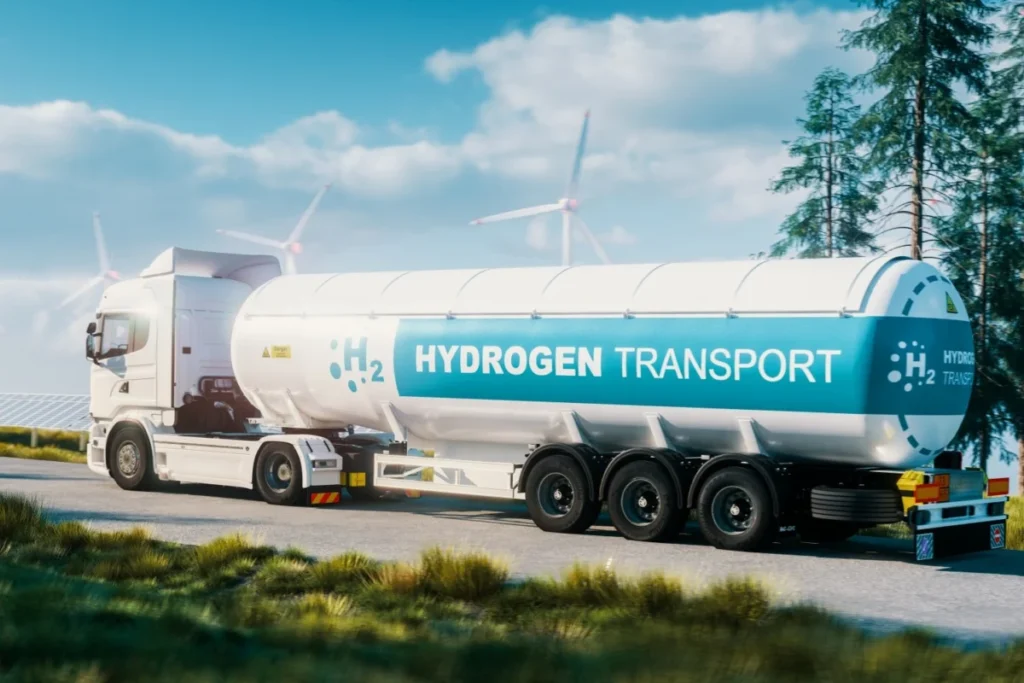
Yet, an equally critical, though often less discussed, challenge lies in the efficient and economical transportation and storage of hydrogen. Pure hydrogen, being the lightest gas known, possesses a remarkably low energy density per unit of volume. This characteristic necessitates the transport of substantial quantities of hydrogen to deliver a meaningful amount of energy, requiring containment systems of exceptional tightness to prevent even the smallest molecules from escaping. The inherent difficulty of this task starkly contrasts with the relative ease of transporting liquid fuels like gasoline. Without robust solutions for hydrogen storage and transport, its potential as a global clean energy solution remains constrained.
Addressing this pivotal aspect of the hydrogen economy, a collaborative team led by researchers at the MIT Energy Initiative (MITEI), in partnership with ExxonMobil Technology and Engineering Co., embarked on a comprehensive examination of hydrogen transportation methods in 2024. Their extensive research, funded by ExxonMobil through MITEI, has culminated in a significant finding: there is no universal "best" method for hydrogen transportation. The optimal approach, in terms of both cost and carbon emissions, is inherently location-dependent, influenced by a multitude of regional factors. Recognizing this variability, the research team has developed an innovative tool designed to empower users to navigate these complexities and select the most suitable transportation strategy for their specific use cases.
This groundbreaking study and the accompanying analytical tool are detailed in a new paper published in the esteemed journal Fuel. The research was spearheaded by former MITEI postdoctoral researchers Gasim Ibrahim, now an R&D engineer/scientist at Honeywell, and Guiyan Zang, a former MITEI group lead who has since become an associate professor at Washington State University. Additional MIT co-authors include former postdocs Bosong Lin, Jacqueline Garrido, Woojae Shin, and Haoxiang Lai, underscoring the collaborative and extensive nature of this effort.
The Hydrogen Transportation Conundrum and the Role of Hydrogen Carriers
The foundational assumption underpinning the MITEI team’s research was that for hydrogen to fulfill its global potential, it must be capable of long-distance transport, particularly across continents and oceans. Given hydrogen’s gaseous nature, converting it into a liquid form prior to shipment emerged as a logical necessity. The central questions driving their investigation were: what are the most effective methods for this conversion and subsequent transport, what are the associated costs, and what is their impact on the carbon intensity of the delivered hydrogen?
"There hasn’t been a lot of attention paid to addressing those questions," stated Gasim Ibrahim, reflecting on the research landscape prior to their study. He noted that while some studies existed, their conclusions were often inconsistent, and a significant degree of uncertainty persisted. This uncertainty stemmed from the inherent variability of costs and emissions from place to place, coupled with a general lack of empirical data on the practicalities of large-scale hydrogen transportation.
"So we decided the best thing to do was to develop an adaptive tool that would enable users to perform their own assessments – a tool that could be updated very easily," Ibrahim explained. He emphasized the commitment to making this tool open-source, allowing for transparency and continuous improvement. "As the industry develops, and as scale becomes more a factor, the assumptions made in [our initial] assessments of the economics and the carbon intensity [of different shipping methods] will need to be updated."
To maintain a focused analysis on the critical aspects of transportation and storage, the developed model, christened the Hydrogen Carrier Analysis Tool (HyCAT), deliberately excludes the upstream processes of hydrogen production and the downstream applications of the delivered hydrogen. HyCAT concentrates its analytical scope on the costs and greenhouse gas (GHG) emissions incurred during the hydrogen’s journey from its point of origin to its destination. While a comprehensive life-cycle assessment would encompass all environmental impacts, HyCAT prioritizes GHG emissions as a key metric for evaluating transportation strategies.
The user-friendliness of HyCAT was a deliberate design objective. Ibrahim highlighted that the tool incorporates an intuitive interface with drop-down menus for inputting various assumptions. The analytical results are presented in clear bar charts, with integrated links to detailed tables for users who require a deeper dive into the data.
Ibrahim further clarified that while HyCAT operates within a well-defined boundary – "incoming hydrogen to outgoing hydrogen" – users are integral to its application. For a specific scenario analysis, users will input local factors, including the carbon intensity and cost associated with the production of the incoming hydrogen. "So that will inform the final values that come out of a HyCAT analysis," Ibrahim remarked, explaining one of the key reasons why the tool demonstrates varying outcomes depending on the user’s inputs and the specific geographic context.
HyCAT meticulously calculates the cost and GHG emissions across five distinct stages of the hydrogen supply chain, contingent upon the user’s defined assumptions:
- Production of Hydrogen Carriers: This stage encompasses the energy and resource requirements for creating the chemical compounds that will facilitate hydrogen transport.
- Hydrogen Loading: This involves the process of impregnating the hydrogen carrier with hydrogen molecules.
- Transportation: This accounts for the energy consumed and emissions generated during the physical movement of the hydrogen-laden carrier (e.g., by ship, pipeline, or truck).
- Unloading and Hydrogen Release: This stage covers the energy and emissions associated with extracting hydrogen from its carrier at the destination.
- Carrier Recycling/Disposal: This considers the environmental impact and cost of managing the hydrogen carrier after its hydrogen has been released.
Exploring Options for Liquefying and Transporting Hydrogen Gas
A pivotal decision in formulating any hydrogen transport plan revolves around the method chosen to convert gaseous hydrogen into a transportable liquid form, and subsequently, the process for recovering the hydrogen gas at the receiving end.
One primary approach involves directly liquefying gaseous hydrogen. However, this process is extraordinarily energy-intensive. Ibrahim noted that "you would need to consume about a third of the energy content of the hydrogen to make the gaseous hydrogen cold enough to liquify." Furthermore, maintaining the extremely low temperatures required for liquid hydrogen presents significant storage and transportation challenges. Unless the containment vessels are impeccably insulated, the liquid hydrogen can re-gasify and escape, leading to product loss and potential safety concerns. The principal advantage of direct liquefaction is that it does not involve chemical reactions, simplifying the process in that regard.
An alternative and increasingly explored avenue involves the utilization of "hydrogen carriers." These are typically liquid chemical compounds capable of absorbing hydrogen atoms under specific conditions and releasing them under different circumstances. This approach effectively transforms hydrogen gas into a more manageable liquid state by chemically binding it to a carrier molecule. The process inherently involves two chemical reactions: one to bind the hydrogen to the carrier at the production site and another to release it at the point of consumption.
In their illustrative analyses, the MITEI researchers examined three potential hydrogen carrier compounds, each possessing distinct advantages and disadvantages:
1. Toluene-Based Carriers: This method involves reacting hydrogen with toluene, a common aromatic hydrocarbon. While the specific chemical reaction for hydrogen absorption by toluene has not been extensively studied, a significant drawback is the typical origin of toluene from the oil and gas industry. This reliance on fossil fuel derivatives means that the toluene carrier itself carries a relatively high carbon intensity. Additionally, some loss of toluene over time necessitates periodic replenishment, adding to operational costs and environmental considerations.
2. Synthetic Methane (Methane-S): This carrier is produced by reacting hydrogen with carbon dioxide (CO2). This reaction, known as the Sabatier reaction, has been understood for some time. Ibrahim highlighted a notable benefit of this process: it actively consumes carbon dioxide, which can be captured from the atmosphere or industrial sources, thereby offering a carbon sequestration aspect. However, a downside of this reaction is the co-production of water, which can lead to a loss of some hydrogen during the reaction cycle.
3. Ammonia (NH3): Ammonia is formed when hydrogen reacts with nitrogen from the air. This reaction is exceptionally well-studied and is already a commercially established industrial process, primarily for fertilizer production. "We’ve been producing ammonia for a long time," Ibrahim stated, emphasizing the existing infrastructure for its transport and storage. Ibrahim referred to ammonia as the "most promising option" due to these established advantages. However, the process required to efficiently release pure hydrogen from ammonia at the destination has historically received less research attention compared to the production of ammonia itself.
Varying Conclusions and Future Directions
The preliminary analyses conducted using HyCAT revealed a consistent and crucial finding: the optimal hydrogen transportation pathway is not a one-size-fits-all solution. "As we developed the tool, we saw that the ‘best’ carrier was very specific to the supply chain at hand," Ibrahim observed. He elaborated that the choice is a complex interplay of factors, including "how far you’re trying to ship your hydrogen, energy and shipping costs at your exporting and importing countries, the capital cost of building the needed facilities at both ends, and more."
For instance, in regions with abundant renewable energy and access to atmospheric nitrogen, ammonia production might be highly cost-effective and low-carbon. Conversely, in areas with readily available captured CO2, synthetic methane could present a compelling option. Direct liquefaction might be viable for shorter distances or specific industrial applications where the energy penalty is less prohibitive.
Building upon these initial insights, Ibrahim and his team are planning a follow-up study. This next phase will involve leveraging HyCAT to analyze specific, real-world supply chain scenarios under defined conditions. The researchers intend to meticulously identify and investigate assumptions that carry a high degree of uncertainty, exploring the potential range of values for these variables. "Then we’ll be able to say, ‘under these conditions, this carrier is better than that one,’ or ‘this carrier is better at cost, but worse at carbon intensity’," Ibrahim projected, aiming to provide more nuanced guidance.
The overarching conclusion from the current study, as summarized by Ibrahim, is a cautionary one: "there’s no conclusion." He strongly advises decision-makers against the temptation to generalize findings from existing literature to their unique operational contexts. Instead, he advocates for the proactive utilization of HyCAT as an essential tool for exploring available options. By grounding their decisions in the data generated by HyCAT, and aligning these with their specific organizational objectives and values, stakeholders can strategically optimize their hydrogen supply chains and accelerate the realization of a truly hydrogen-powered clean energy future. The implications of this research extend beyond mere logistical planning; it represents a critical step in de-risking the massive investments required to build out a global hydrogen infrastructure. As the world grapples with the urgent need to transition away from fossil fuels, the ability to efficiently and sustainably move hydrogen from where it is produced to where it is needed will be a defining factor in the success of this monumental shift.