The explosive growth of electric vehicles (EVs) has intensified the global search for innovative ways to make electric motors more energy efficient, a critical factor influencing vehicle range, performance, and overall sustainability. A significant hurdle in this quest is iron loss, also known as magnetic hysteresis loss, a phenomenon that occurs when magnetic fields within the motor repeatedly reverse direction during operation. This cyclical process inherently wastes energy, dissipating it as heat within the motor’s core, which is typically constructed from soft magnetic materials. Compounding this challenge, electric motors frequently operate at elevated temperatures, where thermal effects can partially demagnetize these crucial materials, thereby exacerbating the energy loss problem and making its resolution considerably more complex.
The Crucial Role of Soft Magnetic Materials in the EV Revolution
The global automotive industry is undergoing a transformative shift towards electrification. Projections from organizations like the International Energy Agency (IEA) indicate that electric vehicle sales are set to continue their rapid ascent, potentially reaching 35% of the total market by 2030. This exponential growth underscores an urgent need for technological advancements across the entire EV ecosystem, with motor efficiency being paramount. An increase in motor efficiency, even by a few percentage points, can translate into substantial improvements in battery range, reduced charging frequency, and a decrease in the overall carbon footprint associated with vehicle operation. Soft magnetic materials, integral to electric motors, transformers, and inductors, are at the heart of this efficiency challenge. Their ability to be easily magnetized and demagnetized is essential for energy conversion, yet their inherent energy losses represent a ceiling on performance.
Understanding the Intricacies of Magnetic Domains
At the microscopic level, a key factor underpinning these thermal and energy loss effects is the behavior of magnetic domains. These are tiny, spontaneously magnetized regions within materials, where the magnetic moments of atoms are aligned in a uniform direction. The collective arrangement, size, and structure of these domains profoundly influence how magnetic materials respond to external magnetic fields, temperature fluctuations, and, crucially, how much energy they lose during operational cycles. In an ideal scenario, magnetic domains would switch direction perfectly in sync with the external field, with no energy cost. However, in reality, the movement of domain walls (the boundaries between domains) and the rotation of magnetic moments require energy, much of which is lost as heat.
The Enigma of Complex Magnetic Maze Domains
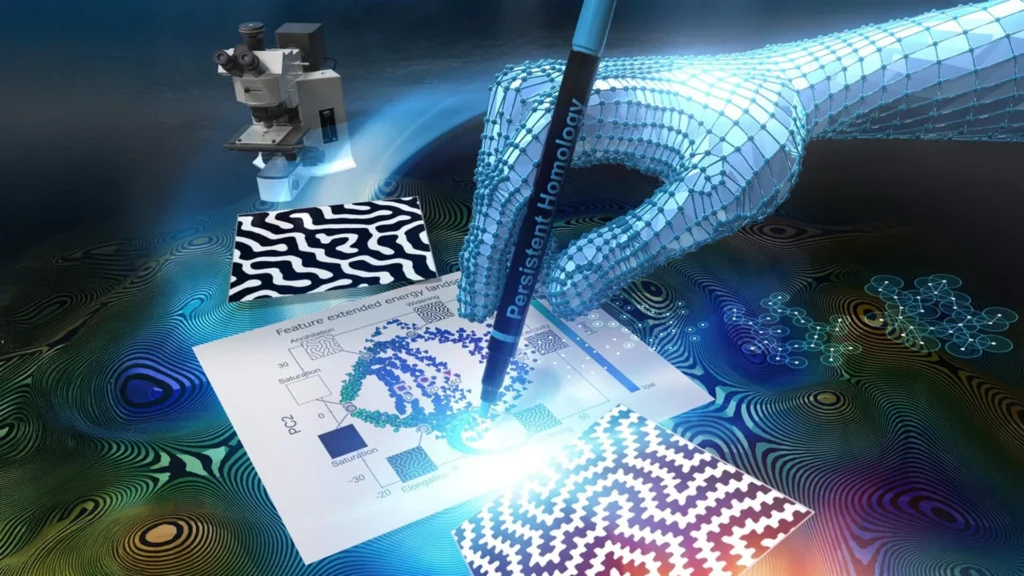
Among the diverse array of magnetic structures, some soft magnetic materials harbor highly intricate patterns known as maze domains. These are characterized by their distinctive zig-zag, labyrinth-like appearance, which can be observed under a microscope. Maze domains are particularly challenging because their structures can undergo abrupt and significant changes as temperatures rise or fall. This dynamic behavior directly impacts the energy loss characteristics of the material, making them a critical area of study for improving motor efficiency. Despite their importance, scientists have long struggled to fully comprehend these complex structures. The difficulty arises from the multitude of interacting factors at play, including the material’s precise microscopic crystal structure, the dynamic influence of thermal effects, and the delicate balance of energy stability within the material. Conventional simulation methods often oversimplify these real-world complexities, while experimental observations, though revealing, frequently lack a clear, quantifiable mechanism to explain cause and effect.
A Breakthrough from Japan: The eX-GL Model
Recognizing this significant gap in understanding, a collaborative team of researchers, spearheaded by Professor Masato Kotsugi and Dr. Ken Masuzawa from the Department of Material Science and Technology at Tokyo University of Science (TUS), Japan, embarked on an ambitious project. Their work, involving collaborators from the University of Tsukuba, Okayama University, and Kyoto University, culminated in the development of a groundbreaking new model: the entropy-feature-eXtended Ginzburg-Landau (eX-GL) model. This innovative approach was specifically designed to delve into the complex energy landscape of maze domains, with their initial investigations focusing on a rare-earth iron garnet (RIG), a material known for exhibiting these intricate magnetic patterns.
Professor Kotsugi articulated the core motivation behind their invention: "Conventional simulations oversimplify real materials, while experiments reveal complexity without a clear way to quantify cause and effect. Our physics-based explainable artificial intelligence framework addresses these limitations and is designed to mechanistically explain the temperature-dependent magnetization reversal process." This statement highlights the model’s unique strength: its ability to bridge the gap between theoretical models and empirical observations by integrating advanced computational techniques with fundamental physics principles. The team’s seminal findings were subsequently published in the esteemed journal Scientific Reports, marking a significant advancement in the field of materials science.
Chronology of Discovery: Blending AI and Physics
The research initiative followed a rigorous, multi-stage methodology that seamlessly integrated advanced imaging techniques, sophisticated mathematical analysis, and cutting-edge machine learning. The primary objective was to unravel how temperature variations specifically affect magnetization reversal within these enigmatic maze domains.
- Microscopic Imaging: The initial phase involved capturing high-resolution microscopic images of the magnetic domains within the RIG sample. This was systematically performed at various temperatures, providing a comprehensive dataset illustrating the thermal evolution of these structures.
- Persistent Homology (PH) Analysis: These rich image datasets were then subjected to the first stage of the eX-GL model, which employs persistent homology (PH). PH is a powerful and sophisticated mathematical method derived from topological data analysis. It excels at identifying and quantifying persistent topological features within data, regardless of scale. In this context, PH allowed the research team to detect and characterize uneven structural characteristics and complex connectivity within the magnetic domain images, essentially mapping the "shape" of the magnetic patterns.
- Machine Learning for Pattern Recognition: Following the PH analysis, a machine learning-based pattern recognition algorithm was applied. This stage was crucial for sifting through the vast amount of PH data to identify the most salient and important features. The output of this stage was a digital free-energy landscape. This landscape is a computational representation that tracks how magnetic microstructures evolve as the energy within the material changes, providing a dynamic view of the system’s stability and transitions.
- Mathematical Analysis and Linkage: The final stage involved advanced mathematical analysis to establish a definitive link between these observed microscopic domain structures and the macroscopic magnetization reversal process. This allowed the researchers to connect the intricate behavior at the atomic scale to the broader functional properties of the material.
Through this meticulous process, the researchers successfully identified a dominant feature, termed PC1, which proved remarkably effective in capturing and describing the entire magnetization reversal process. By establishing a clear connection between PC1 and the underlying physical properties of the material, the team was able to visualize and map out four major energy barriers. These barriers, previously hidden from direct observation, were revealed to exert a profound influence on the dynamics of magnetization reversal, acting as critical checkpoints that the magnetic system must overcome.
Unveiling Hidden Energy Barriers Inside Magnetic Materials
A deeper, detailed analysis of these newly identified energy barriers and their associated microstructures provided unprecedented insights into how different forms of energy contribute to the magnetization reversal process. The researchers meticulously measured and quantified the energy transfer mechanisms involving several fundamental interactions:
- Exchange Interactions: These quantum mechanical interactions are responsible for the parallel alignment of magnetic moments in ferromagnetic materials, forming the basis of magnetic domains.
- Demagnetizing Effects: These arise from the magnetic fields generated by the material itself, which tend to oppose the internal magnetization and can influence domain configurations.
- Entropy: This thermodynamic concept, representing the degree of disorder or randomness in a system, was found to play a surprisingly significant role, particularly in conjunction with thermal effects.
A particularly intriguing discovery was the observation that maze domains grow increasingly complex as the total length of their domain walls increases. This escalating complexity was directly linked to the intricate interplay between entropy and exchange forces. These findings represent a significant leap forward, providing clear physical mechanisms that explain the often-mysterious reversal behavior of maze domains. This level of mechanistic explanation was previously unattainable through conventional experimental or simulation techniques alone.
"Our eX-GL approach effectively automates the interpretation of complex magnetization reversal processes and enables the identification of hidden mechanisms, difficult to discern using conventional methods," stated Professor Kotsugi. He further emphasized the broad applicability of their model: "In addition, since free energy is a universal thermodynamic metric, our model can be extended to other systems with similar characteristics," suggesting that the methodology could have far-reaching implications beyond magnetic materials.
The Broader Impact and Implications for Sustainable Technology
The implications of this research extend far beyond the specific study of rare-earth iron garnets. The development of the eX-GL model and its successful application represent a significant advancement in computational materials science. It introduces a powerful, generalizable strategy for investigating complex energy landscapes not only in magnetic systems but also in a wide array of other related physical materials. This novel "physics-based explainable artificial intelligence framework" offers a new paradigm for materials discovery and optimization.
Addressing Global Energy Efficiency Goals:
The quest for enhanced energy efficiency is a cornerstone of global sustainability efforts. Electric motors consume a substantial portion of global electricity, estimated to be over 45% of total electricity consumption in industrial and commercial sectors. Any improvement in their efficiency, even fractional, can lead to monumental energy savings on a global scale. This research directly contributes to these goals by providing tools to design materials that inherently waste less energy.
Future of Electric Vehicles and Beyond:
For the electric vehicle industry, this research holds the promise of developing next-generation electric motors that are not only more efficient but also potentially smaller, lighter, and more durable due to reduced heat generation. This directly translates to increased range, faster charging, and lower operational costs for consumers, further accelerating EV adoption. Beyond EVs, the principles uncovered could be applied to:
- Renewable Energy: Improving the efficiency of generators in wind turbines and hydroelectric power plants.
- Industrial Applications: Enhancing the performance of motors in manufacturing, HVAC systems, and robotics.
- Data Storage: Developing more efficient and stable magnetic storage devices.
- Power Electronics: Optimizing inductors and transformers in various electronic devices, reducing standby power consumption.
Advancing Materials Science Methodologies:
The eX-GL model itself is a testament to the power of interdisciplinary research, fusing physics, mathematics, and artificial intelligence. This type of hybrid approach is becoming increasingly vital for tackling the most challenging problems in materials science, where complex phenomena often defy traditional analytical methods. The ability to mechanistically explain microscopic behavior from experimental data, rather than just observing it, empowers researchers to design materials with tailored properties more effectively and predictably. This paradigm shift could significantly shorten the material development cycle, bringing innovations to market faster.
Collaborative Scientific Endeavor:
The multi-institutional collaboration between Tokyo University of Science, the University of Tsukuba, Okayama University, and Kyoto University underscores the importance of pooled expertise in modern scientific research. Such partnerships are increasingly crucial for tackling complex, resource-intensive projects that require diverse skill sets and perspectives. This collaborative spirit, coupled with robust financial backing from organizations like the Japan Society for the Promotion of Science (KAKENHI) Grant-in-Aid for Scientific Research (A) (21H04656) and JST-CREST (Grant No. JPMJCR21O1), demonstrates a national commitment to fostering cutting-edge scientific inquiry. Furthermore, the support received by C. Mitsumata from the Tsukuba Research Center for Energy Materials Science (TREMS) at the University of Tsukuba highlights the dedicated infrastructure available for such advanced studies.
In conclusion, the study led by Professor Masato Kotsugi and Dr. Ken Masuzawa not only provides unprecedented clarity into the mechanics of maze domains within soft magnetic materials but also introduces a powerful, broadly applicable strategy for dissecting complex energy landscapes in a multitude of physical systems. This pioneering work lays a critical foundation for designing future materials that will drive the next generation of hyper-efficient electric motors and contribute significantly to global energy sustainability goals.