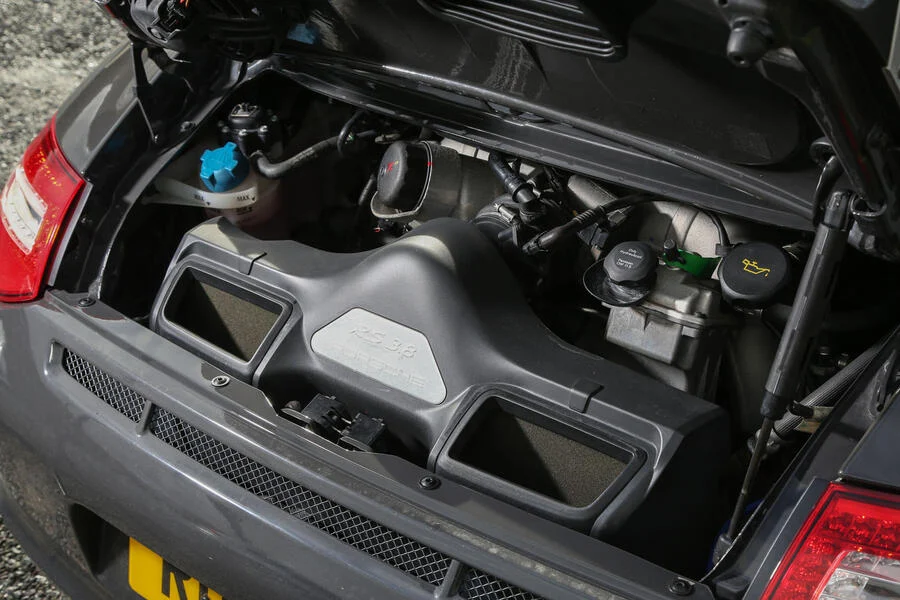
Porsche’s mastery of the boxer engine is a storied narrative etched in automotive history, a symphony of precision engineering that has consistently pushed the boundaries of performance and endurance. From the visceral roar of the 4.0-liter flat-six propelling the track-honed 992 GT3 RS to the awe-inspiring twelve-cylinder might that powered the legendary Porsche 917 to numerous victories, the Stuttgart marque has a profound and unparalleled understanding of this distinctive engine configuration. While each iteration possesses its own unique brilliance, it is the unofficially christened "Mezger" flat-sixes that stand as the undisputed apex of this horizontally opposed lineage, a distinction earned not only through their exceptional performance capabilities but also through the rich tapestry of history woven around their development.
The Genesis of a Legend: Hans Mezger and the Foundation of Porsche’s Boxer Prowess
The "Mezger" moniker is a profound tribute to the indelible legacy of Hans Mezger (1929-2020), the visionary engineer who spearheaded the development team behind the revolutionary 2.0-liter ‘901’ engine, the very heart of the inaugural Porsche 911. While the term "Mezger" is most commonly associated with a specific generation of water-cooled units found in the high-performance GT and Turbo variants of the 996 and 997 model lines, its roots extend back to the fundamental design principles established by Mezger himself. Technically, the designation could even be applied to any air-cooled Porsche six-cylinder engine, acknowledging the enduring influence of Mezger’s foundational work.
The fact that these engines bear the surname of such a legendary engineer is a powerful testament to Mezger’s profound impact on Porsche’s engineering ethos. The fundamental architectural blueprint of his original 901 flat-six served as the bedrock for virtually every air-cooled flat-six engine to emerge from the Porsche factory for the subsequent three decades. This lineage extended beyond road-going vehicles, forming the basis for powerplants that propelled numerous Porsche race cars to glory on circuits worldwide. Key to the enduring success and reliability of these engines were features such as a robust, split crankcase design and an integrated dry-sump lubrication system. These engineering decisions were not merely technical choices; they were fundamental to ensuring the remarkable toughness and longevity that became synonymous with Mezger-designed engines.
A Paradigm Shift and the Rise of the Water-Cooled Era
Hans Mezger retired from Porsche in 1993, marking the end of an era for air-cooled engine development. Four years later, in 1997, Porsche embarked on a significant technological shift with the introduction of the 996 model. This marked the first time in over thirty years that the company moved away from its iconic air-cooled engine design, ushering in the era of water-cooled powertrains. The all-new ‘M96’ engine, which debuted in the 996, was a departure from the established formula.
However, this pioneering water-cooled engine was not without its challenges. Enthusiasts and owners soon identified a series of significant issues that plagued the M96, including cracked cylinder heads, notorious bore scoring, and the often-catastrophic failure of the intermediate shaft (IMS) bearing. The acronym IMS would soon become a deeply ingrained and widely recognized term within the Porsche enthusiast community, often associated with expensive and time-consuming repairs. These issues cast a shadow over the M96’s initial reception, raising concerns about long-term reliability and the inherent robustness that Porsche customers had come to expect.
Returning to the Roots: The Birth of the Modern Mezger
The challenges encountered with the M96 engine prompted a strategic re-evaluation within Porsche, particularly as the company prepared to homologate the 996 for motorsport competition. The demands of racing necessitated a powerplant that was not only competitive but also exceptionally reliable, capable of withstanding the extreme stresses of circuit racing. In response, Porsche engineers looked to their illustrious past for inspiration, delving into the archives for proven designs.
The solution emerged from a derivative of the engine block that had powered the Le Mans-winning 911 GT1. Crucially, this GT1 engine itself was an evolution of Mezger’s sophisticated powerplant designed for the formidable 962 Group C endurance racer. By leveraging this motorsport-proven heritage, Porsche engineered a new water-cooled, naturally aspirated 3.6-liter flat-six engine for the 996 GT3, which debuted in 1999.
This new engine, which would become the quintessential "Mezger" of the water-cooled era, meticulously incorporated many of the design philosophies that had defined its air-cooled predecessors. It featured a robust split crankcase and a dry-sump lubrication system, essential for maintaining consistent oil pressure under extreme G-forces and preventing oil starvation. Furthermore, it adopted a gear-driven intermediate shaft, a significant improvement over the chain-driven system used in the problematic M96 engine. This robust, direct-drive system for the IMS dramatically enhanced reliability and reduced the risk of bearing failure, directly addressing one of the most significant criticisms of the earlier water-cooled units.
Technical Specifications and Performance Benchmarks
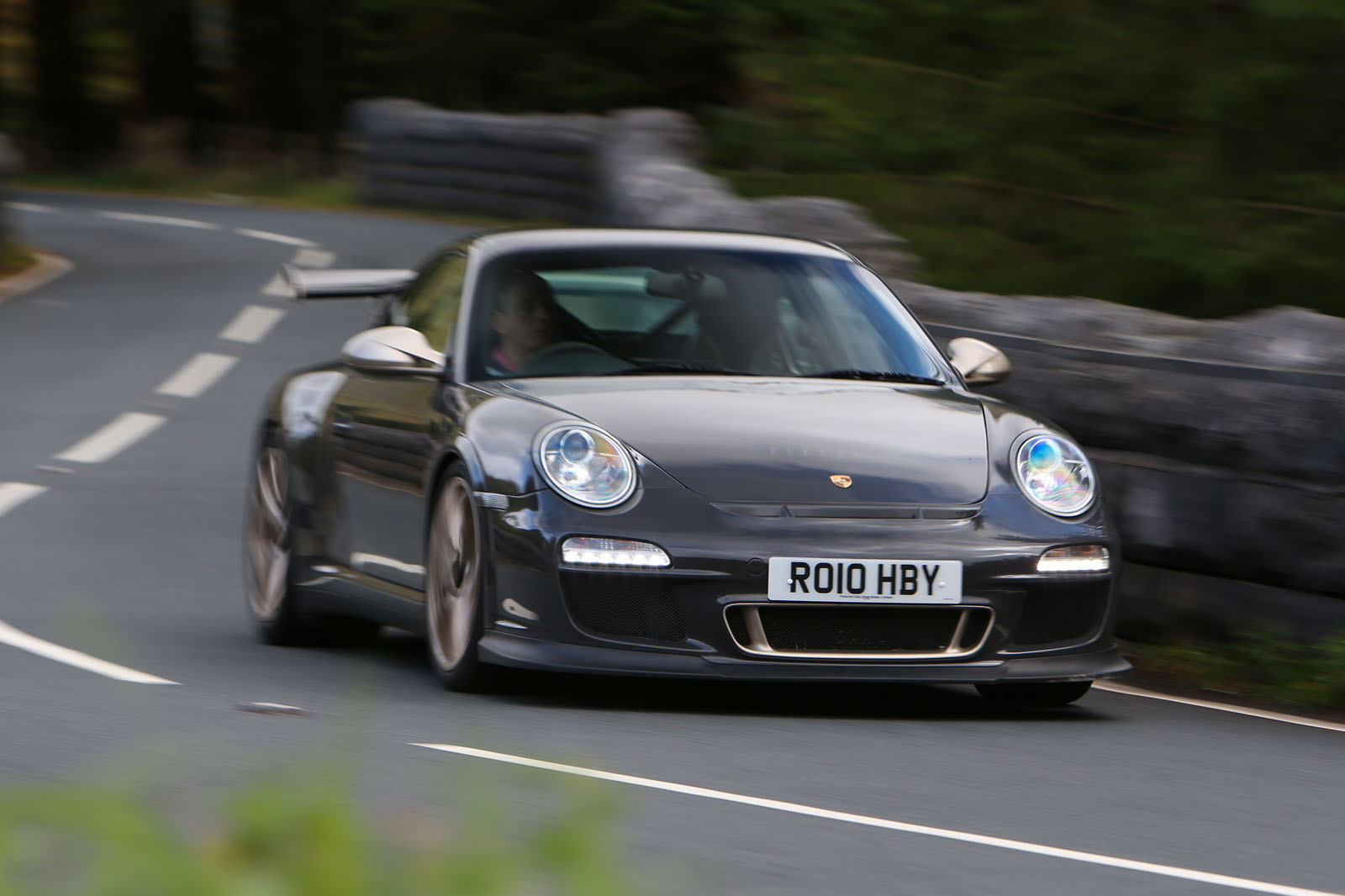
The 3.6-liter Mezger engine, as implemented in the 996 GT3, represented a significant leap forward in terms of performance and durability for the water-cooled era. While exact specifications varied slightly across different iterations and model years, its core design remained remarkably consistent.
- Engine Type: Naturally aspirated, water-cooled flat-six
- Displacement: 3.6 liters (3,596 cc)
- Bore x Stroke: Typically around 96 mm x 82.7 mm
- Compression Ratio: Often in the range of 11.5:1 to 12.0:1
- Power Output: For the 996 GT3 (1999-2005), power output generally ranged from 360 PS (265 kW; 355 hp) to 381 PS (280 kW; 376 hp), depending on the specific model (e.g., standard GT3 vs. GT3 RS). Later iterations in the 997 generation saw further increases.
- Torque: Corresponding torque figures typically ranged from approximately 370 Nm (273 lb-ft) to 395 Nm (291 lb-ft).
- Key Features:
- Split crankcase for enhanced rigidity.
- Dry-sump lubrication system for consistent oil supply under high loads.
- Gear-driven intermediate shaft for superior reliability.
- Individual throttle bodies for precise air-fuel mixture control.
- Lightweight construction using aluminum alloys.
The introduction of the Mezger-derived engine in the 996 GT3 had an immediate and profound impact on the model’s performance credentials. The engine’s ability to rev freely and deliver power with a linear, intoxicating surge, coupled with its inherent robustness, allowed the GT3 to establish itself as a benchmark for track-day performance and a formidable contender in various motorsport disciplines.
Chronology of the Mezger Engine’s Evolution and Impact
The story of the Mezger engine is not a static one; it is a narrative of continuous refinement and adaptation. Understanding its evolution provides crucial context for its enduring appeal.
- 1963: Hans Mezger joins Porsche and begins work on the air-cooled flat-six for the 901 (later 911). This marks the foundational design that would influence decades of Porsche engines.
- 1960s – 1990s: The air-cooled Mezger flat-six powers successive generations of the Porsche 911, becoming a legendary powertrain renowned for its durability and character. This engine also finds its way into numerous successful Porsche race cars, solidifying its motorsport pedigree.
- 1993: Hans Mezger retires from Porsche.
- 1997: Porsche introduces the 996 generation 911, marking a significant departure with the adoption of the water-cooled M96 engine. Early M96 engines are plagued by issues such as bore scoring and IMS bearing failures.
- 1999: The 996 GT3 is launched, featuring a new water-cooled 3.6-liter flat-six engine derived from motorsport applications (specifically, the 911 GT1, itself influenced by the 962 racer). This engine, with its robust split crankcase and gear-driven IMS, is widely recognized as the first "water-cooled Mezger." It quickly garners acclaim for its performance and reliability.
- 2000s: Subsequent iterations of the GT3 and GT3 RS models, across both the 996 and 997 generations, continue to utilize variations of the Mezger engine. These engines are further refined, with power outputs and responsiveness continually enhanced, solidifying the Mezger’s reputation as the ultimate naturally aspirated Porsche engine for performance road cars.
- 2006-2012: The 997 generation GT3 and GT3 RS models feature highly developed versions of the Mezger engine, with displacements increasing to 3.8 liters in some variants and power outputs reaching impressive figures, further cementing its legendary status.
- 2013: With the introduction of the 991 generation 911, Porsche transitions the GT3 models to a new, higher-revving 3.8-liter direct-injection flat-six engine. While still naturally aspirated and incredibly capable, this engine marks a departure from the core architecture of the traditional Mezger, signaling the end of an era for this specific engine lineage in series production GT cars. However, the spirit of its engineering continues to influence Porsche’s powertrain development.
Statements and Reactions: The Unspoken Reverence
While official statements from Porsche regarding specific engine designations like "Mezger" are rare, the reverence within the automotive press and among enthusiasts speaks volumes. Automotive journalists consistently laud these engines in their reviews, often highlighting their "pure" and "unfiltered" delivery, their ability to inspire confidence during spirited driving, and their exceptional durability.
For instance, a reviewer from a prominent automotive publication might state, "The Mezger-powered 997 GT3 RS isn’t just a car; it’s an experience. The engine’s linear power delivery, its willingness to be revved to its stratospheric redline, and the symphonic soundtrack it produces are utterly intoxicating. It’s a testament to the enduring genius of its design."
Similarly, forum discussions among Porsche owners and enthusiasts are replete with anecdotes and praise for the Mezger engine. Common sentiments include, "My Mezger-powered 996 GT3 has been bulletproof for over 150,000 miles," or "There’s just something about the feel and sound of a Mezger that you don’t get from modern turbocharged engines. It’s a true driver’s engine."
These widespread expressions of admiration, though not direct quotes from company executives, collectively represent a powerful endorsement of the Mezger engine’s engineering excellence and its significant impact on the Porsche brand.
Analysis of Implications: A Benchmark for Performance and Durability
The enduring legacy of the Mezger flat-six has several significant implications for Porsche and the automotive industry:
- Reinforced Brand Identity: The Mezger engine became inextricably linked with Porsche’s identity as a manufacturer of high-performance, driver-focused sports cars. Its association with motorsport success further burnished this image.
- Benchmark for Naturally Aspirated Engines: In an era increasingly dominated by turbocharged engines, the Mezger served as a powerful argument for the continued relevance and appeal of naturally aspirated powerplants. Its ability to deliver thrilling performance and precise throttle response at high revs set a high bar for competitors.
- Investment Value: Due to their robust construction and iconic status, Mezger-powered Porsche models have seen significant appreciation in value in the collector car market. This reflects the enduring desirability of these vehicles and the engines that power them.
- Influence on Future Engineering: While Porsche has moved to turbocharging for its mainstream models, the lessons learned from the Mezger – particularly regarding robust construction, effective lubrication, and precise engine management – continue to inform the development of its current and future powertrains. The pursuit of driver engagement and mechanical purity, hallmarks of the Mezger, remains a core tenet of Porsche’s engineering philosophy.
- A Case Study in Engineering Evolution: The transition from air-cooled to water-cooled, and the subsequent refinement of the water-cooled Mezger to address early shortcomings, serves as a compelling case study in how automotive manufacturers adapt to technological advancements while striving to maintain core brand values. The ability to innovate and overcome challenges, as demonstrated with the Mezger, is crucial for long-term success.
In conclusion, the "Mezger" flat-six engine, whether in its air-cooled or water-cooled iterations, stands as a monumental achievement in automotive engineering. It represents a confluence of inspired design, meticulous execution, and a deep understanding of what makes a performance car truly special. Hans Mezger’s foundational work, coupled with the continuous refinement by Porsche’s engineering teams, created powertrains that not only powered iconic vehicles to victory but also captured the hearts and imaginations of enthusiasts worldwide, securing their place in the pantheon of automotive legends.