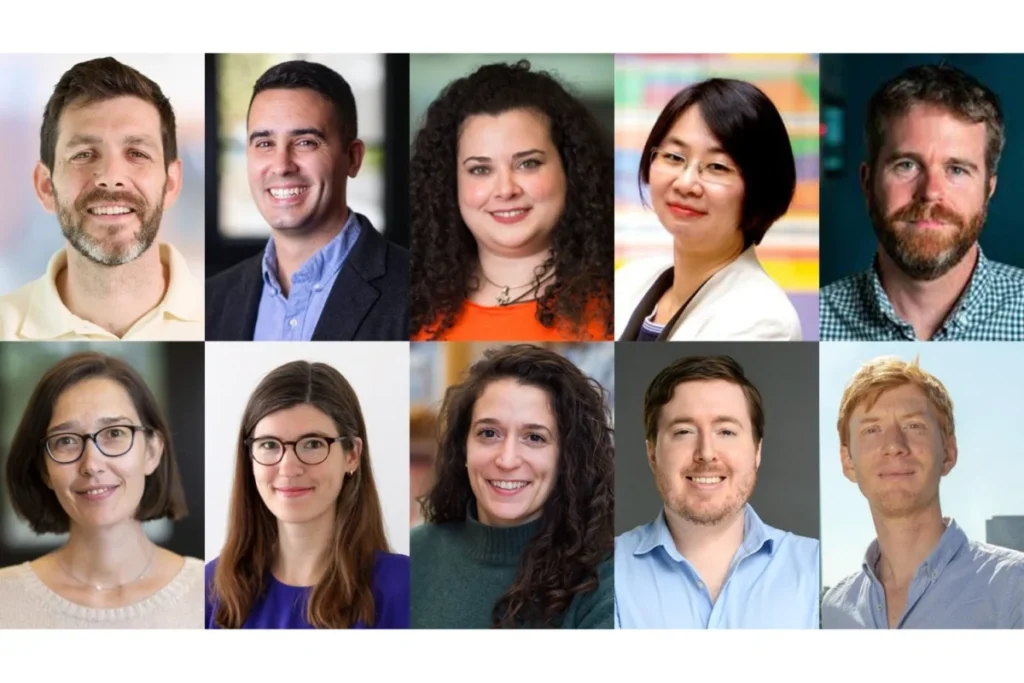
Cambridge, MA — The Massachusetts Institute of Technology’s School of Engineering proudly announced in 2026 the granting of tenure to ten exceptional faculty members, a significant milestone that underscores their profound impact on research, education, and the future of engineering. This distinguished cohort, representing a diverse array of disciplines, will continue to push the boundaries of scientific discovery and technological innovation across critical fields from artificial intelligence and sustainable energy to aerospace engineering and biomedical sciences.
The tenured faculty members hold appointments in five key departments and institutes within the School of Engineering: Aeronautics and Astronautics; Civil and Environmental Engineering; Electrical Engineering and Computer Science (EECS), which reports jointly to the School of Engineering and the MIT Schwarzman College of Computing; Mechanical Engineering; and the Institute for Medical Engineering and Sciences (IMES). This interdisciplinary spread highlights MIT’s commitment to collaborative research and its leadership in addressing complex global challenges through multifaceted approaches.
The Significance of Tenure in Academia
Tenure at an institution like MIT represents the pinnacle of academic achievement, a permanent appointment that recognizes a faculty member’s sustained excellence and significant contributions to their field, teaching, and service. It provides unparalleled academic freedom, allowing scholars to pursue ambitious, long-term research projects without undue external pressure, fostering environments where high-risk, high-reward endeavors can flourish. The tenure process at MIT is notoriously rigorous, typically involving years of intensive research, publication in top-tier journals, securing competitive grants, demonstrating exceptional teaching capabilities, and contributing to the broader academic community. Candidates undergo a multi-stage review process that includes departmental committees, external peer reviews from leading experts worldwide, and comprehensive evaluations by school and institute-level committees, culminating in a decision by the Provost and President. This meticulous vetting ensures that only those who have demonstrated extraordinary promise and delivered impactful results are granted this prestigious status.
"I’m delighted to congratulate the 10 newest tenured faculty members in the School of Engineering," stated Paula T. Hammond ’84, PhD ’93, dean of engineering, Institute Professor, and professor of chemical engineering. "This major career milestone reflects not only their impact and excellence in research, but their deep commitment to education and mentoring the next generation of engineers. I am so excited to see what new developments, innovations, and technologies will come next from this incredibly accomplished group." Dean Hammond’s remarks underscore the dual importance of research prowess and pedagogical dedication in MIT’s faculty selection and retention strategy.
A Deep Dive into the Contributions of the Newly Tenured Faculty
The newly tenured engineers represent the vanguard of their respective fields, each bringing unique expertise and visionary approaches to pressing global issues:
Jacob Andreas, Associate Professor in EECS and CSAIL
Professor Andreas’s work is at the forefront of natural language processing (NLP) and broader artificial intelligence (AI). Affiliated with the Computer Science and Artificial Intelligence Laboratory (CSAIL), his research endeavors to unravel the computational foundations of language learning, aiming to build intelligent systems that can effectively learn from and interact with human guidance. In an era where AI is increasingly integrated into daily life, Professor Andreas’s contributions are crucial for developing more intuitive, robust, and human-centric AI systems capable of understanding and generating natural language, impacting everything from virtual assistants and educational tools to complex data analysis and scientific discovery. His work holds the promise of bridging the communication gap between humans and machines, paving the way for more seamless and intelligent interactions.
Zachary Cordero, Esther and Harold E. Edgerton Associate Professor in Aeronautics and Astronautics
As the associate director of the MIT Gas Turbine Laboratory, Professor Cordero is dedicated to enabling frontier aviation and space platforms through advancements in materials, manufacturing, and structures, with a particular emphasis on high-temperature systems. His research is vital for the next generation of aerospace technologies, including hypersonic flight, advanced propulsion systems, and resilient spacecraft capable of operating in extreme environments. By pushing the boundaries of material science and manufacturing processes, Professor Cordero’s work directly supports the development of more efficient, durable, and safer aircraft and spacecraft, contributing significantly to national security, space exploration, and the future of sustainable aviation.
Christina Delimitrou, KDD Career Development Professor in Communications and Technology and Associate Professor in EECS
Also affiliated with CSAIL, Professor Delimitrou’s research occupies the critical intersection of computer architecture and computer systems. She is recognized as a pioneer in applying machine learning techniques to address design and management challenges within cloud computing environments. With the exponential growth of cloud services powering everything from global businesses to personal devices, optimizing cloud infrastructure for efficiency, performance, and cost-effectiveness is paramount. Professor Delimitrou’s innovative approaches leverage AI to autonomously manage and improve the complex operations of data centers, leading to more scalable, reliable, and energy-efficient cloud systems that are fundamental to modern digital infrastructure.
Sili Deng, Doherty Career Development Professor in Ocean Utilization and Associate Professor in Mechanical Engineering
Professor Deng leads a research group focused on developing scientific machine learning and experimental approaches to understand, predict, and engineer chemically reacting systems. Her work spans applications in sustainable energy, advanced materials manufacturing, and climate-resilient technologies. As the world grapples with climate change and the urgent need for cleaner energy solutions, Professor Deng’s research offers pathways to optimize combustion processes, design novel catalysts, and develop new materials for energy storage and conversion. Her contributions are essential for accelerating the transition to a sustainable future, impacting areas such as carbon capture, efficient power generation, and the creation of next-generation industrial processes.
David Des Marais, Amgen Career Development Professor in Civil and Environmental Engineering
Professor Des Marais leads the Des Marais Lab, which focuses on understanding the intricate mechanisms of plant-environment interaction. Utilizing tools from molecular, quantitative, and population genetics, his lab seeks to identify the physiological basis of plant response to environmental cues. In the face of a changing climate and growing global food demand, Professor Des Marais’s research is critical for developing more resilient and productive agricultural systems. By deciphering how plants adapt to stress factors like drought, heat, and disease, his work provides foundational knowledge for engineering crops that can thrive in challenging conditions, ensuring food security for future generations.
Carmen Guerra-Garcia, Esther and Harold E. Edgerton Associate Professor in Aeronautics and Astronautics
As the director of the Aerospace Plasma Group, Professor Guerra-Garcia’s work is positioned at the intersection of aerospace engineering, low-temperature plasma technologies, and gas discharge physics. Her research directly addresses two major aviation challenges: reducing emissions and ensuring the safety of next-generation aircraft. Through three interconnected thrusts—advancing the fundamental science of electrical discharges in flowing gases, applying this science to plasma-assisted combustion and chemical conversion, and developing physics-based approaches to lightning protection—Professor Guerra-Garcia is pioneering technologies that could make air travel significantly cleaner and safer. Her innovations hold the potential to revolutionize aircraft design and operation, contributing to a greener and more secure aerospace industry.
Laura Lewis, Athinoula A. Martinos Associate Professor in EECS and IMES
Professor Lewis’s research is dedicated to developing advanced methods for analyzing and interpreting multi-modal neuroimaging data, with the goal of measuring previously undetectable aspects of brain function. With a particular interest in fast fMRI, EEG, and PET, she applies these sophisticated methods to study complex phenomena like sleep. Her work is pivotal for advancing our understanding of the human brain, which has profound implications for diagnosing and treating neurological disorders, mental health conditions, and cognitive impairments. By uncovering the intricate dynamics of brain activity, Professor Lewis’s research opens new avenues for therapeutic interventions and a deeper comprehension of consciousness and cognitive processes.
Tami Lieberman, Hermann L. F. von Helmholtz Career Development Professor in Civil and Environmental Engineering and IMES
Professor Lieberman leads the Lieberman Lab, which is dedicated to understanding how ecology and evolution shape the personalized communities of the human microbiome and the role of this personalization in human health. The human microbiome—the vast collection of microorganisms living in and on our bodies—is increasingly recognized as a critical factor in health and disease. Professor Lieberman’s research provides crucial insights into how these microbial communities develop, interact, and influence conditions ranging from digestive disorders and autoimmune diseases to infectious diseases and even mental health. Her work is foundational for developing personalized medical interventions that leverage the power of the microbiome for improved health outcomes.
Kevin O’Brien, Associate Professor in EECS and Member of the Research Laboratory of Electronics
As the leader of the Quantum Coherent Electronics Group, Professor O’Brien’s research focuses on developing tools, techniques, and devices to enhance the measurement of quantum systems, most notably superconducting quantum computers. Quantum computing holds the promise of revolutionizing fields from drug discovery and materials science to cryptography and complex optimization problems. However, building stable and reliable quantum computers presents immense technical challenges. Professor O’Brien’s work is critical for overcoming these hurdles by improving the fidelity and speed of quantum measurements, which are essential for error correction and controlling quantum bits. His contributions are accelerating the development of practical quantum technologies that could unlock unprecedented computational power.
Wim van Rees, Associate Professor in Mechanical Engineering and Leonardo Career Development Professor in Engineering
Professor van Rees’s research advances high-order, high-fidelity numerical methods for efficiently simulating interactions between fluid flows and moving or deforming bodies. His methodologies span diverse applications, including wake vortex dynamics, bio-inspired propulsion, and morphing structures. Understanding and predicting fluid-structure interactions is vital for designing more efficient aircraft, marine vessels, and robotics. By developing sophisticated computational models, Professor van Rees’s work enables engineers to optimize designs for reduced drag, enhanced maneuverability, and improved performance, drawing inspiration from natural systems to create more agile and adaptive engineered solutions.
Broader Implications for MIT and Global Innovation
The tenure decisions in 2026 reflect MIT’s strategic commitment to nurturing pioneering research and fostering a vibrant intellectual community. By investing in these ten individuals, the School of Engineering reinforces its position at the vanguard of global technological advancement. These faculty members are not only expected to produce groundbreaking research but also to inspire and educate the next generation of engineers and scientists. Their work will continue to attract top-tier graduate students and post-doctoral researchers, creating a dynamic ecosystem of innovation that extends far beyond the campus.
The interdisciplinary nature of many of these appointments, particularly those linked to IMES and the MIT Schwarzman College of Computing, highlights a broader trend at MIT towards collaborative, problem-driven research. For example, the joint appointments in EECS with the College of Computing underscore the institute’s foresight in integrating computing across all disciplines, recognizing its transformative potential. This strategic alignment ensures that MIT remains agile in responding to emerging scientific and societal needs.
Furthermore, the research areas represented by this tenured cohort directly address some of the most pressing global challenges of the 21st century: climate change (Deng, Guerra-Garcia, Des Marais), human health (Lewis, Lieberman), advanced computing (Andreas, Delimitrou, O’Brien), and the future of transportation and exploration (Cordero, van Rees, Guerra-Garcia). By empowering these exceptional minds, MIT is not just securing its academic future but also making a profound investment in solutions that will benefit humanity on a global scale. The tenure of these ten faculty members solidifies MIT’s legacy as a crucible of innovation and a beacon for intellectual excellence.