The manufacturing sector is currently witnessing a transformative shift in the production of high-performance industrial components as researchers from Hiroshima University and Mitsubishi Materials Hardmetal Corporation unveil a novel additive manufacturing technique for tungsten carbide-cobalt (WC-Co) cemented carbides. This development, detailed in a recent study published in the International Journal of Refractory Metals and Hard Materials, addresses a long-standing paradox in metallurgy: the very properties that make tungsten carbide indispensable—its extreme hardness and wear resistance—also make it notoriously difficult and expensive to process. By utilizing a specialized hot-wire laser irradiation process, the research team has demonstrated a way to 3D print these "super-materials" without compromising their structural integrity, potentially paving the way for a more sustainable and cost-effective era in tool manufacturing.
The Industrial Significance of Tungsten Carbide-Cobalt
Tungsten carbide-cobalt, often referred to simply as "cemented carbide," is a composite material that has revolutionized heavy industry since its commercialization in the early 20th century. Its composition is a masterclass in material engineering: it combines the extreme hardness of tungsten carbide ceramic particles with the toughness and ductility of a metallic cobalt binder. The result is a material that sits just below diamond on the Mohs scale of hardness but possesses the structural resilience required to survive the violent vibrations of high-speed machining and the crushing pressures of deep-earth drilling.
Currently, WC-Co is the backbone of the global cutting tool industry. It is the primary material used for drill bits, end mills, mining cutters, and construction equipment. Without it, the precision manufacturing of automotive engines, aerospace turbines, and consumer electronics would be significantly more expensive and less efficient. However, the reliance on this material comes with a high price tag. Both tungsten and cobalt are classified as critical raw materials due to their high cost, geographic concentration of supply, and the energy-intensive processes required to refine them.
The Limitations of Conventional Powder Metallurgy
For decades, the gold standard for producing cemented carbide parts has been powder metallurgy. In this traditional workflow, fine powders of tungsten carbide and cobalt are mixed, pressed into a "green" compact shape using high-pressure molds, and then subjected to liquid-phase sintering. During sintering, the material is heated to a temperature where the cobalt melts and "wets" the carbide particles, drawing them together into a dense, solid mass.
While effective, powder metallurgy is inherently restrictive. The process requires expensive, custom-made molds for every different part shape, making small-batch production or prototyping prohibitively expensive. Furthermore, because the material is so hard once sintered, any final shaping must be done using diamond-tipped grinding tools, a process that is slow, costly, and generates significant waste. In many industrial applications, a substantial percentage of the expensive raw material is ground away and lost during the finishing stages. This "buy-to-fly" ratio—the mass of the starting material compared to the mass of the finished part—is a major target for optimization in modern green manufacturing.
A New Frontier: Additive Manufacturing via Hot-Wire Laser Irradiation
To overcome these hurdles, the research team led by Assistant Professor Keita Marumoto at Hiroshima University’s Graduate School of Advanced Science and Engineering turned to additive manufacturing (AM). Unlike traditional subtractive methods, AM builds components layer by layer, placing material only where it is needed. While 3D printing has become common for plastics and softer metals like titanium or aluminum, applying it to cemented carbides has historically resulted in failure. The primary issue is that the high heat of conventional 3D printing lasers often causes the tungsten carbide to decompose or creates "grain growth," where the microscopic crystals expand and weaken the material.
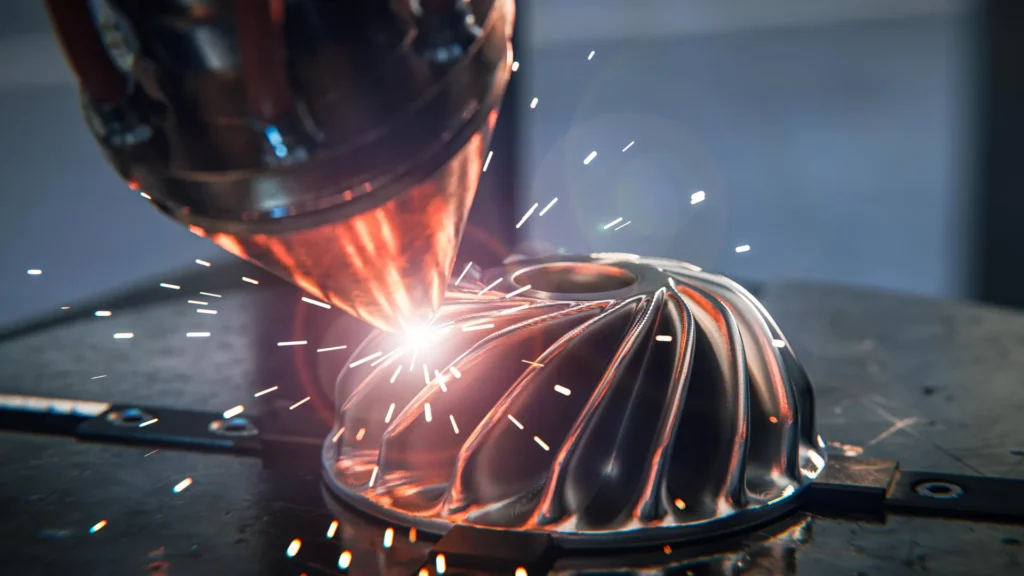
The Hiroshima team utilized a technique known as hot-wire laser irradiation, also referred to as laser hot-wire welding. This process involves a laser beam and a filler wire that is preheated by an electric current before it enters the laser’s path. By preheating the wire, the system requires less energy from the laser to achieve the necessary state for deposition. This allows for a much higher deposition rate and, crucially, provides finer control over the thermal environment of the melt pool.
Experimental Methodology and the "Softening" Strategy
The researchers conducted a series of rigorous tests to determine the optimal configuration for depositing WC-Co onto an iron substrate. They explored two primary fabrication arrangements to observe how the sequence of laser application affected the material’s properties:
- Rod-Leading Method: In this setup, the cemented carbide rod (the filler material) was positioned ahead of the laser beam in the direction of travel. The laser was directed onto the top of the rod.
- Laser-Leading Method: Here, the laser preceded the rod, irradiating the space between the bottom of the carbide wire and the base material.
The most significant finding of the study was that the highest quality results were achieved not by fully melting the tungsten carbide, but by softening it. By carefully calibrating the temperature to remain above the melting point of the cobalt binder (approximately 1,495°C) but below the temperatures that would cause the tungsten carbide crystals to dissolve or grow excessively, the researchers were able to fuse the material while preserving its original microscopic structure. This "softening" approach is a departure from traditional metal 3D printing, which typically relies on a full liquid phase for fusion.
Achieving Industrial-Grade Hardness and Integrity
One of the primary metrics for success in this study was the Vickers hardness (HV) of the printed material. For a cemented carbide to be industrially viable, it must typically exceed a hardness of 1400 HV. Initial tests with the laser-leading method showed promise in terms of structural integrity but struggled to maintain consistent hardness across the deposited layers.
To solve this, the team introduced a nickel alloy-based middle layer between the iron base and the cemented carbide. This transition layer acted as a buffer, preventing the migration of iron into the carbide (which would soften it) and reducing the thermal stresses that lead to cracking. Additionally, the researchers implemented a strict thermal monitoring protocol to prevent grain growth. When grains grow too large, the material loses its "edge-holding" ability and becomes more brittle. By keeping the temperature within a specific "sweet spot," the team produced a defect-free structure with a hardness exceeding 1400 HV, matching the performance of traditionally manufactured carbides.
Chronology of the Research and Collaborative Efforts
The development of this technology is the result of a multi-year collaboration between academia and industry. The timeline of the project reflects a systematic approach to solving the "unprintable" nature of refractory metals:
- Phase 1 (Initial Feasibility): Researchers at Hiroshima University began exploring laser hot-wire welding for high-strength steels, eventually pivoting to the more challenging cemented carbides.
- Phase 2 (Industrial Partnership): Mitsubishi Materials Hardmetal Corporation joined the effort, providing the specialized WC-Co filler wires and industrial expertise in powder metallurgy benchmarks.
- Phase 3 (Optimization): The team spent several months refining the "softening" temperature profiles and testing the rod-leading versus laser-leading configurations.
- Phase 4 (Validation): Final testing confirmed that the 1400 HV threshold could be maintained consistently without the carbon decomposition (decarburization) that typically plagues laser-processed carbides.
Broader Implications for the Global Supply Chain and Sustainability
The implications of this research extend far beyond the laboratory. On a global scale, the ability to 3D print tungsten carbide could significantly alter the supply chain dynamics for critical minerals. Because additive manufacturing uses significantly less raw material than traditional grinding methods, the industrial demand for virgin tungsten and cobalt could be reduced. This is particularly relevant given that the majority of the world’s tungsten supply is concentrated in a few geographic regions, making it susceptible to trade volatility.
Furthermore, this technique allows for "functional grading" or "cladding." Instead of making an entire tool out of expensive cemented carbide, manufacturers can use a cheaper steel alloy for the body of the tool and 3D print the high-performance carbide only on the cutting edges or high-wear surfaces. This approach could reduce the cost of advanced industrial tooling by 30% to 50%, making high-precision equipment more accessible to smaller manufacturing firms.
Expert Reactions and Future Directions
Assistant Professor Keita Marumoto emphasized the novelty of the team’s approach, noting that the "softening" technique could be a blueprint for other hard-to-process materials. "The approach of forming metal materials by softening them rather than fully melting them is novel, and it has the potential to be applied not only to cemented carbides but also to other refractory metals and ceramics," Marumoto stated.
Industry analysts suggest that while the technology is still in the experimental phase, the participation of a major player like Mitsubishi Materials indicates a clear path toward commercialization. The next steps for the research team involve tackling the remaining challenges of additive manufacturing: reducing the risk of micro-cracking in larger components and developing software algorithms to handle the printing of complex, three-dimensional geometries like helical drill bits or intricate injection molds.
As the industry moves toward "Industry 4.0," the integration of high-performance materials into additive workflows is essential. The success of the Hiroshima University and Mitsubishi Materials team provides a foundational framework for a future where the world’s hardest materials are as easy to shape as plastic, without losing the "diamond-like" strength that keeps the wheels of global industry turning.