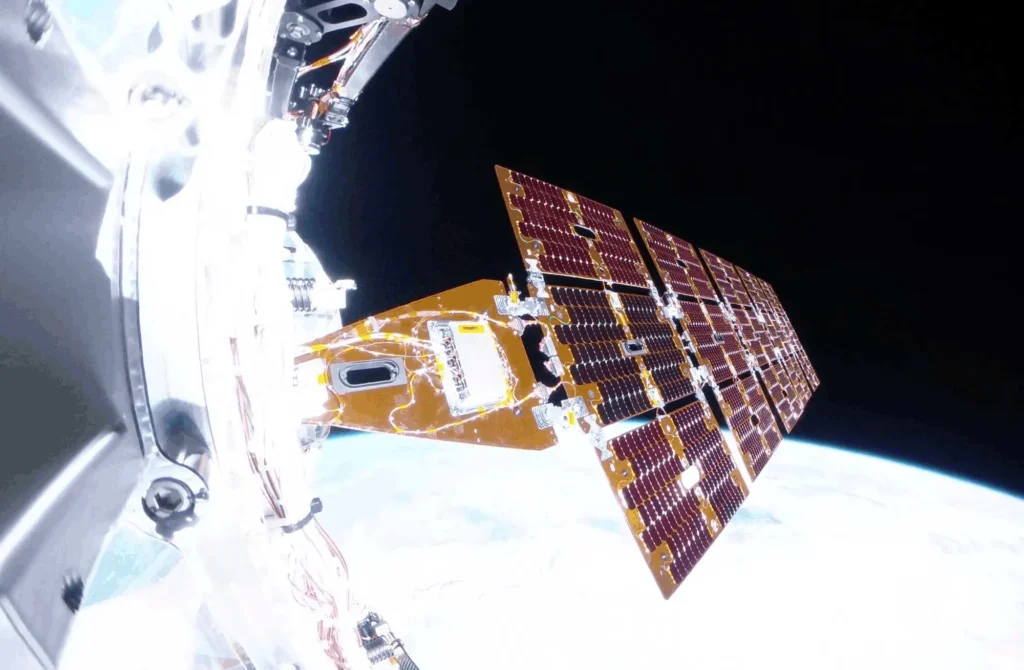
NASA has officially called off its ambitious and high-stakes plan to rescue the Neil Gehrels Swift Observatory, a $500 million scientific asset, from an inevitable fiery reentry into Earth’s atmosphere. The agency announced Wednesday that an "ongoing commercial spacecraft attitude control issue" with the servicer spacecraft, the LINK, built by Katalyst Space of Arizona, has rendered the mission unachievable. This decision marks a significant setback for the pursuit of extending the operational life of vital space assets and highlights the inherent risks and complexities of advanced in-space servicing technologies.
The Genesis of the Mission and the LINK Spacecraft
The Neil Gehrels Swift Observatory, launched in December 2004, has been a groundbreaking instrument in the study of gamma-ray bursts (GRBs), the most powerful explosions in the universe. Its primary mission was to rapidly detect and observe these transient cosmic events, providing crucial data on their origins and the extreme physics involved. Swift’s initial operational lifespan was projected at two years, but the observatory has far exceeded expectations, continuing to deliver invaluable scientific insights for nearly two decades.
However, as is the natural progression for all spacecraft in low Earth orbit, Swift’s orbital altitude has been gradually decreasing. This phenomenon, known as orbital decay, is influenced by various factors, including atmospheric drag. In recent years, heightened solar storm activity has exerted additional drag on the observatory, accelerating its descent. Recognizing the imminent threat of atmospheric reentry and the potential loss of a highly valuable scientific platform, NASA initiated plans for an intervention.
In response, NASA awarded a $30 million contract to Katalyst Space last year. The objective was for Katalyst to develop and deploy a specialized spacecraft, the LINK, designed to rendezvous with and grapple Swift. Once secured, the LINK would then use its propulsion system to boost Swift into a higher, more stable orbit, effectively extending its operational life. This represented a pioneering effort in the field of satellite servicing, aiming to demonstrate the feasibility of actively managing and prolonging the life of orbiting assets.
The Emergence of Technical Challenges with the LINK
The journey of the LINK spacecraft itself, however, encountered significant hurdles shortly after its launch in early July. Approximately three weeks post-launch, NASA first reported control issues with the LINK. These problems, described as an "ongoing commercial spacecraft attitude control issue," proved to be insurmountable for the servicer spacecraft’s ability to execute its primary mission objective.
In a blog post detailing the agency’s decision, NASA stated that due to these persistent technical challenges, the LINK "will not capture or boost" Swift as originally intended. A NASA spokesperson further clarified in a statement that the agency "does not currently have plans for another Swift boost mission." This indicates a definitive conclusion to this particular rescue attempt.
Official Statements and Acknowledgement of Risk
Both NASA and Katalyst Space have publicly acknowledged the outcome and the inherent risks associated with such a novel mission. NASA Administrator Jared Isaacman, in his statement, defended the decision to attempt the rescue, emphasizing the agency’s willingness to take calculated risks for potentially significant scientific returns.
"NASA should be willing to move quickly and take smart risks when the potential return is worth it, and that is exactly what we did with this mission," Isaacman stated. "This is not the outcome we were working toward, but it does not change why this mission was worth attempting." This sentiment underscores the pioneering nature of the endeavor, acknowledging that innovation often involves facing and learning from setbacks.
Katalyst CEO Ghonhee Lee echoed this perspective, highlighting the challenging nature of the mission and the valuable lessons learned. "We took on this high-risk, high-reward challenge and are proud of the milestones we reached along the way," Lee said in an emailed statement. "We have already learned a tremendous amount, and now our job is to turn those lessons into something durable—building a repeatable playbook to inform future rendezvous and proximity operations and satellite servicing."
The Future of Swift and Lessons Learned
Despite the cancellation of the boost mission, the LINK spacecraft will not be entirely without purpose. NASA’s announcement indicated that Katalyst will proceed with a modified objective: to "conduct rendezvous and proximity operations" with Swift. The primary goal of these operations will be to "gather as much data as possible to inform future satellite servicing operations." This represents a pivot from a direct rescue to an observational and data-gathering mission, aimed at extracting maximum scientific and technical value from the LINK’s current capabilities.
This shift underscores the importance of on-orbit data collection for the advancement of satellite servicing technologies. By observing Swift up close and attempting proximity maneuvers, Katalyst and NASA can gain invaluable insights into the practical challenges of interacting with aging spacecraft, understanding their dynamics, and refining the techniques required for future servicing missions.
Without intervention, NASA anticipates that Swift is "likely to re-enter Earth’s atmosphere later this year." The agency has stated that it will continue to prioritize finding new options to react rapidly to cosmic events and will utilize its existing missions to help fill any observational gaps in the interim. This suggests a renewed focus on existing assets and potentially exploring alternative, less complex methods for monitoring the sky for transient phenomena.
Broader Implications for Space Operations and Satellite Servicing
The cancellation of the Swift boost mission has significant implications for the nascent field of satellite servicing and the broader landscape of space operations.
The Promise and Perils of In-Space Servicing
The dream of in-space servicing—the ability to repair, refuel, or reposition satellites—holds immense promise for extending the lifespan of expensive assets, reducing space debris, and enabling more complex orbital missions. The Swift rescue mission was a high-profile attempt to demonstrate the viability of this technology. Its cancellation, while disappointing, does not negate the fundamental importance of this field. Instead, it serves as a stark reminder of the technical complexities and the need for robust, thoroughly tested systems in space.
The Economic and Scientific Cost
The loss of the Swift Observatory, which has an estimated value of $500 million, represents a considerable economic investment that will be curtailed. Scientifically, it means the loss of a unique platform capable of rapid response to gamma-ray bursts. While other observatories can detect these events, Swift’s agility and dedicated instrumentation have been crucial for detailed follow-up observations. The scientific community will need to adapt and rely on other assets to fill this void, potentially impacting the pace and depth of GRB research.
The Importance of Redundancy and Risk Management
This event highlights the critical need for robust risk management strategies in space missions. While taking calculated risks is essential for innovation, it also necessitates thorough testing, contingency planning, and a realistic assessment of potential failure points. The issues with the LINK spacecraft’s attitude control system, which manifested after launch, suggest that pre-launch testing may not have fully replicated the operational environment or identified all potential vulnerabilities.
The Future of Satellite Servicing
Despite this setback, the pursuit of satellite servicing is unlikely to wane. The economic and strategic advantages of extending the life of satellites are too significant to ignore. This experience will undoubtedly inform future development, leading to more rigorous testing protocols, improved component reliability, and a more cautious, step-by-step approach to deploying complex servicing technologies. The data gathered from the LINK’s proximity operations with Swift will be invaluable in this ongoing evolution.
The Role of Commercial Space
The mission also involved a significant commercial partnership with Katalyst Space. This collaboration underscores the growing role of private companies in providing critical space services. While this particular mission did not achieve its ultimate objective, the partnership itself demonstrates a willingness to leverage commercial innovation for government space programs. The lessons learned by Katalyst will be crucial for their future endeavors and for the broader commercial space ecosystem.
A Look Back at Swift’s Scientific Contributions
Launched on April 20, 2004, from Cape Canaveral Air Force Station, Florida, the Swift Observatory has been a workhorse for astrophysics. Its primary instruments include the Burst Alert Telescope (BAT), the X-ray Telescope (XRT), and the Ultraviolet/Optical Telescope (UVOT). The BAT is designed to detect GRBs and pinpoint their locations, while the XRT and UVOT are used for rapid follow-up observations to study the afterglow of these bursts across a wide range of wavelengths.
Swift’s contributions have been immense. It has helped to confirm that GRBs are associated with the death of massive stars and the formation of black holes. It has also provided crucial data on the redshift distribution of GRBs, offering insights into the early universe. The observatory has been instrumental in advancing our understanding of cosmology, high-energy astrophysics, and the fundamental laws of physics under extreme conditions.
The decision to abandon the rescue mission, while a pragmatic response to technical realities, marks the end of an era for a highly successful and scientifically productive observatory. However, the knowledge gained from the attempted rescue, particularly the data from the LINK’s proximity operations, will contribute to the future of space exploration and the development of more resilient and long-lasting space infrastructure. NASA’s commitment to continuing its rapid response to cosmic events, even without Swift’s direct intervention, assures the ongoing pursuit of scientific discovery.