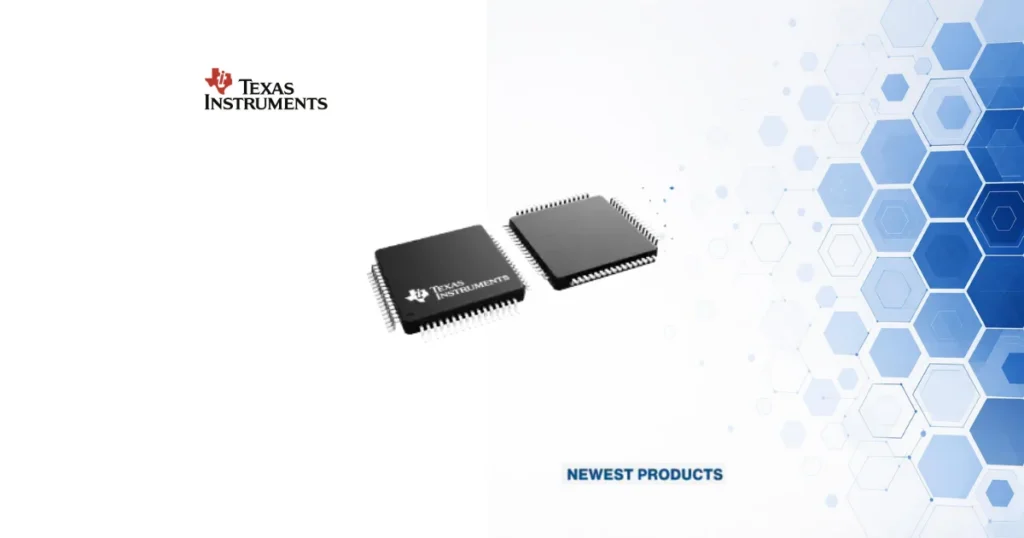
Mouser Electronics, a global authorized distributor of semiconductors and electronic components, has announced its immediate stocking of the groundbreaking MSPM0G5187 mixed-signal microcontrollers (MCUs) from Texas Instruments (TI). This strategic addition to Mouser’s extensive product portfolio marks a significant advancement in embedded processing, bringing sophisticated edge artificial intelligence (AI) capabilities to a wide array of applications. Built upon the robust and power-efficient 32-bit Arm Cortex-M0+ core platform, these devices represent a convergence of ultra-low-power system architecture with an integrated neural processing unit (NPU) accelerator, specifically designed to tackle the demands of modern edge AI.
The introduction of the MSPM0G5187 series is poised to redefine performance benchmarks for sensing, processing, and control applications that require substantial processing power within a compact and energy-efficient footprint. With memory configurations supporting up to 128KB of flash memory, these MCUs are offered in various small and high-pin-count packages, providing design flexibility for engineers. The target applications span a broad spectrum of industries, including smart home appliances, advanced medical devices, sophisticated building automation systems, next-generation mobile devices, and innovative wearables, all of which increasingly demand on-device intelligence and real-time responsiveness.
Integrated Edge AI Acceleration: A Paradigm Shift for Embedded Systems
One of the most compelling features of the MSPM0G5187 MCUs is their integrated edge AI NPU accelerator. This dedicated hardware block is engineered to facilitate local sensing, processing, and control applications directly at the edge, leveraging the power of machine learning within the established and highly scalable MSPM0 platform. Unlike traditional MCUs that rely solely on the main CPU for AI inference, an integrated NPU offloads these computationally intensive tasks, leading to dramatic improvements in processing speed, power efficiency, and overall system performance. For instance, tasks such as anomaly detection in industrial sensors, keyword spotting for voice interfaces, or gesture recognition in wearables can now be executed with unprecedented efficiency, minimizing latency and reducing the need for constant cloud connectivity. This not only enhances user experience but also addresses critical concerns regarding data privacy and security by keeping sensitive data processing localized.
The MSPM0G5187 devices are equipped with up to 128KB of embedded flash program memory, bolstered by built-in error correction code (ECC). This ECC capability is vital for maintaining data integrity and system reliability, particularly in critical applications where data corruption could lead to severe consequences. Furthermore, the MCUs feature up to 32KB of SRAM, also fortified with ECC and parity protection, ensuring robust performance for real-time data handling and AI model execution. To support the evolving landscape of connected devices, the flash memory is intelligently organized into two main banks, complete with address-swap support. This architecture is crucial for enabling seamless field firmware updates (FFU) or over-the-air (OTA) updates, allowing manufacturers to deploy bug fixes, security patches, and new features throughout a device’s lifecycle without requiring physical access, a significant advantage in large-scale IoT deployments.
Advanced Connectivity for a Connected World
Connectivity is a cornerstone of modern embedded systems, and the MSPM0G5187 MCUs deliver robust options. They feature a full-speed USB 2.0 interface, meticulously integrated with an onboard physical layer (PHY), a dedicated clock source, and termination resistors. This comprehensive integration simplifies board design and reduces external component count, leading to more compact and cost-effective solutions. The USB interface supports both compliant host-mode operation, allowing the MCU to manage peripherals, and crystal-less device-mode operation, which further streamlines design by eliminating the need for an external crystal oscillator for USB functionality. This flexibility makes the MCUs ideal for a range of applications, from data logging to human-interface devices.
Beyond USB, the MCUs incorporate four configurable serial interface modules, collectively known as UNICOMM. These versatile modules can be configured to support various communication protocols such as SPI (Serial Peripheral Interface), I2C (Inter-Integrated Circuit), and UART (Universal Asynchronous Receiver-Transmitter). This multi-protocol support enables seamless interaction with a diverse ecosystem of sensors, actuators, and other peripheral devices, offering unparalleled flexibility in system design. Additionally, a dedicated digital audio interface is included, catering specifically to audio applications. This feature is particularly relevant for devices incorporating voice control, audio playback, or sound analysis, further expanding the MCU’s applicability in smart home, medical, and mobile segments.
Precision Analog and Robust Security Features
For mixed-signal applications, which are ubiquitous in the real world, the MSPM0G5187 excels with its integrated high-performance analog capabilities. It boasts a 12-bit, 1.6Msps (Mega-samples per second) analog-to-digital converter (ADC) with an impressive capacity for up to 26 external channels. This high-resolution and high-speed ADC is critical for accurately converting real-world analog signals from various sensors (e.g., temperature, pressure, light, biomedical signals) into digital data that the MCU can process. Such precision and channel density are invaluable for applications requiring intricate sensor fusion and real-time data acquisition. Complementing the ADC is a high-speed comparator, further enhanced by a built-in 8-bit reference digital-to-analog converter (DAC). This combination provides precise voltage monitoring and threshold detection capabilities, essential for power management, motor control, and other critical feedback loops.
In an era where cyber threats are increasingly sophisticated, robust security features are non-negotiable for embedded devices. The MSPM0G5187 addresses this head-on with a comprehensive suite of hardware-accelerated security mechanisms. It includes an advanced AES (Advanced Encryption Standard) accelerator, supporting multiple modes of operation such as GCM/GMAC, CCM/CBC-MAC, CBC, and CTR. These modes provide versatile and efficient cryptographic functions for data encryption, authentication, and integrity checking, crucial for protecting sensitive information at rest and in transit. Beyond encryption, the MCUs incorporate secure key storage, capable of securely holding up to four AES keys. This hardware-backed key storage mechanism prevents unauthorized access to cryptographic keys, a common vulnerability in software-only implementations. Furthermore, flexible firewalls are integrated to protect application code and data from unauthorized access or tampering, creating secure execution environments and isolating critical IP. These security layers are paramount for medical devices, industrial controls, and other applications where system integrity and data confidentiality are paramount.

The MSPM0G5187 LaunchPad Development Kit: Accelerating Innovation
Recognizing the importance of a robust development ecosystem, Mouser is also stocking the Texas Instruments LP-MSPM0G5187 LaunchPad development kit. This kit serves as an indispensable tool for engineers and developers to evaluate the new MCUs and rapidly prototype and develop applications. The LaunchPad simplifies the initial development phase by providing all the necessary hardware components to begin working with the MSPM0G5187 platform immediately.
Key features of the LaunchPad include an onboard XDS110 debug probe, which provides advanced debugging capabilities without the need for external tools. This integrated debugger allows for seamless code development, testing, and troubleshooting. User-friendly buttons are included for input and interaction, facilitating rapid prototyping of user interfaces. The inclusion of USB Type-C connectors ensures modern connectivity and power delivery. This comprehensive development environment, coupled with TI’s extensive software development kits (SDKs), documentation, and community support, significantly lowers the barrier to entry for developers looking to leverage the power of the MSPM0G5187 MCUs. The availability of the LaunchPad alongside the MCUs themselves underscores Mouser’s commitment to supporting the entire product development lifecycle for its customers.
Chronology and Broader Market Context
The release of the MSPM0G5187 MCUs by Texas Instruments and their immediate stocking by Mouser Electronics is not an isolated event but rather a critical development within a broader, accelerating trend in the semiconductor industry. For years, the industry has been moving towards greater integration and intelligence at the edge. The concept of "edge computing," where data processing occurs closer to the source rather than relying solely on centralized cloud servers, has gained immense traction due to demands for lower latency, enhanced security, and reduced bandwidth consumption. Texas Instruments, with its decades-long legacy as a leader in analog and embedded processing, has been at the forefront of this evolution, consistently delivering innovative solutions that push the boundaries of performance and power efficiency.
Mouser Electronics, as a key distribution partner, plays a pivotal role in making such cutting-edge technologies accessible to a global audience of engineers, researchers, and product developers. Its efficient supply chain and commitment to stocking the latest products enable rapid adoption and accelerate time-to-market for innovations built on these new MCUs. This collaboration ensures that the MSPM0G5187, with its unique blend of ultra-low power, mixed-signal capabilities, and integrated NPU, can quickly find its way into a diverse range of next-generation intelligent devices.
Industry analysts have been closely tracking the rise of edge AI, noting its potential to transform various sectors. According to recent market reports, the global edge AI hardware market is projected to grow significantly, driven by the proliferation of IoT devices and the increasing demand for real-time, intelligent decision-making at the device level. The integration of dedicated NPUs in cost-effective, low-power MCUs like the MSPM0G5187 is seen as a key enabler for this growth, democratizing access to AI capabilities that were once confined to more powerful, energy-intensive processors.
While Texas Instruments has not released specific statements regarding the MSPM0G5187 launch, a spokesperson from the company would likely emphasize TI’s unwavering commitment to delivering highly integrated, energy-efficient, and secure embedded solutions that empower customers to innovate across diverse markets. The focus on an Arm Cortex-M0+ core with an NPU accelerator highlights TI’s strategy to provide scalable, intelligent processing at the lowest power envelope, catering directly to the needs of battery-powered and resource-constrained edge applications. Similarly, Mouser Electronics, known for its focus on new product introductions, would affirm its dedication to providing engineers with immediate access to the latest technologies, thereby fostering innovation and accelerating product development cycles globally.
Broader Impact and Implications for the Future of Embedded Systems
The availability of the Texas Instruments MSPM0G5187 mixed-signal MCUs with their integrated edge AI accelerator carries several profound implications for the embedded systems industry and beyond:
- Democratization of Edge AI: By embedding NPU capabilities into an accessible, low-power MCU platform, TI is making sophisticated AI inference more broadly available to embedded developers. This will enable a new wave of intelligent devices that can perform complex tasks like predictive maintenance, environmental monitoring, and personalized user interactions without relying heavily on cloud infrastructure.
- Enhanced Energy Efficiency and Sustainability: The ultra-low-power architecture, coupled with the NPU’s ability to execute AI tasks efficiently, translates directly into longer battery life for mobile and wearable devices and reduced energy consumption for always-on IoT nodes. This contributes to greater sustainability in an increasingly connected world.
- Improved Data Privacy and Security: Performing AI processing directly on the device reduces the need to transmit raw, potentially sensitive data to the cloud. This localized processing significantly enhances data privacy and reduces the attack surface for cyber threats, a critical advantage for applications in healthcare, industrial control, and smart homes.
- Reduced Latency and Real-time Responsiveness: Edge AI allows for instantaneous decision-making, as data does not need to travel to the cloud and back. This low latency is vital for applications requiring immediate responses, such as real-time control systems, autonomous robotics, and safety-critical medical devices.
- Simplified Development and Faster Time-to-Market: The high level of integration—combining CPU, NPU, memory, analog peripherals, and robust security—simplifies board design and reduces component count. Coupled with comprehensive development kits and software tools, this enables engineers to accelerate their design cycles and bring innovative products to market more quickly and efficiently.
- Expansion of Smart Device Capabilities: The MSPM0G5187 enables a new class of smart devices that are more autonomous, context-aware, and responsive. From appliances that learn user habits to medical devices that provide proactive health insights, the potential for innovation is vast.
- Competitive Landscape Shift: This product further intensifies competition in the embedded MCU market, pushing other manufacturers to integrate similar edge AI capabilities into their low-power offerings. This competition ultimately benefits end-users through more capable and efficient devices.
In conclusion, the Texas Instruments MSPM0G5187 mixed-signal MCUs, now readily available through Mouser Electronics, represent a pivotal moment in embedded technology. By seamlessly integrating a powerful Arm Cortex-M0+ core with an innovative edge AI NPU accelerator, advanced mixed-signal capabilities, and robust security features, these MCUs are poised to power the next generation of intelligent, connected, and highly efficient devices across a multitude of industries. The comprehensive development ecosystem, spearheaded by the LP-MSPM0G5187 LaunchPad kit, further ensures that developers can harness this powerful technology to bring their most ambitious ideas to fruition, solidifying the trend towards ubiquitous, intelligent edge computing.