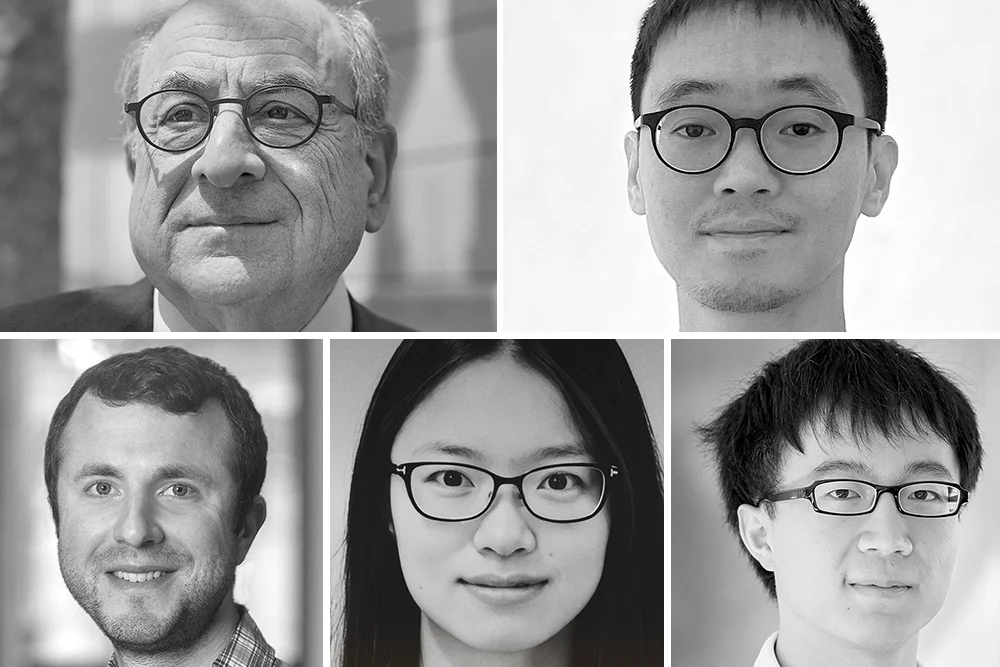
The global scientific community gathered in Los Angeles on April 18 to celebrate the 12th annual Breakthrough Prize ceremony, an event often described as the "Oscars of Science." Among the elite group of laureates honored for their transformative contributions to human knowledge were several distinguished affiliates and alumni of the Massachusetts Institute of Technology (MIT). These researchers, spanning the disciplines of life sciences, fundamental physics, and mathematics, were recognized for work that ranges from the development of the first CRISPR-based medical treatment to uncovering the foundational symmetries of the universe.
Founded in 2012 by a coalition of Silicon Valley entrepreneurs—including Sergey Brin, Priscilla Chan and Mark Zuckerberg, Julia and Yuri Milner, and Anne Wojcicki—the Breakthrough Prize has become the world’s most generous science award. Each primary Breakthrough Prize carries a $3 million purse, while the New Horizons Prizes in Physics and Mathematics, intended for early-career researchers, provide $100,000 awards. The 2024 gala, held at the Academy Museum of Motion Pictures, served as the backdrop for highlighting research that has moved from the theoretical margins into the center of clinical and physical reality.
Revolutionary Advancements in Gene Editing and Hematology
One of the most significant honors of the evening was the Breakthrough Prize in Life Sciences awarded to Stuart H. Orkin, an MIT Class of 1967 alumnus, and Swee Lay Thein of the National Institutes of Health. Their collaborative and individual research has fundamentally altered the trajectory of sickle cell disease and beta-thalassemia, two hereditary blood disorders that have plagued humanity for millennia.
For decades, sickle cell disease was considered a manageable but ultimately incurable condition, characterized by intense pain, organ damage, and shortened lifespans. Orkin, who earned his degree from the MIT Department of Biology before becoming a professor of pediatrics at Harvard Medical School and an investigator at Boston Children’s Hospital, spent years investigating the molecular mechanics of hemoglobin. His research led to the identification of the "master switch" that controls the transition from fetal hemoglobin to adult hemoglobin.
This switch, a transcription factor known as BCL11A, became the primary target for a new era of genomic medicine. Orkin’s work demonstrated that by "silencing" this switch, the body could be prompted to resume the production of fetal hemoglobin, which does not "sickle" like the defective adult version found in patients with the disease. This breakthrough provided the blueprint for the development of Casgevy (exagamglogene autotemcel), which in late 2023 became the first CRISPR-based gene-editing therapy to receive regulatory approval from the U.S. Food and Drug Administration (FDA).
The implications of Orkin’s work extend far beyond a single disease. By proving that CRISPR can be used safely and effectively to treat a genetic disorder in a clinical setting, his research has paved the way for a wave of gene-editing therapies targeting everything from rare metabolic disorders to common cardiovascular conditions.
Decoding the Genetic Roots of Neurodegeneration
The Life Sciences category also recognized Bryan Traynor, a former student in the Harvard-MIT Program in Health Sciences and Technology (HST). Traynor, currently a senior investigator at the National Institute on Aging, shared a Breakthrough Prize with Rosa Rademakers for their pivotal role in identifying the genetic architecture of neurodegenerative diseases.
Their research focused on amyotrophic lateral sclerosis (ALS) and frontotemporal dementia (FTD), two devastating conditions that were long thought to be distinct but are now understood to share a common genetic link. Traynor and Rademakers discovered that a hexanucleotide repeat expansion in the C9orf72 gene is the most common genetic cause of both disorders.
This discovery has provided a unified target for drug developers. Prior to this finding, the biological mechanisms driving ALS were largely a mystery, hampering the development of effective treatments. Today, the identification of the C9orf72 mutation allows for earlier diagnosis and has sparked numerous clinical trials aimed at "antisense" therapies designed to degrade the toxic gene products. The work represents a critical shift toward precision medicine in neurology, offering hope to thousands of families affected by these progressive illnesses.
Theoretical Physics: From Generalized Symmetries to the Big Bang
The physical sciences were equally well-represented by MIT affiliates, particularly in the "New Horizons" categories designed to recognize promising researchers who have already made a substantial impact on their fields.
Shu-Heng Shao, an assistant professor of physics at MIT and a researcher in the MIT Center for Theoretical Physics—part of the Leinweber Institute—was awarded a 2026 New Horizons in Physics Prize. Shao shared the honor with colleagues from the University of Chicago, UCLA, and New York University, including MIT alumnus Yifan Wang (PhD ’16). The group was cited for "discovering and developing the theory of generalized symmetries in quantum field theory."
In the realm of theoretical physics, "symmetries" are the foundational rules that dictate how particles and forces interact. While classical physics relies on standard symmetries, Shao and his collaborators have expanded this framework to include "generalized" or "non-invertible" symmetries. These higher-order mathematical structures allow physicists to describe complex states of matter and quantum phenomena that were previously incomprehensible under the standard model. This research is expected to have long-term impacts on our understanding of quantum gravity and the behavior of exotic materials used in quantum computing.
In a parallel achievement, J. Colin Hill (MIT Class of ’08) was also awarded a New Horizons in Physics Prize. Hill’s work focuses on the largest scales of the universe. Sharing the prize with five other researchers, Hill was recognized for his contributions to measuring the expansion and composition of the cosmos.
Hill’s specific expertise lies in the analysis of the cosmic microwave background (CMB)—the "afterglow" of the Big Bang. By developing sophisticated algorithms to filter and interpret data from telescopes like the Atacama Cosmology Telescope and the upcoming Vera C. Rubin Observatory, Hill has helped refine the "Standard Model of Cosmology." His work addresses the "Hubble Tension," a persistent discrepancy in science regarding how fast the universe is expanding, which may eventually require new physics to resolve.
Harmonic Analysis and the Language of Mathematics
The Breakthrough Prize Foundation also honored Hong Wang (PhD ’19), an MIT alumna who received the New Horizons in Mathematics Prize. Wang, currently an associate professor at New York University’s Courant Institute, was recognized for her work in harmonic analysis.
Harmonic analysis is a branch of mathematics that involves decomposing complex functions into simpler, fundamental waves (like Fourier series). While the field has applications in signal processing and quantum mechanics, it is also home to some of the most notoriously difficult conjectures in pure mathematics. Wang was cited for her progress on problems related to the restriction conjecture and the Kakeya conjecture, which deal with how different mathematical "shapes" or sets can overlap and interact in high-dimensional spaces. Her work provides new tools for mathematicians to explore the geometric properties of functions, bridging the gap between abstract analysis and spatial geometry.
Chronology of the Breakthrough Prize and Institutional Impact
The recognition of these MIT-affiliated scientists is part of a broader trend of institutional excellence. Since the Breakthrough Prize’s inception, MIT faculty and alumni have consistently appeared on the list of laureates, reflecting the Institute’s role as a primary engine for both fundamental research and applied technology.
- 2012: The first Breakthrough Prizes are awarded, primarily focusing on Fundamental Physics.
- 2013: The prizes expand to include Life Sciences and Mathematics.
- 2023 (December): The FDA approves Casgevy, the therapy directly resulting from Stuart Orkin’s research, marking a milestone for the Breakthrough Prize’s real-world impact.
- 2024 (April 18): The 12th ceremony takes place in Los Angeles, distributing over $15 million in total prize money across all categories.
The Breakthrough Prize is unique because of its high-profile nature. Unlike the Nobel Prizes, which are often awarded decades after a discovery, the Breakthrough Prize frequently recognizes ongoing research and relatively recent breakthroughs, providing scientists with significant financial resources during the peak of their careers.
Analysis of Implications: The Future of Collaborative Science
The success of these MIT affiliates underscores several emerging themes in modern science. First is the increasing necessity of interdisciplinary collaboration. Stuart Orkin’s work bridged biology, pediatrics, and genomic engineering. The physics prizes were awarded to large teams, reflecting the reality that modern cosmic and quantum research requires the synthesis of massive datasets and complex theoretical frameworks that no single individual could manage alone.
Second, the prizes highlight the growing influence of private philanthropy in scientific funding. As federal grants for basic research face budget constraints, the Breakthrough Prize Foundation provides a critical alternative, specifically rewarding "high-risk, high-reward" research that might be considered too speculative for traditional government funding.
Finally, the 2024 awards emphasize the transition of CRISPR and gene-editing from a laboratory curiosity to a clinical standard. The recognition of Orkin and Traynor suggests that the next decade of life sciences will be dominated by the ability to not just read the human genome, but to rewrite it to eliminate disease.
As the laureates return to their respective laboratories and classrooms at MIT and beyond, the impact of their recognition continues to resonate. The funds and prestige associated with the Breakthrough Prize are expected to accelerate their research programs, potentially leading to the next generation of scientific "breakthroughs" that will be celebrated in the years to come. For MIT, the success of its affiliates serves as a testament to the Institute’s enduring mission to advance knowledge and serve the world through science and technology.