The integration of 3D printing technology is ushering in a transformative era for human factors and ergonomics, impacting a diverse range of sectors from manufacturing and aerospace to healthcare and consumer products. This innovative additive manufacturing approach offers unparalleled customization, rapid prototyping, and on-demand production capabilities, addressing critical needs in low-volume applications, complex refits, and personalized device development. As industries face evolving challenges such as labor scarcity, an aging workforce, and increasing demands for efficiency and safety, 3D printing emerges as a pivotal solution for optimizing human-machine interaction and enhancing overall well-being.
At its core, the field of human factors, often conflated with ergonomics, is the comprehensive study of how individuals interact with their work environment and the tools they use. While ergonomics commonly refers to the design of objects for comfort and efficiency, such as a well-fitting mouse, human factors encompasses a broader spectrum. It delves into psychological elements like stress, deadline pressures, and even emotional responses, alongside physical considerations. This holistic approach aims to create better synergy between people and their tasks, whether it involves improving product safety testing, designing intuitive website interfaces, enhancing training programs, fostering clearer communication, or empowering employees to report potential issues before they escalate into critical failures. The increasing complexity of modern work environments and the growing recognition of the impact of human well-being on productivity and safety are driving the demand for solutions that 3D printing is uniquely positioned to provide.
The Growing Role of 3D Printing in Industrial Applications
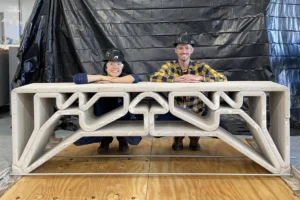
Within the industrial landscape, 3D printing has already established a significant presence in critical areas such as poka-yoke systems—error-proofing mechanisms designed to prevent mistakes in manufacturing processes—and the creation of manufacturing aids like jigs and fixtures. These custom-designed tools, often produced in low volumes, offer substantial cost savings and a marked reduction in errors compared to traditional manufacturing methods. For instance, the automotive sector has witnessed considerable benefits; companies like Audi have reported an 80% reduction in fixture costs by embracing 3D printing and associated automation software. This ability to produce highly specific, often complex, parts on demand is invaluable for industries where precision and efficiency are paramount.
Beyond manufacturing, the aerospace and transportation sectors are increasingly leveraging 3D printing for refitting and upgrading existing infrastructure. This includes applications within military jets and passenger trains, where specialized parts are required for specific upgrades or repairs. These are typically low-volume, high-value projects that benefit immensely from the ability to produce parts from specific materials precisely when and where they are needed. Furthermore, a decided ergonomic element is often incorporated into these components, enhancing operator comfort and reducing fatigue during critical tasks.

Ergonomic Innovations and Personalized Design
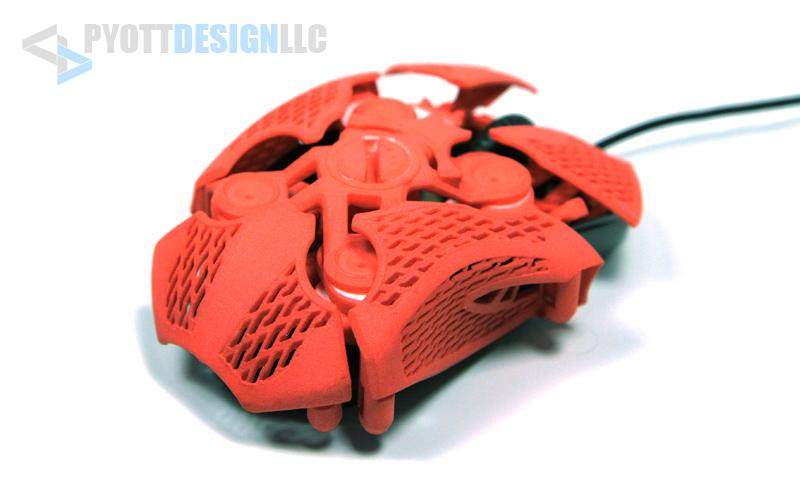
The realm of ergonomics is also being fundamentally reshaped by additive manufacturing. The development of universally more comfortable and efficient peripherals, such as general-purpose ergonomic mice, is one area of growth. However, the true power of 3D printing lies in its capacity for hyper-personalization. The ability to create individual-tailored mice, perfectly conforming to a user’s unique hand shape and grip style, represents a significant leap forward. This bespoke approach extends beyond computer accessories to a wide array of tools and devices, promising to enhance comfort, prevent repetitive strain injuries, and boost productivity across various professions. The image of a 3D-printed, fully adjustable mouse, designed by Charlie Pyott Design LLC, exemplifies this trend, showcasing the potential for highly customized user interfaces.
The Human Factors Imperative in a Changing World
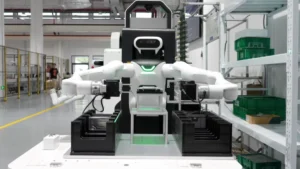
The growing importance of human factors is intrinsically linked to several demographic and economic shifts occurring globally. In many developed nations, labor shortages are becoming increasingly pronounced. This scarcity is particularly acute in professions like construction, where the average age of the workforce is steadily rising, with many skilled tradespeople approaching retirement. Simultaneously, the complexity of work is intensifying. In an era where fewer individuals may be available to operate complex machinery or cover essential shifts, the reliability and efficiency of every worker become paramount.
The healthcare sector, already a critical area for human factors considerations, is facing its own set of escalating challenges. While emergency rooms have long been optimized for rapid response, the overall cost of medical procedures continues to climb. Enhancing hospital workflows is no longer just about efficiency; it’s about critical necessity. With aging populations and an increasing prevalence of chronic conditions like obesity and dementia, patient groups are becoming more complex to manage. This is compounded by a shrinking pool of caregivers who may need to provide more intensive support, often to individuals experiencing mobility issues or cognitive impairments. Designing user experiences (UX) for medical devices and hospital workflows that accommodate conditions such as Parkinson’s, dementia, and visual impairments demands heightened attention and innovative solutions, areas where 3D printing can offer significant advantages.
Prototyping: The Engine of Innovation
The multifaceted challenges presented by diverse environments and user needs underscore the pivotal role of prototyping in the human factors landscape. Many of the specialized devices and solutions required are engineered for very specific user groups or niche applications. In such cases, even minor design modifications can yield substantial improvements in functionality and user experience. This necessitates a higher volume of prototypes, including form-and-fit models, and more iterative design cycles to refine these bespoke solutions.
Desktop 3D printers, positioned close to the end-users, are becoming instrumental in this process. They enable the rapid development of inexpensive prototypes, fostering a direct and swift dialogue between designers and users. This collaborative approach accelerates the innovation cycle and reduces development costs significantly. Furthermore, 3D printing’s inherent flexibility allows for the creation of devices that can be precisely adapted to specific workstations, machines, or workplace layouts. For example, a milling station in one factory might have a different setup than in another. Additive manufacturing allows for quick adjustments to accommodate these variations. The same principle applies to adapting designs for similar environments or uses. Imagine adding a textured grip to a stairwell handrail to clearly delineate walking directions; this adaptable add-on can be modified for various settings, such as industrial environments where workers wear gloves, or even for marine applications where handrails might be wet. This capacity for rapid modification and adaptation, facilitated by readily available prototypes, allows for the development of highly specific and effective individual inventions.
Device Development: Tailored Solutions for Enhanced Functionality
The device sphere represents perhaps the most logical and impactful application of 3D printing in enhancing human factors and ergonomics. The ability to create adapted devices empowers groups of individuals with greater control over their immediate environment and interaction with technology. By tailoring devices to a specific user’s physical attributes, the surrounding environment, hand size, and situational context, 3D printing unlocks unprecedented levels of customization.
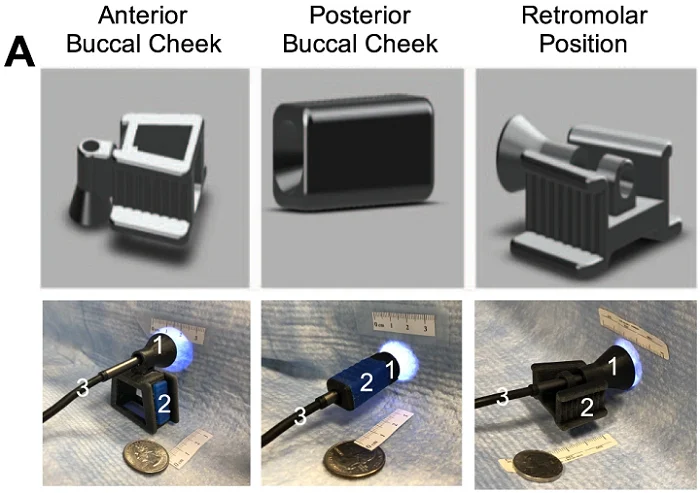
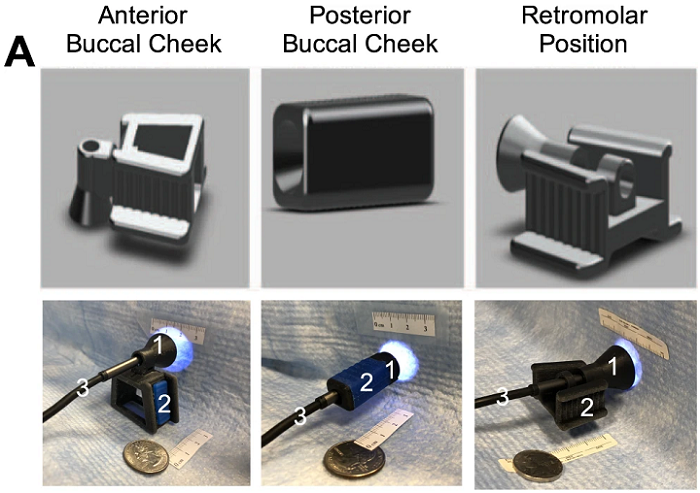
Similar to the advantages seen in prototyping, this technology enables the creation of end-use devices that incorporate novel textures, optimized sizing, and specific modifications for unique scenarios. This process can be significantly streamlined by leveraging scanning technologies, such as CT or other scan-to-workflow capabilities, to produce inexpensive, highly customized items rapidly. The dental industry offers a compelling precedent, where custom prosthetics, braces, and other specialized oral appliances are already being manufactured using similar scan-to-device workflows. This model of personalized device creation is poised to expand across a multitude of other applications.
Room Modifications: Adapting Workspaces for Optimal Performance
Beyond individual devices, 3D printing offers significant advantages in adapting entire physical spaces to better suit human needs and workflows. This can range from modifying machines and workstations to enhancing hospital rooms and educational facilities. A prime example is the creation of Braille signage for hospital waiting rooms. If these signs prove ineffective or require updates due to changes in hospital layout or services, new versions can be quickly designed and printed. Similarly, during periods of construction, temporary signage can be rapidly produced to reflect new traffic flow or safety protocols.
This dynamic adaptability represents a substantial improvement over traditional methods, which are often slow and costly to modify. While much of human factors work traditionally focuses on assessing existing conditions and proposing solutions, additive manufacturing allows for a more fluid and responsive implementation process. The ability to collaborate with in-house 3D printing teams within institutions, such as hospitals, enables continuous improvement and ongoing refinement of solutions. This makes human factors initiatives more localized, agile, and responsive. The cost-effectiveness and responsiveness are further enhanced by the capacity to implement different operational states based on fluctuating demands. For instance, a hospital could adjust its workflow or patient routing based on predictable spikes in trauma cases on Mondays or increased demand for CT scans during specific times when staff are engaged in other critical tasks like vaccinations.
Exigent Upfitting: Rapid Solutions for Critical Situations
One of the most compelling, albeit often less publicized, applications of 3D printing lies in "exigent upfitting"—the rapid development of solutions for urgent, high-risk situations. This scenario mirrors bridge manufacturing in its emphasis on speed and time-to-market, particularly when critical errors can have severe consequences. The inherent reluctance of organizations to publicize such instances, often viewing them as embarrassing failures, means this work is not always widely documented.
A seminal historical example that profoundly influenced the field of human factors research involved the B-17 bombers of World War II. A significant number of these aircraft were crashing during training exercises, leading to tragic losses of aircraft and crews. Psychologist Alphonse Chapanis, investigating these incidents, moved beyond the simple label of "pilot error." He observed that the cockpit contained numerous identical levers, including those for landing gear and flap controls, which were also positioned in close proximity. Chapanis hypothesized that in high-pressure, exigent situations, pilots might inadvertently grasp the wrong lever, leading to catastrophic outcomes.
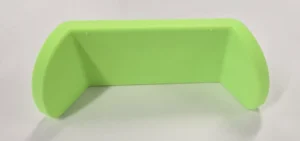
His innovative solution was a testament to early human factors design: he affixed a tire to the landing gear lever and a flap-like component to the flap lever. These tactile cues allowed pilots to distinguish between the controls by touch alone, even under duress. Chapanis’s application of shape coding—using distinct shapes to identify controls—demonstrates the power of simple, yet effective, design interventions. 3D printing is exceptionally well-suited to replicate and advance this principle, enabling the rapid design and deployment of unique solutions for a wide array of critical, time-sensitive scenarios across various industries. This capability is invaluable for enhancing safety and operational integrity when the stakes are highest.
The broader implications of 3D printing’s integration into human factors and ergonomics are profound. As labor markets tighten and the demand for specialized skills increases, optimizing the human element becomes paramount. By enabling the creation of perfectly tailored tools, adaptive workspaces, and intuitive interfaces, 3D printing not only enhances individual comfort and safety but also contributes to greater operational efficiency, reduced errors, and improved overall productivity. The technology’s agility in prototyping and on-demand production ensures that solutions can be developed and implemented rapidly, addressing the evolving needs of a dynamic global landscape. From the factory floor to the operating room, the additive manufacturing revolution is fundamentally reshaping how humans interact with their world, promising a future where work is safer, more efficient, and more human-centric.