ZURICH, Switzerland – A significant stride towards advanced manufacturing automation is underway as Hexagon Robotics and Schaeffler have commenced an intensive training program for Hexagon’s AEON humanoid robot. This collaboration aims to integrate AEON robots into Schaeffler’s global manufacturing operations, beginning with a focused training regimen at the newly established Humanoid Gym in Germany. The initiative is a critical preparatory phase for Schaeffler’s ambitious plan to deploy at least 1,000 AEON humanoids across its factories in the coming years, marking a substantial investment in the future of industrial automation.
The Humanoid Gym: A Crucible for Industrial Robotics
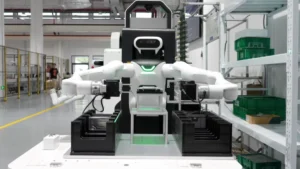
The AEON humanoid robot has officially entered Schaeffler’s Humanoid Gym, a state-of-the-art industrial environment specifically designed for the rigorous training, testing, and validation of humanoid robots before their full-scale introduction into production lines. This dedicated facility underscores Schaeffler’s commitment to a systematic and meticulous approach to integrating advanced robotics, ensuring that the AEON units meet the stringent performance and reliability standards required in high-stakes manufacturing environments.
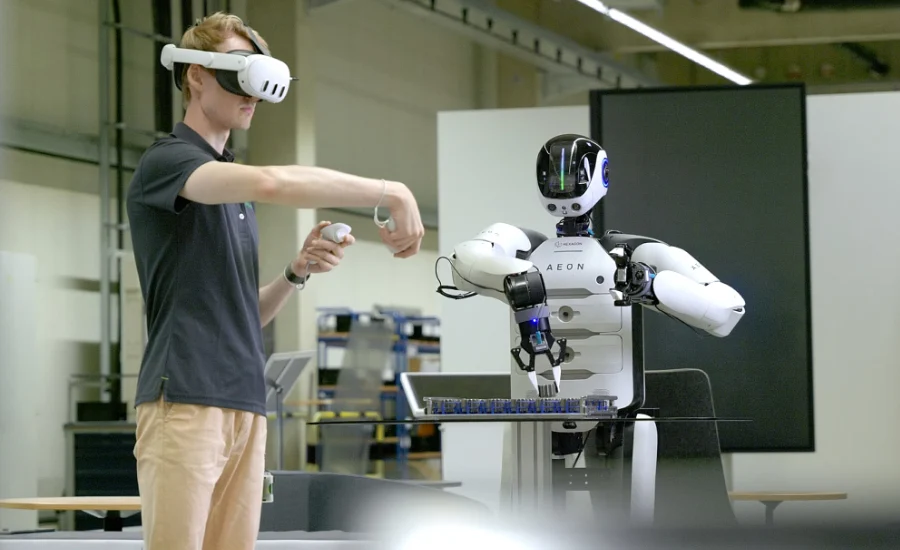
The training methodology adopted by the companies follows a "Train-Validate-Deploy" model, engineered to develop new robotic applications with minimal disruption to existing production workflows. Within the Humanoid Gym, AEON robots will acquire complex manufacturing tasks through a combination of imitation learning and repeated execution. This process involves the robots observing human operators performing specific tasks, then mimicking those actions, and subsequently refining their policies through iterative practice. The initial focus is on representative applications drawn directly from Schaeffler’s operational factories, ensuring immediate relevance and applicability. Once refined, these robotic policies will undergo thorough validation processes to guarantee their effectiveness and safety before being deployed onto the actual factory floor.
Arnaud Robert, President of Hexagon Robotics, emphasized the strategic importance of this validation phase. "The real value creation comes when humanoids perform multiple tasks reliably and at a high-performance standard in production," Robert stated. "Schaeffler’s Humanoid Gym gives us an environment where AEON can meet the performance and reliability standards across real use cases and therefore allow us to scale our manufacturing deployments." This highlights Hexagon’s focus on demonstrating tangible, repeatable value in industrial settings, moving beyond proof-of-concept to large-scale operational integration.
Strategic Vision: Deploying 1,000 Humanoids
Schaeffler’s long-term vision involves a significant paradigm shift in its manufacturing strategy, with the goal of deploying a minimum of 1,000 AEON humanoid robots across its extensive global network of production facilities. This ambitious target reflects a broader industry trend towards embracing advanced automation to enhance productivity, improve operational flexibility, and address persistent labor shortages in skilled manufacturing roles. The initial training program at the Humanoid Gym is expected to lay the groundwork for AEON deployments across multiple manufacturing applications within Schaeffler over the next six months, setting a rapid pace for integration.
Dr. Jochen Schröder, Chief Operating Officer at Schaeffler, articulated the company’s forward-looking perspective. "With AEON being trained in our Humanoid Gym, we are taking the next step in turning humanoid robotics into an industrial reality," Dr. Schröder remarked. This statement underscores Schaeffler’s proactive stance in adopting cutting-edge technologies to maintain its competitive edge in a rapidly evolving global industrial landscape. The training program also serves a crucial secondary purpose: providing Schaeffler personnel with hands-on experience in operating, training, and integrating these advanced humanoids. This internal capacity building is vital for a smooth transition and broader adoption of the technology across factory floors.
Background and Context: The Rise of Humanoid Robotics in Industry
The collaboration between Hexagon Robotics and Schaeffler is set against a backdrop of increasing interest and investment in humanoid robotics worldwide. Historically, industrial automation has been dominated by fixed-base robotic arms and, more recently, mobile autonomous robots. Humanoid robots, with their anthropomorphic form and ability to navigate and interact in environments designed for humans, represent the next frontier. Their potential to perform a diverse range of tasks in existing infrastructure, without requiring extensive retooling of factory layouts, makes them particularly attractive for manufacturers.
Hexagon Robotics, a division of the global technology group Hexagon, leverages its parent company’s extensive expertise in sensor, software, and autonomous solutions. Hexagon’s long-standing presence in metrology and industrial measurement systems provides a strong foundation for developing precise and reliable robotic systems like AEON. The AEON robot itself is designed to offer high dexterity, adaptability, and the capacity for advanced learning, making it suitable for intricate manufacturing processes that traditionally required human intervention.
Schaeffler, a global automotive and industrial supplier, has been a key player in the manufacturing sector for decades, known for its precision components and systems for engines, transmissions, and chassis, as well as rolling and plain bearing solutions for industrial applications. As a company deeply embedded in advanced engineering, Schaeffler has been at the forefront of adopting Industry 4.0 principles, integrating digital technologies, artificial intelligence, and advanced automation into its production processes. The decision to invest in humanoid robots aligns perfectly with its strategic objectives to enhance efficiency, reduce production costs, and build more resilient and flexible supply chains.

Market Trends and Supporting Data
The global market for industrial robotics has been on a steady upward trajectory, driven by factors such as rising labor costs, a growing demand for automation, and technological advancements. According to various industry reports, the global industrial robotics market is projected to reach significant valuations, with some estimates placing it in the range of tens of billions of dollars by the end of the decade. Within this broader market, the segment for humanoid robots, while nascent, is poised for explosive growth. Analysts predict that as these robots become more capable, cost-effective, and easier to integrate, their market share will expand considerably, potentially reaching several billion dollars in market value within the next five to seven years.
Key drivers for this growth include:
- Labor Shortages: Many industrialized nations face an aging workforce and a dwindling pool of skilled labor in manufacturing, making automation an imperative. Humanoid robots can fill these gaps by performing repetitive or hazardous tasks.
- Increased Productivity and Efficiency: Robots can operate continuously with consistent precision, leading to higher output and reduced error rates compared to human workers.
- Flexibility and Adaptability: Humanoids, by design, can operate in human-centric environments and handle a variety of tasks, offering greater flexibility to manufacturers who need to quickly reconfigure production lines for new products or demand fluctuations.
- Safety Improvements: Deploying robots for dangerous or ergonomically challenging tasks can significantly improve workplace safety for human employees.
Implications and Broader Impact
The successful deployment of AEON robots at Schaeffler’s facilities could have far-reaching implications for both companies and the wider manufacturing industry.
For Schaeffler: The integration of 1,000 AEON humanoids represents a monumental leap in automation. It promises significant improvements in operational efficiency, a reduction in manufacturing lead times, and enhanced quality control. By automating more tasks, Schaeffler can reallocate its human workforce to higher-value, more complex, or creative roles, fostering innovation and upskilling opportunities. This strategic move could solidify Schaeffler’s position as a leader in smart manufacturing and provide a considerable competitive advantage in the global market.
For Hexagon Robotics: Securing a major customer like Schaeffler and successfully deploying AEON on such a large scale provides invaluable validation for Hexagon’s technology. It establishes AEON as a viable, robust solution for demanding industrial applications, which could accelerate adoption by other manufacturers. This collaboration serves as a powerful case study, demonstrating the commercial readiness and scalability of their humanoid robotics platform.
For the Manufacturing Industry: This initiative is a strong signal that humanoid robots are transitioning from research labs to industrial reality. It will likely inspire other major manufacturers to explore similar investments, accelerating the development and deployment of humanoid robotics across various sectors, including automotive, electronics, logistics, and more. The "Train-Validate-Deploy" model could become a blueprint for future robot integration programs, emphasizing systematic testing and iterative refinement.
Workforce Transformation: While the prospect of robots in factories often raises concerns about job displacement, the reality is likely more nuanced. The deployment of humanoids will undoubtedly transform job roles. Rather than outright replacement, it is expected to lead to a shift towards roles focused on robot supervision, maintenance, programming, and complex problem-solving. This necessitates workforce retraining and upskilling initiatives, which Schaeffler’s internal training program for its personnel already addresses. The goal is often to augment human capabilities, allowing workers to focus on tasks requiring unique human cognitive skills while robots handle the repetitive, strenuous, or hazardous work.
Challenges and Future Outlook
Despite the immense potential, the journey to full-scale humanoid integration is not without its challenges. These include:
- Complexity of Integration: Ensuring seamless interaction between humanoids, existing machinery, and IT systems requires sophisticated engineering and software development.
- Safety Protocols: Developing robust safety standards for human-robot collaboration in dynamic factory environments is paramount.
- Public Perception and Acceptance: Overcoming initial skepticism or concerns from the workforce and the public about advanced automation is crucial for smooth adoption.
- Cost-Effectiveness at Scale: While initial investments are high, demonstrating a clear return on investment through increased productivity and cost savings over time is essential for long-term viability.
The training at Schaeffler’s Humanoid Gym is a crucial step in addressing these challenges, providing real-world data and operational experience. As AEON robots begin to perform tasks across Schaeffler’s facilities in the coming months, the manufacturing world will be closely watching. This collaboration between Hexagon Robotics and Schaeffler represents a significant milestone in the evolution of industrial automation, promising a future where humanoid robots play an integral role in shaping the factories of tomorrow.