A team of theoretical physicists at Monash University has unveiled a groundbreaking prediction regarding a previously unknown state of quantum matter, potentially reshaping the scientific community’s understanding of how ultracold particles interact at the subatomic level. Led by PhD candidate Sam Foster, the research team has utilized complex mathematical modeling to demonstrate that two fundamentally distinct classes of particles—bosons and fermions—can coalesce into stable, self-bound "quantum droplets" under conditions of strong interaction. This discovery, published in the prestigious journal Physical Review Letters, challenges decades of established theoretical assumptions and provides a new roadmap for the development of next-generation quantum technologies, ranging from high-precision sensors to advanced quantum computing architectures.
The Convergence of Bosons and Fermions
To understand the magnitude of this discovery, one must first consider the traditional dichotomy of quantum particles. In the standard model of physics, all particles are categorized as either bosons or fermions based on their spin and statistical behavior. Bosons, such as photons or certain atoms like Rubidium-87, are known for their "sociable" nature; they can occupy the same quantum state simultaneously, a characteristic that allows for the creation of Bose-Einstein Condensates (BECs), where thousands of atoms act as a single quantum entity.
In contrast, fermions—including electrons, protons, and atoms like Potassium-40—are governed by the Pauli Exclusion Principle. This fundamental law of nature dictates that no two fermions can occupy the same quantum state at the same time. This "antisocial" behavior is what prevents solid matter from collapsing and gives rise to the structure of the periodic table. For decades, the consensus among physicists was that mixing these two disparate groups in a strongly interacting environment would lead to instability, causing the system to either collapse or expand into a dilute gas.
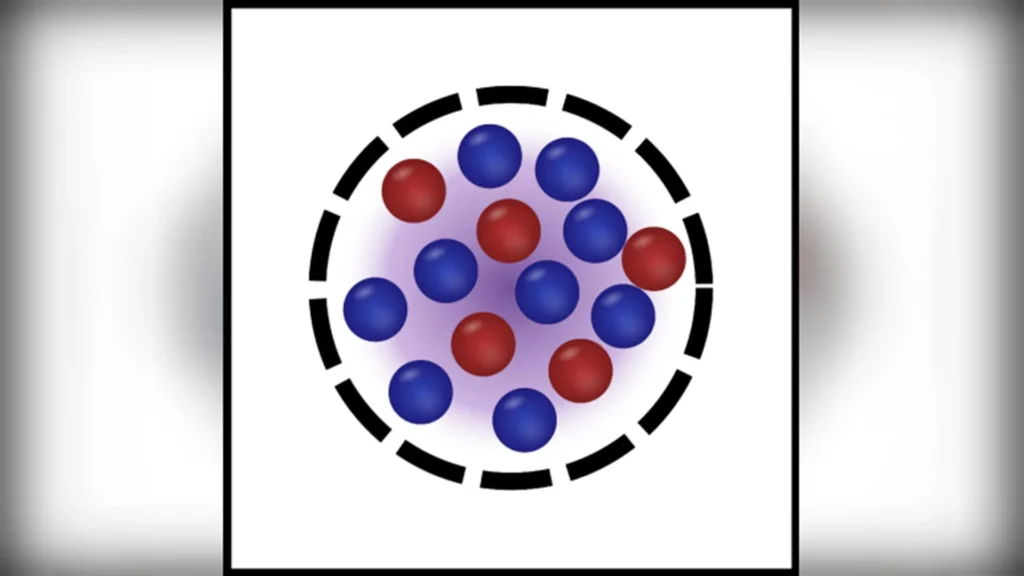
However, the Monash University study, titled "Quantum droplets in a resonant Bose-Fermi mixture," suggests otherwise. The research indicates that when the attractive forces between bosons and fermions are tuned to a specific "resonant" strength, the inherent repulsion of the fermions (caused by quantum pressure) and the attractive interactions can reach a perfect equilibrium. The result is a self-sustaining droplet that does not require an external container or trap to maintain its shape, effectively acting as a liquid drop in a vacuum.
Overcoming Theoretical Hurdles: The Challenge of Strong Interactions
The primary difficulty in predicting these droplets lay in the complexity of "strong interactions." For years, physicists have been able to model quantum systems where particles interact weakly. In such "weakly interacting" regimes, the behavior of the system is relatively predictable, and the mathematical equations are manageable. However, as the interaction strength increases—a state referred to as the "unitary limit" or "resonant" regime—traditional theoretical frameworks often break down.
"Previous theories could only describe these systems when the particles interacted relatively weakly," explained lead author Sam Foster. "Our new approach lets us explore what happens when those interactions become much stronger, which is where the most interesting physics emerges."
The research team, which included Associate Professor Jesper Levinsen and Professor Meera Parish from Monash’s School of Physics and Astronomy, along with collaborators at Heidelberg University, utilized advanced quantum field theory techniques to account for these strong interactions. They focused on the "quantum fluctuations"—tiny, fleeting changes in energy in a vacuum—that provide the necessary "extra" pressure to stabilize the droplet against total collapse. This phenomenon is known as the Lee-Huang-Yang (LHY) correction, a concept originally developed in the 1950s but only recently applied to the study of self-bound quantum liquids.
A Chronology of Quantum Droplet Research
The journey toward the discovery of Bose-Fermi droplets is part of a broader evolution in the study of quantum fluids that has spanned nearly a century.
- 1924-1925: Satyendra Nath Bose and Albert Einstein predict the existence of the Bose-Einstein Condensate, a state of matter where atoms are cooled to near absolute zero and merge into a single quantum wave.
- 1995: Researchers at JILA and MIT achieve the first experimental BEC, an achievement that earned the Nobel Prize in Physics in 2001. This opened the door to studying ultracold atomic gases.
- 2015: Theoretical physicist Dmitry Petrov predicts that droplets made entirely of bosons could exist due to quantum fluctuations. This was a radical departure from the idea that quantum gases always expand to fill their container.
- 2016-2018: Experimental teams in Spain and Germany confirm Petrov’s prediction, observing bosonic quantum droplets in the lab using isotopes of dysprosium and potassium.
- 2024: The Monash University team extends this concept to Bose-Fermi mixtures. Their work provides the first theoretical evidence that these two different species of particles can form a stable, mixed-species droplet, even under the stress of strong resonant interactions.
Technical Analysis: The Mechanics of Stability
The stability of the predicted Bose-Fermi droplets relies on a delicate "tug-of-war" between three distinct physical forces.
- Inter-species Attraction: The primary force pulling the boson and fermion atoms together. By using a technique called Feshbach resonance, experimentalists can use magnetic fields to tune this attraction to be exceptionally strong.
- Fermionic Pressure: Because fermions cannot overlap, they exert a "Fermi pressure" that pushes outward. This is a purely quantum mechanical effect related to the kinetic energy of the particles.
- Quantum Fluctuations: As the droplet attempts to collapse under the inter-species attraction, the zero-point energy of the vacuum (quantum fluctuations) creates a repulsive correction.
The Monash team’s data shows that at a specific density and interaction strength, these three forces cancel each other out. Unlike a cloud of gas that would dissipate if the surrounding magnetic traps were turned off, these droplets are "self-bound." If confirmed in a laboratory setting, they would represent a new phase of matter that sits between a dilute gas and a dense liquid.
Furthermore, the team’s calculations identified signs of a "liquid-gas phase transition." This suggests that by slightly altering the temperature or the ratio of bosons to fermions, researchers can cause the droplet to "evaporate" into a gas or "condense" into a liquid, providing a unique laboratory for studying the fundamental thermodynamics of quantum matter.
Potential for Experimental Verification
One of the most significant aspects of the Monash study is that it is not merely a mathematical curiosity; it is a testable prediction. The researchers have indicated that the conditions required to create these droplets are within the reach of current ultracold atom laboratories.
Facilities around the world already use laser cooling and evaporative cooling to reach temperatures just billionths of a degree above absolute zero. These labs frequently work with mixtures of Bosonic atoms (like Rubidium) and Fermionic atoms (like Potassium or Lithium). According to the study, by applying specific magnetic field strengths to reach the resonant interaction point, experimentalists should be able to observe the formation of these droplets.
"The results create opportunities to investigate entirely new quantum states," said Foster. "We’ve shown that these two very different types of particles can balance each other perfectly to create a stable droplet that effectively holds itself together."
Broader Implications for Quantum Technology and Beyond
While the research is categorized as fundamental physics, the implications for applied science and future technology are substantial. The ability to create stable, self-bound quantum matter provides a new platform for "quantum simulation." Scientists can use these droplets to simulate the behavior of other complex systems that are difficult to study directly, such as the dense matter found inside neutron stars or the behavior of electrons in high-temperature superconductors.
In the realm of quantum computing and sensing, the stability of these droplets is highly attractive. Quantum systems are notoriously fragile; even the slightest environmental interference can cause "decoherence," where the quantum state is lost. Self-bound droplets, which maintain their integrity through their own internal forces, could potentially serve as more robust "qubits" or as the basis for ultra-precise sensors. Because these droplets are sensitive to external fields, they could be used to measure gravity or magnetic fields with unprecedented accuracy, aiding in everything from mineral exploration to fundamental tests of General Relativity.
Scientific Community Reaction and Future Outlook
The publication in Physical Review Letters has already sparked interest within the global physics community. While experimental groups have yet to report the creation of a Bose-Fermi droplet, the Monash paper provides the necessary parameters and "signatures" for what to look for.
Independent analysts suggest that the success of this model lies in its ability to bridge the gap between two-body interactions and many-body physics. By solving the problem of how a few particles interact and scaling that up to a "many-body" droplet, the Monash team has provided a sophisticated tool for future theoretical work.
"Understanding how matter organizes itself under extreme quantum conditions gives us new tools for designing and controlling quantum systems," Foster noted. "While this is fundamental research, discoveries like this often become the foundation for tomorrow’s quantum technologies."
As the scientific community moves forward, the focus will shift from the chalkboard to the laboratory. The next few years are expected to see a race among ultracold atom labs to be the first to "see" a Bose-Fermi droplet. If successful, this discovery will not only validate the work of Foster, Levinsen, and Parish but will also mark the beginning of a new chapter in our mastery of the quantum world, proving once again that the laws governing the smallest scales of the universe continue to hold surprises that defy our everyday intuition.