The ambitious roadmap NASA is charting for lunar and Martian exploration, heavily reliant on the transformative potential of nuclear power and propulsion, is encountering a significant and unavoidable obstacle: cost. This critical challenge was underscored by a prominent panelist at the U.S. Space Nuclear Industry Symposium, who articulated the economic realities that could dictate the pace and feasibility of these groundbreaking missions.
The stark environment of the lunar south pole, a primary target for future landings, presents formidable challenges that necessitate robust and reliable power sources. Vince Bilardo, executive director of nuclear space programs for Intuitive Machines, a Houston-based aerospace company, emphasized this point. "The lunar surface at the south pole, where we want to land, is a very challenging environment where you need to be able to survive the lunar night," Bilardo stated. He elaborated that "radioisotope power systems (RPS), survive-the-night generators are being key to that." These systems are crucial for maintaining operational capabilities during the extended periods of darkness that characterize the lunar poles, where solar power becomes impractical.
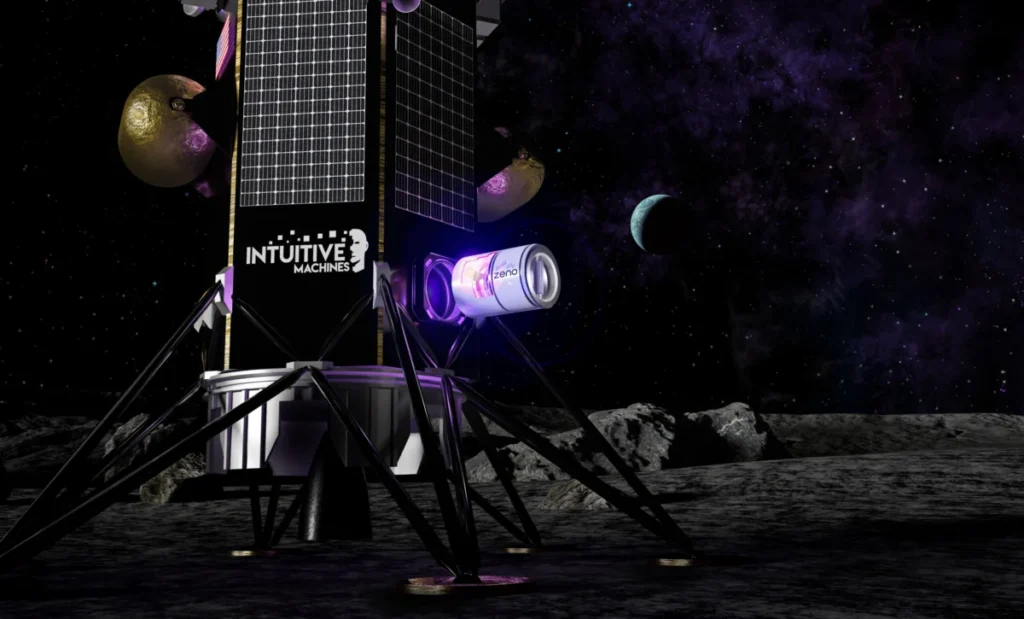
Intuitive Machines is actively engaged in developing such a solution. In 2023, the company, as part of a multi-company team led by Zeno Power, was awarded a $15 million contract by NASA. This funding is earmarked for the development of a radioactive generator specifically designed for integration into lunar landers. A key differentiator of this new generator is its proposed reliance on the isotope americium-241, a departure from NASA’s established practice of using plutonium-238. For decades, plutonium-238 has been the fuel of choice for NASA’s multi-mission radioisotope thermoelectric generators (RTGs), powering iconic missions like the Mars rovers. However, Bilardo highlighted a critical constraint: the diminishing supply of this vital isotope.
"It is produced by the Department of Energy for NASA’s outer planetary deep space science exploration missions, and we do not believe that plutonium 238 is going to be made available in sufficient quantities for the number of commercial generators we would need to support Moon Base," Bilardo explained, referencing NASA’s overarching objective to establish the foundational elements of a lunar surface base by 2030. The demand for reliable, long-duration power sources for a sustained presence on the Moon, particularly for supporting scientific research, infrastructure development, and potential resource utilization, far outstrips the current production capacity of plutonium-238.
The proposed alternative, americium-241, while a viable option for lunar surface power, comes with its own significant economic baggage. Bilardo was candid about the expense: "Americium is expensive." He stressed that a concerted effort is required to address this financial barrier. "There’s work that needs to be done across government, NASA, [the Department of Energy] and commercial industry to try to drive the price down for that material if we’re going to be able to use it in a sustainable fashion on the lunar surface.” This suggests a multifaceted approach involving enhanced production capabilities, streamlined supply chains, and potentially government incentives to reduce the per-unit cost of americium.
Beyond the direct cost of the fuel, a more systemic issue looms large: the absence of a framework for insuring and indemnifying private commercial missions that transport radioactive materials. Bilardo pointed out, "Additionally, there is currently no way to insure or indemnify a private commercial mission carrying radioactive material." This regulatory and financial gap represents a substantial risk for commercial entities looking to deploy nuclear technologies in space, potentially deterring investment and delaying mission deployment. The development of clear liability protocols and insurance mechanisms is therefore paramount.
A Glimpse into the Future: Fission Power and the Lunar Base Timeline
NASA’s strategic vision extends beyond radioisotope power. The agency is actively targeting 2030 for the deployment of the first fission reactor on the Moon, a monumental step that would provide significantly more power than RTGs and enable more complex operations. Nujoud Merancy, NASA’s Moon Base chief architect, echoed Bilardo’s concerns regarding the production and cost of critical materials. Speaking on the same panel, she underscored the agency’s commitment to addressing these challenges. "Uncovering these production gaps is where we need to focus," Merancy asserted. "And being able to do things like incentivizing things to get launched, to work through the production, to work through the launch indemnification – we have to start attacking these problems. And americium is one that comes up frequently" in the context of lunar base planning.
Merancy’s statement highlights a proactive stance from NASA, acknowledging that the agency must play a pivotal role in facilitating not only the use but also the production and indemnification of these advanced power sources. This implies a collaborative effort involving public-private partnerships and strategic investments to overcome existing bottlenecks. The mention of americium as a recurring topic in lunar base planning underscores its immediate relevance and the urgency to find solutions for its cost-effective deployment.
White House Urgency and Broader Implications
The push for nuclear power in space is not confined to NASA; it has garnered significant attention at the highest levels of government. Aaron Miles, coordinator for strategic capabilities at the White House Office of Science and Technology Policy, revealed the Trump administration’s intent to see initial tests of in-space nuclear power and propulsion within the next two years. This ambitious timeline reflects a recognition of the transformative impact nuclear technologies can have on space exploration and national security.
Beyond the lunar surface reactor, Miles also referenced Space Reactor-1 Freedom, a nuclear-electric spacecraft slated for a 2028 launch. This mission is designed to deliver three scientific helicopters to Mars, showcasing the potential of nuclear propulsion for interplanetary travel and advanced scientific payloads. "We believe the general success of American space nuclear power efforts may depend on making this significant achievement during this term," Miles declared, emphasizing the strategic importance of these developments for the nation’s leadership in space.
The implications of successfully overcoming the cost and regulatory hurdles associated with space nuclear power are profound. On the Moon, it could enable the establishment of a permanent, self-sustaining base capable of supporting advanced scientific research, including the search for water ice and other resources, as well as the development of in-situ resource utilization (ISRU) technologies. Such a base would serve as a vital staging ground for future missions to Mars and beyond.
For deep space exploration, nuclear propulsion offers a paradigm shift. Traditional chemical rockets are limited by their fuel-to-mass ratios, making long-duration, high-speed interplanetary journeys prohibitively time-consuming and resource-intensive. Nuclear electric propulsion (NEP) and nuclear thermal propulsion (NTP) systems, however, can provide much higher thrust-to-weight ratios and significantly reduce transit times. This would open up new possibilities for human missions to Mars, enabling shorter crew exposure to the harsh radiation environment of deep space and allowing for more frequent missions. Furthermore, advanced nuclear power systems could enable more ambitious robotic missions to the outer solar system, carrying more sophisticated scientific instruments and reaching destinations previously considered inaccessible within practical mission timelines.
The challenges highlighted at the symposium are not merely technical; they are deeply intertwined with economic viability, regulatory frameworks, and intergovernmental cooperation. The successful development and deployment of space nuclear power will require sustained investment, innovative policy solutions, and a collaborative spirit between government agencies and the private sector. The stakes are high, as the ability to harness the immense power of the atom for space exploration could redefine humanity’s presence in the cosmos and unlock scientific discoveries previously relegated to the realm of science fiction. The path forward is undoubtedly complex, but the potential rewards – a more robust lunar presence and faster, more capable interplanetary missions – make it a journey worth undertaking. The coming years will be critical in determining whether these ambitious plans can be translated from vision to reality, driven by innovation and a concerted effort to tackle the fundamental challenge of cost.