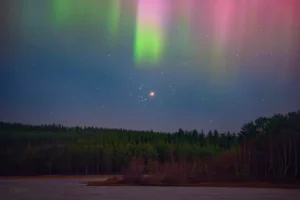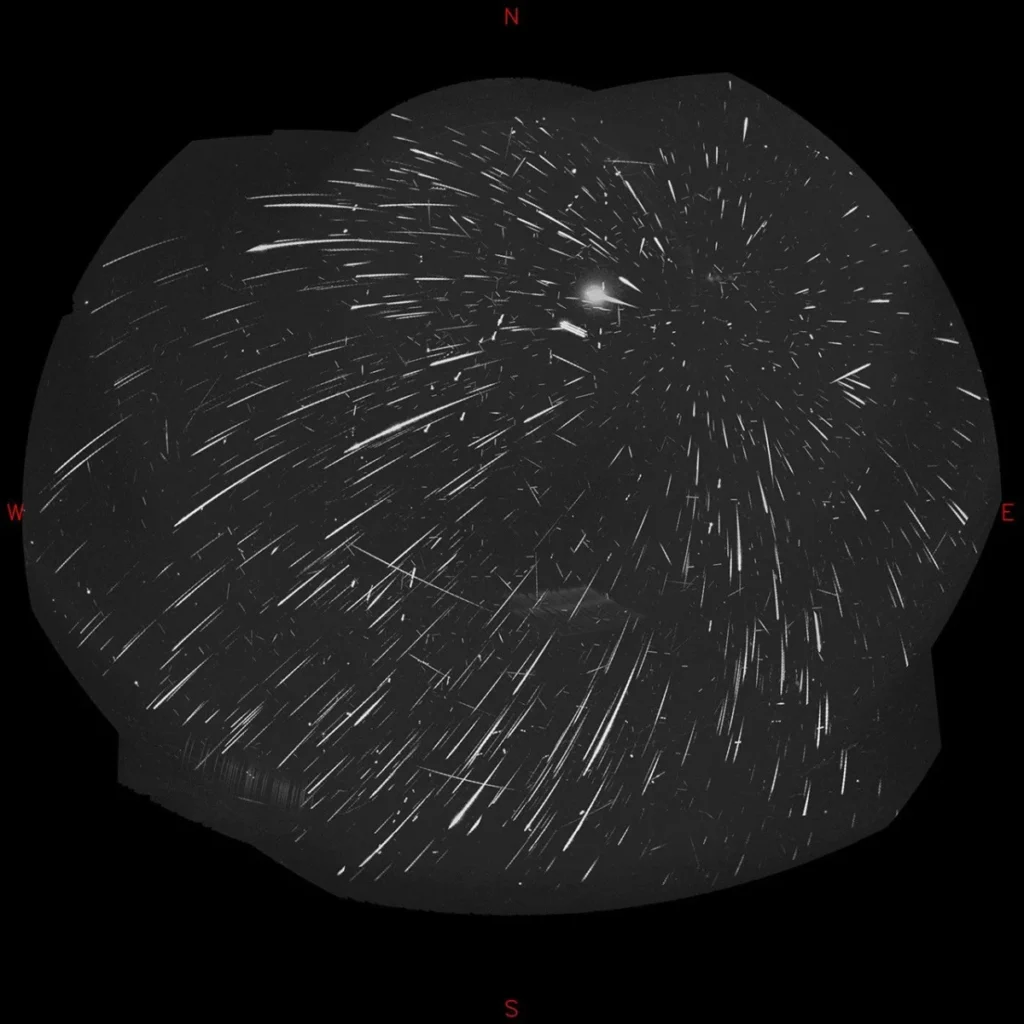
The night of August 12-13, 2026, offered a breathtaking display of cosmic fireworks as the annual Perseid meteor shower reached its zenith. Amateur and professional astronomers alike turned their gaze skyward, and at an astronomical observatory in the Czech Republic, a dedicated team captured an extraordinary panorama of this celestial event. Using four specialized meteor-monitoring cameras, researchers meticulously aligned and combined their imagery to produce a stunning all-night, all-sky view, showcasing the sheer volume of meteors that graced the heavens. This comprehensive capture reveals not only the dazzling Perseids but also hints at the presence of other, less prolific meteor showers, painting a richer picture of the interplanetary debris that our planet traverses.
The Perseid Phenomenon: A Cosmic Debris Trail
The Perseid meteor shower is one of the most anticipated astronomical events of the year, renowned for its reliability and the brilliance of its meteors. This annual shower occurs as Earth passes through the debris trail left behind by Comet Swift-Tuttle. As these tiny particles, often no larger than a grain of sand, enter Earth’s atmosphere at incredible speeds – tens of thousands of miles per hour – they ignite due to friction, creating the luminous streaks we perceive as meteors, or shooting stars.
The peak activity of the Perseid shower typically occurs between August 11th and August 13th. In 2026, this peak coincided with particularly favorable viewing conditions for many observers, with minimal moonlight interference in some regions, allowing for a more profound appreciation of the fainter meteors. The captured imagery from the Czech observatory underscores the intensity of this year’s event, with a total count of 1,706 meteors recorded over the course of the night.
A Symphony of Streaks: Unraveling the All-Sky Image
The all-sky image, a composite of data from four strategically placed meteor-monitoring cameras, provides an unparalleled perspective on the meteor shower. Each camera, designed to capture a wide field of view, contributes to a seamless panorama of the entire celestial dome. The process of aligning and combining these images is a testament to the technological advancements in astronomical observation, allowing for a more complete and scientifically valuable record of the event.
The overwhelming majority of the streaks visible in the composite image are indeed Perseids. Their distinct trails converge towards a single point in the sky known as the radiant. For the Perseids, this radiant lies within the constellation Perseus, hence the shower’s name. The visual representation of these trails all originating from a common point strongly supports the theory of a shared debris stream from Comet Swift-Tuttle.
However, the detailed analysis of the captured data reveals more than just the dominant Perseid display. The presence of meteors belonging to other, less active showers adds layers of complexity and scientific interest to the image. One such shower identified is the Kappa Cygnids, whose radiant is located in the constellation Cygnus. The paths of these meteors are seen crossing those of the Perseids, illustrating the dynamic nature of Earth’s passage through multiple streams of cosmic dust.
Furthermore, the image provides evidence of meteors originating from the antihelion complex. This is a broader region in the sky, generally located near Aquarius and opposite the Sun from Earth’s perspective. The antihelion complex is associated with dust particles that are less concentrated and spread over a wider area, often resulting in fainter and less frequent meteors. Its identification in the all-sky view highlights the diverse origins of the material that contributes to our planet’s meteor showers.
Chronology of a Celestial Event
The journey of a meteor shower to Earth is a cosmic dance that unfolds over millennia. Comet Swift-Tuttle, a large comet with an orbital period of approximately 133 years, last passed through the inner solar system in 1992. As it orbits the Sun, it sheds dust and ice, leaving a vast trail of debris in its wake.
Pre-Shower Activity: In the days and weeks leading up to the peak, observers typically note an increase in meteor activity. This gradual build-up is due to Earth encountering the outer edges of the debris stream.
August 12-13, 2026: This period marked the peak of the Perseid meteor shower. The all-sky camera network in the Czech Republic was actively recording throughout the night. The data collected during these hours formed the basis of the remarkable composite image. Scientists meticulously processed the captured frames, identifying individual meteors, calculating their trajectories, and correlating them with known meteor shower radiants.
Post-Shower Observation: While the peak activity is brief, some Perseid meteors can still be observed for several weeks after the peak. Astronomers continue to monitor for any lingering activity and to analyze the data collected during the shower’s most intense phase.
Supporting Data and Scientific Context
The scientific value of the all-sky image extends beyond its aesthetic appeal. It provides crucial data for understanding the distribution and density of meteoroid streams. The total count of 1,706 meteors recorded by the observatory in a single night offers a quantitative measure of the shower’s intensity. For comparison, typical Perseid rates during peak night can range from 50 to 100 meteors per hour under ideal dark sky conditions, translating to thousands of meteors over an entire night. The recorded count of 1,706 meteors suggests an exceptionally active and rich debris trail encountered by Earth in 2026.
The identification of meteors from other showers, such as the Kappa Cygnids and the antihelion complex, allows astronomers to refine their models of interplanetary dust distribution. These showers, while less prominent than the Perseids, contribute to the overall meteoroid environment and provide insights into the dynamics of cometary and asteroidal debris. For instance, the Kappa Cygnids are thought to be associated with the comet 96P/Machholz, showcasing how different cometary trails contribute to the meteor activity we observe.
Implications and Broader Impact
The continuous monitoring of meteor showers, facilitated by technologies like the all-sky camera network, has several significant implications:
- Space Weather and Debris Tracking: Understanding the density and composition of meteoroid streams is vital for assessing the risk to spacecraft and satellites. While most meteors burn up harmlessly in the atmosphere, larger particles can pose a threat.
- Cometary Evolution Studies: The study of meteor showers provides valuable information about the composition and evolution of comets. By analyzing the material shed by comets, scientists can gain insights into the early solar system.
- Public Engagement and Education: Events like the Perseid meteor shower offer a fantastic opportunity to engage the public with astronomy. Beautiful images and clear explanations of these phenomena can inspire curiosity and foster a greater appreciation for science.
- Networked Observatories: The success of this all-sky capture highlights the power of networked observatories. By combining data from multiple locations, astronomers can create more comprehensive and robust datasets, leading to more accurate scientific conclusions. The collaboration between the Czech observatory and organizations like CEMeNt (which likely stands for a Czech meteor network) underscores the importance of international cooperation in scientific research.
The analysis of the 2026 Perseid meteor shower, particularly through comprehensive captures like the one presented, will undoubtedly contribute to our ongoing efforts to understand the dynamic and often spectacular nature of our solar system. Each streak of light across the night sky is a fleeting reminder of the vast cosmic processes at play, and the dedication of astronomers who work to decipher their stories.