As China continues its ambitious trajectory in space exploration, a groundbreaking proposal has emerged from the nation’s scientific community: the deployment of advanced quadruped robotic dogs to aid in the construction, maintenance, and operation of its planned International Lunar Research Station (ILRS). This initiative underscores a growing global trend towards integrating sophisticated artificial intelligence and robotics into deep space missions, aiming to enhance safety, efficiency, and the overall scope of human endeavors beyond Earth. The concept, detailed by researchers in the Chinese Space Science and Technology journal, envisions these robotic companions as integral components of a sustained lunar presence, fundamentally reshaping the dynamics of future extraterrestrial habitation.
The Genesis of the Lunar Canines: A Vision for Autonomy
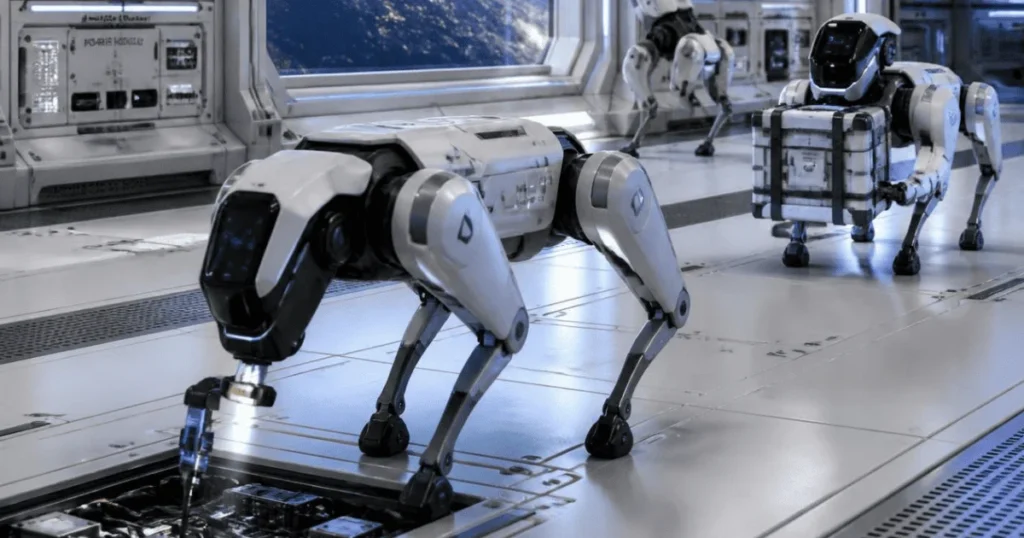
The core of the proposal centers on integrating highly mobile, autonomous, or semi-autonomous quadruped robots—colloquially referred to as "robotic dogs"—into the ILRS framework. This ambitious lunar base, targeted for initial completion around 2035, represents China’s long-term commitment to lunar exploration and resource utilization. The robotic dogs are envisioned to serve a multifaceted role, acting primarily as assistant and patrol units for astronauts. Their design allows for independent movement across the lunar surface and within base modules, enabling them to conduct continuous inspections, monitor environmental parameters, and relay critical data to human crews.
Beyond routine surveillance, these robotic platforms are slated to bolster security by actively monitoring the lunar environment for potential hazards. This includes detecting geological instabilities such as unexpected rockfalls, abrupt changes in temperature or air quality within pressurized habitats, and other unforeseen dangers that could jeopardize astronaut safety or mission integrity. The researchers’ vision extends far beyond basic exploration and protection, however. They propose that these versatile robots could work in concert with astronauts during complex scientific missions. Different robotic units could be specialized for distinct tasks: one might be optimized for traversing challenging, uneven lunar terrain, another for meticulously collecting geological samples, and a third for performing precise technical work requiring fine motor control and specialized tooling.
Moreover, the scope of these robotic dogs’ utility encompasses the ambitious task of preparing the Moon for long-term human settlement. This includes pioneering resource extraction, such as harvesting water ice from the perpetually shadowed regions of the lunar poles—a critical resource for life support and propellant production. They could also be tasked with mining valuable minerals and constructing foundational infrastructure using locally sourced regolith, significantly reducing the logistical burden and cost associated with transporting materials from Earth. On a day-to-day operational level, the robots are expected to perform numerous practical tasks around the lunar base, including environmental monitoring (air quality, temperature), general maintenance, cleaning living areas, tending to hydroponic or aeroponic plant systems, and even assisting with food preparation, thereby freeing astronauts to focus on higher-level scientific research and decision-making.
Perhaps one of the most innovative and human-centric aspects of the proposal is the suggestion that these robotic systems could provide psychological and emotional support to astronauts. Long-duration space missions, particularly in the isolated and confined environment of a lunar base, are known to exert significant psychological stress on crew members. The presence of an interactive robotic companion could offer an additional source of social interaction and a sense of normalcy, potentially mitigating the adverse effects of prolonged isolation and contributing to crew well-being. This reflects a holistic understanding of the challenges of space habitation, where technological solutions extend beyond mere utility to encompass human psychological needs.
China’s Ascendant Space Ambitions: A Broader Context
The proposal for lunar robotic dogs is not an isolated initiative but fits squarely within China’s accelerating and increasingly sophisticated space program. Over the past two decades, China has rapidly established itself as a major player in space exploration, achieving milestones previously only accomplished by a handful of nations. This includes the successful deployment of its own orbital space station, Tiangong; multiple lunar missions, including the Chang’e 4 mission that achieved the first-ever soft landing on the far side of the Moon in 2019, and the Chang’e 5 mission that returned lunar samples to Earth in 2020; and the deployment of its Zhurong rover on Mars in 2021. These achievements demonstrate China’s growing capabilities in spacecraft design, deep space communication, robotic landing, and remote operations.
The International Lunar Research Station (ILRS) is central to China’s long-term strategy for lunar exploration and resource utilization. Initiated as a collaborative project, primarily with Russia, the ILRS aims to establish a permanent scientific base on the Moon, serving as a hub for scientific research, technological development, and potentially resource extraction. The ILRS represents a strategic counterpoint to NASA’s Artemis program, which also aims for a sustained human presence on the Moon, fostering an environment of both competition and potential future cooperation in lunar exploration. The proposed ILRS timeline envisions an initial base establishment around 2035, with a broader expansion into a larger orbital complex by 2045, suggesting a multi-decade commitment to lunar infrastructure. A significant focus of upcoming missions for the ILRS is the lunar South Pole, an area believed to harbor substantial reserves of water ice in its permanently shadowed craters. This water ice is considered a crucial "in-situ resource" (ISR) that could provide potable water for astronauts, oxygen for life support, and hydrogen and oxygen for rocket propellant, thus enabling more sustainable and cost-effective deep space missions.
A Legacy of Robotic Exploration: From Rovers to Quadruped Companions
The concept of using robots in space is far from new. Robotic probes and rovers have been indispensable pioneers in exploring distant planets and moons, operating in environments too hostile or remote for human presence. From the early Mariner and Voyager probes that charted the outer solar system to the Spirit, Opportunity, Curiosity, and Perseverance rovers that have extensively explored the Martian surface, robots have consistently provided invaluable scientific data and insights. The International Space Station (ISS) itself relies heavily on robotic arms like the Canadarm2 for external maintenance, spacecraft docking, and astronaut assistance during spacewalks.
What distinguishes China’s proposal for robotic dogs is the shift towards highly mobile, autonomous, and potentially interactive quadruped platforms, a significant leap from wheeled rovers or fixed robotic arms. This evolution is mirrored by advancements in terrestrial robotics, exemplified by companies like Boston Dynamics with their Spot robot, which demonstrates advanced locomotion, navigation, and manipulation capabilities in complex environments. These "dog-like" robots offer superior maneuverability over varied and challenging terrain compared to wheeled systems, making them ideal for the rugged and unpredictable lunar landscape. Their ability to step over obstacles, climb stairs (or lunar craters), and recover from falls significantly enhances their operational flexibility. The integration of advanced AI allows for on-board decision-making, adaptive behavior, and increasingly sophisticated human-robot interaction, moving beyond mere teleoperation to true semi-autonomy or even full autonomy in certain tasks. This progression from simple probes to complex, intelligent, and agile robotic companions represents a natural and necessary step in extending humanity’s reach into the cosmos.
Overcoming the Lunar Gauntlet: Why Robots Excel
The rationale behind deploying robotic systems on the Moon becomes profoundly clear when considering the myriad difficulties and inherent dangers faced by humans operating in an extraterrestrial environment. Space, and the lunar surface in particular, is an unforgiving domain. Any technological assistance that can be rendered through robotics, whether for maintenance, repairs, exploration, or monitoring, offers substantial advantages over purely human operations.
One of the most critical benefits of robotic systems lies in enhancing safety. Extravehicular Activities (EVAs), or spacewalks, are among the most hazardous aspects of human spaceflight. Astronauts must don pressurized suits that contain a finite supply of oxygen, navigate in a vacuum, and constantly manage the risk of becoming untethered from their spacecraft—a scenario that could lead to being lost in the vastness of space. Robotic systems, however, can be designed to mitigate many of these risks. A robot could be equipped with electromagnetic feet or specialized attachment mechanisms to securely fasten itself to a spacecraft’s exterior without the need for traditional harnesses or tethers. Programmed to rapidly traverse the spacecraft’s surface, identify damage, monitor critical systems, and even perform intricate repairs, these robots could undertake tasks that are excessively risky or time-consuming for humans.

Beyond EVAs, the lunar environment itself poses numerous threats to human health and mission longevity. Cosmic radiation and solar flares are particularly damaging; without Earth’s protective atmosphere and magnetosphere, astronauts are exposed to high levels of radiation that can damage cellular DNA, increase the risk of cancer, and cause acute radiation sickness. Robotic systems, while susceptible to radiation-induced electronic failures, do not suffer from biological effects like DNA damage or cancer, and their components can be shielded more effectively or designed with radiation-hardened electronics. Similarly, the lunar surface is constantly bombarded by micrometeoroids traveling at immense velocities. Even microscopic particles can cause significant damage to spacecraft and equipment. Robots can be designed with more resilient exteriors or can operate in hazardous areas without risking human life.
Furthermore, robots offer significant advantages in terms of operational efficiency and resource management. Unlike human crew members, robots do not require living quarters, food, water, oxygen, waste disposal systems, or exercise equipment—all of which demand considerable physical space, mass, and energy. If robotic systems can be designed for compact storage, perhaps folded or stacked in dense configurations, it could be theoretically possible to store a multitude of robots in the same volume required for a single human astronaut. This dramatically expands a spacecraft’s operational capacity and the amount of work that can be accomplished without increasing the number of humans exposed to the inherent dangers of space. This paradigm shift allows human astronauts to dedicate their time to critical decision-making, complex scientific investigations, and situations that genuinely demand human intelligence, judgment, and adaptability, while routine, repetitive, or hazardous tasks are delegated to their robotic counterparts. Robots also do not experience motion sickness, fatigue, or the psychological strain of isolation, enabling them to operate for extended periods without downtime. The lunar dust, which is abrasive and electrically charged, poses a significant threat to equipment and human health; robots can be designed with features to resist its corrosive effects and minimize contamination.
The Technical Frontier: Engineering Autonomous Companions
Before China’s robotic dogs can embark on their lunar missions, significant technological hurdles must be overcome. The researchers acknowledge the imperative to develop highly advanced artificial intelligence (AI), robust communication systems, and precise navigation capabilities tailored for the unique lunar environment. Robots operating on the Moon will lack access to the extensive datasets, reliable communication infrastructure, and global positioning systems (like GPS) that are readily available on Earth. This necessitates that lunar robots possess a high degree of autonomy, capable of processing sensory data, making real-time decisions, and navigating unfamiliar and dynamic terrains independently.
Key technical areas requiring intensive development include:
- Advanced AI and Machine Learning: For autonomous decision-making, object recognition, hazard avoidance, task planning, and adapting to unforeseen circumstances. This includes developing lunar-specific AI models trained on simulated or actual lunar data.
- Robust Communication Systems: Capable of operating over long distances with inherent time delays (light-speed lag between Earth and Moon) and potential signal obstructions. This may involve developing local mesh networks on the Moon or relying on relay satellites.
- Precise Navigation and Localization: Systems like Simultaneous Localization and Mapping (SLAM) will be crucial for robots to build real-time maps of their surroundings while simultaneously tracking their own position. This will be enhanced by technologies such as LIDAR, stereo cameras, and inertial measurement units, coupled with sophisticated algorithms to compensate for lunar surface irregularities and lighting conditions.
- Energy Management: Powering these autonomous robots for extended periods in an environment with extreme temperature fluctuations and long lunar nights will require advanced power generation (e.g., highly efficient solar panels, radioisotope thermoelectric generators for shadowed regions) and storage solutions (e.g., robust batteries).
- Material Science and Durability: Designing robots to withstand the abrasive lunar dust, extreme temperatures ranging from -173°C to 127°C, vacuum, and radiation requires specialized materials and shielding.
- Human-Robot Interaction (HRI): For the proposed psychological support and seamless collaboration with astronauts, intuitive HRI interfaces will be essential, allowing astronauts to easily command, monitor, and interact with the robotic dogs.
Beyond Utility: Psychological Support and the Human Element
The inclusion of psychological and emotional support as a function for these robotic companions highlights a progressive understanding of human factors in long-duration spaceflight. The isolation and confinement inherent in lunar base operations can lead to significant psychological challenges, including stress, anxiety, depression, and interpersonal conflicts among crew members. The presence of an interactive robotic companion could serve as a non-judgmental presence, a recipient of communication, and even a source of playful interaction, thereby mitigating the sense of loneliness and aiding in maintaining crew morale.
While not a substitute for human interaction, a well-designed robotic companion could offer a sense of continuity and a focal point for engagement, helping astronauts cope with the psychological demands of an extreme environment. This concept aligns with studies on the benefits of animal companionship in isolated settings on Earth, translated into a technological solution for space. It underscores a growing recognition that future space habitats must be designed not just for physical survival but also for psychological well-being.
The ILRS Vision: A Stepping Stone to Deep Space
China’s plan to establish its initial lunar base around 2035, followed by the expansion into a larger orbital complex by 2045, signifies a long-term, strategic commitment to lunar exploration and beyond. The heavy focus on the lunar South Pole is particularly significant. This region is believed to contain vast quantities of water ice in permanently shadowed craters, a resource that could prove invaluable for future sustained human presence. Water ice can be processed to yield potable water, breathable oxygen, and hydrogen-oxygen rocket propellant, making it a "game-changer" for reducing the logistical costs and enhancing the feasibility of deep-space missions.
The robotic dogs would play a crucial role in validating and exploiting these resources. Their ability to operate in extremely cold, dark environments, potentially equipped with specialized drills and sensors, would be instrumental in prospecting and extracting water ice without exposing human astronauts to unnecessary risks. This strategic approach—using advanced robotics to pioneer resource utilization—is a cornerstone of enabling long-term, self-sufficient lunar settlements and serving as a stepping stone for future crewed missions to Mars and beyond.
Geopolitical Orbit: Implications for the Global Space Race
The development and deployment of advanced robotic systems like these lunar dogs also carry significant geopolitical implications. China’s ILRS initiative, coupled with its rapid advancements in space technology, places it at the forefront of the new space race. While NASA’s Artemis program aims to return humans to the Moon and establish a sustained presence, the ILRS represents an alternative vision, potentially fostering a parallel, internationally collaborative effort distinct from the U.S.-led framework.
The ability to deploy sophisticated, autonomous robotics on the Moon enhances a nation’s strategic capabilities in space. It demonstrates technological prowess, self-sufficiency, and the capacity to undertake complex missions with reduced human risk. This could influence future international partnerships, resource claims, and the overall governance of lunar activities. The success of China’s robotic dog initiative would not only advance scientific understanding and technological capability but also solidify its position as a leading global space power, potentially shaping the future landscape of lunar and deep-space exploration for decades to come.
The Dawn of a New Era: Human-Robot Symbiosis in Space
Considering the profound challenges of space travel—radiation, vacuum, microgravity, isolation, and the sheer logistical complexity—it is evident that the future of extraterrestrial exploration will involve far more than humans simply venturing into orbit. By seamlessly blending human intelligence and adaptability with the resilience, efficiency, and tireless capabilities of increasingly sophisticated robotic systems, future missions can become exponentially safer, more efficient, and capable of achieving far more ambitious goals than would be possible with humans alone.
The proposed deployment of robotic dogs on the Moon by China is a testament to this evolving paradigm: one of human-robot symbiosis. These autonomous companions represent a significant step towards enabling permanent human settlements beyond Earth, not just by performing dangerous or mundane tasks, but by fundamentally transforming the way humanity lives, works, and explores the cosmos. As we look towards an era of sustained lunar presence and ambitious deep-space ventures, the integration of intelligent robotics will be not merely beneficial, but absolutely indispensable, charting a course for humanity’s enduring journey among the stars.