Raytheon Technologies has announced the successful testing of its advanced AN/SPY-6(V) radar system during the recent "Pacific Dragon" missile-defense exercise, a pivotal multinational event held near Hawaii. The exercise, a demonstration of advanced integrated air and missile defense (IAMD) capabilities, brought together naval assets and personnel from a consortium of allied nations, including the United States, Australia, Italy, Japan, the Republic of Korea, Chile, and Spain. This rigorous validation underscores the SPY-6’s transformative potential for enhancing maritime situational awareness and strengthening collective security in an increasingly complex global environment.
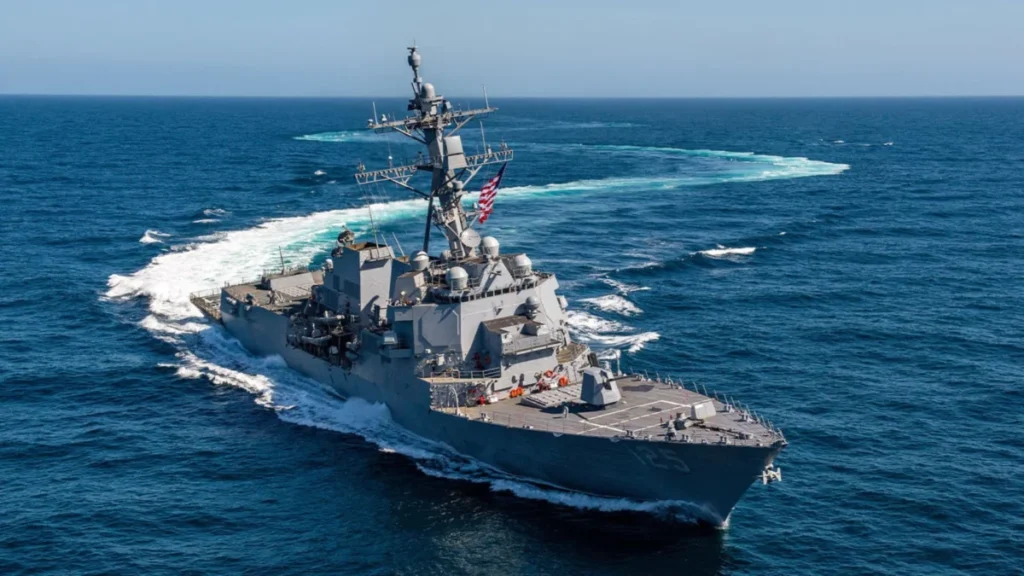
The AN/SPY-6(V) radar system was put through its paces onboard the U.S. Navy’s newest Flight III Arleigh Burke-class destroyer, the USS Jack H. Lucas (DDG-125). As the vanguard of the Navy’s next generation of surface combatants, the Lucas serves as the inaugural platform for this cutting-edge radar. The Pacific Dragon exercise encompassed a sophisticated series of information-sharing and target-tracking events, meticulously crafted to test and significantly improve the participating nations’ integrated air and missile-defense capabilities. While no live firing was involved in this particular iteration of the exercise, the focus remained squarely on the intricate processes of detection, tracking, data fusion, and seamless communication across diverse naval platforms.
The Pacific Dragon Exercise: A Crucible for Alliance and Readiness
The Pacific Dragon series of exercises is a recurring, biennial event that serves as a critical testbed for advanced missile defense technologies and multinational interoperability. Held in the strategic waters off Hawaii, it provides a realistic operational environment for navies to practice coordinated responses to ballistic missile threats and other air and surface challenges. The exercise is primarily sponsored by the U.S. Indo-Pacific Command (INDOPACOM) and the Missile Defense Agency (MDA), with a clear objective: to enhance the collective ability of allied nations to detect, track, and ultimately defeat missile threats. The inclusion of seven allied navies in the recent iteration—Australia, Italy, Japan, the Republic of Korea, Chile, and Spain alongside the United States—highlights the growing importance of a unified front against evolving threats in the Indo-Pacific and beyond.
Previous iterations of Pacific Dragon have progressively increased in complexity, moving from basic information exchange to more advanced integrated tracking scenarios. This consistent evolution underscores the commitment of participating nations to not only improve their individual defensive capabilities but also to weave them into a cohesive, multinational network. The geopolitical landscape of the Indo-Pacific, marked by the proliferation of advanced missile technologies and heightened regional tensions, makes such exercises indispensable. They are not merely training events but vital demonstrations of resolve and readiness, designed to deter potential adversaries and assure allies of a robust collective defense posture.
USS Jack H. Lucas: Spearheading a New Era of Naval Power
The USS Jack H. Lucas (DDG-125) represents a significant leap forward in naval destroyer design and capability. As the lead ship of the Flight III Arleigh Burke-class destroyers, it is the most substantially upgraded version of the venerable Burke line, which has formed the backbone of the U.S. Navy’s surface fleet for decades. The Flight III designation signifies a profound evolution, primarily driven by the need to accommodate the power and cooling requirements of the AN/SPY-6(V) radar. This required extensive modifications to the ship’s design, including a larger superstructure, enhanced power generation capacity, and improved cooling systems.
Commissioned in October 2023, the USS Jack H. Lucas is more than just a new ship; it is a symbol of the Navy’s strategic pivot towards maintaining technological superiority in an era of peer and near-peer competition. Its selection as the platform for the SPY-6’s critical test in Pacific Dragon underscores its role as a pathfinder for future naval operations. These Flight III destroyers are designed to be the premier air and missile defense assets within carrier strike groups and independent deployer roles, providing unparalleled situational awareness and engagement capability against the most advanced threats. The integration of the SPY-6 with the Aegis Combat System Baseline 10 on the Lucas creates a formidable deterrent, capable of operating effectively across multiple warfare domains.
AN/SPY-6 Radar: A Technological Leap in Air and Missile Defense
The AN/SPY-6(V) radar, often referred to as the Air and Missile Defense Radar (AMDR), is a revolutionary leap in naval radar technology, representing a generational advance over its predecessor, the AN/SPY-1. Developed by Raytheon, the SPY-6 is designed to be the cornerstone of the U.S. Navy’s Integrated Air and Missile Defense (IAMD) strategy for decades to come. Its development history spans over a decade, with initial contracts awarded in the early 2010s to address the growing complexity of aerial and missile threats, particularly ballistic and hypersonic weapons.
At its core, the SPY-6 is an active electronically scanned array (AESA) radar, leveraging advanced Gallium Nitride (GaN) technology. This material choice allows for significantly higher power output, greater efficiency, and improved reliability compared to older Gallium Arsenide (GaAs) based systems. The radar’s design is inherently modular, built around Radar Modular Assemblies (RMAs). Each RMA is a self-contained radar unit, approximately two cubic feet in size. This modularity is a game-changer, allowing Raytheon to scale the radar’s power and size to fit various ship classes without a complete redesign. For instance, the AN/SPY-6(V)1, installed on Flight III Arleigh Burke destroyers like the USS Jack H. Lucas, comprises 37 RMAs, offering vast detection ranges and tracking capabilities. Smaller variants, such as the AN/SPY-6(V)2 (9 RMAs for aircraft carriers and amphibious assault ships) and AN/SPY-6(V)3 (24 RMAs for FFG-62 Constellation-class frigates), provide tailored capabilities for their respective platforms.
This modularity not only enables cost-effective production and integration across the fleet but also simplifies maintenance and future upgrades. Instead of replacing an entire radar system, individual RMAs can be swapped out or upgraded, ensuring the system remains at the forefront of technology throughout its operational lifespan.
Unpacking the Exercise: Information Sharing and Threat Simulation
During the Pacific Dragon exercise, the USS Jack H. Lucas‘s AN/SPY-6(V)1 radar demonstrated its prowess in several critical areas. The exercise simulated a spectrum of air and missile threats, ranging from low-flying cruise missiles and conventional aircraft to advanced ballistic missiles and nascent hypersonic threats. The SPY-6 proved adept at detecting and tracking these diverse targets simultaneously, a capability crucial for defending against complex, multi-axis attacks.
The core of the exercise, however, revolved around information sharing. The SPY-6’s ability to feed its high-fidelity tracking data into the wider Aegis Combat System, specifically the Baseline 10 configuration, was paramount. This data, which is "targeting-quality," means it is precise enough to be used directly by the ship’s defensive weapons systems, significantly reducing the sensor-to-shooter timeline. Furthermore, the exercise validated the system’s "interoperability." This means that once the Lucas detected and tracked a simulated threat, that information could be seamlessly transmitted over tactical data links (such as Link 16 and potentially Cooperative Engagement Capability – CEC) to other allied ships participating in the exercise.
This multi-national data exchange is not merely about sharing raw information; it’s about creating a common operational picture across a distributed fleet. When one ship detects a threat, other ships in the network can immediately receive that track data, prepare their own weapons systems, supplement the track with their own sensors for greater accuracy, or even conduct the engagement themselves. This networked defense strategy is exponentially more effective than individual platforms operating in isolation, as it allows for optimal resource allocation, redundancy, and a layered defense against sophisticated threats. The simulated scenarios likely included coordinated defense against multiple inbound targets, testing the network’s ability to prioritize threats and assign engagements efficiently among allied assets.
Interoperability: The Cornerstone of Collective Security
The concept of interoperability, as demonstrated by the SPY-6 in Pacific Dragon, is more than a technical feature; it is a strategic imperative for modern naval warfare and allied defense. In an era where potential adversaries possess increasingly sophisticated anti-access/area denial (A2/AD) capabilities, no single nation can effectively counter all threats alone. The ability of diverse naval platforms from different countries to communicate, share data, and coordinate their actions in real-time transforms individual assets into a cohesive, formidable defense network.
Tactical data links like Link 16, and more advanced systems like the Cooperative Engagement Capability (CEC), are the conduits for this interoperability. CEC, for instance, allows multiple ships and aircraft to act as a single, distributed sensor network, dramatically extending detection ranges and improving target tracking accuracy. The SPY-6’s integration into Aegis Baseline 10, which supports these advanced data links, means that the highly accurate tracking data generated by the radar can immediately contribute to this shared battlespace awareness.
For the allied nations participating in Pacific Dragon, this means a significant enhancement of their collective missile defense posture. A Japanese destroyer, for example, could receive a ballistic missile track from the USS Jack H. Lucas via Link 16, allowing it to prepare its Standard Missile-3 (SM-3) interceptors even before its own sensors acquire the target. This reduced reaction time is crucial in missile defense, where fractions of a second can determine success or failure. This seamless integration reinforces the strength of alliances, promoting standardized procedures, and building trust and confidence among partner navies.
Statements and Official Perspectives
Following the successful demonstration, Raytheon was quick to highlight the significance of the SPY-6’s performance. "During Pacific Dragon 2026 (PD26), SPY-6 participated aboard USS Jack H. Lucas (DDG 125), the Navy’s first Flight III destroyer equipped with Baseline 10 and AN/SPY-6, alongside the Missile Defense Agency and allied forces," explained a Raytheon spokesperson in a social media post. They further elaborated, "By enhancing interoperability across the fleet and with allied forces, SPY-6 is helping strengthen readiness and support regional security." This statement underscores Raytheon’s view of the radar not just as a piece of hardware, but as a critical enabler for strategic alliance building and regional stability.
While specific quotes from U.S. Navy or allied officials were not immediately available beyond Raytheon’s report, it can be logically inferred that the successful test was met with considerable satisfaction. Naval commanders would likely emphasize the operational benefits of the SPY-6’s enhanced situational awareness and its contribution to reducing decision cycles in high-stakes engagements. Representatives from allied navies, such as those from Japan and the Republic of Korea, who face immediate missile threats in their respective regions, would undoubtedly laud the strengthened interoperability and the increased collective defense capabilities that the SPY-6 facilitates. The Missile Defense Agency, which plays a pivotal role in the development and deployment of missile defense systems, would view this as a crucial validation of their investment and a significant step forward in building a robust, layered missile defense architecture.
Strategic Implications for the Indo-Pacific and Beyond
The successful testing of the AN/SPY-6(V) radar during Pacific Dragon carries profound strategic implications, particularly for the Indo-Pacific region, but also for global naval operations.
Firstly, it significantly bolsters deterrence. The presence of highly capable IAMD platforms, equipped with advanced radars like SPY-6, signals to potential adversaries that any aggressive action involving missile proliferation or attacks will be met with a robust, multi-national defense. This enhances regional stability by making such actions less viable.
Secondly, it reinforces military alliances and partnerships. The ability of diverse navies to operate as a unified network, sharing critical targeting data and coordinating defensive actions, deepens trust and operational cohesion. This is vital in an era where collective security arrangements are paramount. It also standardizes procedures and promotes common operational doctrines among participating nations.
Thirdly, the SPY-6 marks a significant technological advancement that reshapes the future of naval warfare. Its ability to detect and track a wide array of threats, including emerging hypersonic weapons, positions the U.S. Navy and its allies at the forefront of defensive capabilities. This technological edge is crucial for maintaining freedom of navigation and projecting power in contested maritime domains.
Finally, the modular design of the SPY-6 offers flexibility and longevity. As threats evolve, the system can be upgraded and adapted, ensuring its relevance for decades. This not only optimizes cost-effectiveness over the life cycle but also ensures that future naval platforms, from frigates to carriers, can benefit from this cutting-edge radar technology, creating a truly integrated and scalable defense system across the entire fleet. Challenges remain, including the substantial costs associated with full fleet deployment and the extensive training required for personnel to fully leverage the system’s capabilities. However, the outcomes of exercises like Pacific Dragon underscore the undeniable strategic value of these investments.
In conclusion, the successful demonstration of Raytheon’s AN/SPY-6(V) radar aboard the USS Jack H. Lucas during the Pacific Dragon exercise is a landmark achievement. It validates a critical technology designed to enhance maritime situational awareness, accelerate threat response, and most importantly, strengthen the interoperability of allied forces. As global challenges continue to evolve, the SPY-6 stands as a testament to technological innovation and the unwavering commitment of nations to collective security, poised to play a central role in defending against the complex threats of the 21st century.