A groundbreaking new platform developed by researchers at MIT, Brigham and Women’s Hospital, and the Broad Institute of MIT and Harvard promises to transform the treatment landscape for debilitating esophageal conditions. Published recently in Nature Biomedical Engineering, the study details an innovative approach that overcomes the long-standing challenges of delivering therapeutics directly to the esophagus, offering a future where patients could experience localized treatment with significantly reduced systemic side effects. This breakthrough represents a pivotal step forward in precision medicine, addressing an unmet need for millions suffering from inflammatory esophageal disorders.
The esophagus, a muscular tube connecting the throat to the stomach, is surprisingly difficult to target with conventional drug delivery methods. Its dynamic nature, characterized by rapid peristaltic movement, combined with a highly impermeable lining of stratified squamous epithelium, means that orally administered drugs often pass through too quickly or fail to penetrate the tissue effectively. This anatomical and physiological hurdle has severely limited the development of localized therapies, forcing clinicians to rely on systemic drugs that, while effective, carry a heavy burden of potential adverse effects.
Giovanni Traverso, an associate professor of mechanical engineering at MIT, a practicing gastroenterologist at Brigham and Women’s Hospital, and an associate member of the Broad Institute, underscored the significance of this challenge. "There are many people with esophageal disease, and if you look at drugs for these conditions, they’re very limited in their ability to target this part of the body and it’s very difficult to develop them," Traverso stated. "We hope this platform will make it easier to develop systems that can help patients suffering from these conditions." Traverso served as the senior author of the seminal study, with former MIT postdoc Christina Karavasili, now an assistant professor at Aristotle University of Thessaloniki in Greece, as the paper’s lead author.
The Unmet Medical Need: A Spectrum of Esophageal Disorders
Esophageal diseases encompass a wide range of conditions, many of which cause significant discomfort, impair quality of life, and can lead to severe complications. Among the most prevalent and challenging are eosinophilic esophagitis (EoE) and esophageal involvement in Crohn’s disease.
Eosinophilic esophagitis is a chronic inflammatory disorder triggered by food or environmental allergens, characterized by an accumulation of eosinophils in the esophageal lining. This inflammation can lead to esophageal dysfunction, including strictures, fibrosis, and impaired motility, making swallowing (dysphagia) incredibly difficult and often painful. The prevalence of EoE has been steadily increasing globally, with estimates ranging from 1 in 1,000 to 1 in 2,000 individuals, making it a significant public health concern. Patients often struggle with eating, leading to nutritional deficiencies, anxiety, and a substantial impact on their social lives. Current treatments for EoE include dietary elimination, proton pump inhibitors, and swallowed topical corticosteroids (e.g., fluticasone or budesonide slurries), which aim to reduce inflammation but often require consistent adherence and may not be effective for all patients. In more severe cases, biologic therapies like dupilumab have been approved, but these are systemic and expensive.
Crohn’s disease, a form of inflammatory bowel disease, can affect any part of the gastrointestinal tract, from the mouth to the anus. While involvement of the esophagus is less common than in other segments, it can be particularly debilitating, causing symptoms such as dysphagia, odynophagia (painful swallowing), chest pain, and weight loss. The inflammation in esophageal Crohn’s is often severe and challenging to manage, frequently requiring systemic immunosuppression. The global incidence of Crohn’s disease is estimated to be around 6.3 per 100,000 person-years, with a growing prevalence, and while esophageal involvement is rare, it significantly complicates the patient’s condition.
Current therapeutic strategies for both EoE and esophageal Crohn’s often rely on systemic drugs, such as infliximab. Infliximab is a monoclonal antibody that targets tumor necrosis factor-alpha (TNF-alpha), a potent inflammatory cytokine. By neutralizing TNF-alpha, infliximab effectively dampens the inflammatory response. While highly effective for many patients, particularly those with moderate to severe disease, its systemic administration means it suppresses the entire immune system. This broad immunosuppression carries a heightened risk of serious infections, including tuberculosis and fungal infections, as well as other potential adverse effects such as infusion reactions and an increased risk of certain malignancies. The need for a localized treatment that could mitigate these systemic risks has been a critical driver for research in this area.
The Direct Delivery Conundrum: A Historical Challenge
The inherent challenges of delivering drugs directly to the esophageal tissue are multifaceted. Beyond the rapid transit time of orally ingested substances, the esophageal lining itself poses a formidable barrier. The stratified squamous epithelium, a multi-layered protective tissue, is designed to withstand mechanical stress and chemical insults, making it highly impermeable to drug molecules. This impermeability, while crucial for its protective function, becomes a significant obstacle for therapeutic absorption.
Alternative delivery methods have their own drawbacks. Injecting drugs directly into the esophageal tissue, for instance, requires endoscopic procedures, which are invasive, uncomfortable for patients, and must be performed in a clinical setting by a specialist. This inconvenience limits their practicality for chronic conditions requiring frequent administration. Some existing anti-inflammatory steroid drugs are formulated as thick mixtures designed to adhere to the esophageal lining for a longer duration. However, even with improved residence time, these formulations still struggle to effectively penetrate the impermeable squamous layer, limiting their efficacy and requiring higher doses, which can still lead to some systemic absorption.
The scientific community has long grappled with these issues, recognizing that localized delivery could revolutionize treatment for numerous gastrointestinal conditions. The development of a platform capable of overcoming these biological and physiological barriers has remained a holy grail in pharmaceutical research, paving the way for the development of drugs that are not only effective but also safer for patients.
An Innovative Approach: Mimicking Biology, Enhancing Permeability
The MIT-led research team embarked on a mission to fundamentally alter how drugs interact with esophageal tissue. Their core objective was to develop novel drug formulations that could temporarily increase the permeability of esophageal cells, thereby allowing therapeutic agents to penetrate more effectively.
To achieve this, the researchers first needed a robust and reliable system to screen potential permeability enhancers. They ingeniously designed an in vitro screening platform that meticulously mimics the complex structure and function of the esophagus. This system featured actual esophageal tissue pressed between two vertical plates, replicating the organ’s layered architecture. Drug formulations could then be introduced at the top of this system, simulating oral ingestion, while researchers precisely measured the amount of drug that successfully permeated the tissue and collected in wells positioned beneath. This sophisticated bio-mimetic model provided an unprecedented tool for high-throughput screening, a critical step in identifying effective excipients.
Using this advanced system, the team systematically evaluated approximately 100 different compounds, focusing on excipients – inactive ingredients that can enhance the therapeutic effect or delivery of a drug. This initial broad screen allowed them to identify several promising candidates that showed some ability to increase esophageal tissue permeability. The next logical step involved testing combinations of these top candidates, hypothesizing that synergistic effects might yield even greater permeability enhancement.
This combinatorial screening proved fruitful. The researchers discovered that the most effective combination was a pair of bile salts: sodium chenodeoxycholate and sodium cholate. Bile salts, naturally produced in the liver, play a crucial role in fat digestion and absorption in the small intestine, and their ability to emulsify fats hinted at their potential to interact with cell membranes.
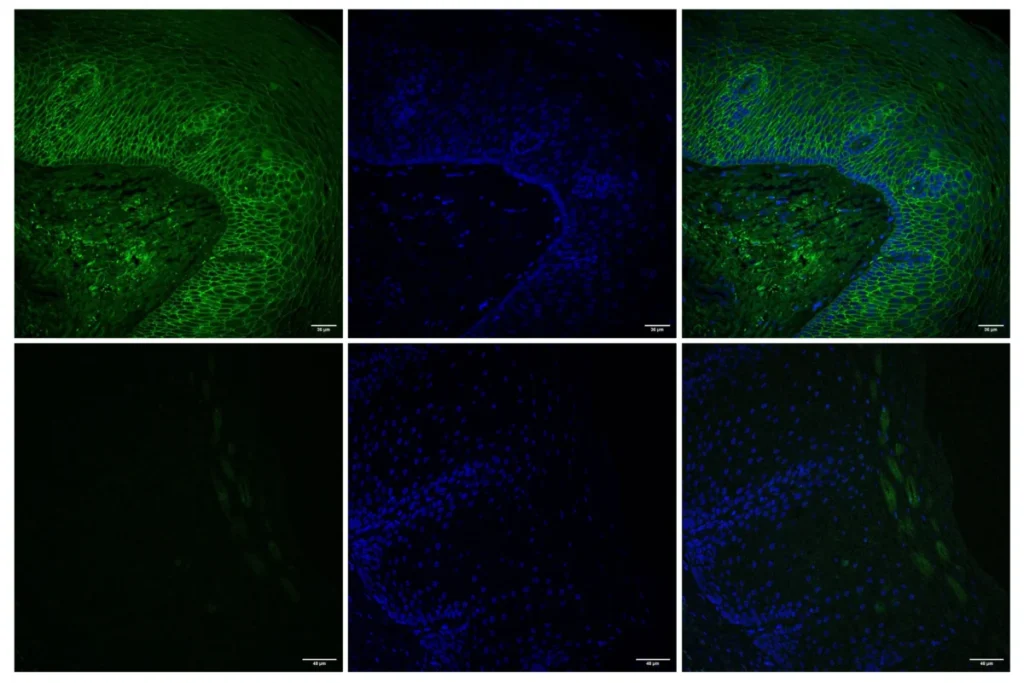
Further investigation into the mechanism of action revealed that these bile salts do not cause permanent damage to the tissue. Instead, they appear to temporarily loosen the cell-cell junctions that typically form a tight barrier between epithelial cells. Lead author Christina Karavasili explained, "Our data suggest that the bile salts temporarily loosen these cell-cell junctions, mainly by interacting with calcium ions that help maintain junction integrity. This creates a more permissive pathway between the cells, allowing larger molecules to move into the mucosal tissue more efficiently."
The Synergistic Formulation: Hydrogel and Bile Salts
The discovery of the bile salt combination was then integrated into a practical drug delivery vehicle. The researchers chose a polysaccharide-derived hydrogel as the base for their formulation. Hydrogels are known for their biocompatibility and their ability to form viscous, adhesive layers. This specific hydrogel was selected for its consistency, allowing it to lightly but persistently coat the lining of the esophagus after being swallowed.
The brilliance of this combined approach lies in its synergy: "The hydrogel helps the formulation remain on the esophageal surface for longer, while the bile salts help increase transport across the tissue," Karavasili elaborated. This dual mechanism ensures both prolonged contact time and enhanced penetration, two critical factors previously lacking in esophageal drug delivery.
Pre-clinical Validation and Safety Profile
With the novel formulation developed, the researchers moved to in vivo testing to validate its efficacy and safety. In animal models, the team demonstrated that this innovative hydrogel-bile salt formulation could effectively deliver infliximab to the esophagus. This was a crucial proof-of-concept, showing that the system could not only enhance permeability but also facilitate the delivery of a complex biologic drug like infliximab, which is a relatively large molecule.
A key concern with any new drug delivery system that alters tissue permeability is the potential for irreversible damage or long-term side effects. The researchers meticulously investigated this aspect and found reassuring results. The loosening of the cell-cell junctions induced by the bile salts was indeed temporary, with the esophageal cells returning to their normal, impermeable state within approximately three days. This reversibility is paramount, as it suggests that the platform can provide localized drug delivery without compromising the esophagus’s long-term barrier function.
Minimizing Systemic Side Effects: A Paradigm Shift
The ability to deliver powerful anti-inflammatory agents like infliximab directly to the site of inflammation in the esophagus marks a potential paradigm shift in treatment. As Traverso emphasized, "We were interested in delivering anti-TNFs as a model drug, but also to help people who suffer from conditions like Crohn’s disease to have options that could be delivered to the site. If we have the possibility of site-directed delivery, we may be able to mitigate systemic side effects from these immunosuppressing agents."
This targeted approach holds immense promise for improving patient safety and quality of life. By concentrating the drug’s action specifically where it is needed, the systemic exposure to the immunosuppressant can be drastically reduced, thereby lowering the risk of opportunistic infections and other serious adverse events associated with broad immune suppression. For patients with chronic conditions requiring long-term therapy, this could mean fewer hospital visits, reduced monitoring requirements, and a significantly improved safety profile.
Broader Implications and Future Horizons
The significance of this research extends far beyond the immediate application to infliximab and esophageal inflammation. The developed platform is, by design, a versatile tool. As Traverso articulated, "This is a platform to enable the development of drug-delivery systems for the esophagus, which hasn’t been possible before because the tools haven’t existed." This implies that the same hydrogel-bile salt combination, or variations thereof, could be adapted to deliver a wide array of other therapeutic agents.
Future research could explore the delivery of different classes of drugs, including:
- Other biologics: Beyond anti-TNFs, other monoclonal antibodies or protein-based therapies could benefit from localized delivery.
- Small molecule drugs: Enhanced permeability could allow for more effective delivery of traditional small molecule anti-inflammatory or anti-fibrotic agents.
- Gene therapies: The temporary opening of cell junctions might even facilitate the delivery of nucleic acid-based therapies, offering novel approaches to treat genetic disorders affecting the esophagus.
- Local anesthetics or pain modulators: For conditions causing chronic esophageal pain, localized delivery could provide targeted relief without systemic side effects.
The researchers are now focused on optimizing the formulation further in preparation for potential testing in human subjects. Key optimization goals include fine-tuning the gel’s adhesion properties to ensure it remains on the esophageal surface for a sufficient duration to deliver the drug effectively, without causing discomfort or irritation to the patient. The balance between residence time, drug release kinetics, and patient comfort is a critical parameter for clinical translation.
This innovation also has substantial implications for pharmaceutical research and development. By providing a reliable platform and screening system, it could accelerate the discovery and development of new esophageal therapeutics, potentially reducing the time and cost associated with bringing new drugs to market. The ability to precisely control drug delivery at the site of disease opens up new avenues for drug design, moving away from systemic compromises towards highly targeted interventions.
Funding and Collaborative Excellence
This pioneering research was supported by significant funding from multiple prestigious sources, underscoring its potential impact. Key contributions came from the Karl van Tassel Career Development Professorship, the Department of Mechanical Engineering at MIT, and the Division of Gastroenterology at Brigham and Women’s Hospital. Crucially, the U.S. Advanced Research Projects Agency for Health (ARPA-H) also provided substantial support. ARPA-H is a relatively new federal agency established to accelerate the pace of health breakthroughs, focusing on high-risk, high-reward research that has the potential to transform health outcomes. Its involvement highlights the national strategic importance placed on solving complex medical challenges like targeted drug delivery. The agency notes that the views and conclusions contained in this article are those of the authors and should not be interpreted as representing the official policies of the United States government.
The collaboration between MIT, Brigham and Women’s Hospital, and the Broad Institute exemplifies the power of interdisciplinary research, bringing together mechanical engineering, gastroenterology, and biomedical science expertise. This synergistic environment is often where the most transformative scientific breakthroughs occur, bridging fundamental scientific discovery with clinical application.
In conclusion, this novel drug delivery platform represents a monumental leap forward in the treatment of esophageal diseases. By effectively overcoming the long-standing barriers to localized drug delivery, it paves the way for safer, more effective, and precisely targeted therapies. For the millions of individuals worldwide suffering from conditions like eosinophilic esophagitis and esophageal Crohn’s disease, this research offers not just hope, but a tangible pathway towards a future with improved health outcomes and a significantly enhanced quality of life. As the platform moves closer to human trials, its potential to revolutionize gastrointestinal medicine becomes increasingly clear.