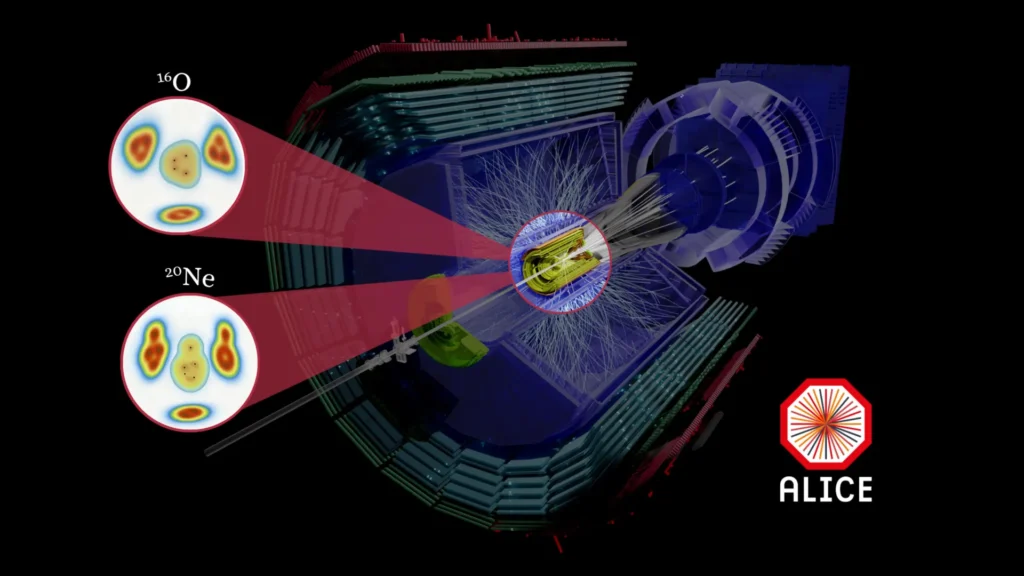
In the high-energy corridors of the European Organization for Nuclear Research (CERN) in Switzerland, a team of international physicists has achieved a milestone that bridges the gap between the infinitesimal world of subatomic particles and the infinite scale of cosmic history. By colliding atomic nuclei significantly smaller than those previously utilized in such experiments, researchers from the Niels Bohr Institute, in collaboration with the ALICE (A Large Ion Collider Experiment) team, have successfully recreated quark-gluon plasma—the primordial "soup" of matter that dominated the universe during its first few microseconds of existence. This breakthrough, recently published in the journal Physical Review Letters, challenges long-held assumptions in nuclear physics and provides a new lens through which to view the fundamental forces that shaped our reality.
The Dawn of Time in a Microscopic Laboratory
To understand the significance of this achievement, one must look back approximately 13.8 billion years. In the immediate aftermath of the Big Bang, the universe was an unimaginably hot and dense environment. During the first millionth of a second, temperatures were so extreme—surpassing several trillion degrees—that the building blocks of modern matter could not yet form. Protons and neutrons, which make up the nuclei of all atoms today, did not exist. Instead, their constituent parts, quarks and gluons, moved freely in a state of matter known as quark-gluon plasma (QGP).
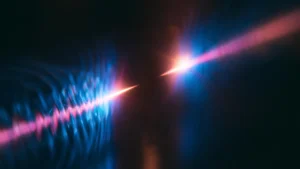
As the universe expanded and cooled, these quarks and gluons became "confined" by the strong force, binding together to form the hadrons (protons and neutrons) that eventually coalesced into the first atoms. For decades, physicists have sought to reverse this process, "melting" ordinary matter back into its primordial state to study its properties. At CERN’s Large Hadron Collider (LHC), this is typically achieved by accelerating heavy ions, such as lead nuclei, to 99.999999% of the speed of light and smashing them together. The resulting "Little Big Bang" creates a droplet of QGP that exists for a fleeting fraction of a second, allowing detectors like ALICE to capture the debris of its expansion.
Breaking the Size Barrier: From Lead to Neon
Until recently, the prevailing consensus among the scientific community was that creating quark-gluon plasma required the massive energy and volume provided by the collision of heavy nuclei. Lead, with its 208 protons and neutrons, was the gold standard. However, the new research led by Associate Professor You Zhou and his team at the Niels Bohr Institute has demonstrated that QGP can be generated using much lighter elements.
By utilizing oxygen-16 (8 protons, 8 neutrons) and neon-20 (10 protons, 10 neutrons), the researchers pushed the boundaries of what was thought possible. The experiment proved that even these relatively tiny systems could reach the energy densities required to liberate quarks and gluons from their confinement.
"We have pushed the boundary for how small the atomic nuclei can be while still recreating this primordial matter," stated Associate Professor You Zhou. "We now know more about the fundamental conditions required for matter to transition into this extreme state. Hopefully, this will help us better understand how the plasma behaved during the first moments of the Universe—and how it later evolved into the forms of matter that everything around us is made of."
The "Bowling Pin" Signature: Geometry in the Subatomic Realm
One of the most striking aspects of the study is the discovery that the geometric shape of the colliding nuclei leaves a distinct "fingerprint" on the resulting particle flow. Because the quark-gluon plasma acts as a nearly perfect fluid with extremely low viscosity, it retains a "memory" of the initial collision geometry as it expands and cools.
The researchers observed that collisions between spherical oxygen nuclei resulted in a relatively uniform, rounded pattern of particle emission. In contrast, neon-20 nuclei, which are naturally elongated and shaped somewhat like bowling pins or American footballs, produced a distinctively asymmetrical, elliptical pattern.
Postdoctoral Researcher Emil Gorm Dahlbæk Nielsen, a co-author of the study, compared the process to a cosmic shadow play. "It is a bit like shining light on an object and seeing its shadow. You cannot see the object directly, but its shadow reveals its shape," Nielsen explained. "In the same way, the movement of the particles reveals the geometric shape of the atomic nuclei that was present at the beginning of the collision."
This ability to "image" the shape of a nucleus through high-energy collisions represents a significant leap forward. Traditionally, nuclear structure has been studied using low-energy experiments that measure how nuclei vibrate or rotate. By using the "Little Big Bang" method, physicists can now probe the internal arrangements of protons and neutrons at energy levels that were previously inaccessible, providing new data on the strong force—the fundamental interaction that holds atomic nuclei together.
A Chronology of Quark-Gluon Research
The journey to this discovery has been decades in the making, involving a steady progression of technological and theoretical advancements:
- 1975: Aage Bohr, son of the legendary Niels Bohr, receives the Nobel Prize in Physics for his work on the non-spherical geometry of atomic nuclei, laying the theoretical groundwork for understanding nuclear shapes.
- 2000: The Relativistic Heavy Ion Collider (RHIC) at Brookhaven National Laboratory in New York reports the first strong evidence of quark-gluon plasma, describing it not as a gas, but as a "perfect liquid."
- 2010: The Large Hadron Collider at CERN begins heavy-ion runs, using lead-lead collisions to reach record-breaking temperatures and densities.
- 2017-2021: Researchers begin experimenting with "small systems," such as proton-lead and high-multiplicity proton-proton collisions, noticing hints of QGP-like behavior.
- 2024: The University of Copenhagen team publishes findings from oxygen and neon runs, confirming that even small, light nuclei can produce a collective primordial state.
Technical Implications and Data Analysis
The ALICE detector at CERN is a marvel of modern engineering, specifically designed to handle the thousands of particles produced in a single heavy-ion collision. It uses a Time Projection Chamber (TPC) and sophisticated silicon trackers to reconstruct the trajectories of particles with sub-millimeter precision.
In the oxygen and neon experiments, the team analyzed "anisotropic flow"—a measure of how the particles’ momentum is distributed relative to the geometry of the collision zone. The data showed that the flow coefficients (mathematical descriptions of the particle patterns) matched the predictions for a fluid-like expansion of QGP. This confirmed that the matter created in these small collisions was indeed a collective, interacting plasma rather than just a collection of independent particle interactions.
The data also provides a crucial check on the "Standard Model" of particle physics. By observing how the strong force behaves in different geometric configurations (spherical vs. elongated), physicists can refine the equations of Quantum Chromodynamics (QCD), the theory that describes the interactions between quarks and gluons.
Broader Scientific Impact and Future Horizons
The implications of this research extend far beyond the walls of the laboratory. Understanding the transition from quark-gluon plasma to ordinary matter is essential for cosmology. It informs our models of how the universe expanded and how the initial inhomogeneities in the primordial soup might have led to the distribution of galaxies we see today.
Furthermore, the study of QGP has surprising applications in other areas of physics, including the study of neutron stars. These collapsed stellar remnants are so dense that their cores may contain a form of quark matter similar to what is produced at CERN. By understanding the "equation of state" of QGP in the lab, scientists can better predict the behavior of matter under the extreme gravity of a neutron star.
Looking ahead, the team at the Niels Bohr Institute plans to push the boundary even further. The next phase of research involves using even lighter nuclei, such as helium-4. Helium is one of the most abundant elements in the universe, and its simple structure—two protons and two neutrons—presents the ultimate test for the minimum size required to create a "Little Big Bang."
"What is fascinating is that we can use the same experiment both to learn about the structure of atomic nuclei and to gain a better understanding of what happened during the birth of the Universe," concluded You Zhou. "These two things turn out to be much more closely connected than one might initially think."
As the Large Hadron Collider continues its high-luminosity upgrades, the ability to perform precision measurements on a wider variety of atomic nuclei will likely lead to further "paradigm shifts." The work of the University of Copenhagen researchers ensures that the legacy of the Niels Bohr Institute remains at the forefront of human efforts to decode the fundamental language of the cosmos. For now, the "bowling pin" signature of neon-20 stands as a testament to the fact that even in the smallest of collisions, the history of the entire universe is waiting to be read.