When MIT mechanical engineering Professor Kripa Varanasi landed in New Delhi in the middle of the night in June 2024 to attend a conference, he was immediately confronted by a stark reality: the city was sweltering under an oppressive 104-degree Fahrenheit heat. This extreme nocturnal temperature was merely a prelude to the daytime conditions, which soared to nearly 122 F, trapping Varanasi indoors for the duration of his visit. "This was June, and it was crazy. It was so hot for the whole meeting that I never left the hotel," he recounted, a sentiment that resonated deeply, recalling a cooler India from his youth. "When I grew up in India, it was not like this. That kind of inspired me." This personal experience, a visceral encounter with the accelerating impacts of climate change, served as a catalyst for Varanasi and other researchers at the Massachusetts Institute of Technology, galvanizing them to accelerate efforts in developing innovative, sustainable, and equitable cooling technologies.
The Genesis of "Critical Cooling": A Human Rights Imperative
Varanasi’s stark observation in India underscored a growing global crisis: extreme heat is not merely an inconvenience but a grave threat to human health, productivity, and life itself, particularly in the Global South. This urgency led to the establishment of the Critical Cooling initiative by the MIT Climate Project, a program championed by Christoph Reinhart, the Terri and Alan Spoon Professor of Architecture and Climate, who leads MIT’s Sustainable Design Lab (SDL). The term "critical cooling" itself emerged from a collaborative effort between the SDL and Harvard’s Human Rights Entrepreneurs Clinic, reflecting a profound recognition that access to cooling is increasingly becoming a human rights issue. Reinhart articulated the initiative’s core motivation: "It is motivated by the fact that climate change increasingly causes heat fatalities, primarily among vulnerable populations, who lack access to active cooling. The impact that MIT can have by ‘cooling people, not spaces’ is enormous." This vision guided the competitive grant program, which last year requested proposals for groundbreaking approaches. Four projects, receiving grants totaling $450,000, were subsequently funded for six months to develop proof-of-concept prototypes, all of which have now demonstrated significant promise and are exploring avenues for further development.
The Global Heat Crisis: A Dire Backdrop
The context for MIT’s Critical Cooling initiative is a world grappling with unprecedented warming. According to the World Meteorological Organization (WMO), 2023 was the warmest year on record, a trend that continues into 2024, with numerous regions, including parts of India, experiencing prolonged and intense heatwaves. These heatwaves are not isolated incidents but symptoms of a broader climate crisis driven by anthropogenic greenhouse gas emissions. The health consequences are severe: heat stress can lead to dehydration, heatstroke, exacerbation of cardiovascular and respiratory diseases, and increased mortality, especially among the elderly, children, and outdoor workers. The Lancet Countdown on Health and Climate Change reports that heat-related deaths among people over 65 have increased by 85% since 1990. Economically, extreme heat leads to significant productivity losses, particularly in agriculture and construction, sectors vital to developing economies.
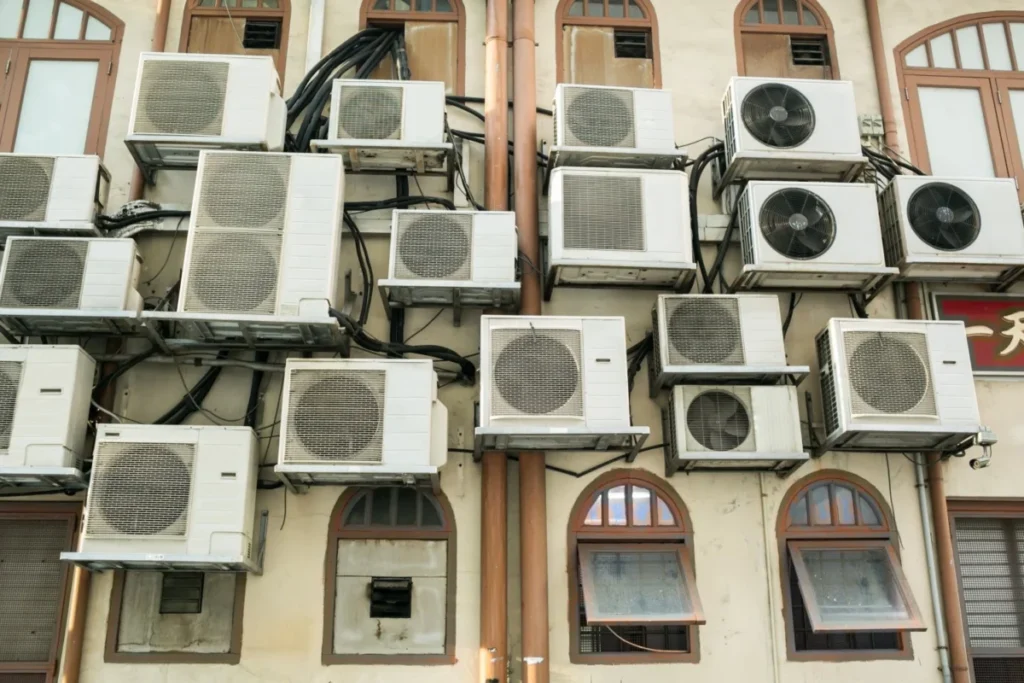
Furthermore, the demand for cooling is skyrocketing. Gang Chen, the Carl Richard Soderberg Professor of Power Engineering at MIT, notes that only about 8 percent of the 2.8 billion people living in the hottest parts of the world currently have access to air conditioning. Yet, the existing air conditioning infrastructure already contributes between 3 and 4 percent of global warming emissions, primarily due to the energy consumption and the leakage of potent hydrofluorocarbon (HFC) refrigerants. Projections indicate that the market for air conditioners could triple or even quadruple in the coming years, driven by rising incomes and temperatures, which would commensurately amplify their contribution to global warming if current technologies persist. This creates a challenging paradox: the very solutions designed to mitigate heat are simultaneously accelerating the problem. The urgency, therefore, is not just to provide cooling but to provide sustainable cooling, particularly for populations in regions with limited access to reliable or affordable power and high levels of poverty.
MIT’s Multifaceted Approach: Four Pioneering Projects
Recognizing the complexity and scale of the challenge, MIT researchers pursued diverse, innovative pathways under the Critical Cooling initiative, addressing different scales of application, technological principles, and environmental considerations.
1. Personal Cooling: Varanasi’s Wearable Innovation
Inspired by his personal ordeal in New Delhi and the biological marvel of an elephant’s ears dissipating heat to cool its blood, Professor Kripa Varanasi focused on a "cooling people, not spaces" paradigm. His project involved developing a wearable personal cooling system, a proof-of-concept prototype that aims to provide localized cooling to individuals. The device operates on a principle akin to natural thermoregulation, targeting the most effective areas for heat exchange. Crucially, the prototype consumes a mere 33 watts, a stark contrast to a typical room air conditioner’s approximately 1,000 watts.
The economic implications are equally significant. Varanasi estimates the prototype’s material cost at about $20 using U.S. materials. However, if manufactured with local materials in India, this cost could plummet to less than $1 per unit. This low cost opens up transformative possibilities for large-scale deployment. Imagine government programs distributing these cooling garments to vulnerable communities, local entrepreneurs establishing charging stations for night-time wear, and new businesses emerging to manufacture the systems. The washable nature of the garments, with the cooling material separable, ensures hygiene and longevity. Varanasi envisions these devices enabling people to achieve at least a good night’s sleep even amidst extreme heat, a critical factor for health and productivity. His initial prototype, tested on a simulated foot with a heater, successfully maintained the temperature within the necessary zone for body cooling, proving its viability. The underlying material, widely available but treated using a novel process developed by his team, represents a fundamental scientific breakthrough. Varanasi is now actively exploring commercialization strategies, emphasizing that "ultimately, to make anything work, it has to be a business, otherwise good ideas can die. It has to be a good business and a sustainable business."
2. Subsurface Cooling: Chiang’s Earth-Powered Solution
Professor Yet-Ming Chiang, the Kyocera Professor of Materials Science and Engineering, delved into the potential of utilizing subsurface wells as a passive or low-energy active cooling mechanism. His research explored the use of heat-absorbing materials within these wells to supply spaces with air significantly cooler than peak ambient temperatures, requiring substantially less energy than conventional vapor-compression heat pumps. The earth’s subsurface maintains a relatively stable temperature throughout the year, making it a reliable heat sink. By circulating air or a fluid through a network of underground pipes or wells lined with advanced heat-absorbing materials, heat can be efficiently transferred from the indoor environment to the cooler ground.
Chiang’s approach aims to leverage this geothermal stability to create a more energy-efficient cooling system suitable for both small apartment buildings and single-family homes, particularly in India and other parts of the Global South where energy infrastructure can be limited and expensive. The beauty of this method lies in its potential for decentralized application and reduced reliance on electricity grids, making it robust in regions prone to power outages. By minimizing the use of refrigerants and high-energy compressors, subsurface cooling offers a path towards significantly lower operational costs and a reduced carbon footprint, presenting a scalable alternative to traditional air conditioning.
3. Refrigerant-Free AC: Henry’s Rubber-Based Breakthrough
Professor Asegun Henry, the George N. Hatsopoulos Professor in Thermodynamics, addressed the dual challenge of energy inefficiency and the environmental impact of hydrofluorocarbon (HFC) refrigerants in conventional air conditioning. HFCs are potent greenhouse gases, thousands of times more impactful than carbon dioxide over a 20-year period, and their leakage during operation and disposal contributes significantly to global warming. Henry’s innovative approach explores an alternative cooling cycle that completely eliminates chemical refrigerants.
His research focused on using a cheap, widely abundant solid "caloric" material—rubber—to achieve a cooling effect. Caloric materials exhibit a temperature change when subjected to external fields (like mechanical stress, magnetic fields, or electric fields). In Henry’s system, rubber is mechanically stretched and relaxed, causing it to absorb and release heat. This heat is then efficiently transferred using plain water as a heat transfer fluid, which is non-toxic, inexpensive, and environmentally benign. This "elastocaloric" cooling system represents a radical departure from current AC technology, promising to be far more energy-efficient and entirely free of greenhouse gas refrigerants. The initial target market for this technology includes single-family houses and apartment buildings, but the potential scalability of the system could also allow for its application in larger cooling demands, such as data centers, which are increasingly energy-intensive.
4. Next-Generation Refrigerants: Chen’s Climate-Neutral Path
Professor Gang Chen tackled the inherent problems of existing air conditioning units, which are often expensive, power-hungry, and reliant on refrigerants with significant global warming potential. He highlighted that these refrigerants, far more potent greenhouse gases than carbon dioxide, are prone to leaking out over the device’s lifetime and especially during disposal, exacerbating their environmental contribution. Chen’s project aimed to address this by developing a completely different kind of chemical refrigerant that possesses no greenhouse impact.
While current refrigerants like HFCs have been phased down under international agreements like the Kigali Amendment to the Montreal Protocol, the search for truly climate-neutral alternatives remains critical. Chen’s approach involves exploring novel chemical compounds or mixtures that can achieve efficient refrigeration cycles without contributing to atmospheric warming. His team built and tested three prototypes, and while he cautioned, "I’m not at the stage where I can say that I know this will work," the experiments provided enough promise to warrant further development. If successful, his work could dramatically alter air conditioning technology worldwide, offering a drop-in replacement for existing systems or enabling new designs that are fundamentally more sustainable. This has profound implications not just for residential and commercial cooling but also for industrial applications and the intensive cooling needs of rapidly expanding data centers.
Collaborative Momentum: Driving Innovation Forward
The success of the Critical Cooling initiative was bolstered by a strong collaborative framework. Liana Frey, a managing director at the MIT Climate Project, noted the collective progress made by all teams, with most producing initial prototypes. The initiative kicked off with a crucial workshop organized in collaboration with the Abdul Latif Jameel Poverty Action Lab (J-PAL), led on J-PAL’s side by Senior Policy Manager Andre Zollinger. This workshop brought together a diverse group of stakeholders, including representatives from the World Bank, leaders from the Global South, industry experts, and engineers with innovative ideas. Such multi-sectoral engagement is vital for ensuring that technological solutions are not only scientifically sound but also economically viable, socially equitable, and aligned with the real-world needs of vulnerable populations. "We’re continuing to look at different ways of proceeding with the work," Frey affirmed, underscoring the ongoing commitment to nurture these promising ideas.
Overcoming Hurdles and Eyeing Commercialization
While the initial results are encouraging, the journey from proof-of-concept to widespread adoption is fraught with challenges. Scaling production, securing further funding, navigating regulatory landscapes, and establishing effective distribution channels, particularly in diverse markets like the Global South, require sustained effort and strategic partnerships. For Varanasi’s wearable cooling, developing a robust business model that can support local manufacturing and distribution while ensuring affordability will be key. For Chiang’s subsurface cooling, geological assessments and installation complexities need to be addressed. Henry’s and Chen’s advanced AC systems will require rigorous testing for efficiency, durability, and cost-effectiveness at commercial scales, as well as adherence to safety standards. The transition from laboratory success to market impact demands not only technological refinement but also robust business development and policy support.
Profound Implications: A Cooler, More Equitable Future
The potential implications of these MIT-led innovations are profound and far-reaching. If successfully developed and deployed, these technologies could:
- Mitigate Climate Change: By dramatically reducing energy consumption and eliminating or replacing potent greenhouse gas refrigerants, they could significantly lower the carbon footprint of cooling, a sector projected to be a major contributor to future emissions.
- Improve Public Health: Providing access to affordable and sustainable cooling, especially to vulnerable populations, could prevent countless heat-related illnesses and deaths, enhance sleep quality, and improve overall well-being and productivity.
- Promote Energy Equity: Solutions like Varanasi’s wearable device or Chiang’s subsurface cooling could offer relief in areas with unreliable or non-existent power grids, democratizing access to essential cooling.
- Spur Economic Development: Local manufacturing, distribution, and maintenance of these new technologies could create jobs and foster economic growth in developing regions, establishing new industries and entrepreneurial opportunities.
- Enhance Resilience: As climate change intensifies, these innovations could bolster societal resilience against extreme heat events, allowing communities to better adapt to a warming world.
- Transform Industry: The principles behind Henry’s and Chen’s work could revolutionize the air conditioning and refrigeration industries, driving a shift towards more sustainable and efficient practices globally.
The Path Ahead: Sustained Support for a Warming World
The initial success of MIT’s Critical Cooling initiative serves as a powerful testament to the potential of targeted research and interdisciplinary collaboration in addressing one of humanity’s most pressing challenges. The enthusiasm for these solutions is palpable. "There are a lot of people interested in this heat-stress question," says Liana Frey, "It’s just becoming more and more urgent." As global temperatures continue their relentless ascent, the need for innovative, equitable, and sustainable cooling solutions will only intensify. The commitment demonstrated by MIT and its partners to further develop and fund these groundbreaking ideas offers a beacon of hope, illustrating a proactive and scientifically rigorous approach to building a cooler, more livable future for all. The next phase will involve translating these promising prototypes into scalable, market-ready products that can deliver on their immense potential and help humanity adapt to the undeniable realities of a warming planet.