Modern chemistry serves as the invisible scaffolding for nearly every advancement in the 21st century, from the synthesis of life-saving pharmaceuticals to the creation of high-performance materials used in aerospace and electronics. At the heart of these advancements is the ability of chemists to manipulate molecules at the atomic level, a process that often relies on the precise movement of electrons. For decades, one of the most powerful tools in this arsenal has been single-electron transfer (SET), a technique that allows researchers to activate inert molecules and forge new chemical bonds. However, this tool has long been hampered by a fundamental law of thermodynamics: electrons naturally gravitate toward the molecule that is easiest to reduce. This "path of least resistance" has historically prevented scientists from directing reactions toward more difficult, yet potentially more valuable, chemical pathways.
In a landmark study recently published in the journal Nature, a collaborative team of researchers led by the University of Wisconsin-Madison, alongside partners at Colorado State University and the University of Colorado Boulder, has unveiled a revolutionary approach that bypasses this traditional limitation. By developing a catalyst capable of releasing electrons directly into a solvent—creating what are known as "solvated electrons"—the team has demonstrated a method to force reactions that were previously considered impossible or highly inefficient. This discovery does not merely add a new reaction to the chemist’s toolkit; it fundamentally rewrites the framework for how redox (reduction-oxidation) reactions are designed.
The Challenge of Thermodynamic Preference in Electron Transfer
To understand the magnitude of this breakthrough, one must first consider the traditional constraints of electron transfer. In a typical chemical reaction involving two different types of molecules, a catalyst or a reagent will attempt to donate an electron to initiate a bond-forming process. Under standard conditions, if Molecule A is easier to reduce (meaning it has a higher electron affinity or a more positive reduction potential) than Molecule B, the electron will almost exclusively migrate to Molecule A.
This natural preference, while predictable, is often a hindrance. In complex drug synthesis, for instance, a chemist might need Molecule B to receive the electron to trigger a specific structural change. If Molecule A is present—even as a necessary part of the reaction environment—it acts as an "electron sink," hogging the charge and preventing the desired transformation of Molecule B. For years, the only way to circumvent this was to use incredibly harsh reagents or to laboriously modify the starting materials to change their electronic properties, processes that are often expensive, dangerous, and environmentally taxing.
The research team, spearheaded by Zachary Wickens, a professor in the UW-Madison Department of Chemistry, sought to break this cycle by changing the "where" and "how" of electron delivery.
A New Mechanism: The Ejection of Free Electrons
The core innovation of the Wickens group lies in the development of a unique class of photoredox catalysts. Unlike traditional catalysts that hold onto an electron until they come into direct contact with a substrate molecule, the new catalyst is designed to eject the electron directly into the surrounding solvent.
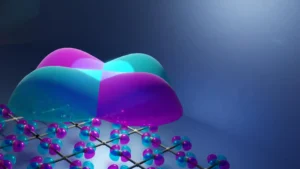
"Our catalyst works a bit differently because it actually just ejects the electron directly into solvent," Wickens explained. This creates a "solvated electron," which is essentially a free electron floating in the liquid, stabilized only by the surrounding solvent molecules. In the world of chemistry, a free electron is the ultimate "aggressive" source of energy. Because an electron is significantly more stable when attached to almost any molecule than when it is floating freely in a solvent, it becomes incredibly desperate to find a home.
Once the electron is released into the "wild" of the solution, it no longer follows the traditional rules of thermodynamic preference. It effectively strikes the first molecule it encounters. This "kinetic" approach to electron transfer allows the electron to attach to molecules that would normally be ignored in a competitive environment. As Wickens noted, "Anything is better than the electron freely floating in solution."
The Science of Selective Recycling: How the Reaction Succeeds
While the concept of "firing electrons at everything" might seem like it would lead to chaotic and unselective results, the research team discovered a sophisticated secondary mechanism that ensures the desired reaction pathway prevails. This is where the collaborative efforts of the Colorado teams proved essential.
Researchers at Colorado State University, led by Professor Robert Paton and supported by the National Science Foundation-funded Center for Sustainable Photoredox Catalysis (SuPRCat), conducted extensive computational modeling to track the fate of these electrons. Their simulations revealed that the decisive moment of selectivity does not actually happen when the electron first leaves the catalyst. Instead, it happens in the milliseconds following the transfer.
According to Paton, the "easier to reduce" molecule—the one that would normally win the electron—does indeed often catch the electron first. However, the reaction at that site is frequently reversible. The electron can "bounce" back out or the molecule can return to its starting state without forming a permanent bond. Conversely, when the "desired" (but harder to reduce) molecule catches an electron, it quickly undergoes a chemical change that moves it further down the path toward the final product, effectively "trapping" the electron in the desired pathway.
"Our calculations reveal how the decisive selectivity emerges after electron transfer has already occurred," Paton said. "We found that the desired reactant can escape reversal and continue toward product, while the partner that is easier to reduce is effectively recycled back to its starting material."
This "recycling" mechanism explains how the reaction achieves high yields of the target product despite the initial thermodynamic odds being stacked against it. It is a form of kinetic control that allows chemists to harvest the results of a difficult reaction while the "natural" reaction essentially spins its wheels.
Spectroscopy and Experimental Validation
To confirm these theoretical findings, scientists at the University of Colorado Boulder, led by Professor Niels H. Damrauer, utilized advanced spectroscopy. This allowed the team to "see" the transient species created during the reaction and measure the speeds at which electrons were moving between the catalyst, the solvent, and the reactants.
The spectroscopic data provided the physical evidence needed to support the computational models. It confirmed that the catalyst was indeed producing solvated electrons and that the subsequent "recycling" of the unwanted intermediates was occurring as predicted. This multi-disciplinary approach—combining synthetic chemistry, high-level computation, and precision physics—was critical to proving that this wasn’t just a lucky fluke, but a reproducible new framework for chemical design.
A Five-Year Chronology of Innovation
The breakthrough reported in Nature is the culmination of half a decade of focused research. The Wickens group at UW-Madison began developing this family of catalysts roughly five years ago, initially looking for more efficient ways to drive photoredox reactions—reactions that use light energy to move electrons.
- Phase 1 (2019-2020): Initial discovery of the catalyst class. The team noticed unusual reactivity patterns that didn’t align with standard reduction potential tables.
- Phase 2 (2021-2022): Refinement of the catalyst structure. The researchers worked to make the catalyst more stable and capable of being activated by visible light, which is safer and more sustainable than ultraviolet light.
- Phase 3 (2022-2023): Collaboration with CSU and CU Boulder. Recognizing that they had found something that defied standard logic, Wickens sought out experts in computation and spectroscopy to help decode the mechanism.
- Phase 4 (2023-2024): Final testing and application. The team demonstrated that the method could be used for a wide range of "coupling" reactions—joining two different molecules together—that are essential for creating complex drug precursors.
Implications for the Pharmaceutical and Materials Industries
The ability to ignore traditional electron-transfer preferences has massive implications for industrial chemistry. In the pharmaceutical sector, many drug candidates are discarded during the development phase because they are too difficult or expensive to synthesize. This often happens because the necessary chemical bonds require "forcing" an electron into a resistant part of the molecule.
By using the solvated electron approach, chemists can now consider synthetic routes that were previously "off-limits." This could lead to:
- More Efficient Drug Discovery: Faster synthesis of complex organic molecules means more candidates can be tested in clinical trials.
- Greener Chemistry: Because this method uses light-activated catalysts and avoids the need for harsh, toxic reducing agents (like metallic sodium or lithium), it aligns with the global push for sustainable manufacturing.
- Advanced Materials: The technique could allow for the creation of new polymers and high-tech materials with unique electronic or structural properties that were previously impossible to link.
Furthermore, the "recycling" aspect of the reaction minimizes waste. Since the "wrong" molecule is simply returned to its starting state rather than being turned into a useless byproduct, the overall efficiency of the process is significantly higher than traditional methods.
A Paradigm Shift in Redox Chemistry
The research team believes this is just the beginning. By demonstrating that selectivity can be managed after the electron transfer event, they have opened the door for a new generation of "non-canonical" reaction designs.
"This is not just another synthetic method; it’s a new way to design redox reactions," Wickens stated. The traditional mindset has always been to find the "perfect" match between a catalyst and a substrate’s reduction potential. This new framework suggests that chemists can instead use a "brute force" electron source and then rely on the inherent kinetic properties of the molecules to sort out the final result.
As the scientific community begins to digest these findings, the impact is expected to ripple through academic and industrial labs alike. The study, authored by a team including Joseph M. Edgecomb, Matthew D. Resmini, Alissia F. Meyer, Niket Manoj, and Arindam Sau, stands as a testament to the power of collaborative, multi-disciplinary science in solving problems that have frustrated the field for generations.
In the long term, this discovery may be remembered as the moment when chemists finally broke free from the "thermodynamic trap," gaining the ability to steer electrons not just where they want to go, but where they are needed to build the future.