Global demand for electricity is rising fast, driven by an unprecedented surge from energy-hungry data centers supporting artificial intelligence, along with expanding manufacturing sectors worldwide. This escalating demand is placing immense pressure on existing power systems, necessitating solutions that go beyond merely generating additional electricity. The imperative now is to use existing energy supplies far more efficiently and at a lower cost, a challenge that researchers at the National Renewable Energy Laboratory (NREL) believe they have addressed with a groundbreaking new technology.
The Intensifying Global Energy Crisis and the Need for Innovation
For decades, the global energy landscape has primarily focused on increasing supply to meet demand. However, recent trends, particularly the explosion of generative AI and the proliferation of advanced manufacturing facilities, have created a demand curve steeper than ever anticipated. Data centers, the physical infrastructure of the digital world, are projected to consume an ever-larger share of global electricity. Industry analysts estimate that by 2030, data centers could account for over 5% of global electricity consumption, a significant jump from current levels, with some projections going even higher. This surge, coupled with the electrification of transportation, industrial processes, and an expanding global population, underscores a critical inflection point: the world needs not just more power, but smarter power.
Traditional grid infrastructure, often reliant on aging components and less efficient conversion technologies, struggles to keep pace with these new demands. The energy lost during conversion and transmission within the grid, and even within individual electronic systems, represents a colossal waste of resources and contributes to increased operational costs and carbon emissions. This backdrop highlights the urgency for innovations that can fundamentally alter how electricity is managed and delivered.
Introducing ULIS: A Paradigm Shift in Power Conversion
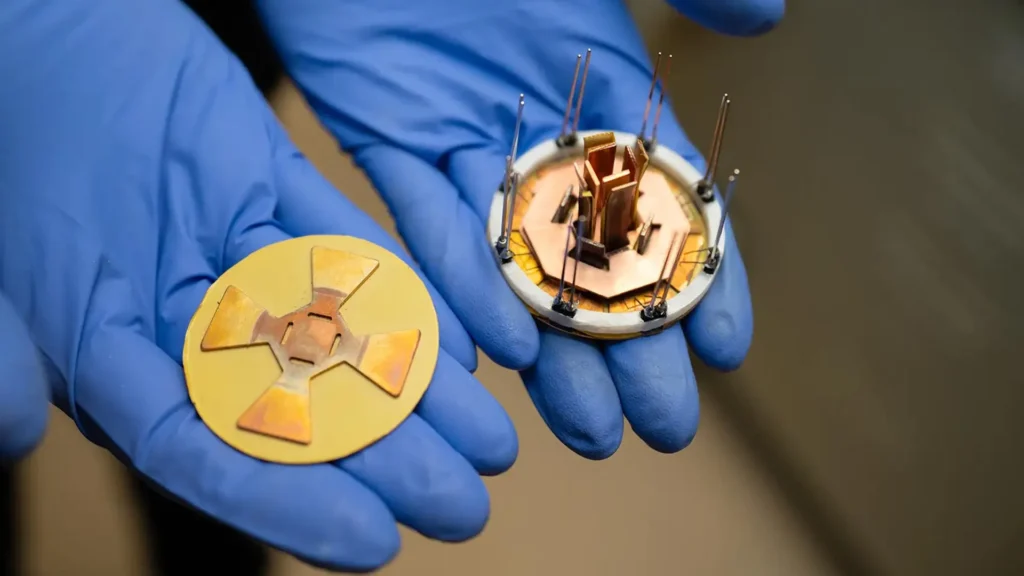
In response to this pressing global challenge, NREL researchers have developed the Ultra-Low Inductance Smart power module, or ULIS. This silicon carbide (SiC) based power module represents a significant leap forward in power electronics, designed to dramatically improve how electricity is converted and delivered across various applications. Power modules are the essential housings for power electronics, which regulate the flow of electricity between different systems. ULIS distinguishes itself by delivering record-breaking efficiency, higher power density, and an innovative manufacturing process designed to keep costs low.
NREL, a U.S. Department of Energy national laboratory, has a long-standing reputation for pioneering research in renewable energy and energy efficiency. The development of ULIS stems from years of dedicated work in advanced power electronics, aiming to unlock new levels of performance from semiconductor materials like silicon carbide. SiC semiconductors are rapidly replacing traditional silicon in high-power, high-frequency applications due to their superior thermal conductivity, higher breakdown voltage, and faster switching speeds. ULIS capitalizes on these inherent advantages, pushing the boundaries of what SiC technology can achieve.
The ULIS design achieves five times the energy density of earlier designs while occupying significantly less space. This remarkable combination allows manufacturers to build equipment that is not only smaller and lighter but also considerably more energy efficient. The module, rated at 1200 volts and 400 amps, is ideally suited for a diverse range of demanding applications, including high-density data centers, the modernization of electrical grids, compact microreactors, and heavy-duty platforms such as next-generation aircraft and military vehicles. This versatility positions ULIS as a foundational technology for future energy systems.
The Critical Role of Ultra-Low Inductance
A core innovation behind ULIS’s superior performance lies in its exceptionally low parasitic inductance. Parasitic inductance refers to an unwanted electrical resistance that inherently slows down changes in electrical current and, consequently, limits the efficiency of power conversion. In high-frequency power electronics, minimizing this inductance is paramount for achieving optimal performance. ULIS achieves a reduction in this resistance by an astounding seven to nine times compared with even today’s most advanced silicon carbide power modules.
This drastic reduction in parasitic inductance is not merely a technical detail; it translates directly into tangible benefits. Because the ULIS system can switch electrical current extremely quickly and efficiently, it converts a far greater proportion of the available electricity into usable power. This capability allows ULIS to extract significantly more value from the same energy supply, making it an incredibly strong candidate for addressing the burgeoning global energy needs by maximizing the utility of every electron.
Faisal Khan, NREL’s chief power electronics researcher and the principal investigator for the ULIS project, emphasizes the transformative nature of this breakthrough. "We consider ULIS to be a true breakthrough," Khan stated. "It’s a future-proofed, ultrafast power module that will make the next generation of power converters more affordable, efficient, and compact. This isn’t just an incremental improvement; it’s a foundational shift in how we approach power conversion at the system level." His remarks underscore the project team’s confidence in ULIS’s potential to set new industry standards.
Beyond Efficiency: Unparalleled Reliability in Demanding Environments
While efficiency is a primary driver for ULIS, its design also prioritizes robust reliability, especially in the most demanding operational environments. According to Khan, the lightweight yet powerful module incorporates advanced features that allow it to monitor its own condition and anticipate component failures well before they occur. This predictive capability is a game-changer for critical applications.
This self-monitoring feature is particularly crucial for high-risk applications such as advanced aviation and military operations. For aircraft operating at altitudes of 30,000 feet, where maintenance is impossible mid-flight, or for vehicles navigating unpredictable combat zones, early failure detection can be the decisive factor between mission success and catastrophic loss of equipment or, more importantly, human life. The ability to identify and preempt potential issues translates into enhanced operational safety, reduced downtime, and lower lifecycle costs for these high-value assets.
Khan proudly notes the homegrown nature of the project: "ULIS was a truly organic effort, built entirely in-house here at NREL. This allowed us to maintain complete control over the design and manufacturing process, fostering a level of innovation that might not be possible with external partners. We are very excited to demonstrate its strengths in real-world settings." This internal development process highlights NREL’s comprehensive capabilities in advanced materials and power electronics research.
A Radical Redesign for Lower Cost Manufacturing: The "Pancake" Revolution
Many of ULIS’s unprecedented performance gains stem from a completely new physical design that departs radically from conventional power module architectures. Traditional power modules typically stack semiconductor devices within box-like packages, a method that can introduce parasitic elements and limit thermal dissipation.
In stark contrast, ULIS arranges its circuitry in a flat, octagonal layout, resembling a "pancake." This disk-shaped structure allows for the integration of more components into a smaller footprint, thereby reducing both overall size and weight. Simultaneously, its innovative current routing minimizes magnetic interference, which is critical for delivering cleaner electrical output and achieving higher overall efficiency. The flat design not only improves electrical performance but also simplifies thermal management by providing a larger surface area for heat dissipation.
The journey to this elegant design involved a fascinating chronology of research and development. Early concepts explored complex three-dimensional shapes, including designs resembling intricate flowers or hollow cylinders. However, these ambitious ideas proved to be either too expensive or too difficult to manufacture at scale. The pivotal breakthrough occurred when the NREL team, after extensive experimentation, simplified the concept into a nearly two-dimensional structure. Sarwar Islam, another NREL power electronics researcher, played a crucial role in proposing this flattened design, which successfully balanced high performance with practical considerations of cost and manufacturability.
Shuofeng Zhao, an NREL power electronics researcher who designed ULIS’s flux cancellation architecture, recalled the design challenges: "Our biggest concern was that the device switches off and on very quickly, and we needed a layout that wouldn’t create a chokepoint within the design, hindering the flow of current or generating unwanted inductance." The "pancake" approach effectively resolved these intricate electrical engineering challenges.
Zhao humorously described the design evolution: "We squished it flat, like a pancake, and suddenly we had a low-cost, high-performing design that was much easier to fabricate." This simplification was instrumental in making ULIS a commercially viable technology. Joshua Major, also part of the NREL power electronics team, further contributed by developing new fabrication methods that enabled the intricate structure to be produced using only in-house tools and facilities. The result was a design that masterfully combined the electrical advantages often associated with more complex three-dimensional systems with the practicality and cost-effectiveness of flat manufacturing techniques.
Flexible Materials and Wireless Control: Enhancing Adaptability
ULIS also innovates significantly in its choice of materials and control mechanisms. Traditional power modules often bond copper directly to rigid ceramic bases to conduct electricity and manage heat. While effective, this approach inherently limits flexibility and adds to the module’s bulk and weight.
Instead, ULIS bonds copper to Temprion, a flexible polymer. This material change yields a thinner, lighter, and more adaptable structure. The bonding process itself is simplified, requiring only heat and pressure, and its components can be machined with widely available equipment. This streamlined manufacturing approach dramatically reduces production costs, bringing them down to hundreds of dollars per module rather than the thousands typically associated with advanced power electronics. This cost reduction is crucial for broad market adoption and scalability.
Another major advance is ULIS’s capability for wireless operation. The module can be controlled and monitored without the need for physical cables, functioning as a self-contained unit. This modular, "Lego-like" design allows for seamless integration into a vast array of systems, from data center servers to advanced aircraft and military vehicles, without the complexities of wiring harnesses. This wireless functionality not only simplifies installation and maintenance but also enhances the overall reliability of the system by eliminating potential points of failure associated with physical connections. A patent for the low-latency wireless communication protocol, spearheaded by Sarwar Islam, is currently pending, further cementing ULIS’s innovative edge.
Designed for Future Technologies: A Forward-Looking Approach
While ULIS currently leverages the significant advantages of advanced silicon carbide semiconductors, its design was intentionally built with an eye toward future evolution. The module can be readily adapted for upcoming semiconductor materials, including gallium nitride (GaN) and even gallium oxide (Ga2O3), a material that has not yet reached commercial use but shows immense promise for next-generation power electronics due to its ultra-wide bandgap properties. This forward-looking design ensures that ULIS remains relevant and high-performing as semiconductor technology continues to advance, offering a truly future-proof solution.
Collectively, these innovations support a central, overarching goal: as societies become increasingly dependent on reliable, high-quality electricity, ULIS is engineered to deliver unparalleled efficiency without sacrificing the critical element of dependability. It represents a proactive step towards building more resilient and sustainable energy infrastructures for the future.
Broad Impact and Strategic Implications Across Key Sectors
The implications of ULIS are expected to be profound and widespread, impacting multiple critical sectors:
U.S. Power Grid Modernization: In the U.S. power grid, electricity often undergoes multiple conversions into usable forms before it reaches consumers. This process frequently relies on large, low-frequency equipment that is inherently inefficient and wastes considerable energy. ULIS’s fast switching capabilities dramatically improve conversion efficiency, while its ability to tolerate high temperatures may significantly reduce long-term maintenance costs for grid infrastructure. The integration of ULIS could enable smaller, more distributed grid components, enhancing resilience and reducing transmission losses, aligning perfectly with ongoing efforts to modernize and decarbonize national grids.
Transforming Aviation: The aviation industry is aggressively pursuing electrification, particularly with the development of electric vertical takeoff and landing (eVTOL) aircraft and hybrid-electric propulsion systems. These applications demand power converters that are not only highly efficient but also extremely lightweight and compact. ULIS’s ability to move electricity quickly and conserve energy directly enables lighter and more powerful converters, which is crucial for maximizing payload capacity, extending flight range, and improving the overall commercial viability of electric aircraft. This could accelerate the transition to cleaner and quieter air travel.
Advancing Fusion Energy Systems: Although commercial fusion energy remains a long-term goal, research and development are progressing rapidly. Future fusion reactors will require incredibly compact and reliable pulsed power components to initiate and sustain fusion reactions. The ultralow inductance and exceptionally durable design of ULIS make it remarkably well suited for the extreme conditions and precise power delivery requirements of fusion energy systems, potentially playing a vital role in unlocking this limitless energy source.
Fueling Data Centers and AI Infrastructure: The burgeoning demands of artificial intelligence and expanding data centers are putting unprecedented strain on power infrastructure. ULIS can significantly improve the efficiency of power delivery within these facilities, reducing energy consumption, heat generation, and the physical footprint required for power conversion equipment. This translates directly into lower operational costs, reduced cooling requirements, and the ability to pack more computing power into existing spaces, which is critical for the continued growth of the digital economy.
Enhancing Military and Defense Capabilities: For military applications, reliability in extreme conditions is non-negotiable. ULIS’s rugged design, self-monitoring features, and high power density provide a strategic advantage for next-generation military vehicles, portable power systems, and advanced defense platforms. Its ability to perform reliably under harsh environmental stresses, coupled with predictive maintenance capabilities, ensures critical systems remain operational when it matters most, contributing to mission success and personnel safety.
As industries worldwide strive for more reliable electricity, advanced artificial intelligence capabilities, and next-generation vehicles, NREL’s Ultra-Low Inductance Smart power module (ULIS) offers a compelling solution. With its innovative design, material choices, and future-proof architecture, ULIS is now available for licensing, poised to make a significant and lasting impact on the global energy landscape. This development marks a pivotal moment in the quest for a more efficient, reliable, and sustainable energy future.