The shape of the universe is not something we often ponder in our daily lives, yet it forms the bedrock of our understanding of existence. A groundbreaking new study, published by a team of researchers, suggests that the cosmos might not be uniform, but rather asymmetric or "lopsided," meaning its properties are not identical in every direction. This revelation presents a profound challenge to the prevailing "standard cosmological model," which has long described the dynamics and structure of the entire cosmos based on fundamental assumptions of isotropy (looking the same in all directions) and homogeneity (being uniform when averaged on large scales). The implications of such an asymmetry could necessitate a fundamental rethinking of our most cherished cosmic theories.
A Fundamental Challenge to Cosmic Symmetry
The recent publication details how this potential cosmic asymmetry stems from a significant observational discrepancy known as the "cosmic dipole anomaly." This anomaly poses a direct and serious challenge to the most widely accepted description of the universe, the Lambda-CDM model (Lambda-cold dark matter model), which is built upon the aforementioned principles of isotropy and homogeneity. For decades, the Lambda-CDM model has been remarkably successful in explaining a vast array of cosmological observations, from the expansion of the universe to the formation of galaxies. Its elegance and explanatory power have made it the cornerstone of modern cosmology. However, a growing number of observational "tensions," or disagreements in data, are beginning to strain its foundational assumptions. The cosmic dipole anomaly, according to the new research, is not merely another tension but a potentially fatal flaw in the very geometry we ascribe to the universe.
The Standard Model: Pillars of Cosmic Understanding
The Triumph of Lambda-CDM
The Lambda-CDM model represents the current consensus in cosmology, explaining the universe’s evolution from the Big Bang to the present day. It posits that the universe is composed of approximately 5% ordinary matter, 27% dark matter, and 68% dark energy. Dark matter provides the gravitational scaffolding for large-scale structures, while dark energy drives the accelerating expansion of the universe. This model is underpinned by Albert Einstein’s theory of General Relativity, which describes gravity as the curvature of spacetime. Crucially, to make Einstein’s complex equations tractable for describing the entire universe, cosmologists adopted simplifying assumptions: that the universe is isotropic and homogeneous on scales larger than about 100 megaparsecs (roughly 326 million light-years). This simplification leads to the Friedman-Lemaître-Robertson-Walker (FLRW) metric, which mathematically describes an expanding, homogeneous, and isotropic universe.
The Cosmic Microwave Background (CMB) and Isotropy
The primary observational evidence supporting the FLRW description, and thus the Lambda-CDM model, comes from the Cosmic Microwave Background (CMB). Discovered in 1964 by Arno Penzias and Robert Wilson, the CMB is the faint afterglow radiation left over from the Big Bang, dating back to when the universe was only about 380,000 years old. This relic radiation is remarkably uniform across the entire sky, varying by only one part in a hundred thousand (approximately 2.725 Kelvin with fluctuations of microkelvins). This near-perfect uniformity was a powerful confirmation of the universe’s initial homogeneity and isotropy, leading cosmologists to confidently model the universe using the "maximally symmetric" FLRW description of spacetime within General Relativity. The CMB’s statistical properties, observed by missions like COBE, WMAP, and Planck, have been instrumental in constraining the parameters of the Lambda-CDM model with unprecedented precision.
The FLRW Metric: A Simplified Universe
The FLRW metric assumes that the universe is spatially flat, homogeneous, and isotropic. These assumptions dramatically simplify Einstein’s field equations, making it possible to derive elegant solutions that describe the universe’s expansion. For decades, the FLRW metric has served as the bedrock for calculating the age of the universe, its expansion rate, and the evolution of cosmic structures. The observed large-scale structure of the universe, with its cosmic web of galaxies and voids, broadly aligns with the predictions of the FLRW model, especially when coupled with the presence of dark matter and dark energy.
Cracks in the Cosmic Foundation: Emerging Tensions
Despite the Lambda-CDM model’s successes, several significant anomalies, or "tensions," have emerged from increasingly precise observational data in recent years. These discrepancies hint that our understanding of the cosmos might be incomplete or fundamentally flawed.
The Hubble Tension
One of the most widely debated of these anomalies is the "Hubble tension," named after Edwin Hubble, who in 1929 famously discovered that the universe is expanding. The tension arises from a persistent disagreement in the measured value of the Hubble constant (H₀), which quantifies the current rate of the universe’s expansion. Measurements derived from observations of the early universe, primarily from the Planck satellite’s CMB data, yield a value of approximately 67-68 kilometers per second per megaparsec (km/s/Mpc). In contrast, measurements from the local, more recent universe, using "standard candles" like Type Ia supernovae observed by the Hubble Space Telescope and parallax measurements from the Gaia satellite, consistently yield a higher value, around 73-74 km/s/Mpc. This approximately 9% difference is statistically significant, exceeding typical error margins. Resolving the Hubble tension has proven difficult, with proposed solutions ranging from new fundamental particles (like early dark energy) to modifications of gravity, none of which have gained universal acceptance.
The Cosmic Dipole Anomaly: A Deeper Rift
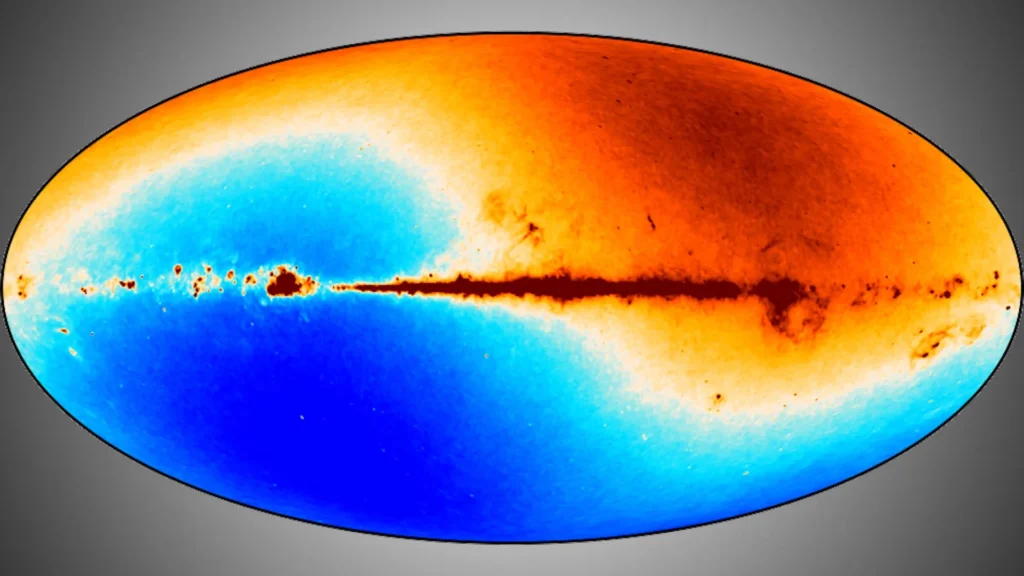
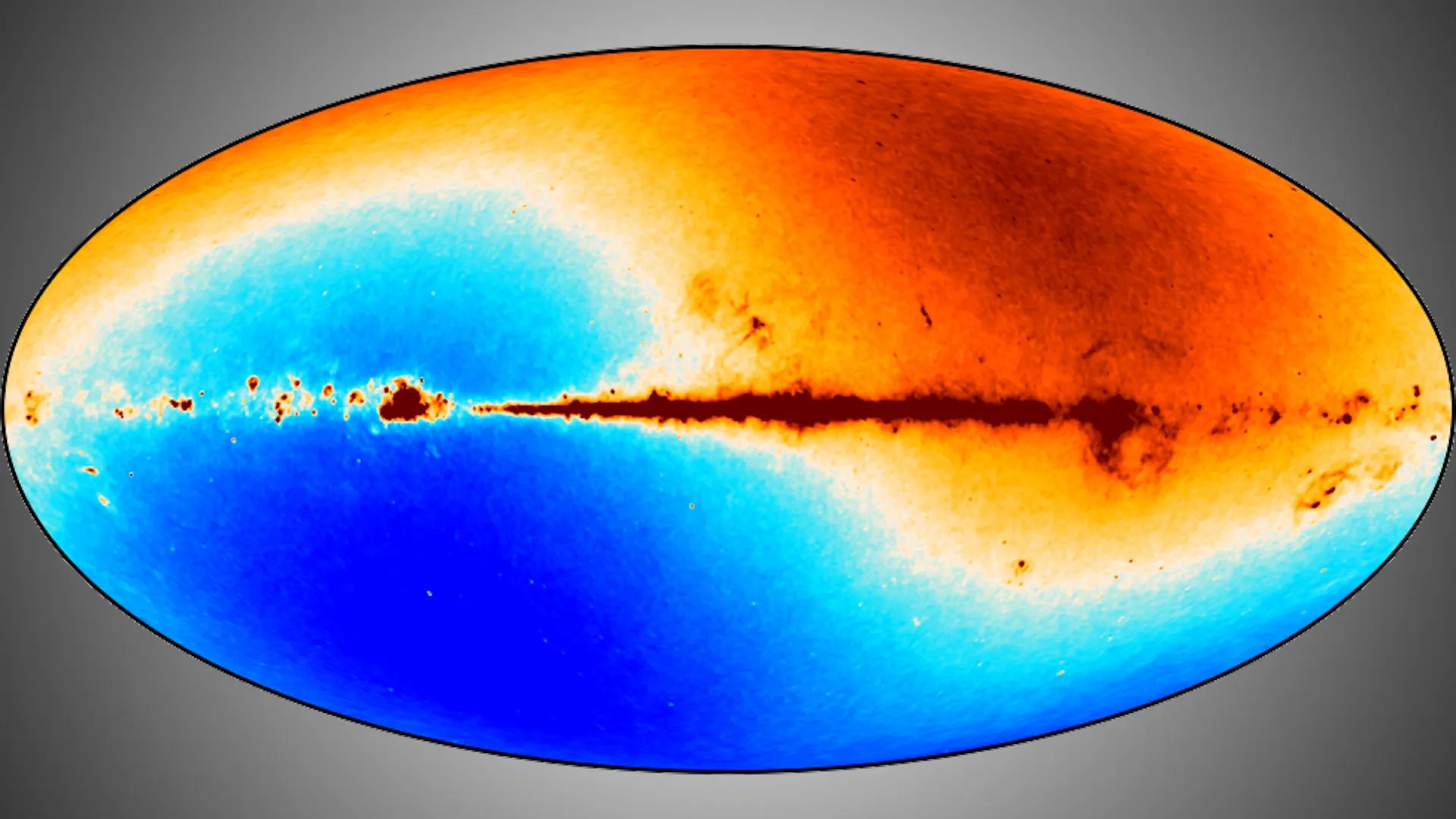
While the Hubble tension has garnered significant attention, the cosmic dipole anomaly, though less widely discussed, is arguably even more fundamental to our understanding of the cosmos. As previously established, the CMB is remarkably uniform, but it does exhibit a primary variation: the CMB dipole anisotropy. This is the largest temperature difference in the CMB, where one side of the sky is slightly hotter and the opposite side slightly cooler, by about one part in a thousand (around 3.35 mK). This particular anisotropy is widely understood to be caused by the motion of our solar system and the Local Group of galaxies relative to the CMB rest frame. In essence, as we move through the universe, we observe the CMB radiation blueshifted in the direction of our motion (making it hotter) and redshifted in the opposite direction (making it cooler). This effect is perfectly consistent with the Lambda-CDM model, as it’s an observer-dependent phenomenon rather than an intrinsic property of the universe’s large-scale structure.
However, if the universe truly conforms to the FLRW description, then this observed local motion, responsible for the CMB dipole, should produce corresponding variations in the observed sky distribution of other distant astronomical sources. That is, if we are moving towards a certain region of the sky, we should observe a higher density or brighter collection of distant galaxies and quasars in that direction, due to relativistic beaming and aberration effects. This consistency is a crucial test for the isotropic and homogeneous universe.
The Ellis-Baldwin Test: Probing Cosmic Directionality
A Challenge from the Past (1984)
The concept of verifying this consistency is not new. In 1984, cosmologists George Ellis and John Baldwin pondered whether a similar variation, or "dipole anisotropy," should exist in the sky distribution of distant astronomical sources such as radio galaxies and quasars. They recognized that for such a test to be valid, the sources had to be extremely distant. Nearby sources could create a spurious "clustering dipole" due to local inhomogeneities in the matter distribution, which would not be cosmological in origin. Their insight laid the groundwork for what is now known as the Ellis-Baldwin test.
The Methodology
The Ellis-Baldwin test is elegantly simple in its premise: it compares the dipole observed in the CMB (attributed to our local motion) with the dipole observed in the number density or luminosity of distant galaxies and quasars. If the FLRW assumption of a "symmetrical universe" is correct, then the observed variation in distant astronomical sources should be directly determined by the observed variation in the CMB. Specifically, the direction and magnitude of the dipole in the distribution of matter should align with the direction and magnitude of the CMB dipole, once observational biases are accounted for. Consistency between these two dipoles would strongly support the standard Lambda-CDM model and its underlying FLRW description. Conversely, any significant discord would directly challenge these fundamental tenets.
Performing this test with sufficient precision has been a long-standing challenge, as it requires extensive, uniform sky surveys of extremely distant objects. The data catalogues necessary to conduct such a precise test have only become available relatively recently, thanks to advancements in telescope technology and survey methodologies. Researchers meticulously analyze vast datasets of radio galaxies, quasars, and sources observed at mid-infrared wavelengths, searching for systematic variations in their distribution across the celestial sphere. These different wavelengths and observational techniques are crucial for cross-verification, ensuring that any detected anisotropy is not an artifact of a specific instrument or observational band.
The Verdict: A Failed Test
The outcome of the latest research applying the Ellis-Baldwin test is stark: the universe appears to fail. The variation in the distribution of distant matter does not match that predicted by the CMB dipole. Specifically, the observed dipole in matter is often found to be significantly larger than what would be expected from our motion relative to the CMB, sometimes by factors of two or more, and occasionally even pointing in a slightly different direction. This inconsistency suggests that the observed dipole in distant galaxies is not solely due to our local motion but could indicate an intrinsic anisotropy in the universe itself.
The robustness of this finding is bolstered by the fact that the same result is obtained using diverse observational platforms and wavelengths. Terrestrial radio telescopes, which probe the sky at radio frequencies, and satellites observing at mid-infrared wavelengths, both yield similar discrepant results. This multi-messenger concordance minimizes the possibility of instrumental error or specific astrophysical foregrounds creating a false signal. The cosmic dipole anomaly has thus established itself as a major challenge to the standard cosmological model, even if parts of the astronomical community have, until now, chosen to largely overlook or downplay its significance in favor of other "tensions."
Rewriting the Cosmic Narrative: Implications and New Frontiers
A Paradigm Shift?
The implications of the cosmic dipole anomaly are far-reaching and potentially revolutionary. Unlike some other cosmological tensions that might be resolved by minor adjustments or additions to the Lambda-CDM model, this anomaly strikes at the very heart of the model’s foundational assumptions. If the universe is indeed intrinsically anisotropic on large scales, it means abandoning not just the Lambda-CDM model but the FLRW description itself. This is not a matter of "patching up" a problem; it’s a "going back to square one" scenario for theoretical cosmology. It implies that the universe might not be as simple and uniform as we have assumed for decades, forcing cosmologists to consider more complex, inherently directional models of spacetime.
The Scientific Community’s Response
Such a profound challenge to an established paradigm typically elicits a multi-faceted response from the scientific community. Initially, there will likely be intensified scrutiny of the data, the analysis methodologies, and the statistical significance of the findings. Independent research groups will attempt to replicate the results using their own datasets and analysis techniques. Given the robustness claimed by the new study, and the corroboration across different observational methods, it will become increasingly difficult for the astronomical community to ignore this anomaly. The growing cumulative evidence from various tensions, including the Hubble tension, will likely lead to a more open discussion about the limitations of the standard model. Leading figures in cosmology may initially express caution, emphasizing the need for further verification, but the weight of evidence could soon necessitate a serious re-evaluation of fundamental principles.
The Search for New Physics
If the universe is indeed anisotropic, the search for new cosmological models will accelerate. This could involve exploring:
- Anisotropic Universes: Theoretical frameworks that explicitly allow for preferred directions in space, potentially arising from exotic forms of dark energy, primordial magnetic fields, or even remnants of an anisotropic Big Bang.
- Modifications to General Relativity: While General Relativity has passed all local tests with flying colors, its applicability on cosmological scales might need re-evaluation. Perhaps gravity itself behaves differently in an anisotropic universe, or new gravitational degrees of freedom emerge.
- Fundamental Forces or Particles: The existence of a cosmic dipole anomaly could point towards new fundamental forces or particles that influence the distribution of matter in a directional way, beyond the known standard model of particle physics.
The Role of Next-Generation Observatories and AI
The future of cosmology is bright with the promise of unprecedented data. An avalanche of new observations is expected from next-generation satellites and telescopes, which will provide higher precision and wider sky coverage, crucial for resolving these cosmological tensions. Missions like the European Space Agency’s Euclid satellite and NASA’s SPHEREx (Spectro-Photometer for the History of the Universe, Epoch of Reionization, and Ices Explorer) will map billions of galaxies across vast cosmic volumes, providing detailed 3D maps of the universe’s structure. Ground-based observatories such as the Vera C. Rubin Observatory (with its Legacy Survey of Space and Time) and the Square Kilometre Array (SKA), a monumental radio telescope project, will offer deep, wide-field observations across various wavelengths.
These observatories will generate datasets of immense complexity, making human-driven analysis increasingly challenging. This is where Artificial Intelligence (AI) and Machine Learning (ML) will play a pivotal role. AI algorithms can be trained to identify subtle patterns and anomalies in colossal datasets that might elude human inspection, potentially uncovering the underlying principles of a new cosmological model. Machine learning techniques could help construct and test anisotropic models, explore vast parameter spaces, and even suggest entirely new theoretical frameworks that can reconcile the observed anomalies with our understanding of physics.
Profound Impact on Fundamental Physics
The impact of confirming an anisotropic universe would be truly monumental on fundamental physics. It would force a re-evaluation of some of the most basic principles underpinning our understanding of space, time, and gravity. It would profoundly alter our theories of the Big Bang, the early universe, and the ultimate fate of the cosmos. Such a discovery would not only rewrite cosmology textbooks but also inspire new avenues of research in particle physics, quantum gravity, and theoretical physics, opening up a new era of scientific discovery and potentially leading to a deeper, more accurate picture of reality itself. This is a crucial moment in cosmological research, standing at the precipice of a potential paradigm shift that could redefine humanity’s place in an unexpectedly lopsided universe.