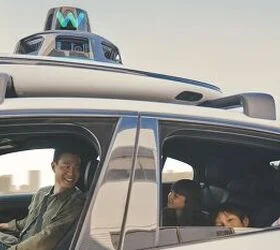
A groundbreaking study released by the Insurance Institute for Highway Safety (IIHS) has ignited a fervent debate within the automotive and technology sectors, suggesting that autonomous vehicles (AVs) may indeed be superior drivers to their human counterparts. The findings, which lean heavily on operational data from Waymo, one of the leading pioneers in self-driving technology, present a compelling, albeit nuanced, case for the safety and efficiency of AVs. However, the study’s methodology and the broader implications of its conclusions warrant careful examination, as the transition from human to machine control of our roadways is a complex issue with far-reaching consequences.
The IIHS study, aiming to quantify the safety performance of AVs, focused on a substantial dataset compiled from Waymo’s operations. Waymo, a subsidiary of Alphabet Inc., has been actively deploying its fleet of driverless Jaguar I-PACE vehicles in several major metropolitan areas: Phoenix, Arizona; San Francisco, California; Los Angeles, California; and Austin, Texas. The core of the IIHS’s findings indicates a remarkable disparity in accident rates. According to the study, Waymo’s driverless vehicles have been involved in 68% fewer accidents compared to human drivers operating in similar conditions and environments. This statistic, if taken at face value, represents a significant leap forward in automotive safety and a potential paradigm shift in how we perceive road risks.
Background and Context of the Study
The genesis of this study lies in the ongoing quest to enhance road safety and reduce the tragic toll of traffic accidents, which claim millions of lives globally each year. The development of autonomous vehicle technology has been driven, in large part, by the promise of eliminating human error, which is widely recognized as the primary contributing factor in the vast majority of collisions. Factors such as driver distraction, fatigue, impairment, and aggressive driving are all elements that AVs, in theory, are designed to overcome.
The IIHS, a non-profit organization funded by the auto insurance industry, has a long-standing mission to reduce crashes, deaths, and injuries related to motor vehicle travel through research and education. Their involvement in analyzing AV safety data underscores the insurance industry’s keen interest in understanding the real-world performance of these emerging technologies, as it directly impacts risk assessment and future insurance models.
Waymo, having accumulated millions of miles of autonomous driving experience, provided the crucial dataset for the IIHS analysis. The company’s phased approach to deployment, starting with geofenced areas and gradually expanding its operational domain, has allowed for the collection of extensive real-world data under varying traffic conditions, weather, and road types. This extensive operational history is a key differentiator, providing a foundation for statistically significant comparisons.
Key Findings and Supporting Data
The headline figure from the IIHS study is the 68% reduction in accidents involving Waymo’s driverless vehicles when compared to human drivers. To arrive at this figure, the IIHS researchers meticulously analyzed data encompassing approximately 50 million miles driven by Waymo vehicles. This figure represents the collective mileage accumulated by Waymo’s autonomous fleet across its operational territories.
To provide a comparative baseline, the study also considered the immense volume of miles driven by humans. While the exact figure used for direct comparison within the IIHS study is not explicitly detailed in the provided excerpt, general statistics on human driving reveal the scale of the undertaking. In the United States alone, passenger vehicles log trillions of miles annually. For instance, the U.S. Department of Transportation’s Federal Highway Administration reported over 3.2 trillion vehicle miles traveled in the U.S. in 2021. The sheer magnitude of human driving underscores the extensive real-world testing and data accumulation that AVs are beginning to approach.
The IIHS’s methodology involved a critical step referred to as "cleaning up" the data. This process is essential because raw data from different sources, particularly when comparing human-driven vehicles with autonomous systems, rarely aligns perfectly. Researchers likely had to standardize reporting metrics, account for different definitions of "accident" (e.g., minor fender-benders versus reportable crashes), and control for variables such as geographic location, time of day, and traffic density to ensure a fair and accurate comparison. This data cleaning is a testament to the complexity of evaluating AV safety and highlights the need for rigorous analytical frameworks.
While the 68% reduction is a striking statistic, it’s crucial to consider the nuances. The IIHS report acknowledges the comparative sample size. Waymo’s 50 million miles, while substantial for an AV company, is a fraction of the 222 billion miles driven by people in the U.S. in a given period, as indicated by the comparison to human driving data. This disparity means that while Waymo’s data is robust, it is still a developing dataset when viewed against the backdrop of centuries of human driving experience.
Furthermore, the concept of "apples-to-apples" data comparison remains a significant challenge. The IIHS report itself points out the need to "clean up" the information. This implies that direct, unadjusted comparisons might be misleading. For example, Waymo vehicles primarily operate in specific, often well-maintained urban environments with advanced mapping and sensor capabilities. Human drivers, on the other hand, navigate a much wider array of conditions, including rural roads, unpaved surfaces, and areas with less predictable infrastructure. The study likely attempted to account for these differences through statistical adjustments, but inherent variations will always exist.
Timeline and Evolution of AV Safety Data
The journey towards AVs reaching a level of safety that surpasses human drivers is a gradual one, marked by distinct phases of development and data accumulation.
- Early Stages (Pre-2010s): Research and development of autonomous systems were largely confined to controlled environments and academic settings. Safety was a theoretical consideration, with limited real-world data available.
- The Rise of AV Testing (2010s): Companies like Google (which later spun off Waymo) began public testing of their AVs on public roads. This period saw the accumulation of the first significant real-world mileage, with safety drivers present to intervene. Early incidents and disengagements provided valuable learning opportunities.
- Expansion of Operational Design Domains (ODDs) (Late 2010s – Early 2020s): Waymo, Uber, Cruise, and others expanded their testing and limited commercial operations into more complex urban environments. This phase saw the development of sophisticated sensor suites, advanced AI algorithms, and robust safety protocols. Data collection intensified, focusing on edge cases and challenging scenarios.
- The IIHS Study and Current Landscape (2020s onwards): The IIHS study represents a critical point where researchers are beginning to analyze large-scale, real-world operational data from commercial AV deployments. The focus shifts from simply accumulating miles to drawing statistically significant conclusions about safety performance relative to human drivers. This era is characterized by increasing scrutiny of AV safety data and the development of standardized metrics for evaluation.
The IIHS study is a product of this evolving landscape, leveraging the mature data collection capabilities of companies like Waymo. As more AV companies gain regulatory approval and expand their operations, the volume and diversity of safety data will continue to grow, allowing for more comprehensive and granular analyses.
Reactions and Perspectives from Related Parties
While the IIHS study offers a compelling snapshot, the reactions from various stakeholders are multifaceted.
- Waymo: As the primary data provider, Waymo has consistently emphasized its commitment to safety. A spokesperson for Waymo, in response to such findings, would likely reiterate their rigorous testing protocols and the data-driven approach that underpins their safety record. They would likely highlight that their vehicles are designed to operate without human intervention, and their systems are continuously learning and improving. However, they would also acknowledge the ongoing nature of AV development and the importance of continued research and validation.
- Other AV Developers: Competitors in the AV space would likely view the IIHS study with keen interest, using it to benchmark their own progress and identify areas for further development. While they might not have provided data for this specific study, they would likely be engaged in similar internal analyses and would welcome any findings that contribute to the broader understanding of AV safety.
- Regulators and Policymakers: Government agencies such as the National Highway Traffic Safety Administration (NHTSA) would be closely monitoring these developments. The IIHS findings could influence future regulatory frameworks, safety standards, and guidelines for AV deployment. They would be keen to understand the conditions under which AVs demonstrably outperform human drivers and how to ensure public safety as AVs become more prevalent.
- Consumer Advocacy Groups: Organizations focused on consumer safety would likely express cautious optimism. While the prospect of safer roads is highly desirable, they would likely emphasize the need for transparency in reporting, independent verification of data, and robust oversight to ensure that the pursuit of technological advancement does not compromise public well-being. They might also raise concerns about the accessibility and affordability of AV technology.
- The Public: Public perception of AVs remains a significant factor. While some individuals are eager to embrace the convenience and potential safety benefits of autonomous transportation, others harbor reservations, often fueled by media portrayals of AV accidents or a general distrust of new technologies. The IIHS study, by presenting concrete data, could help to allay some fears, but widespread adoption will likely require continued evidence of reliability and safety across a wider range of scenarios. The comparison to "Will Smith’s side in iRobot" reflects this underlying tension between technological progress and human autonomy.
Broader Impact and Implications
The implications of a study that suggests AVs are demonstrably safer drivers than humans are profound and extend far beyond the automotive industry.
- Public Safety Transformation: If these findings are replicated and validated across a wider range of AV developers and operational contexts, it could herald a significant reduction in road fatalities and injuries. This would have a ripple effect on healthcare systems, emergency services, and the overall quality of life.
- Economic Shifts: The widespread adoption of AVs could lead to substantial economic changes. The trucking and transportation industries, for instance, could see a dramatic shift in labor requirements. Insurance models would need to be fundamentally rethought, with a potential decrease in premiums for AV usage and an increase in liability for manufacturers and software providers.
- Urban Planning and Infrastructure: The presence of AVs could influence urban planning. Reduced need for parking, optimized traffic flow, and potentially smaller vehicle footprints could reshape cityscapes. Infrastructure may need to adapt to accommodate AV communication systems and specialized charging needs.
- Ethical and Legal Frameworks: As AVs become more autonomous, complex ethical dilemmas and legal challenges will continue to emerge. Questions of liability in the event of an accident, the ethical programming of AVs in unavoidable crash scenarios, and the implications for personal privacy (given the vast amount of data AVs collect) will require ongoing societal and legal deliberation.
- The Future of Mobility: This study is a significant step in the ongoing evolution of mobility. It suggests that the transition from human-controlled vehicles to autonomous systems is not just a technological possibility but a potential pathway to a safer and more efficient transportation future. However, the journey is far from over, and continued rigorous testing, transparent data sharing, and thoughtful regulatory oversight will be paramount in realizing this future responsibly.
In conclusion, the IIHS study, leveraging Waymo’s extensive operational data, presents a compelling argument for the enhanced safety of autonomous vehicles. While the nuances of data comparison and the vastness of human driving experience necessitate careful interpretation, the reported 68% reduction in accidents is a significant indicator of progress. As AV technology continues to mature and its deployment expands, further research and independent verification will be crucial in shaping public perception, informing policy, and ultimately determining the role of robots behind the wheel in the years to come. The question is no longer if machines can drive safely, but when and how we will entrust them with the responsibility of our journeys.