A recent groundbreaking study conducted at Luleå University of Technology (LTU) in Sweden, led by Professor Alexander Kaplan, is shedding new light on a fundamental yet often overlooked aspect of laser additive manufacturing (AM): powder absorbance. Originally from Austria, Professor Kaplan, a seasoned researcher with over two decades dedicated to the physics of lasers, welding, and AM at LTU, has spearheaded research that delves into the intricate optical interactions within powder beds. The findings, published in the journal [Insert Journal Name Here if available, otherwise omit or use a placeholder like "a leading scientific journal"], challenge conventional understandings of energy input in laser powder-bed fusion (L-PBF) processes, revealing that the powder itself acts as a crucial component of the optical system, significantly influencing energy absorption and, consequently, process efficiency and part quality.
The research, titled "Absorbance study of powder conditions for laser additive manufacturing," meticulously investigated the absorbance of various metal powders across a wide spectrum of wavelengths, from ultraviolet (330 nm) to near-infrared (1560 nm). This comprehensive range encompasses wavelengths critical for industrial laser processing, offering a nuanced perspective beyond simplistic material properties. The study underscores a vital paradigm shift: in L-PBF, powder is not merely inert feedstock awaiting melting; it actively participates in the laser’s energy delivery.
Professor Kaplan articulated the significance of this research, stating, "Though manufacturing processes by laser beams are applied in many industrial applications, the absorption mechanisms and the extent of energy losses are hardly known. It can be estimated that commonly between 30% and 70% of the beam power is lost by reflections. Improved understanding of absorption has high potential to improve the process efficiency and quality controllability." This stark statistic highlights the substantial room for optimization within current AM practices, suggesting that a significant portion of laser energy is being wasted due to insufficient absorption.
Comprehensive Material and Condition Analysis
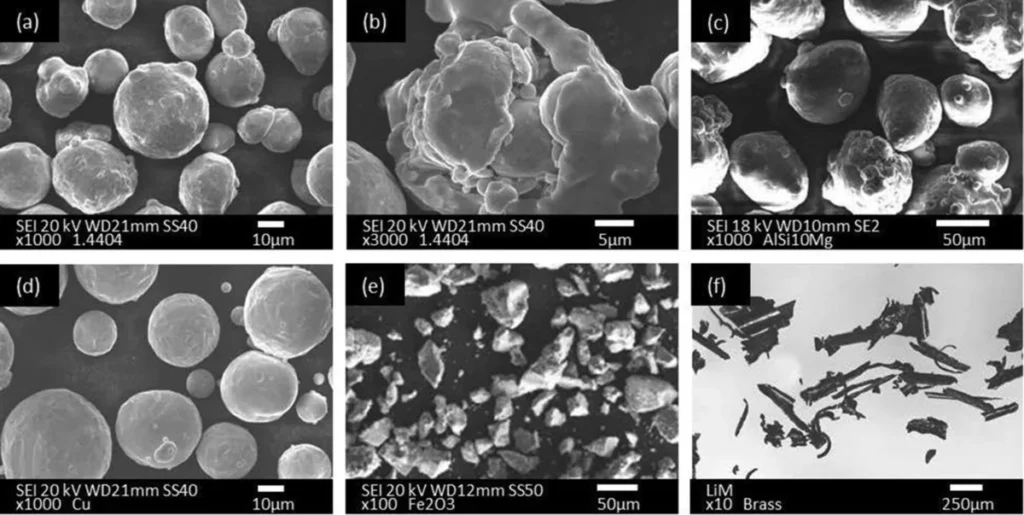
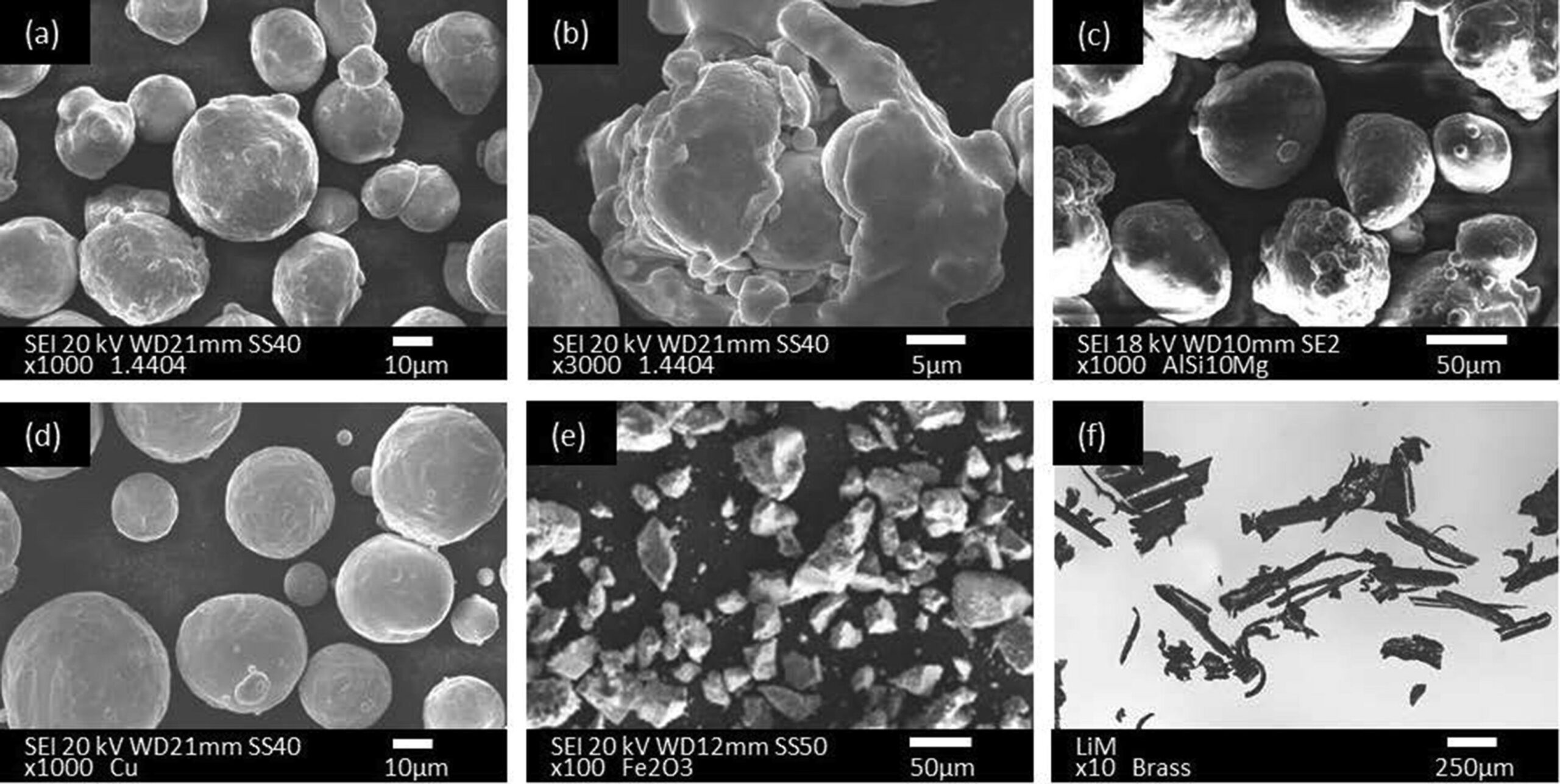
The study’s scope was notably broad, encompassing 39 distinct powder samples derived from 16 different materials. This extensive selection included a wide array of steels such as 316L-type material, H13, and 630 stainless steel, alongside high-performance alloys like Inconel 718. Aluminum alloys, including AlSi10Mg and AlSi40, were also examined, alongside titanium and its ubiquitous Ti-6Al-4V variant, Nitinol, chromium, copper, brass, and even iron ore. A particularly intriguing inclusion was a TiCoCrFeNiMo high-entropy alloy, representing cutting-edge materials research.
Beyond material diversity, the researchers rigorously explored the impact of various powder conditions on absorbance. This included examining different particle-size fractions, distinguishing between new and used powder, assessing the effects of storage and oxidation, analyzing aged AlSi10Mg, and investigating the behavior of powder mixtures. This multi-faceted approach significantly enhances the paper’s practical relevance for everyday AM operations, moving beyond theoretical constructs to address real-world manufacturing scenarios.
The Powder Bed as an Optical System
Traditionally, energy input in AM has been primarily defined by machine parameters: laser power, scan speed, hatch distance, and layer thickness. These parameters are used to calculate energy density, establishing process windows. While not incorrect, this approach is incomplete. The LTU study posits that the machine dictates the energy delivered by the beam, but it is the powder bed itself that governs how much of that energy is actually absorbed.
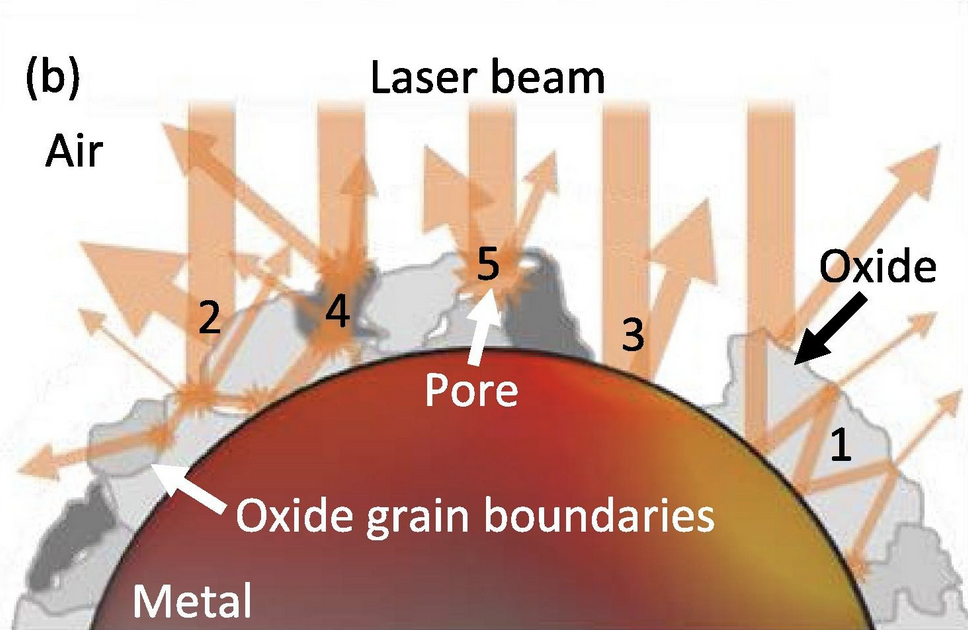
A powder bed is far from a uniform, flat surface. It is a complex, granular structure characterized by particle interstices, varying contact points, irregular surface angles, and the presence of satellite particles. When a laser beam interacts with this environment, it can be reflected multiple times between particles, pass into voids, scatter, or become trapped within the powder bed for extended periods—a stark contrast to the predictable reflection from a polished metal surface. This inherent geometric complexity of the powder bed contributes significantly to higher measured absorbance compared to theoretical calculations for flat materials. The laser effectively gets multiple opportunities to interact with the material before energy can escape.
Wavelength’s Critical Role in Absorption
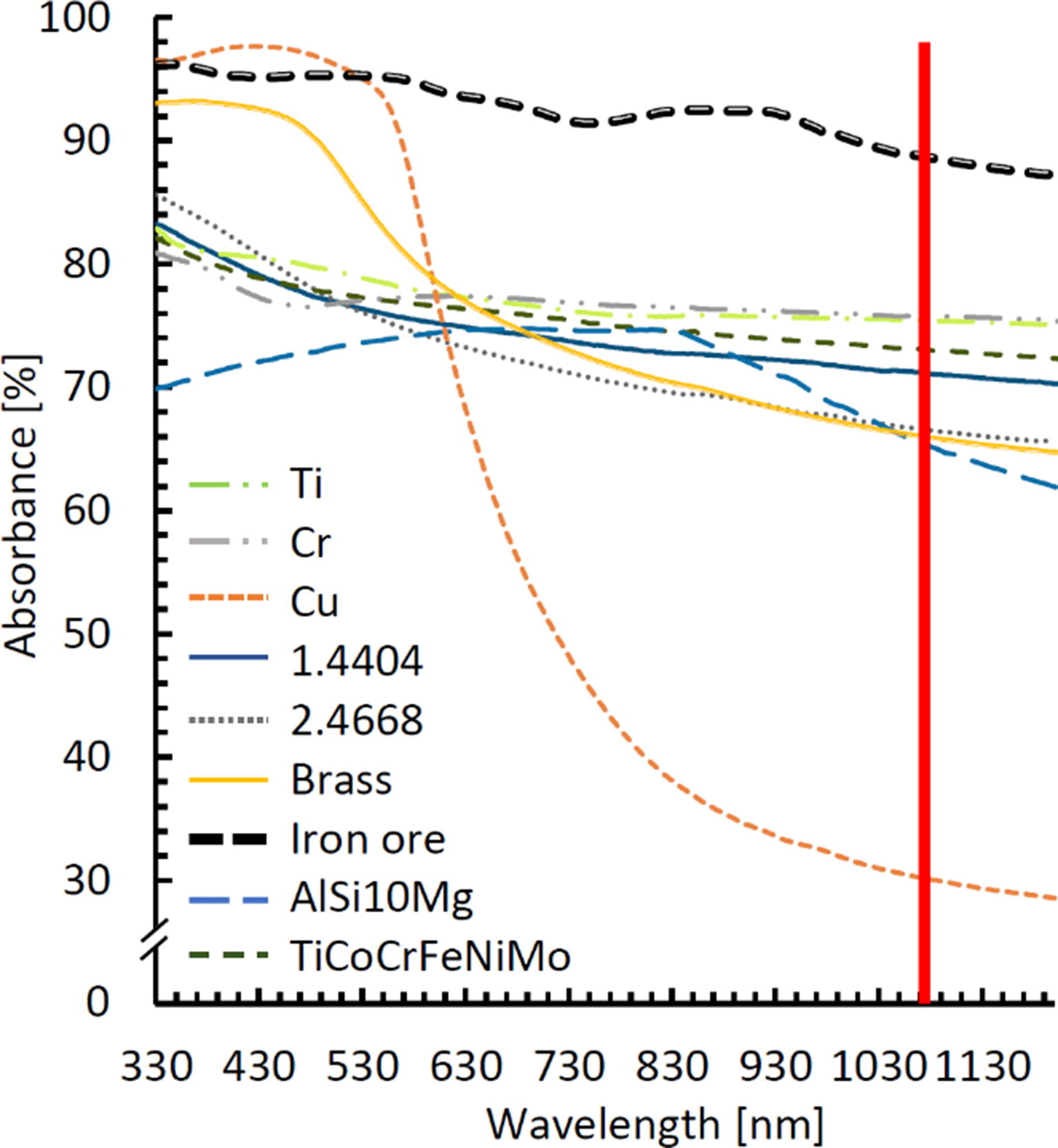
The study’s findings also illuminate the critical importance of laser wavelength in determining absorbance. At the common near-infrared (NIR) wavelength of approximately 1070 nm, often employed by fiber lasers, the researchers observed substantial variations in absorbance among different materials. This contrasts with shorter wavelengths, such as 450 nm (blue light) and 635-650 nm (visible red light), where material-dependent absorbance differences were less pronounced. This observation helps explain the increasing adoption of shorter-wavelength lasers for processing highly reflective materials.
A prime example is copper, a material known for its strong reflectivity at NIR wavelengths. The LTU study corroborates this, showing significantly higher absorbance for copper in the visible spectrum, with absorbance diminishing as the wavelength shifted towards the NIR. This aligns with industry trends, where green and blue lasers are becoming increasingly vital for copper L-PBF applications. However, the study emphasizes that improved absorbance is only the first step in addressing the challenges of processing copper. Its high thermal conductivity rapidly dissipates heat, potentially destabilizing the melt pool and leading to defects like lack-of-fusion porosity, keyhole-related pores, residual stress, and cracking. For applications where electrical or thermal performance is paramount, even minor defects can be critical.
The implications of this research are profound. Even when the industry recognizes the benefits of green lasers for copper, the LTU study provides a more granular understanding of how powder condition influences the initial energy transfer. Variations in powder surface characteristics, particle size, oxidation state, or reuse history can alter the absorbed energy, thereby impacting the subsequent thermal history of the material. For conductive materials like copper, this thermal history is often the genesis of quality issues.
Powder Condition: A Neglected Variable
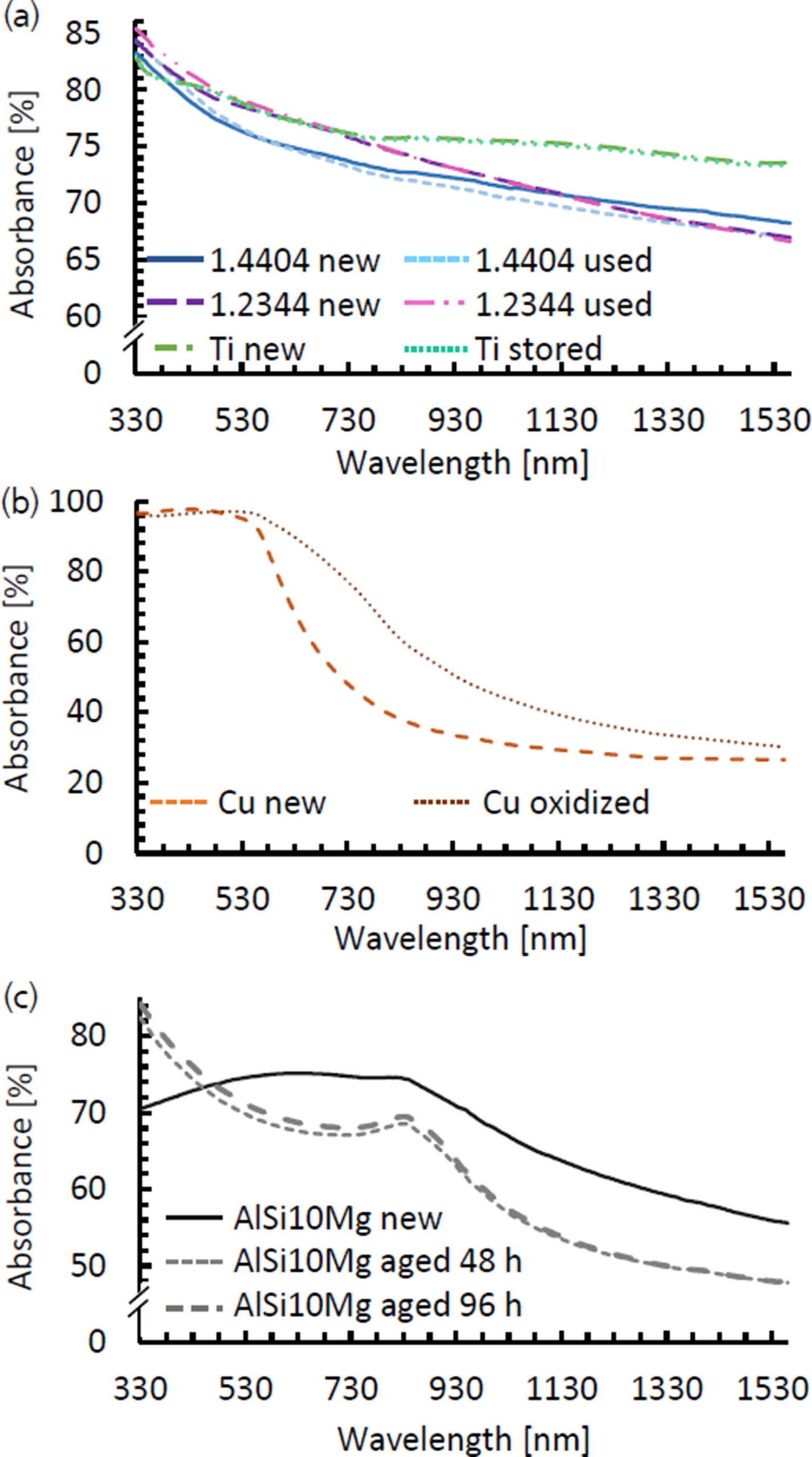
The study further investigated how various powder conditions influence absorbance. Aluminum powders, for instance, did not behave as flat-surface calculations might predict, underscoring the powder bed’s role. The aging and oxidation of AlSi10Mg powders demonstrated a measurable impact on their absorbance, a crucial finding given that aluminum powders naturally form oxide layers that are integral to the real-world L-PBF process.
For steel powders such as 1.4404 and 1.4542, finer particle-size fractions exhibited higher absorbance than their coarser counterparts. The researchers reported an average increase of approximately 6% for 1.4404 and 2.4% for 1.4542. This phenomenon is attributed to the increased surface area and greater opportunities for multiple reflections offered by finer powders. This measured effect provides a tangible explanation for why alterations in powder specifications, even within the same alloy, can lead to process deviations.
The research also delved into the effects of powder aging, storage, and reuse. Stored titanium powder, used steel powders, oxidized copper, and aged AlSi10Mg all displayed distinct absorbance curves compared to their fresh or untreated counterparts. These effects were not uniform across all materials, indicating that powder condition influences surface characteristics, chemistry, morphology, and optical response in material-specific ways. Oxidized copper, aged AlSi10Mg, and used steels all presented unique absorbance behaviors, mirroring the variability encountered in production environments where powders undergo storage, reuse, sieving, and handling.
The complexities extend to powder mixtures. The study examined mixtures designed to simulate variations in particle size, alloying, or impurity levels, including a high-entropy alloy mixture. While the absorbance of a mixture could sometimes be approximated from its components, it was not always perfectly predictable. The authors noted that differences in density, particle size, segregation, and uneven distribution could significantly influence the overall outcome. This finding challenges the simplistic approach of treating blended or recycled powders as mere averages of their constituent materials, suggesting that the powder bed’s optical behavior is more nuanced.
Implications for Industrial Adoption and Cost-Effectiveness
While this research does not suggest that recycled or used powder is inherently unsuitable, nor that every minor powder variation will disrupt a process, it strongly implies that powder condition can significantly impact energy coupling. This, in turn, can necessitate adjustments to process parameters. Traditional powder quality assessments typically focus on chemistry, particle size distribution, flowability, apparent density, oxygen and moisture content, and defined reuse limits. The LTU study adds a critical dimension: understanding the powder as an energy-coupling surface.
This body of work resonates with other ongoing research exploring powder bed fusion from various angles. In-situ studies on L-PBF have demonstrated that absorptivity during processing can deviate from static measurements and liquid-metal estimations. Direct measurements during melt pool formation have revealed that absorptivity is a dynamic parameter intrinsically linked to the process itself. Furthermore, recent investigations into textured or modified powders indicate the potential for engineering powder surfaces to precisely control laser absorption.
Collectively, these research efforts highlight a consistent message: absorption is not a static property but rather an evolving characteristic influenced by material condition and the processing environment. This understanding is becoming increasingly vital as AM transitions further into mass production and embraces material reuse.
In industrial settings, powder is subjected to storage, drying, sieving, reuse, blending, and handling—a lifecycle that imbues it with a "history" that becomes part of the overall process history. For critical components, tighter process control, enhanced powder specification, rigorous incoming inspection, well-defined reuse protocols, and comprehensive traceability are often the solutions, albeit at an increased cost.
A key practical question for broader AM adoption and cost-competitiveness lies in determining the extent of powder variation a process can tolerate before becoming unstable. The LTU study, by measuring absorbance, provides a crucial piece of the puzzle by explaining how powder variation can enter the process through altered energy absorption, which in L-PBF is directly tied to wavelength and optical interactions.
While the study focused on laser powder-bed fusion, the fundamental question of how powder condition influences energy input into the powder bed remains relevant for electron beam powder-bed fusion (EB-PBF) as well, albeit with different influencing factors. EB-PBF involves electron interactions, vacuum conditions, charge behavior, preheating, thermal conductivity, and powder-cake formation.
The underlying challenge—understanding powder’s role in energy coupling—is not merely academic. It directly impacts powder reuse, the integration of scrap-derived or recycled materials, process stability, and the real costs associated with part qualification. Industrial adoption is accelerated when a process can accommodate a realistic range of powder conditions while maintaining stable outcomes. This becomes even more critical with powder reuse, which inherently broadens the spectrum of powder conditions. The ability to rapidly assess how a new powder batch couples energy into the process directly influences the speed of qualification, parameter adjustment, and the transition from material uncertainty to controlled production.
Professor Kaplan’s research, built upon more than 20 years of dedication to additive manufacturing, offers a fresh perspective on a familiar subject. While the variability of powder absorption was already known, the LTU study provides specific, measurable insights:
- Powder condition fundamentally alters energy coupling.
- The geometry of the powder bed leads to real-world absorption that differs from idealized flat-surface calculations.
- Laser wavelength plays a critical role in the manifestation of these effects.
- Particle size variations can measurably shift absorbance.
- Aging and oxidation can significantly alter optical response.
- Powder mixtures do not always behave as simple averages of their components.
These findings collectively reshape the perception of powder in AM, positioning it not just as a material but as an integral component of the machine-material interaction. In powder-bed fusion technologies, this interaction represents the very genesis of the manufacturing process. As AM continues its trajectory towards widespread industrial deployment, a deeper, data-driven understanding of these fundamental optical phenomena will be paramount for optimizing efficiency, ensuring repeatability, and unlocking the full economic potential of the technology.
About the Author:
Ulf Lindhe is a seasoned executive in the additive manufacturing industry with decades of experience spanning technology development, industrial strategy, and global market expansion. He has held senior leadership roles within the metal additive manufacturing sector, contributing to the commercialization and international growth of advanced AM systems. Over the course of his career, Lindhe has worked closely with aerospace, medical, and high-performance engineering companies, helping bridge the gap between technological capability and practical industrial deployment.
Images courtesy of Benedikt Brandau et al., Luleå University of Technology