Physicists at Emory University have achieved a significant breakthrough by employing a machine learning approach to unveil previously unknown details about how particles interact within complex systems. Their innovative work, published in the prestigious journal PNAS, specifically focuses on non-reciprocal forces—a class of interactions where the influence one particle exerts on another is distinct from the influence it receives in return. This paradigm-shifting research demonstrates that artificial intelligence can transcend its conventional roles of data analysis and prediction, serving as a powerful instrument for discovering entirely new physical laws and challenging long-held theoretical assumptions.
The findings emerge from a robust collaboration between experimental and theoretical physicists, spearheaded by Justin Burton, an Emory professor of experimental physics, and Ilya Nemenman, an Emory professor of theoretical physics, both senior co-authors of the paper. By meticulously combining a custom-designed neural network with empirical data gleaned from laboratory experiments involving dusty plasma, the team has not only provided the most detailed description to date of the forces governing this complex system but has also illuminated a new pathway for scientific exploration. "We showed that we can use AI to discover new physics," states Burton, emphasizing the profound implications of their methodology. He further clarifies, "Our AI method is not a black box: we understand how and why it works. The framework it provides is also universal. It could potentially be applied to other many-body systems to open new routes to discovery."
Unveiling the Enigma of Non-Reciprocal Forces
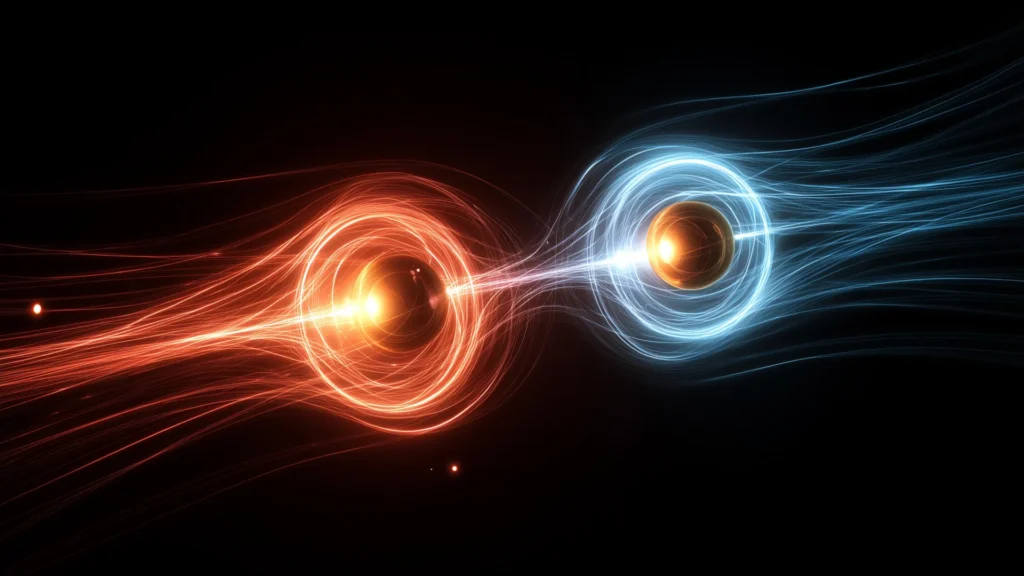
The concept of non-reciprocal forces represents a fundamental departure from the classical Newtonian principle of action-reaction, where forces between interacting bodies are always equal and opposite. In systems governed by non-reciprocal interactions, this symmetry is broken, leading to emergent behaviors that are notoriously difficult to predict and model using traditional physics. Such forces are ubiquitous in nature, appearing in diverse contexts ranging from biological systems, like the collective motion of cells during embryonic development or the swarming behavior of bacteria, to active matter systems, where individual components consume energy to generate directed motion. Understanding these forces is crucial for deciphering the complex dynamics of everything from cellular mechanics to the self-organization of materials.
The challenge lies in their intricate nature. Unlike reciprocal forces, which can often be described by simple potential functions, non-reciprocal interactions are highly dependent on the relative positions, velocities, and even histories of the interacting particles. This complexity makes direct measurement and theoretical modeling exceptionally arduous, often leading to oversimplified assumptions in existing models. The Emory team’s success in precisely quantifying these forces with an accuracy exceeding 99% marks a monumental step forward in this field.
Dusty Plasma: A Dynamic Laboratory for Fundamental Physics
At the heart of this groundbreaking study lies dusty plasma, a fascinating system often referred to as the "fourth state of matter." Beyond solids, liquids, and gases, plasma consists of an ionized gas where electrons and ions move freely, granting it unique properties such as electrical conductivity. It constitutes an astounding 99.9% of the visible universe, powering stars, forming nebulae, and manifesting in phenomena like the solar wind and lightning strikes on Earth.
Dusty plasma introduces an additional layer of complexity by incorporating macroscopic charged dust particles suspended within this ionized gas. These particles, typically micron-sized, become highly charged through interactions with the plasma, making them susceptible to electromagnetic forces and allowing them to interact strongly with each other and the surrounding plasma environment. Dusty plasmas are not confined to laboratory settings; they naturally occur in diverse cosmic environments, including planetary rings (such as those of Saturn), cometary tails, and the Earth’s ionosphere. On the Moon, for instance, weak gravity combined with electrostatic charging causes lunar dust to levitate above the surface, explaining why astronauts’ suits become covered in fine particulate matter. On Earth, even phenomena like wildfires can generate dusty plasma when soot particles become charged within the hot, ionized smoke, potentially disrupting radio communications for firefighters.
Crucially for research, dusty plasma serves as an unparalleled model system for studying fundamental physics, particularly the collective behavior of many-body systems. Unlike the microscopic scale of atoms and molecules or the inherent complexity of living organisms, the dust particles in a laboratory plasma are large enough to be individually tracked and observed in real-time using optical methods. Moreover, the experimental conditions—such as gas pressure, plasma density, and particle charge—can be precisely controlled and tuned. This tunability allows researchers to mimic a wide range of physical conditions and systematically investigate how particles respond to different forces and interactions, making it an ideal testbed for developing and validating new theoretical models and computational tools.
The Experimental Foundation: Precision 3D Tracking
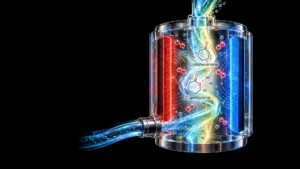
The empirical data crucial for training the AI model was generated in Burton’s experimental physics lab at Emory. Researchers meticulously recreate dusty plasma environments within a controlled vacuum chamber. Here, tiny plastic particles, typically a few micrometers in diameter, are suspended and become charged within a plasma-filled environment. By carefully adjusting parameters like gas pressure, the team can simulate various real-world conditions and observe the intricate dance of interacting particles.
For this specific project, Burton and his then-PhD student Wentao Yu, now a postdoctoral fellow at the California Institute of Technology, developed an advanced tomographic imaging method to capture the full three-dimensional (3D) motion of these particles. The technique involves sweeping a thin laser sheet through the vacuum chamber while a high-speed camera simultaneously records images. By combining these sequential snapshots, the researchers can reconstruct the precise 3D positions of dozens of individual particles over extended periods. This high-resolution, time-resolved data provides an unprecedented level of detail regarding particle trajectories and interactions, forming the indispensable dataset upon which the neural network would be trained and validated.
The AI Innovation: Designing a Neural Network for Discovery
The development of the artificial intelligence model was spearheaded by Ilya Nemenman, a theoretical biophysicist with a keen interest in how complex systems emerge from the interactions of their constituent parts. His work often explores collective motion, drawing parallels between the movement of cells within the human body and other self-organizing systems. "General questions of how a whole system arises from interactions of tiny parts are very important," Nemenman explains, citing cancer metastasis—where cells break away from a tumor—as a prime example of complex collective behavior driven by underlying interactions.
While AI has revolutionized many fields, its direct application in discovering new fundamental physical laws, rather than merely analyzing existing data or making predictions based on known principles, has remained a rare feat. This project aimed to push those boundaries. The primary challenge in designing the AI model was the limited amount of experimental data available. Unlike typical machine learning applications that thrive on massive datasets, probing entirely new physics inherently means operating in a data-scarce environment.
"When you’re probing something new, you don’t have a lot of data to train AI," Nemenman notes. This necessitated a novel approach: "That meant we would have to design a neural network that could be trained with a small amount of data and still learn something new." The team, which also included co-author Eslam Abdelaleem, then an Emory graduate student and now a postdoctoral fellow at Georgia Tech, dedicated over a year to refining the neural network’s architecture through intensive weekly meetings. This iterative process was crucial for structuring the network to be "physics-informed"—meaning it incorporated known physical principles and constraints—while simultaneously retaining the flexibility to "explore and infer unknown physics," as Burton describes. The goal was to avoid a "black box" scenario, where the AI provides answers without transparent reasoning.
The final model elegantly disentangled particle motion into three primary influences: drag forces dependent on velocity, environmental forces such as gravity or electric fields, and crucially, the complex non-reciprocal forces acting between particles. This modular design allowed the AI to identify and characterize the inter-particle forces with remarkable precision and interpretability. "Once we came up with the correct structure of the network to train, it turned out to be fairly simple," Nemenman reflects, underscoring the elegance born from months of rigorous intellectual sparring.
Revelatory Discoveries and Theoretical Revisions
After its intensive training on the 3D particle trajectories, the AI model successfully captured the intricate dynamics of the dusty plasma, including the elusive asymmetrical forces between particles. The researchers liken this behavior to two boats navigating a lake; the waves generated by each boat can influence the other in complex ways, pushing or pulling them differently depending on their relative positions and motions.
In the context of dusty plasma, the AI revealed a precise description of a phenomenon where a leading particle consistently attracts a trailing particle, while the trailing particle, in turn, always repels the leading one. "This phenomenon was expected by some but now we have a precise approximation for it which didn’t exist previously," Nemenman explains. This detailed quantification validates previous qualitative hypotheses and provides a concrete, mathematical framework for understanding such interactions.
Even more significantly, the AI’s findings directly challenged and refined several long-standing theoretical assumptions in dusty plasma physics:
- Particle Charge and Size: A common assumption posited that a particle’s electric charge increases in direct proportion to its size. The AI model, however, demonstrated a more nuanced relationship. While larger particles do indeed carry more charge, the proportionality is not simple and depends critically on other environmental factors such as plasma density and temperature. This correction implies that previous models might have misestimated charge distributions in various dusty plasma environments.
- Force Decay with Distance: Another prevalent theory held that the forces between particles decrease exponentially with distance, irrespective of particle size. The AI’s analysis contradicted this, revealing that the rate at which these forces weaken is indeed influenced by particle size. This discovery suggests that the range and strength of inter-particle interactions are more complex than previously understood, with larger particles potentially exerting influence over greater distances or with different decay characteristics.
These profound corrections, validated through additional targeted experiments, underscore the power of this AI-driven approach to uncover subtle yet critical details that eluded conventional theoretical and experimental methods. The ability to "see what’s occurring in such exquisite detail" allows for a deeper, more accurate understanding of the fundamental physics at play.
Interdisciplinary Collaboration and Broader Recognition
The success of this project is a testament to the power of interdisciplinary collaboration, bridging experimental physics, theoretical physics, and advanced machine learning. The synergistic efforts of Burton’s experimental team, responsible for generating high-fidelity data, and Nemenman’s theoretical group, which designed the intelligent analytical framework, were indispensable. The contributions of junior researchers like Wentao Yu and Eslam Abdelaleem highlight the role of graduate students in pushing the frontiers of science.
The research garnered significant support from prominent scientific institutions, primarily funded by the National Science Foundation (NSF), with additional backing from the Simons Foundation. Vyacheslav (Slava) Lukin, program director for the NSF Plasma Physics program, lauded the project as "a great example of an interdisciplinary collaboration where the development of new knowledge in plasma physics and AI may lead to further advances in the study of living systems." Lukin further emphasized the broader applicability, stating, "The dynamics of these complex systems is dominated by collective interactions that emerging AI techniques may help us to better describe, recognize, understand and even control." This endorsement from a major funding body underscores the scientific community’s recognition of the study’s innovative methodology and far-reaching potential.
Implications for Future Science and Technology
The development of this physics-based neural network, which can operate efficiently on a standard desktop computer, offers a flexible and potent framework for studying many-body systems across a diverse array of scientific disciplines. Its implications are vast and transformative:
- Materials Science and Engineering: The ability to precisely characterize non-reciprocal forces could revolutionize the design of novel industrial materials. From tailoring the flow properties of paints and inks to engineering self-assembling colloids and advanced composites, a deeper understanding of particle interactions can lead to materials with unprecedented functionalities and performance characteristics.
- Biology and Living Systems: Nemenman’s original interest in collective motion in biological contexts finds a powerful new tool. The framework developed for dusty plasma can be adapted to study the intricate interactions within groups of living cells, potentially shedding light on complex biological processes such as tissue formation, wound healing, and even the metastatic spread of cancer. Nemenman is poised to share this expertise, planning to teach students at the Konstanz School of Collective Behavior in Germany how to apply AI to infer the physics of collective motion, not just in plasma but within living systems, from cellular aggregates to animal flocks and human crowds.
- Fundamental Physics and Complex Systems: Beyond dusty plasma, this AI methodology offers a universal approach to uncovering hidden laws in other intractable many-body systems. This could include investigations into quantum materials, where emergent properties arise from complex electron interactions, or the baffling dynamics of turbulent fluids. The framework provides a systematic way to move beyond phenomenological models towards a more fundamental, data-driven understanding of complexity.
- The Evolving Role of AI in Scientific Discovery: This study fundamentally shifts the perception of AI from merely a powerful analytical or predictive tool to an active partner in scientific discovery. It provides a blueprint for how AI can be designed to explore the unknown, formulate hypotheses, and even challenge established theories, thereby accelerating the pace of scientific advancement. This interpretability and the ability to work with limited data are crucial for applying AI to nascent scientific fields where comprehensive datasets are not yet available.
Despite these remarkable advances, the researchers emphatically stress that human expertise remains an indispensable component of the scientific process. Scientists must critically design the AI models, carefully interpret their outputs, and rigorously validate the conclusions. "It takes critical thinking to develop and use AI tools in ways that make real advances in science, technology and the humanities," Burton asserts.
Looking ahead, the team remains profoundly optimistic about the future of AI-augmented scientific exploration. "I think of it like the Star Trek motto, to boldly go where no one has before," Burton concludes. "Used properly, AI can open doors to whole new realms to explore." This sentiment encapsulates the essence of their achievement: not just a technical triumph, but a philosophical leap forward in how humanity seeks to understand the fundamental laws governing the universe. The Emory team’s work marks a pivotal moment, signaling a new era where intelligent machines, guided by human ingenuity, become key collaborators in uncovering the deepest secrets of nature.