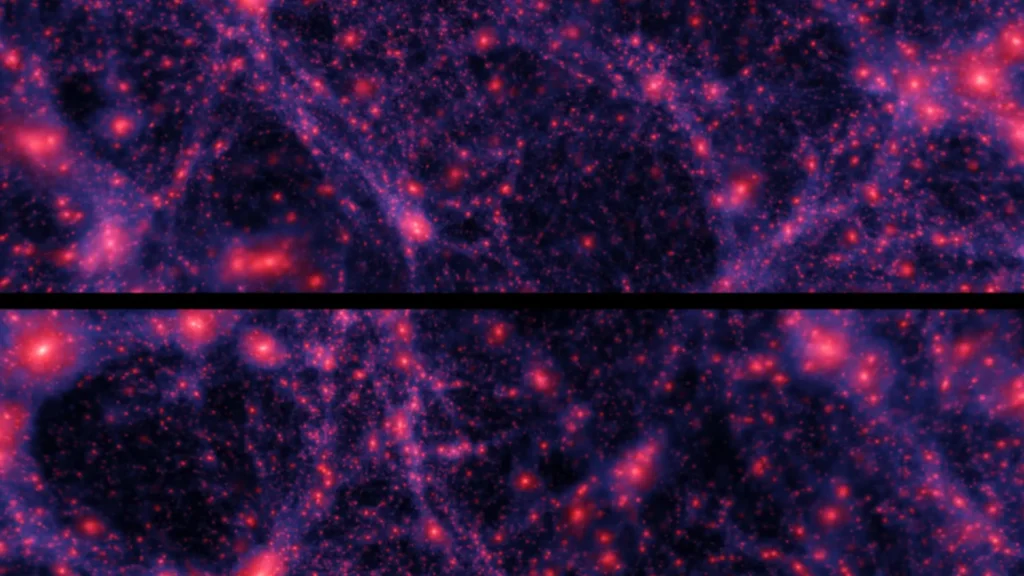
Artificial intelligence is already playing a major role in helping cosmologists study the universe. Now, new research suggests a machine learning technique called transfer learning could make the search for new physics much faster and less expensive. However, the study also uncovered a surprising downside: AI can sometimes become so dependent on what it has already learned that it struggles to recognize something truly new. This dual revelation, published in the Journal of Cosmology and Astroparticle Physics (JCAP), highlights both the immense promise and the inherent complexities of integrating advanced AI into the vanguard of scientific exploration, particularly in the quest to understand phenomena that lie beyond our current understanding of the cosmos.
The Enduring Quest Beyond the Standard Model of Cosmology
For decades, the standard cosmological model, known as Lambda-CDM (ΛCDM), has served as the bedrock of modern cosmology. This sophisticated framework posits that the universe is composed of approximately 5% ordinary matter, 27% mysterious dark matter, and 68% enigmatic dark energy. ΛCDM successfully accounts for a vast array of cosmological observations, including the universe’s accelerated expansion, the formation and large-scale distribution of galaxies, the cosmic microwave background (CMB) anisotropies, and the abundance of light elements. Its predictive power has been remarkable, solidifying its status as the most robust model to date.
Yet, despite its triumphs, ΛCDM is not without its limitations and unresolved puzzles. The very nature of dark matter and dark energy remains unknown, representing fundamental gaps in our understanding of the universe’s composition and evolution. Moreover, recent high-precision astronomical observations have begun to reveal subtle discrepancies and tensions with ΛCDM predictions. The most prominent of these is the "Hubble tension," a persistent disagreement between measurements of the universe’s expansion rate (Hubble constant) derived from the early universe (CMB data) and those from the late universe (supernovae and galaxy observations). Other potential anomalies include the "S8 tension" (a discrepancy in the clustering of matter) and questions surrounding the total mass of neutrinos, which, while tiny, could significantly impact cosmic structure formation. These unresolved issues suggest that ΛCDM may be an incomplete picture, a highly successful approximation of a deeper, more fundamental reality, driving cosmologists to search for "new physics" that extends beyond its parameters.
Exploring these possibilities requires an immense undertaking. Researchers must generate enormous numbers of detailed computer simulations, each representing a virtual universe built using different physical assumptions. These simulations are not mere models; they are complex, high-resolution numerical experiments that trace the evolution of matter, energy, and spacetime from the Big Bang to the present day. They account for gravity, hydrodynamics, radiative transfer, and the intricate interplay of cosmic components under varying theoretical conditions, such as the effects of massive neutrinos, modified theories of gravity (e.g., f(R) gravity, Dvali-Gabadadze-Porrati (DGP) model), or dynamic, evolving dark energy models.
The Prohibitive Cost of Cosmic Simulation
The computational demands of these simulations are staggering. Producing even a single high-fidelity simulation can require thousands of processor cores running for weeks or even months on supercomputers like the Summit at Oak Ridge National Laboratory or the Perlmutter at NERSC. These facilities consume megawatts of power and represent significant financial investments. Each simulation generates petabytes of data, which then needs to be analyzed, often by other computationally intensive methods. The sheer scale of these operations creates a significant bottleneck in the pace of cosmological discovery. Systematically exploring the vast parameter space of potential new physics theories — which might involve tweaking dozens of variables for each simulation — quickly becomes intractable, both in terms of time and cost. This computational barrier means that many promising theoretical avenues remain underexplored, simply due to the prohibitive resources required to simulate their implications for the observable universe.
Recognizing this fundamental challenge, the research team, led by first author Veena Krishnaraj, an undergraduate student at Princeton University, and co-authored by Adrian Bayer, a cosmologist at the Flatiron Institute and Princeton University, alongside Christian Kragh Jespersen and Peter Melchior, investigated whether transfer learning could offer a viable solution to alleviate this computational burden.
Transfer Learning: A Strategic Shortcut for Cosmic Discovery
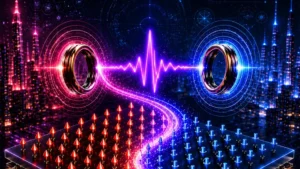
Transfer learning is a powerful machine learning paradigm where an AI system applies knowledge gained from one task to another related task. Instead of training a neural network entirely from scratch on the most complex and computationally costly simulations, the team devised a more efficient strategy. They first trained the AI on simpler, less expensive simulations based purely on the well-understood ΛCDM model. This initial phase, known as pretraining, allowed the AI to develop a foundational understanding of cosmic evolution under standard physics. Only then was this pre-trained network subjected to additional training using more sophisticated models that incorporate potential new physics.
Adrian Bayer succinctly explains the approach: "It’s basically a shortcut. Usually people train the AI directly on the most computationally expensive simulations. What we do instead is first use simpler and less expensive ΛCDM simulations to give the AI an idea of what’s happening, and only afterward move to the more complex models." He likens this pedagogical approach to human learning: "You first read a basic book to get an idea of the knowledge, and then move to the really complicated book." This sequential learning prevents the AI from having to "digest everything at once," as Krishnaraj notes, making the learning process far more efficient.
The results of this strategic pretraining were striking and demonstrated a significant leap in efficiency. In some cases, the use of transfer learning reduced the number of expensive, full-scale simulations required to train the AI by more than a factor of ten. This substantial reduction translates directly into immense savings in computational time and resources, potentially accelerating the pace at which cosmologists can explore and constrain theories beyond the standard model. For instance, if a particular line of inquiry previously demanded 1,000 high-fidelity simulations over several months, transfer learning could cut that down to just 100, dramatically shortening the research cycle and freeing up supercomputing resources for other critical projects.
The Unexpected Pitfall: Negative Transfer and AI’s Blind Spots
However, the study also revealed a less obvious, yet critical, challenge: the phenomenon of "negative transfer." While prior knowledge is generally beneficial, it can, under certain circumstances, hinder the learning process or even lead to incorrect conclusions. Expanding on Bayer’s textbook analogy, imagine a medical student who has extensively studied common diseases. When confronted with a rare condition that shares many superficial symptoms with a common ailment, their existing knowledge, while vast, might inadvertently lead them to misdiagnose the rare disease as the more familiar one.
The same issue can arise in AI systems. The researchers observed that in some instances, the subtle signatures of new physics closely resembled patterns that the AI had already strongly associated with parameters within the standard cosmological model. When this occurs, the pre-trained neural network, heavily biased by its initial learning, may interpret unfamiliar information through the lens of what it already knows, making it harder to recognize genuinely novel effects. It’s akin to an observer with a strong preconceived notion struggling to see evidence that contradicts their established worldview.
This effect became particularly evident when the team studied simulations that included the effects of massive neutrinos. While neutrinos are incredibly light, their collective mass, though still largely unconstrained, can subtly influence the formation of large-scale structures in the universe. The observational signatures linked to neutrino mass, such as changes in the clustering of galaxies, closely resemble changes associated with an existing ΛCDM parameter called δ8 (delta-eight), which quantifies how strongly matter clusters throughout the universe. Because of this inherent physical degeneracy — where different physical processes can produce very similar observable signatures — the pre-trained neural network initially had difficulty distinguishing between the two effects.
"The negative transfer is not random. It is driven by underlying physical degeneracies in the model," emphasizes Veena Krishnaraj. This insight is crucial: the AI’s "mistake" is not a random error but a direct consequence of the universe’s own intricate physics, where multiple causes can lead to similar observable outcomes. This challenge underscores a fundamental aspect of scientific discovery: discerning subtle differences in data to identify unique causal mechanisms. "So this is something we need to be aware of and try to mitigate," she concludes, highlighting the necessity for careful design and validation of AI systems in scientific applications.
Implications for Future Research and Unprecedented Data Volumes
The findings of this study carry significant implications for the future of cosmological research, especially as humanity stands on the cusp of an era defined by unprecedented astronomical data. Upcoming cosmological surveys, such as the European Space Agency’s Euclid mission, the Vera C. Rubin Observatory’s Legacy Survey of Space and Time (LSST), the Dark Energy Spectroscopic Instrument (DESI), and NASA’s Roman Space Telescope, are poised to collect petabytes, and even exabytes, of high-precision data about the universe in the coming years. These observatories will map billions of galaxies, chart the cosmic web in exquisite detail, and probe the universe’s expansion history with unparalleled accuracy.
The sheer volume and complexity of this data will overwhelm traditional human-driven analysis methods, making AI not just a helpful tool but an indispensable partner in discovery. The team believes that transfer learning, despite its identified challenges, could become an important and even essential tool for processing and interpreting these vast datasets. By quickly sifting through observational data and identifying patterns that hint at new physics, AI could dramatically accelerate the scientific process.
However, the discovery of negative transfer serves as a crucial cautionary tale. It underscores the need for robust methodologies to validate AI-driven findings and for humans to maintain a critical oversight role. If an AI system, biased by its pre-existing knowledge of ΛCDM, inadvertently overlooks or misinterprets evidence for truly novel physics because it resembles a known parameter, it could delay or even prevent groundbreaking discoveries. This necessitates the development of AI models that are not only efficient but also transparent, interpretable, and equipped with mechanisms to flag anomalies that genuinely deviate from established paradigms. Future research will need to focus on strategies to mitigate negative transfer, perhaps through more sophisticated pretraining regimes, the incorporation of uncertainty quantification, or the development of "curiosity-driven" AI that actively seeks out deviations rather than confirming expectations.
Broader Context: AI in Science and the Philosophy of Discovery
This study also contributes to a broader discussion about the role of AI, particularly foundation models and large language models, in scientific discovery. The pretraining-fine-tuning paradigm employed in transfer learning shares conceptual similarities with how large language models are first trained on massive text corpora and then fine-tuned for specific tasks. These approaches are revolutionizing fields from drug discovery to materials science.
However, science, at its heart, is about discovering the unknown unknown. While AI excels at finding patterns within existing data and interpolating or extrapolating from learned knowledge, the very nature of groundbreaking discovery often involves recognizing something truly unprecedented, something that lies entirely outside the learned distribution. The negative transfer phenomenon highlights this tension: the more an AI learns about the "known," the harder it might be for it to grasp the "truly new." This raises philosophical questions about the limits of inductive reasoning in AI and the enduring human role in formulating entirely novel hypotheses and recognizing genuinely paradigm-shifting anomalies. The future of AI in science will likely involve a symbiotic relationship, where AI handles the heavy lifting of data analysis and pattern recognition, while human scientists provide the intuition, creativity, and critical thinking necessary to interpret anomalies and hypothesize entirely new physical laws.
The Path Forward: From Simulations to Real Observational Data
So far, the transfer learning approach has only been rigorously tested using simulations. The next crucial step for Krishnaraj, Bayer, and their colleagues will be applying these techniques to real astronomical observations from existing and upcoming surveys. This transition will present new challenges, including dealing with observational noise, instrumental biases, and the inherent incompleteness of real-world data. Success in this endeavor could solidify transfer learning’s place as a cornerstone methodology in the ongoing quest to unravel the universe’s deepest mysteries. The paper, "Transfer Learning Beyond the Standard Model" by Veena Krishnaraj, Adrian E. Bayer, Christian Kragh Jespersen, and Peter Melchior, is now available in JCAP. The findings illuminate a path toward faster, more efficient cosmological discovery, while simultaneously reminding us that the search for the truly unknown demands not only powerful tools but also an open mind, capable of recognizing what has never been seen before.