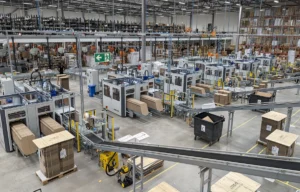
A California-based defense technology company, Attalon, has announced a significant expansion of its manufacturing capabilities, with plans to open a new 80,000-square-foot facility in Philadelphia by the summer of 2027. This strategic investment is designed to substantially increase the domestic production of advanced precision coatings and critical optical materials, which are integral components in next-generation guided munitions and sophisticated defense systems. The move underscores a growing national imperative to fortify the U.S. defense industrial base against supply chain vulnerabilities and escalating global demand.
The Strategic Imperative: Bolstering the U.S. Defense Industrial Base
Attalon’s decision to dramatically scale its U.S. manufacturing footprint arrives at a pivotal moment for global security and domestic defense readiness. Recent geopolitical tensions, particularly the conflict in Ukraine and heightened competition in the Indo-Pacific, have intensified the demand for precision-guided munitions (PGMs) and exposed fragilities within the global defense supply chain. Nations worldwide are rapidly replenishing stockpiles, accelerating modernization programs, and prioritizing the domestic production of critical defense components to reduce reliance on potentially unstable foreign sources. The U.S. Department of Defense (DoD) has explicitly called for increased industrial capacity and resilience, recognizing that a robust domestic manufacturing base is fundamental to national security and strategic autonomy. This initiative by Attalon directly addresses these concerns by expanding the production of foundational materials essential for modern warfare.
For decades, the U.S. defense industry has, in some sectors, embraced a globalized supply chain model, sometimes leading to dependence on overseas suppliers for niche components and raw materials. While this approach offered cost efficiencies in peacetime, it has proven vulnerable to disruptions caused by pandemics, trade disputes, and geopolitical instability. The push to "reshore" or "friend-shore" critical manufacturing capabilities has gained considerable momentum, supported by legislative actions and executive orders aimed at strengthening the defense industrial base and ensuring access to essential technologies. Attalon’s Philadelphia facility exemplifies this national strategic pivot, aiming to mitigate risks and ensure a reliable, domestic source for high-performance defense materials.
Deep Dive into Attalon’s Philadelphia Expansion: Capabilities and Investment
The new manufacturing site in Philadelphia represents a monumental leap for Attalon, specifically designed to more than quadruple its precision coatings capacity. This exponential increase is critical for addressing the burgeoning demand and current supply shortfalls facing the U.S. defense industry. The expansive 80,000-square-foot facility will allocate approximately 60,000 square feet to advanced manufacturing operations, establishing a state-of-the-art production environment. The remaining space will serve a dual purpose, also housing Attalon’s new corporate headquarters, signifying a long-term commitment to the region and consolidating its leadership and operational functions under one roof. Over the next decade, Attalon plans to invest more than $30 million in this project, covering the construction of the facility, the acquisition of advanced production equipment, and ongoing research and development initiatives.
Advanced precision coatings are not merely superficial layers; they are highly engineered materials that impart critical functionalities to defense components. They are vital for improving the durability, performance, and survivability of missile components, including sensitive seeker assemblies, aerodynamic nose cones, and guidance system optics. These coatings must withstand extreme temperatures, corrosive environments, high-G forces, and abrasive conditions encountered during flight and operation. They can provide anti-reflective properties for optical clarity, enhance stealth characteristics, offer thermal management solutions, and protect against electromagnetic interference, all of which are crucial for the accuracy, reliability, and longevity of modern precision weapons. The ability to produce these coatings domestically, at scale, directly translates into more resilient and effective defense systems for the U.S. military and its allies.
Beyond increasing coating production, the Philadelphia facility will also serve as a centralized hub for Attalon’s U.S. crystal-growth operations. This strategic consolidation means the company will manufacture key optical materials in-house, significantly reducing its reliance on external suppliers for these foundational components. Specific materials slated for production include Potassium Nickel Sulfate (KNS), Calcium Fluoride (CaF₂), and specialized UV glass. KNS is an inorganic compound often used in advanced optical applications for its unique properties, while CaF₂ is a critical material for high-performance infrared (IR) optics due to its excellent transmission across a broad spectrum and its thermal stability. Specialized UV glass is essential for applications requiring transparency in the ultraviolet range, often found in advanced sensor systems and optical guidance packages. These materials are indispensable for the optical and infrared systems that underpin modern guided missiles, target acquisition systems, and other advanced defense platforms, ensuring superior detection, tracking, and targeting capabilities.
Leadership Perspective and Broader Industry Reactions
John Bergeron, Chief Executive Officer of Attalon, articulated the company’s strategic vision behind the expansion. "Advanced coatings are foundational to how modern munitions perform, and demand for precise, durable, and repeatable coatings and materials is now outpacing supply," Bergeron stated. He further emphasized, "This investment lets us scale our most sophisticated coating capabilities to meet that demand, pairing breakthrough performance with the production speed and U.S.-based manufacturing our customers need." His remarks highlight not only the immediate challenge of supply shortages but also Attalon’s commitment to technological leadership and operational agility, ensuring that cutting-edge materials are produced with the necessary speed and quality within the U.S.
The project is also poised to deliver substantial economic benefits to the Philadelphia region. Attalon estimates that the new facility will create more than 100 new jobs over the next decade, with approximately 65 positions expected during the initial phase of operations. These roles are anticipated to span a range of high-skill areas, including materials scientists, chemical engineers, optical engineers, manufacturing technicians, quality control specialists, and administrative staff. Local economic development agencies and Philadelphia city officials are likely to welcome this significant investment, recognizing its potential to stimulate job growth, attract further high-tech industries, and contribute to the revitalization of the city’s manufacturing sector. Such initiatives align with broader municipal and state goals to foster innovation and create sustainable, high-wage employment opportunities.
Industry observers and defense analysts widely view Attalon’s expansion as a critical component of a broader, concerted effort to strengthen the U.S. defense industrial base. The imperative to onshore critical manufacturing capabilities and reduce dependencies on potentially volatile international supply chains has become a paramount concern for national security strategists. Recent geopolitical events have underscored the vulnerabilities inherent in a globalized supply chain, prompting defense manufacturers to actively invest in expanding domestic production capacity. This not only ensures a reliable supply of essential components but also fosters greater innovation and control over intellectual property within the U.S. According to several defense think tanks, investments like Attalon’s are vital for maintaining the technological edge of the U.S. military and ensuring its ability to respond effectively to future threats. The move also signals a proactive response from the private sector to governmental calls for increased domestic resilience, potentially drawing favorable attention from the Department of Defense and other federal agencies responsible for industrial base policy.
Philadelphia: A Strategic Choice for Advanced Manufacturing
Attalon’s selection of Philadelphia as the site for its new advanced manufacturing hub is a strategically informed decision, leveraging the city’s rich industrial heritage, robust talent pool, and advantageous logistical position. Philadelphia has a long-standing history as a manufacturing powerhouse, dating back to the industrial revolution, and while some traditional industries have declined, the city retains a strong foundation of skilled labor and manufacturing expertise. The presence of numerous world-class universities and research institutions in the greater Philadelphia area, such as the University of Pennsylvania, Drexel University, and Temple University, provides a continuous pipeline of engineering and scientific talent crucial for advanced technology sectors. This academic ecosystem also fosters collaborative research opportunities, which could further accelerate Attalon’s innovation in materials science.
Logistically, Philadelphia offers excellent connectivity. Its port provides access to global shipping lanes, while its extensive highway and rail networks facilitate efficient distribution across the East Coast and beyond. Proximity to major defense contractors, military installations, and government research laboratories in the Mid-Atlantic region (e.g., in Maryland, Virginia, and Washington D.C.) further enhances its appeal, allowing for closer collaboration with key customers and partners. This strategic positioning reduces transportation costs and lead times, contributing to overall supply chain efficiency. Moreover, the city’s ongoing efforts towards urban renewal and economic diversification make it an attractive location for companies looking to invest in modern, high-tech manufacturing, fitting into a broader trend of "reindustrialization" in select urban centers across the U.S.
Broader Implications for National Security and Technological Supremacy
Attalon’s expanded manufacturing footprint is poised to play a crucial role in supplying the advanced coatings, optical components, and thermal technologies required for future missile systems and other mission-critical defense applications. By becoming one of the leading domestic suppliers of precision optical coatings and specialty optical materials, Attalon will significantly enhance U.S. manufacturing resilience. This resilience is not merely about having domestic production capacity but also about reducing the lead times for critical components, allowing for faster development, deployment, and replenishment of advanced defense systems. In an era of rapid technological change and evolving threats, the ability to quickly innovate and scale production domestically is a distinct strategic advantage.
The investment is expected to contribute substantially to the creation of skilled jobs, fostering a highly trained workforce capable of operating cutting-edge manufacturing processes. This benefits the local economy directly and strengthens the national human capital base in critical defense technologies. From a national security perspective, a robust domestic supply of these components ensures that the U.S. military can maintain its technological superiority and operational readiness without being constrained by external dependencies. This is particularly vital for precision-guided munitions, which are increasingly central to modern military doctrine and highly dependent on sophisticated materials for their accuracy and effectiveness.
Furthermore, this expansion contributes to the broader goal of fostering innovation within the U.S. defense industrial ecosystem. By bringing crystal-growth and advanced coating production in-house, Attalon creates opportunities for closer integration between material science research and product development. This vertical integration can accelerate the development of even more advanced materials with enhanced properties, pushing the boundaries of what is possible in defense technology. The long-term implications include strengthening the country’s ability to support future generations of precision-guided weapons, hypersonic systems, advanced sensor arrays, and other complex defense platforms, ensuring the U.S. maintains its technological edge on the global stage.
Conclusion: A Pillar of U.S. Defense Industrial Resilience
With the Philadelphia facility expected to begin operations by the summer of 2027, Attalon’s investment represents a significant commitment to U.S. manufacturing resilience and national security. The multi-faceted impact of this expansion — from quadrupling critical production capacity and creating high-skill jobs to consolidating key material science operations domestically — positions Attalon as a vital contributor to the nation’s defense industrial base. This strategic move not only addresses immediate supply chain challenges but also lays the groundwork for sustained innovation and technological leadership, ensuring that the U.S. remains at the forefront of defense capabilities for decades to come. The Philadelphia facility is poised to become a pillar of American industrial strength, directly supporting the warfighter and safeguarding national interests through advanced material science and domestic production prowess.