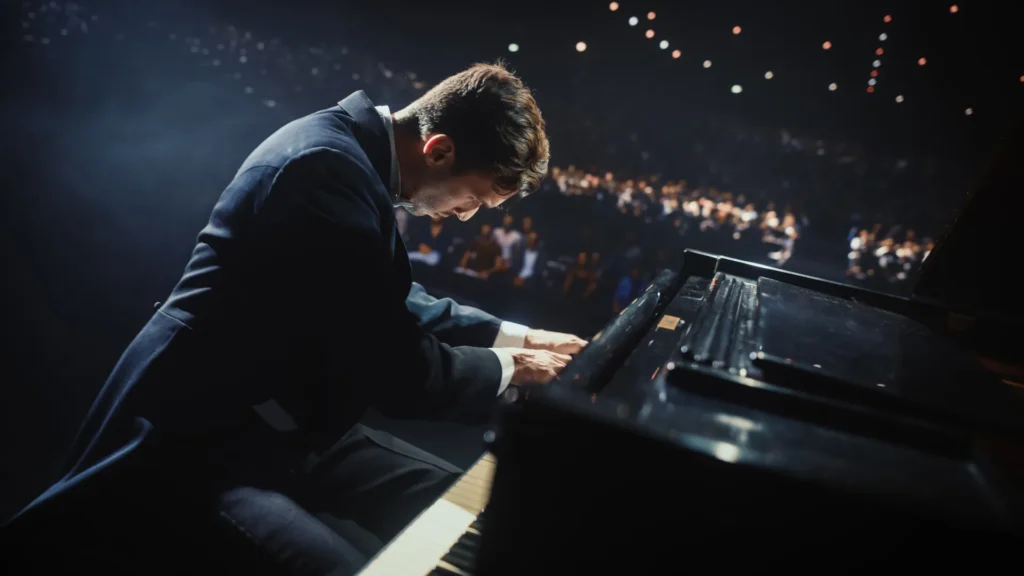
For generations, the expressive power of a pianist’s touch has been a topic of fervent debate, dividing musicians and scientists alike. While virtuosos and music teachers steadfastly maintained that a performer’s subtle interaction with the keyboard could profoundly alter the very character of a piano’s sound, skeptics argued that once a hammer struck a string, the resulting tone was almost entirely a function of the instrument’s physics, with any perceived differences being merely psychological or attributable to changes in volume and timing. Now, a groundbreaking scientific study has delivered some of the most compelling and clearest evidence to date, unequivocally demonstrating that pianists truly possess the ability to sculpt a piano’s timbre through the nuanced artistry of their touch alone, settling a century-old contention.
Led by the distinguished Dr. Shinichi Furuya from the NeuroPiano Institute and Sony Computer Science Laboratories, Inc., an international team of researchers harnessed cutting-edge ultra high-speed sensing technology to meticulously unravel the intricate, often hidden movements that underpin expressive piano playing. Their pivotal findings, published in the prestigious Proceedings of the National Academy of Sciences (PNAS), illuminate how the minuscule, almost imperceptible motions of a pianist’s fingers and hands directly influence how listeners perceive intrinsic qualities such as brightness, heaviness, warmth, and clarity in musical notes. This research marks a significant convergence of art and science, providing empirical validation for a deeply held artistic intuition.
A Century of Discord: The Timbre Debate
The question of whether a pianist could genuinely manipulate timbre through their physical interaction with the keys has been a subject of intense discussion dating back to the early 20th century. Musicians frequently employ a rich lexicon to describe tonal qualities – terms like "warm," "dark," "bright," "heavy," "singing," or "pearly" are commonplace in pedagogical and critical discourse. Yet, for decades, many scientists, particularly those steeped in the physics of acoustics, remained skeptical. Their arguments often posited that the primary determinants of a piano’s sound were the hammer’s velocity upon impact, the string’s material and tension, and the instrument’s resonating body. Any perceived variation in timbre, they contended, was largely a product of changes in loudness (dynamics), timing (tempo and articulation), or psychological projection on the listener’s part, rather than an intrinsic alteration of the sound’s spectral content through touch itself.
Prominent acousticians throughout the 20th century, using early recording and analysis technologies, struggled to isolate the variable of touch from other performance parameters. They often concluded that a hammer’s strike, once initiated, was an independent event, and the resulting sound wave’s spectral envelope was fixed. This view often put them at odds with master pianists and pedagogues like Theodor Leschetizky, Alfred Cortot, and Heinrich Neuhaus, who consistently emphasized the paramount importance of varied touch and attack for achieving a rich palette of tonal colors. Anecdotal evidence from countless concert halls, where audiences and critics consistently differentiated between performers based on their "tone" or "touch," further fueled the artistic side of the argument, but lacked the rigorous empirical backing demanded by science. The new research directly confronts and ultimately challenges this long-held scientific assumption.
Unveiling the Secrets of Expressive Touch: The HackKey System
To bridge this historical divide, Dr. Furuya’s team developed a custom-built, highly sophisticated noncontact sensing system dubbed "HackKey." This revolutionary technology allowed them to record the movements of all 88 piano keys with unparalleled precision and speed. Operating at an astonishing 1,000 frames per second and possessing microscopic spatial accuracy, HackKey could capture the most minute details of key depression and release, far beyond the capabilities of previous systems.
The experimental phase involved twenty internationally acclaimed pianists, renowned for their expressive playing and tonal control. These virtuosos were tasked with a series of exercises, intentionally playing individual notes or short phrases while striving to produce contrasting tonal qualities. For instance, they were asked to render the same note as "bright" versus "dark," or "light" versus "heavy." This deliberate manipulation of intended timbre was crucial for isolating the role of physical touch.
Following the performance phase, a series of listening tests were conducted. Participants, comprising both individuals with extensive musical training (professional musicians and advanced students) and those with no formal musical background, were asked to identify the intended timbres (e.g., whether a note sounded "bright" or "dark"). The results were striking: listeners consistently and accurately recognized the intended timbres, regardless of their musical expertise. Unsurprisingly, professional pianists demonstrated an even greater sensitivity to these subtle differences, underscoring their highly developed auditory perception honed through years of practice and performance. This robust listener perception provided the first strong indication that the pianists’ intentional variations in touch were indeed translating into discernible changes in sound quality.
The Hidden Choreography of Musical Expression
The true breakthrough came when the researchers correlated the precise physical movements recorded by HackKey with the perceived timbral differences. They discovered that only a handful of extremely precise movement features were strongly and causally connected to changes in perceived timbre. These features included incredibly tiny variations in acceleration profiles of the key, minute differences in the exact timing of key depression, and subtle synchronizations (or deliberate desynchronizations) between the hands, even when playing what might outwardly appear to be a single, unified musical event.
A particularly significant finding was the demonstration that altering even a single, isolated movement feature could reliably change how listeners described the sound. This provided direct, irrefutable evidence that touch itself plays a causal role in shaping timbre, rather than merely accompanying other musical effects like loudness or tempo. Previous studies often struggled to disentangle these variables, leading to the scientific skepticism. By isolating and manipulating specific movement parameters, Furuya’s team could confidently assert a direct causal link between physical action and perceived tonal color.
The study conceptualized these subtle gestures as components of a "shared motor skill," developed and refined through years of advanced piano training. This means that the artistry behind a pianist’s tone is not merely metaphorical, subjective, or a matter of psychological projection; it is demonstrably grounded in measurable, repeatable physical actions. As Dr. Furuya articulated, this pioneering work "helps bring a long-standing artistic intuition into the realm of science." The findings not only corroborate what countless pianists have instinctively believed for centuries but also offer an unprecedented, clearer understanding of precisely how skilled physical movement generates the rich emotional and aesthetic experiences intrinsic to music. It validates the immense dedication and nuanced practice that goes into mastering the instrument.
Beyond the Concert Hall: Far-Reaching Implications
The ramifications of this research extend far beyond the confines of concert halls and conservatories, promising transformative impacts across diverse fields.
Revolutionizing Music Education: The discoveries hold immense potential for reshaping music education. Historically, piano pedagogy has relied heavily on abstract or metaphorical instructions – "play warmer," "use a lighter touch," "make it sing." While effective for some, these subjective commands can be frustratingly vague for others. Future training systems, informed by this research, could move beyond such nebulous guidance. Imagine interactive teaching tools that, using similar high-speed sensing technology, could show students the exact physical movements – the precise acceleration curves, timing variations, and micro-synchronizations – associated with specific tonal qualities. This data-driven approach could make expressive techniques more tangible, easier to visualize, and therefore more efficient to teach and learn, potentially accelerating skill acquisition and reducing the often-protracted trial-and-error process.
Advancements in Rehabilitation Science and Neuroscience: The study’s insights into the intricate link between advanced motor control and sensory perception have profound implications for rehabilitation science and neuroscience. By meticulously detailing how precise motor actions shape auditory experience, the research offers critical clues about how the brain integrates complex movement plans with sensory feedback. This understanding could inform novel therapeutic approaches for individuals recovering from neurological conditions such as stroke, Parkinson’s disease, or other motor impairments. Training systems that leverage musical movement, guided by specific timbral goals, could be developed to improve dexterity, coordination, and fine motor control, making rehabilitation exercises more engaging and effective. For neuroscientists, the work provides a powerful model for studying embodied cognition – how our physical interactions with the world shape our perceptions and even our emotional responses.
Enhancing Robotics and Human-Computer Interaction (HCI): The findings are also poised to influence the development of more sophisticated robotics and human-computer interaction systems. The ability to quantify the subtle physical nuances that produce expressive musical performance opens new avenues for creating robotic systems that can execute tasks with greater dexterity and human-like nuance. In HCI, this could lead to more expressive digital instruments, virtual reality environments where users can interact with musical interfaces with unprecedented subtlety, and even AI-powered systems that can generate musical performances with truly human-like emotional depth and timbral variety.
The Rise of Expressive AI and Music Technology: Researchers in related fields are already actively exploring technologies inspired by expressive musical performance. Recent work in artificial intelligence and music technology has increasingly focused on modeling timbre, generating realistic piano motion, and building systems capable of reproducing subtle expressive nuances in performance. This study provides crucial empirical data to inform these efforts. AI models, particularly those employing deep learning, can now be trained not just on audio waveforms, but also on the correlated high-precision movement data, enabling them to learn the intricate relationship between gesture and sound. This could lead to digital instruments that respond more naturally to a performer’s touch, or AI composers and performers that can infuse their creations with a level of timbral artistry previously thought to be uniquely human. Some scientists envision a future where this understanding could lead to the development of "smarter" training tools that provide personalized feedback based on a student’s physical technique, or even advanced prosthetic limbs that allow for more nuanced musical expression.
Dynaformics: The Science of Creativity and Performance
This groundbreaking study also contributes significantly to a burgeoning scientific endeavor aimed at understanding creativity itself. For decades, much of the scientific research on perception in music primarily focused on quantifiable elements such as pitch, loudness, and rhythm – parameters relatively easier to measure and isolate. Timbre, however, has proven far more elusive and challenging to study scientifically, precisely because it involves higher-level sensory interpretation, subjective aesthetic judgment, and deep emotional response.
By precisely identifying the specific physical actions directly linked to timbre perception, the researchers have effectively opened a vital new door. They have created a pathway to systematically study how artistic expression emerges from the complex, dynamic interaction between the performer’s body, the brain’s motor and sensory systems, and the resulting sound. This research firmly places the subjective experience of musical beauty within an objective, measurable scientific framework.
The work is a key component of a broader, interdisciplinary movement often referred to as "dynaformics" – the science of music performance. Supporters of dynaformics believe this holistic approach, which integrates biomechanics, neuroscience, acoustics, and psychology, could eventually transform how musicians train. By understanding the precise physical mechanisms behind expressive performance, musicians may be able to train more efficiently, optimize their technique to avoid common performance injuries (a significant issue for professional musicians), and overcome physical limitations that often accompany years of intense, repetitive practice. It moves beyond merely analyzing the sound product to understanding the embodied process of its creation.
The excitement surrounding these findings stems from more than just the satisfaction of resolving a long-standing musical mystery. It underscores a profound realization: some of the deepest emotional power and aesthetic impact of music may emanate from movements so infinitesimally small they are almost invisible to the naked eye, yet precise enough for human listeners across all levels of musical experience to discern and feel the difference. This research not only validates the artistry of pianists but also deepens our understanding of the intricate, beautiful connection between human movement, perception, and the transcendent power of music.