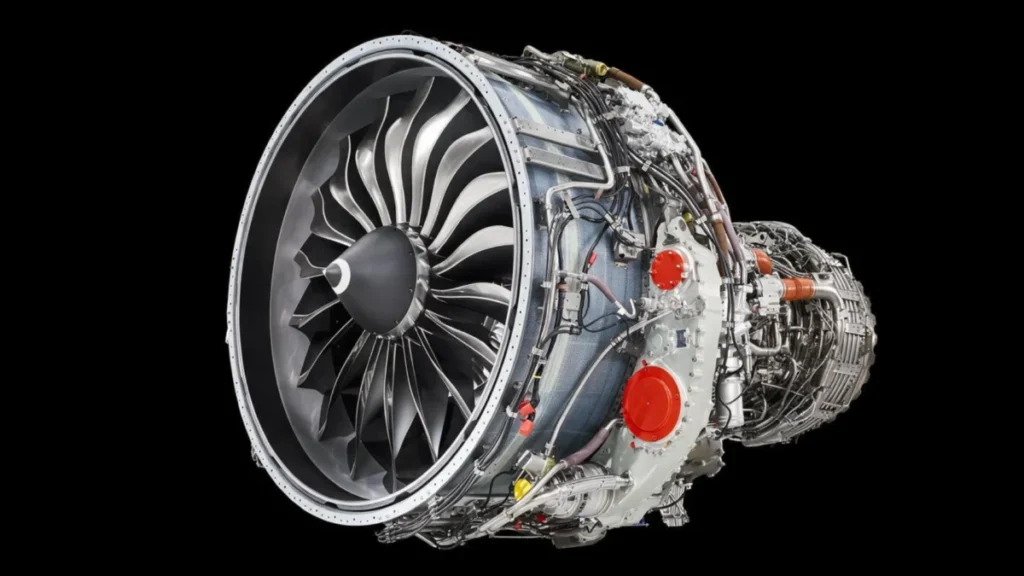
Aircraft engine manufacturer CFM International has announced a significant advancement in the operational lifespan and reliability of its LEAP-1B engines, securing crucial certifications from both the US Federal Aviation Administration (FAA) and the European Union Aviation Safety Agency (EASA) for its LEAP-1B high-pressure turbine (HPT) durability kit. This milestone is a testament to CFM’s unwavering commitment to enhancing engine performance, reducing maintenance demands, and bolstering the overall economic viability for airlines operating in diverse and often challenging global environments. Alongside this, the French-US joint venture also obtained initial engine-level certification for its LEAP-1B reverse bleed system (RBS), a sophisticated cooling technology poised to further revolutionize engine durability and streamline maintenance protocols. These certifications arrive as the LEAP engine family celebrates remarkable achievements, including surpassing 100 million flight hours and delivering over 10,000 units globally, underscoring its pivotal role in modern commercial aviation.
The HPT durability kit, specifically designed for the LEAP-1B engine which powers the Boeing 737 MAX family of aircraft, is engineered to double the engine’s "time on wing" (TOW). Time on wing refers to the duration an engine can operate on an aircraft before requiring removal for maintenance or overhaul. Doubling this critical metric translates directly into substantial operational savings and improved aircraft utilization for airlines. This enhancement is particularly vital for carriers operating in demanding environments characterized by extreme heat, abrasive airborne particulates, and high-cycle operations, such as those frequently encountered in the Middle East, India, and other arid or tropical regions. In these conditions, engine components, especially the high-pressure turbine, are subjected to intensified thermal and mechanical stresses, leading to accelerated wear and tear. The new durability kit addresses these challenges head-on, promising a robust solution that extends the operational window between scheduled shop visits.
Following the successful acquisition of regulatory approvals, CFM International has initiated the industrialization phase for the production of the new hardware. This involves scaling up manufacturing capabilities and integrating the enhanced components into its production lines. The company anticipates a full transition to large-scale manufacturing by early 2027, at which point the upgrade will be systematically rolled out across the entire LEAP-1B fleet. This phased approach ensures a smooth transition and efficient integration of the new technology, minimizing disruption to existing operations while maximizing the benefits for its global customer base.
Further solidifying its commitment to engine maturity and operational excellence, CFM has also achieved initial engine-level certification for its LEAP-1B reverse bleed system (RBS). This innovative cooling technology is specifically designed to enhance engine durability by optimizing internal airflow and temperature management, thereby significantly reducing the need for on-wing fuel nozzle replacements. Fuel nozzles, critical for efficient combustion, are often subject to degradation in harsh operating conditions, necessitating frequent inspections and replacements. By minimizing these interventions, the RBS helps bring the maintenance intervals for the LEAP-1B engine in line with the long-established and highly regarded reliability standards of the CFM56 engine family. The CFM56, a true workhorse of the aviation industry, has set a benchmark for reliability and cost-efficiency over decades, and aligning the LEAP-1B with these standards is a powerful testament to CFM’s engineering prowess and commitment to continuous improvement.
Gael Meheust, President and CEO of CFM International, emphasized the transformative impact of these newly developed systems. He stated that the upgrades are expected to significantly extend the time between engine shop visits while simultaneously reducing overall maintenance demands, especially for operators flying in the aforementioned harsh environments. Meheust highlighted that these enhancements would allow customers to benefit from longer time on wing, thereby maintaining the exceptional efficiency, reliability, and high utilization rates that have become hallmark features of the LEAP engine family. The strategic vision behind these improvements is to empower airlines with greater operational flexibility, lower direct maintenance costs (DMC), and ultimately, a more competitive edge in a highly demanding industry.
CFM International also provided an update on the adoption rates of these advanced systems across its broader LEAP fleet. Currently, 70% of LEAP-1A engines, which power the Airbus A320neo family, are operating with the reverse bleed system (RBS). Additionally, 40% of the LEAP-1A fleet has been equipped with the high-pressure turbine (HPT) durability kit. These figures indicate a proactive approach by CFM in deploying these enhancements, even prior to the formal LEAP-1B specific certifications, likely through service bulletins and early adoption programs, demonstrating the company’s continuous drive for fleet-wide improvement and customer support. The formal LEAP-1B certifications now pave the way for accelerated integration into the Boeing 737 MAX fleet.
These significant technical achievements coincide with a momentous period for CFM International, as the company prepares to celebrate the 10-year anniversary of the LEAP-1A engine’s entry into commercial service on August 2. Since its introduction in 2016, the LEAP engine program has witnessed unprecedented growth and adoption. CFM has delivered more than 10,000 LEAP engines worldwide across its three variants – the LEAP-1A for the A320neo, the LEAP-1B for the 737 MAX, and the LEAP-1C for the COMAC C919. Cumulatively, the global LEAP fleet has amassed an astonishing record of over 100 million engine flight hours, a testament to its reliability and the trust placed in it by airlines globally.
Meheust reflected on this rapid growth, drawing a compelling comparison with the CFM56 program. "It took 17 years to deliver 10,000 CFM56 engines, but just 10 years to deliver 10,000 LEAP engines," he noted. This stark contrast underscores the accelerated pace of modern aviation development and the overwhelming market demand for new-generation, fuel-efficient engines. He further emphasized, "These milestones remind us that with the success of the LEAP program comes an even greater responsibility to do everything we can to help our customers succeed." This statement encapsulates CFM’s customer-centric philosophy, highlighting the ongoing commitment to support and enhance its products throughout their lifecycle.
The LEAP Engine Family: A Deep Dive into Innovation
The LEAP (Leading Edge Aviation Program) engine represents a generational leap in propulsion technology, building upon the storied legacy of the CFM56. A joint venture between GE Aerospace (formerly GE Aviation) of the United States and Safran Aircraft Engines of France, CFM International was founded in 1974. The LEAP program was officially launched in 2008, with its first flight occurring in 2014. It incorporates a suite of advanced technologies designed to deliver double-digit improvements in fuel efficiency and reduced emissions compared to its predecessor. Key innovations include:
- 3D Woven Carbon Fiber Composite Fan Blades: These lightweight, strong blades contribute to reduced engine weight and improved aerodynamic efficiency.
- Twin-Annular, Pre-Swirl (TAPS) Combustor: Designed to lower NOx emissions significantly.
- Ceramic Matrix Composites (CMCs): Utilized in the high-pressure turbine section, CMCs are lighter and can withstand much higher temperatures than traditional nickel alloys, enabling greater efficiency and durability.
- Advanced Aerodynamics: Optimized designs for the compressor and turbine sections to maximize efficiency.
These technological advancements have enabled the LEAP engine to offer up to 15% better fuel consumption and CO2 emissions, alongside reduced noise footprints, making it a cornerstone of airlines’ efforts to modernize their fleets and achieve sustainability targets.
Economic and Operational Implications for Global Airlines
The certifications for the HPT durability kit and RBS carry profound economic and operational implications for airlines worldwide, particularly those heavily invested in the Boeing 737 MAX and Airbus A320neo fleets.
- Reduced Direct Maintenance Costs (DMC): By extending the time between engine shop visits and minimizing the need for on-wing maintenance such as fuel nozzle replacements, airlines will experience a direct reduction in maintenance expenditures. Engine overhauls are among the most significant costs for an airline, and pushing these intervals out can save millions of dollars annually per fleet.
- Improved Aircraft Utilization and Availability: An engine that remains on wing longer means an aircraft spends more time in the air generating revenue and less time grounded for maintenance. This translates to higher aircraft utilization rates, crucial for maximizing asset value and meeting demanding flight schedules.
- Lower Spare Engine Requirements: If engines are more reliable and have longer service intervals, airlines may be able to reduce the size of their spare engine pools, freeing up capital that would otherwise be tied up in these expensive assets.
- Enhanced Operational Efficiency: The ability to operate in challenging environments with greater confidence and fewer unscheduled disruptions significantly enhances an airline’s operational efficiency and reliability, improving punctuality and passenger satisfaction.
- Competitive Advantage: Airlines equipped with the most durable and reliable engines gain a competitive advantage through lower operating costs and a more robust operational backbone. This is especially true in regions where engine performance is frequently tested by environmental extremes.
Regulatory Oversight and Industry Standards
The involvement of the FAA and EASA in certifying these durability enhancements underscores the stringent regulatory framework governing commercial aviation. These agencies conduct exhaustive reviews and testing to ensure that any new component or system meets the highest standards of safety, reliability, and airworthiness. The certification process typically involves:
- Design Review: Evaluation of the engineering design, materials, and manufacturing processes.
- Component Testing: Rigorous testing of individual parts under simulated operational conditions.
- Engine-Level Testing: Comprehensive testing of the engine with the new components installed, often involving thousands of hours of endurance and performance testing on test stands.
- Flight Testing: In some cases, flight testing on actual aircraft to validate performance in real-world conditions.
Achieving these certifications from two of the world’s most respected aviation authorities provides an undeniable seal of approval, instilling confidence in airlines and passengers alike regarding the safety and performance of the upgraded LEAP-1B engines.
Market Landscape and Competitive Positioning
The narrow-body aircraft market is a fiercely competitive arena, dominated by the Airbus A320neo family and the Boeing 737 MAX. Both aircraft types offer significant fuel efficiency improvements over their predecessors, largely due to their advanced engine options. For the 737 MAX, the LEAP-1B is the sole engine option, making its performance and reliability paramount to the aircraft’s success. For the A320neo, airlines have a choice between the LEAP-1A and Pratt & Whitney’s PW1100G-JM geared turbofan (GTF) engine.
While both new-generation engine families have faced initial "teething issues" characteristic of novel technologies, CFM’s proactive development and certification of these durability kits for the LEAP-1B (and prior implementation on the LEAP-1A) strategically enhances its competitive standing. By directly addressing reliability and maintenance challenges, CFM reinforces the LEAP engine’s value proposition, offering airlines a more mature, predictable, and cost-effective solution. This focus on long-term operational excellence strengthens CFM’s relationship with its customers and solidifies its market leadership in the narrow-body segment.
Future Outlook and CFM’s Enduring Commitment
CFM International’s journey with the LEAP engine is far from over. The company explicitly stated its ongoing focus on advancing the LEAP engine family by continually improving efficiency, reliability, and utilization. Furthermore, the commitment extends to enhancing durability, availability, and overall cost of ownership for its customers. This involves continuous research and development, leveraging data from the extensive operational fleet to identify areas for further optimization, and proactive engagement with airlines to understand their evolving needs.
The rapid accumulation of 100 million flight hours and the delivery of 10,000 LEAP engines are not merely statistical achievements; they represent a vast reservoir of operational data and experience. This wealth of information allows CFM to refine its designs, predict maintenance needs more accurately, and develop targeted solutions like the HPT durability kit and RBS. As the global aviation industry continues to recover and grow, with a strong emphasis on fuel efficiency and sustainability, the LEAP engine, bolstered by these latest enhancements, is well-positioned to remain at the forefront of narrow-body propulsion for decades to come. CFM’s commitment to innovation and customer success ensures that the LEAP engine will continue to set new benchmarks for performance, reliability, and economic value in commercial aviation.