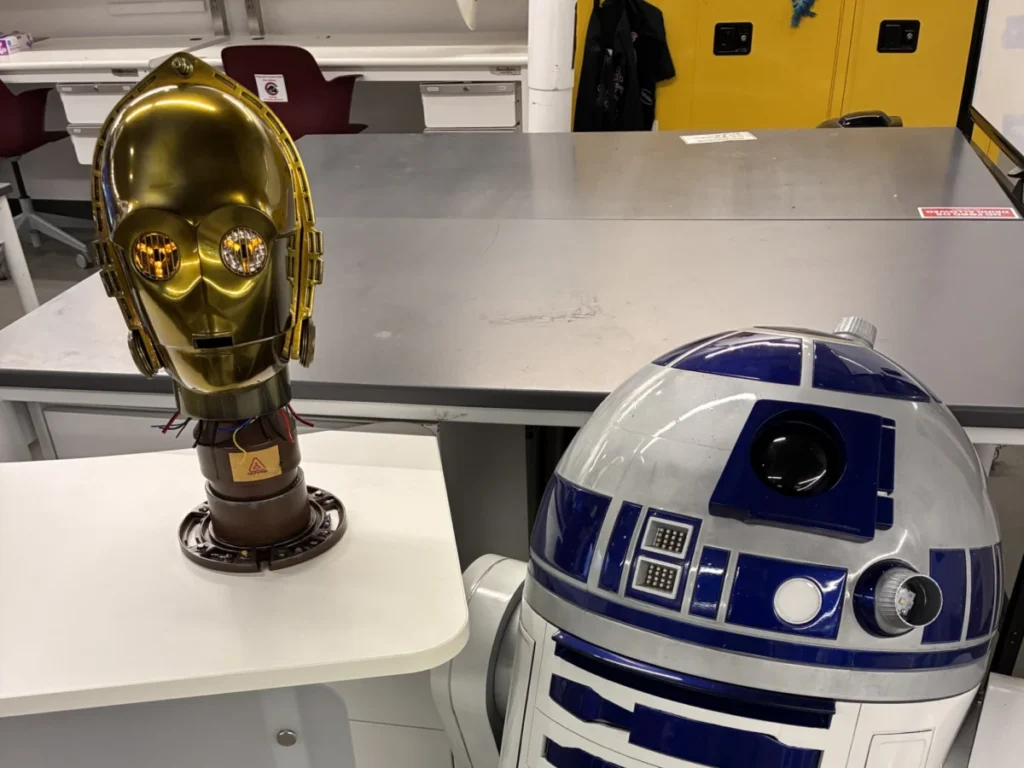
The landscape of artificial intelligence is increasingly populated by conversational agents, with AI chatbots becoming ubiquitous tools in various digital interfaces. While the proliferation of screen-based AI assistants is undeniable, a more specialized niche involves integrating these intelligent systems into custom hardware. This approach, while less common, offers a unique avenue for exploring human-AI interaction, particularly when developers go the extra mile to imbue their creations with distinctive personality and physical presence. Such is the ambition realized in Sam Potozkin’s "Threepio" project, a meticulously crafted, fully embodied C-3PO replica designed not just as a novelty, but as a profound exploration into the nuances of human interaction with artificial entities.
The Threepio Project: A Deep Dive into Embodied AI
Inspired by the iconic protocol droid from George Lucas’s original 1977 "Star Wars: Episode IV – A New Hope," Sam Potozkin, a dedicated student at Chapman University, embarked on a mission to replicate the experience of interacting with C-3PO as faithfully as possible. His vision extended beyond mere aesthetic resemblance, aiming for a synthesis of advanced AI capabilities with a physical form that resonates with decades of cultural familiarity. The project, therefore, serves as a compelling case study in embodied AI, where the physical manifestation of an intelligent system significantly alters human perception and engagement.
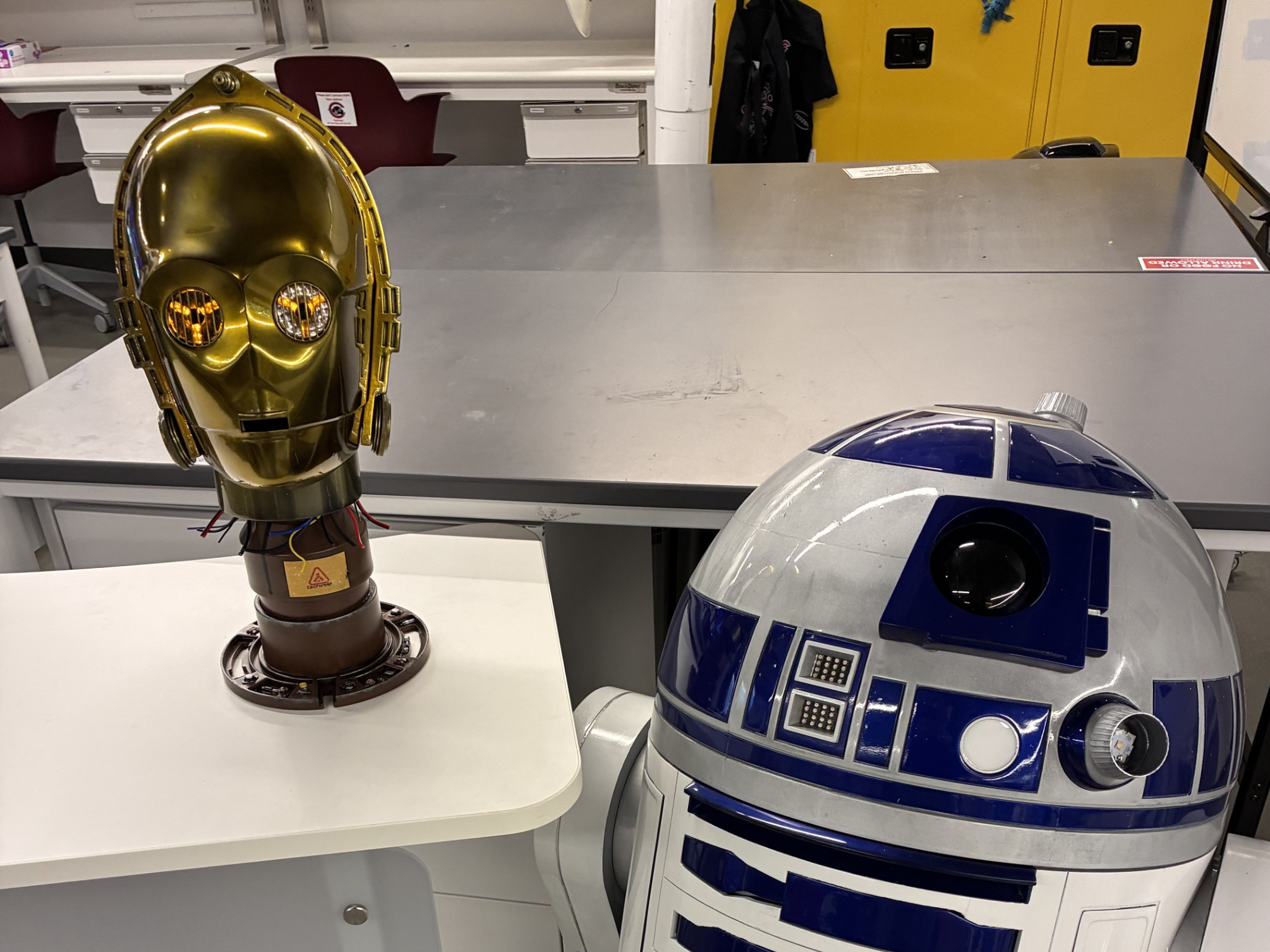
Potozkin’s attention to detail began with the physical construction of the droid’s head. Utilizing 3D printing technology, he invested considerable effort in post-processing the printed parts to achieve the smooth, lustrous gold finish characteristic of C-3PO. This involved meticulous sanding, priming, and painting to eliminate visible layer lines and achieve a professional-grade appearance. Furthermore, small, intricate "greeblies"—technical details often found on science fiction props—were incorporated into the display stand, enhancing the overall realism and immersive quality of the piece. This commitment to visual fidelity underscores a fundamental principle of embodied AI: that a compelling physical presence can bridge the gap between abstract technology and tangible experience.
Beyond the Screen: The Philosophy of Embodied Interaction
The Threepio project is more than just an impressive piece of fan art or a technical demonstration; it is a research platform. Potozkin authored a comprehensive paper, accessible on GitHub, that delves into the theoretical underpinnings of human-AI interaction. In this paper, he explores why individuals react differently to contemporary, often disembodied, AI systems compared to the enduring appeal and perceived familiarity of a fictional android like C-3PO, which has existed in the cultural consciousness for nearly half a century.
As Potozkin articulates in his paper, the core objective was to explore the translation of a beloved fictional character into a real-world, embodied AI system. This endeavor necessitated the complex integration of abstract concepts from both cutting-edge AI research and established communication theory. The project posits that moving conversational AI off the screen and into a physical, interactive system fundamentally alters the nature of human engagement. By giving the AI a physical presence, a distinct voice, and a carefully crafted personality, Potozkin aimed to create an experience that transcends purely digital interaction, fostering a deeper sense of connection and familiarity in the real world. This approach aligns with a growing body of academic research in Human-Robot Interaction (HRI) that emphasizes the importance of embodiment for effective and naturalistic interactions between humans and AI. Studies have shown that physical robots can elicit stronger emotional responses, higher levels of trust, and more intuitive communication patterns compared to their virtual counterparts.
Technical Ingenuity: Hardware and Software Synergy
The sophistication of Potozkin’s Threepio extends deep into its internal architecture. Unlike many off-the-shelf AI chatbot implementations that rely on cloud-based processing, his C-3PO runs its entire AI chat stack locally on a Raspberry Pi 5. The Raspberry Pi 5, released in late 2023, represents a significant leap in performance for single-board computers, boasting a more powerful quad-core ARM Cortex-A76 processor, enhanced graphics capabilities, and up to 8GB of LPDDR4X SDRAM. These specifications make it an ideal platform for running local large language models (LLMs) or other complex AI algorithms, reducing latency and ensuring data privacy, which are critical considerations for embodied AI systems.
A particularly innovative aspect of the Threepio project is its audio output. Instead of employing a conventional speaker, Potozkin utilized an exciter. An exciter is a transducer that, when attached to a surface, causes that surface to vibrate and produce sound. In this application, the exciter is strategically placed within the droid’s head, causing the entire structure to resonate and emit sound. This clever design choice creates the illusion that C-3PO’s voice is emanating naturally from its head, rather than from a discrete speaker grille. Potozkin dedicated considerable time to refining the audio effects, meticulously adjusting equalization and other parameters to ensure the sound output was not only clear but also captured the distinctive, somewhat metallic, yet warm timbre associated with the original character’s voice. This level of acoustic fidelity is crucial for maintaining the illusion of an authentic C-3PO experience and enhancing the user’s immersion.
A Legacy of Droid Building: Star Wars and the Maker Community
The Threepio project emerges from a rich tradition of "droid building" within the Star Wars fan community, a subculture celebrated for its dedication to recreating the beloved droids from the saga. From the intricate R2-D2s that can navigate conventions to the more obscure astromechs and protocol droids, these builders often combine engineering prowess with artistic craftsmanship. Projects like Potozkin’s Threepio highlight the ongoing inspiration drawn from the Star Wars universe for practical applications in robotics and AI. The enduring appeal of droids as companions, tools, and even characters with their own personalities has fostered a global community of makers who leverage skills in electronics, 3D printing, programming, and mechanical design. This project, while highly advanced, shares the spirit of ingenuity and passion that drives the broader maker movement. Experienced R2-D2 builders often advise beginners to start with the dome, a testament to the complexity and detail involved in creating even a partial droid. Potozkin’s choice of C-3PO’s head as his canvas aligns with this wisdom, allowing for focused attention on intricate details that define the character.
The Evolution of Conversational AI: From ELIZA to Embodied Systems

To fully appreciate the significance of Potozkin’s Threepio, it’s helpful to contextualize it within the broader history of conversational AI. The journey began in the mid-1960s with programs like ELIZA, developed by Joseph Weizenbaum at MIT. ELIZA simulated a Rogerian psychotherapist by using simple pattern matching and keyword recognition to respond to user input, often remarkably convincingly, despite lacking true understanding. This early work demonstrated the surprising human tendency to anthropomorphize even rudimentary AI.
The 1970s and 80s saw the development of more sophisticated rule-based systems and expert systems, designed for specific domains. The rise of the internet in the 1990s and 2000s brought text-based chatbots to customer service and online platforms. However, these systems were largely limited by their pre-programmed responses and inability to handle nuanced conversation. The real paradigm shift occurred in the 2010s with advancements in machine learning, particularly deep learning and neural networks. This led to the development of powerful large language models (LLMs) like those powering modern virtual assistants and generative AI, capable of understanding context, generating creative text, and engaging in far more fluid and human-like conversations.
Potozkin’s project bridges this historical trajectory by taking modern LLM capabilities and embedding them within a physical, culturally resonant form. While current LLMs excel at generating text, they typically lack physical presence. Threepio, by combining the latest in local AI processing with a carefully crafted physical manifestation, pushes the boundaries of how we interact with these increasingly intelligent systems, evoking the "familiarity" that fictional characters like C-3PO have long enjoyed.
Implications for Human-AI Relations and Future Development
The implications of projects like Threepio are far-reaching, impacting fields from robotics and AI research to education and even entertainment. For human-robot interaction (HRI) researchers, an embodied AI like Threepio provides a unique platform for studying how physical presence, personality, and established cultural narratives influence human trust, engagement, and perception of intelligence. It allows for empirical studies on factors such as social cues, emotional responses, and the "uncanny valley" phenomenon, where overly human-like robots can evoke feelings of eeriness.
Educationally, the Threepio project serves as an inspirational example of interdisciplinary work, combining engineering, computer science, industrial design, and communication theory. It demonstrates to students the tangible results of integrating diverse academic fields and encourages hands-on learning in robotics, AI programming, and advanced manufacturing techniques like 3D printing. Chapman University, where Potozkin is a student, fosters such innovative projects that push the boundaries of technology and creativity.
Furthermore, the project hints at the future trajectory of AI. As AI becomes more sophisticated, there will be an increasing demand for it to operate seamlessly within our physical world. This means moving beyond screen-based interfaces to embodied forms that can interact with us in more natural and intuitive ways. From domestic robots that assist with daily tasks to companion robots that provide social interaction, the lessons learned from projects like Threepio will be invaluable. The ability to give AI a relatable personality, particularly one rooted in popular culture, could significantly accelerate public acceptance and adoption of advanced robotic systems.

Challenges and Triumphs in Robotics
The journey to bring Threepio to life was not without its obstacles. Potozkin candidly shared the myriad challenges encountered during the ambitious endeavor. These included learning to solder complex electronic components, a fundamental skill in robotics that requires precision and patience. Refining the audio effects to achieve the desired vocal quality was an iterative process, demanding keen auditory perception and technical expertise. The physical construction also presented its own set of hurdles, from meticulously sanding layer lines inherent in 3D printing to dealing with issues like "orange peel" texture during painting. A particularly memorable challenge involved a dropped head at one point, a common mishap in intricate fabrication projects that often necessitates painstaking repairs and rework.
That Potozkin, as a student, managed to overcome these significant technical and practical difficulties is a testament to his dedication, problem-solving skills, and the invaluable experience gained through hands-on making. Such an ambitious undertaking requires not only theoretical knowledge but also practical resilience and adaptability in the face of unexpected setbacks.
The Open-Source Ethos and Future Directions
Crucially, Sam Potozkin has embraced the open-source ethos by making his Threepio project accessible on GitHub. This decision allows other makers, students, and researchers to customize, extend, and build upon his work. The project provides a detailed framework, from hardware schematics to software code, empowering others to put their unique spin on the conversational droid. This open-source approach fosters collaboration, accelerates innovation, and democratizes access to advanced robotics and AI development. The potential for community contributions is vast, including the possibility of integrating additional languages, perhaps even the remaining 5,999,999 forms of communication that C-3PO famously masters. This extensibility ensures that the project remains a living, evolving platform for exploration.
In conclusion, Sam Potozkin’s Threepio project stands as an absolutely impressive achievement in the realm of embodied AI. It masterfully blends meticulous craftsmanship, cutting-edge technology, and a deep understanding of human psychology and cultural narratives. By bringing C-3PO to life, Potozkin has not only created a captivating conversational robot but has also provided a valuable contribution to the ongoing dialogue about the future of human-AI interaction. His work underscores the profound impact that physical embodiment and personality can have on our relationship with artificial intelligence, paving the way for more intuitive, engaging, and culturally resonant AI systems in the years to come.