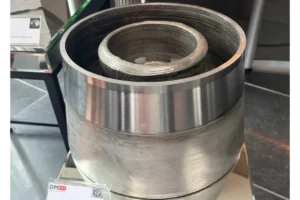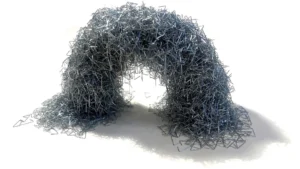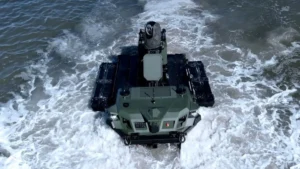
A decade ago, Conflux Technology embarked on a mission fueled by a singular vision: that metal additive manufacturing (AM), commonly known as 3D printing, held transformative potential for the design and production of heat exchangers. While much of the burgeoning 3D printing industry at the time was focused on future possibilities, Conflux adopted a pragmatic, long-term approach. The company dedicated years to meticulously developing its proprietary technology, driven by the conviction that it could meet the stringent demands of high-stakes sectors like aerospace, defense, and motorsport. Today, according to Conflux CEO Dan Woodford, this strategic foresight is yielding tangible results, signaling a pivotal shift from theoretical promise to widespread industrial adoption.
"The momentum that people talked about five or ten years ago is now actually there," Woodford stated in an interview with 3DPrint.com. "The intention is converting into action." This sentiment underscores a broader industry trend where the initial excitement surrounding AM is now translating into concrete implementation, particularly in applications where performance gains can justify higher initial costs.
The Genesis of a Focused Strategy
The foundational idea for Conflux originated with founder Michael Fuller, a veteran of Formula One engineering. Fuller’s extensive experience in the demanding world of motorsport revealed a critical need for advanced thermal management solutions. He identified heat exchangers as a prime candidate for disruption by metal AM. The inherent complexity of heat exchanger design—featuring intricate internal channels, expansive surface areas for heat dissipation, and the necessity for highly efficient cooling—presented an ideal challenge for additive manufacturing. Unlike companies pursuing a broad application of AM, Conflux strategically narrowed its focus to master this specific, high-value problem.
"We gave ourselves a head start and chose a really difficult subject matter," Woodford explained, reflecting on the company’s early days. "When we started, the technology was still maturing, but now we’re in a really good position. A lot of companies are using additive in interesting ways, often alongside traditional manufacturing. What we’re seeing now is that entire heat exchangers are increasingly being built through additive manufacturing, and that’s becoming much more common."

This focused strategy has positioned Conflux at the forefront of a market that is increasingly moving beyond experimentation and embracing real-world deployment.
Aerospace and Defense: A New Frontier for Additive Manufacturing
The aerospace and defense sectors have emerged as significant growth engines for Conflux. The company’s engagement with aerospace clients dates back to 2018, and it has since been involved in numerous high-profile programs. Collaborations have included work with industry giants such as Airbus, Honeywell, and General Atomics. These partnerships have propelled Conflux’s technology into cutting-edge projects, including the development of hydrogen-powered aircraft. Notably, the company has contributed to Airbus’s zero-emission initiatives and the European Union-funded THEMEA4HERA program, which is dedicated to advancing thermal management systems for future hydrogen-powered regional aircraft.
The integration of AM into aerospace is no longer an afterthought but a deliberate design consideration from the outset of new aircraft development. This proactive inclusion signifies a profound shift in how the industry approaches engineering and manufacturing.
"The fact that additive is becoming a serious part of the design and creation of next-generation aircraft is now just a fact," Woodford elaborated. "It’s moved from being something people thought might be useful to something that is deliberately being included in development programs." He cautioned, however, that this doesn’t signal an overnight revolution in terms of the number of AM-produced parts flying immediately. "Does that mean we’re suddenly going to see huge numbers of parts flying tomorrow? No. But the intention is converting into action."
The Critical Role of Certification and Scalability
For Conflux, a pivotal development in the aerospace industry has been the growing emphasis on certification. This heightened focus presents both challenges and opportunities for companies leveraging additive manufacturing.

"The second thing that’s changed is that companies are now taking certification seriously and translating it into concrete action," Woodford observed. "For us, that’s both a challenge and an opportunity. The conversation has shifted from whether additive can do the job to how we qualify it, how we certify it, and how we put it into service."
The path to integrating AM into aerospace is far more complex than simply acquiring larger or faster 3D printers. Woodford stresses that true scalability involves a holistic production system. This encompasses sophisticated design methodologies, consistent manufacturing capabilities, robust post-processing techniques like depowdering and finishing, rigorous inspection protocols, and comprehensive quality management systems. "People sometimes think scaling means buying more machines, but that’s only one piece of the puzzle. It’s an entire production system. You need the right designs, the ability to manufacture consistently, depowdering, post-processing, inspection, and quality systems. It’s an end-to-end production process. That’s what scaling actually looks like."
Overcoming Size Limitations and Future Production Horizons
A significant hurdle in producing large-scale aerospace heat exchangers is the current build volume limitations of many industrial metal 3D printers. To circumvent this, Conflux has pioneered modular design strategies. These designs enable the creation of components by joining multiple printed sections, effectively overcoming the constraints of single-build capacities.
"A lot of the aerospace parts we’re creating today are actually larger than the machines can print in one piece," Woodford explained. "We’ve developed ways to create modular parts made up of two, three, or more sections that are joined together into a single component. We’ve already deployed those into aviation test programs, and we’re progressing that approach. Longer term, large-format machines will become important because that’s where you really unlock the maximum performance."
Currently, Conflux is producing hundreds of heat exchangers annually for customers outside the aerospace sector, with a primary focus on automotive applications. The company’s long-term ambition is to scale production to thousands of units per year. This involves not only increasing output but also developing manufacturing systems that can be replicated and deployed by other entities, fostering broader adoption of AM for heat exchanger production.

Accelerating Adoption in Defense and Advanced Air Mobility
While commercial aerospace operations are characterized by deliberate, long-term development cycles, the defense sector and emerging aircraft projects are demonstrating faster adoption rates for AM. Conflux is actively engaged with companies in the advanced air mobility (AAM) space, recognizing drones and other uncrewed aerial vehicles (UAVs) as significant avenues for accelerating the deployment of AM-produced parts. These applications often involve less stringent approval processes compared to those for large passenger aircraft, enabling quicker integration into operational use.
"We are already crossing into production," Woodford noted. "The reality is that commercial aviation moves deliberately. Putting a part onto an aircraft that carries thousands of passengers will always take time. There are hurdles we need to clear, and we’re working through them with our partners. Some things simply can’t be accelerated."
A Call for Present-Day Integration
Woodford’s overarching message to the engineering community is clear: additive manufacturing is no longer a technology of the distant future. It is a mature and capable solution ready for immediate integration into product development roadmaps.
"I’d like more engineers to realize that additive is ready to be included in product development roadmaps and taken seriously," he concluded. "There are still hurdles, especially in aerospace certification, but those hurdles are being addressed. That’s the exciting part. The technology isn’t waiting for a future opportunity anymore. The opportunity is already here."
This perspective highlights a critical inflection point for AM. The industry is moving past the phase of proving technical feasibility and is now deeply entrenched in the practical challenges and opportunities of implementation, qualification, and scaling. Conflux Technology’s decade-long journey, from a focused hypothesis to a recognized player in high-performance AM applications, exemplifies this industry-wide evolution. The company’s success underscores the strategic value of specialization and persistent technological development in unlocking the full potential of additive manufacturing for critical industrial applications.