In a significant strategic move aimed at broadening its technological applications beyond ongoing legal endeavors, Continuous Composites has announced its successful acquisition of a Phase II Small Business Innovation Research (SBIR) contract from the US Navy. This contract signifies a pivotal step for the company, which has a proven track record in defending its intellectual property within the realm of composite 3D printing. The focus of this new venture will be the development and integration of advanced functionalities directly into unmanned aerial vehicle (UAV) components, marking a departure from solely structural additive manufacturing.
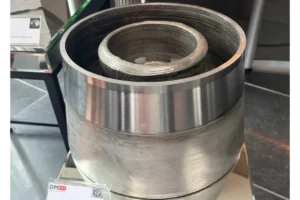
This latest award from the US Navy builds upon a substantial history of successful SBIR collaborations for Continuous Composites. The company has previously secured four Phase I and four Phase II SBIR awards, accumulating a total of $6.4 million in funding through this program. These prior awards have paved the way for significant advancements across various defense and aerospace sectors. Notable past projects include the development of composite structures for the Air Force in 2021, the creation of an isogrid structure for NASA, and the design of a low-cost airframe for the Navy. Additionally, the company has explored highly sensitive applications such as a 3D-printed Navy submarine shaft, and the development of structures with embedded sensors for the Navy. Their SBIR portfolio also encompasses a topology optimization software tool and collaborative testing plans for drone parts with Aurora Flight Sciences, alongside an AFWERX Manufacturing Challenge contract for advanced bonding techniques. These diverse projects underscore Continuous Composites’ commitment to pushing the boundaries of additive manufacturing, particularly in the creation of functional and integrated composite structures for UAVs.
Integrating Functionality: The Next Frontier in UAV Design
The current Phase II SBIR contract with the US Navy centers on the intricate process of embedding sensors, advanced wiring alternatives, and electronic components directly within 3D-printed composite structures. This innovative approach aims to revolutionize UAV design by significantly reducing weight and complexity. The strategic elimination or minimization of traditional wiring harnesses, often a substantial contributor to a UAV’s overall mass, is a primary objective.
The aerospace industry has long recognized the imperative to reduce wiring weight. Technologies such as fiber optics, electrohydrostatic actuators (EHAs), and solid-state power controllers have already been instrumental in shedding pounds from modern aircraft. Continuous Composites’ initiative seeks to build upon these advancements by enabling load-bearing composite components to simultaneously function as integrated power distribution systems. This could lead to substantial weight savings through shorter wiring paths, reduced housing requirements, and fewer fasteners, effectively transforming structural elements into multi-functional entities. The concept envisions a composite airframe that acts not only as a protective housing but also as an optimal conduit for data transmission, such as fiber-optic cables, thereby eliminating the need for separate, dedicated infrastructure.

Pioneering Integrated Systems: A Foundation of Success
This ambitious goal is grounded in Continuous Composites’ prior successes in additive manufacturing. The company has previously demonstrated the capability to print electronic components, conductive materials like copper, and fiber optics directly within composite materials. Crucially, these earlier tests confirmed that the integration of these elements had a negligible impact on the mechanical integrity of the printed structures. This validation provides a robust foundation for the current program, which aims to elevate this capability to a new level.
The current research and development efforts will delve deeper into incorporating higher-capacity conductive pathways into these load-bearing components. A key challenge and focus will be maintaining both exceptional mechanical performance and critical electrical isolation through meticulously controlled material placement during the printing process. The emphasis will remain steadfast on preserving structural integrity as enhanced functionality is introduced, thereby enabling composite components that can simultaneously bear significant loads and efficiently distribute power without compromising overall performance or safety.
Redefining UAV Form Factors and Operational Agility
The implications of this technological advancement for UAV design are profound and potentially transformative. The ability to embed power and data pathways directly into structural elements could liberate designers from conventional constraints, leading to radically different and more optimized form factors. Imagine UAVs that are essentially all wing or all engine, with all necessary electronic and power systems seamlessly integrated into these primary components. This could result in aircraft with enhanced aerodynamic efficiency, greater payload capacity, and improved maneuverability.
Furthermore, Continuous Composites envisions a future where UAVs can be assembled and reconfigured with a "Lego-like" modularity. This approach would allow for rapid component swapping, dramatically increasing operational flexibility and reducing downtime. For instance, a UAV could be reconfigured within seconds by simply removing a central module and installing a new battery and payload, enabling swift adaptation to diverse mission requirements. This level of interchangeability could revolutionize logistical support and mission planning for drone operations across various sectors.
CEO’s Vision: From Structure to Integrated Functionality
Steve Starner, CEO of Continuous Composites, articulated the strategic significance of this new program. "This program represents a shift from printing structure alone to printing functionality directly into the structure," Starner stated. "By embedding electrical pathways into load-bearing composite components, we’re enabling a new class of multifunctional UAV systems designed for real-world operational environments." This statement highlights the company’s commitment to evolving its additive manufacturing capabilities from purely structural applications to fully integrated, functional systems.
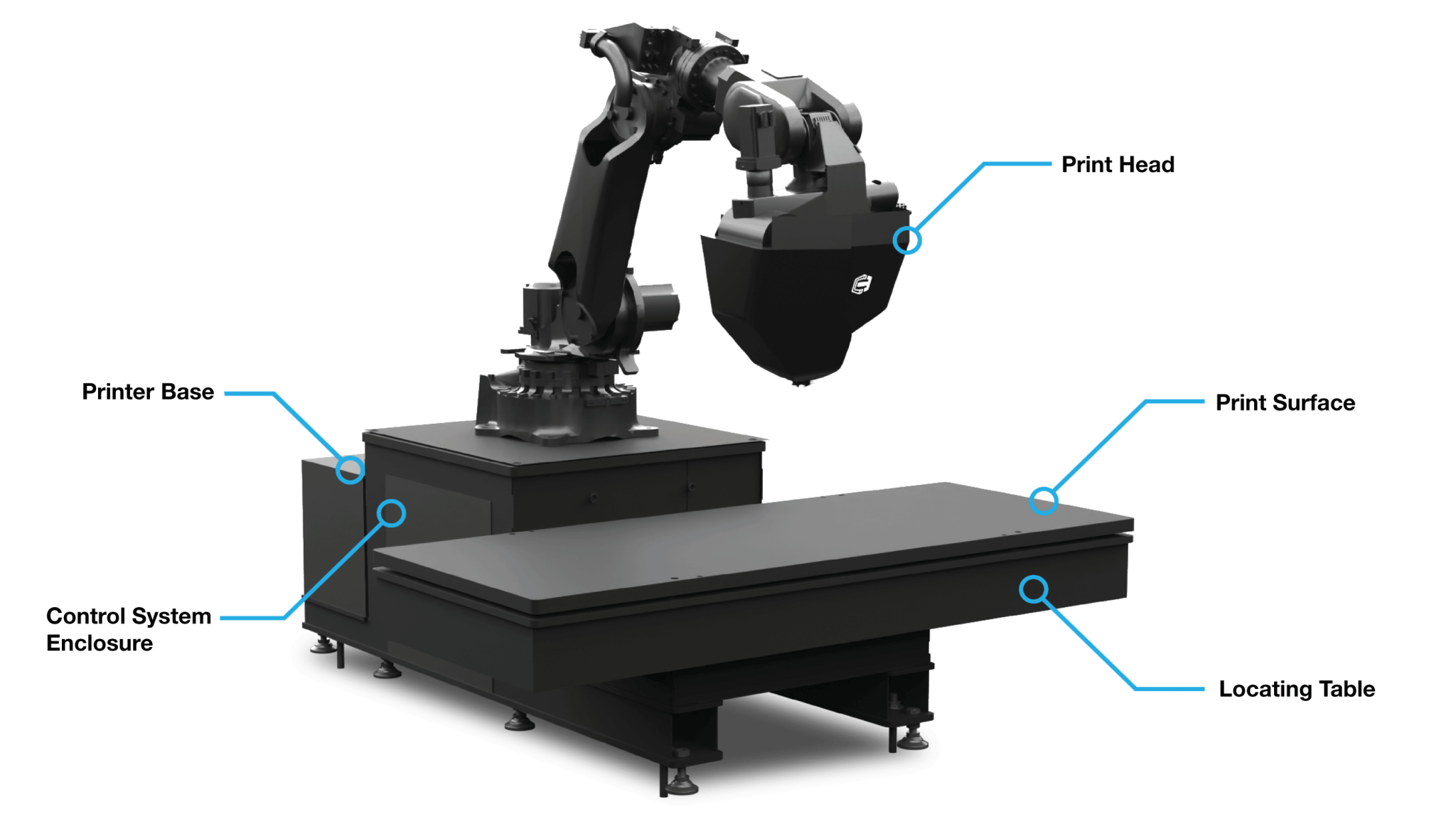
The current phase of work is slated to span 30 months and will encompass rigorous material science research, comprehensive process validation, and the intricate integration of conductive elements at both coupon and sub-scale structural levels. Following this initial period, a one-year option period is planned, which will culminate in the delivery of a functional, system-level demonstration. This extended phase is designed to advance the technology significantly, paving the way for its eventual deployment in operational UAV platforms.
Strategic Implications for National Defense and the Global UAV Market
The work being undertaken by Continuous Composites holds considerable strategic importance for the United States, particularly in the context of the rapidly evolving global UAV market. Currently, the US faces a notable disadvantage in the production of small UAVs. A significant portion of the 15 million UAVs utilized in recent conflicts, such as those in Russia and Ukraine, either incorporate Chinese components or are manufactured using predominantly Chinese-made 3D printers. Given China’s expanding industrial base and its demonstrated prowess in large-scale manufacturing, the nation is poised to outproduce the US in drone production at scale.
This disparity presents a potential vulnerability for the US, which could find itself at a significant disadvantage in future conflicts heavily reliant on small drone technology, despite its own technological capabilities. The innovations being developed by Continuous Composites offer a tangible path toward regaining a technological edge. By enabling the integration of various functionalities directly into structural components, reducing reliance on wiring and fasteners, and potentially leading to smaller, faster, and more maneuverable drones with enhanced payload capacities, this work directly addresses critical defense needs. The implications for the future defensibility of the US and its competitive standing in the global UAV market are therefore substantial and far-reaching. This technological leap could redefine the landscape of unmanned aerial systems, offering a critical advantage in both military and civilian applications.