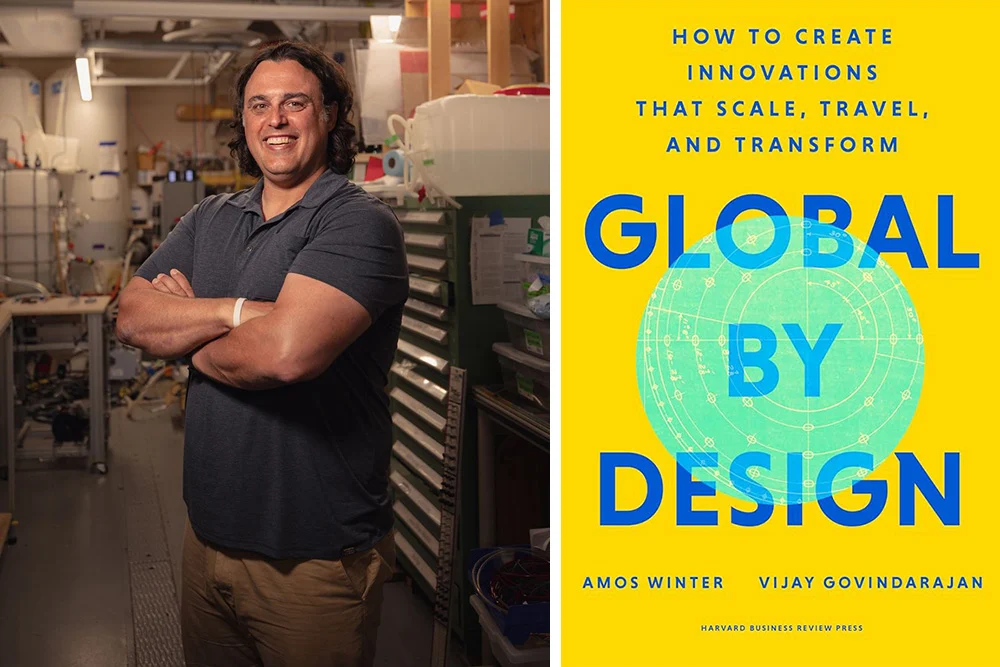
The collaborative effort by Professor Winter and Professor Govindarajan aims to equip businesses with the tools to navigate the complexities of global markets, emphasizing the growing significance of emerging economies. Their work challenges traditional innovation paradigms, which often see products designed for affluent markets subsequently adapted, often poorly, for less wealthy regions. Instead, "Global by Design" advocates for an approach where solutions are conceived with global scalability and diverse consumer needs in mind from the outset.
The Economic Imperative: Why Emerging Markets Drive Growth
A central tenet of "Global by Design" is the undeniable economic gravity shifting towards emerging markets. Professor Winter underscores this point, stating, "Emerging markets are growing at about twice the rate as the U.S. and Europe. If you’re a multinational company that really wants to maximize your growth rate, it’s not going to be in wealthy markets, it has to be in emerging markets." This statement reflects a crucial reality for corporations seeking sustained expansion in an increasingly interconnected global economy.
Data from organizations like the International Monetary Fund (IMF) consistently supports this perspective. For instance, projections often show developing and emerging economies collectively growing at significantly higher rates than advanced economies. While exact figures fluctuate, the trend has been clear for decades: these markets represent vast, untapped, and rapidly expanding consumer bases. For multinational corporations (MNCs), particularly legacy companies with established presences in developed markets, overlooking this growth trajectory is tantamount to foregoing substantial future revenue streams.
Professor Winter further elaborates on the pitfalls of a one-size-fits-all strategy. "You can’t just simply take what you sold in the U.S. and Europe and then try to sell it in a place like India; it’s probably going to be too expensive [or not meet consumer needs]," he explains. This observation resonates with countless corporate failures where products, perfectly suited for high-income consumers, proved inaccessible or irrelevant in contexts marked by different purchasing powers, infrastructure limitations, and cultural preferences. The book, therefore, offers a critical guide on how to leverage existing knowledge and intellectual property without resorting to a simplistic "copy and paste" approach, fostering genuine innovation tailored for global success.
Deconstructing "Global by Design": A Three-Phase Framework
"Global by Design" moves beyond theoretical discourse, offering a practical and disciplined methodology encapsulated in a three-phase framework. While the specific nomenclature of these phases is detailed within the book, the overall progression guides readers through:
-
Identifying Opportunities: This initial phase likely focuses on deep ethnographic research and market analysis in diverse contexts, particularly emerging markets. It involves "looking at those problems with fresh eyes," as Winter describes, to truly understand the unique pain points, resource constraints, and aspirational needs of potential users. This contrasts with traditional market research that might project developed market needs onto different populations. The emphasis is on distilling "unique requirements that must be satisfied," which often diverge significantly from those in affluent nations.
-
Designing Solutions: Once opportunities are clearly defined, this phase centers on the iterative development of high-value, low-cost solutions. This is where engineering ingenuity meets economic pragmatism. The goal is not merely to create cheaper versions of existing products but to design fundamentally new solutions that offer superior value propositions within the given constraints. This often involves innovative material choices, simpler mechanics, and design elements that enhance durability and ease of maintenance in challenging environments. The authors champion the creation of solutions that are robust, accessible, and inherently valuable, rather than simply being "low-cost."
-
Scaling Locally and Globally: The final phase addresses the critical challenge of bringing these innovations to market effectively and expanding their reach. This involves strategic considerations for production, distribution, pricing, and partnerships that can facilitate widespread adoption. The framework likely provides guidance on adapting business models for different regions, navigating regulatory landscapes, and building sustainable ecosystems around the new products or services. Crucially, it also touches upon strategies to avoid cannibalizing existing product lines in developed markets through intelligent product differentiation.
This structured approach aims to help innovators and organizations systematically address historically unsolved problems, transforming challenges into opportunities for significant social impact and financial viability.
Addressing Critical Global Challenges: Water, Health, and Energy
Professor Winter highlights the pressing nature of problems in the developing world, particularly those related to fundamental human needs like water, health care, and energy. These are areas where, despite technological advancements in wealthy nations, solutions have often failed to translate effectively. "Even though we have solutions to these problems in wealthy countries, they just haven’t mapped over, often because the solutions are too expensive or they’re not robust enough, leading these problems to persist for generations unsolved," he observes.
Consider the global water crisis: According to the World Health Organization (WHO) and UNICEF, billions of people still lack access to safely managed drinking water. Existing purification systems from developed countries are often prohibitively expensive to acquire, operate, and maintain in low-resource settings, or they rely on infrastructure (like reliable electricity grids) that simply doesn’t exist. Similarly, in healthcare, advanced medical devices are often too delicate, complex, or costly for remote clinics or areas with limited trained personnel. Energy poverty, affecting hundreds of millions globally, persists because grid-based solutions are expensive to extend, and existing off-grid alternatives are often inefficient or unreliable.
"Global by Design" seeks to empower innovators to tackle these deeply entrenched issues by fostering a mindset that embraces constraints as catalysts for innovation. By focusing on creating "high-value solutions" rather than just "low-cost" ones, the book promotes the development of technologies that genuinely meet the specific needs and realities of these communities, ensuring they are both affordable and effective in the long term.
The Broader Appeal: Beyond Emerging Markets
While the book places a strong emphasis on emerging markets, its principles extend far beyond. Globally minded solutions, designed with resource constraints and universal value in mind, possess a unique ability to resonate with a wider spectrum of consumers. In developed economies, there is a growing segment of "resource-constrained consumers" who, for various reasons (economic downturns, environmental consciousness, minimalist lifestyles), seek efficient, durable, and cost-effective products. Innovations born from the challenges of emerging markets can offer superior value to these consumers.
Moreover, such products can create significant "upsell opportunities" for wealthy consumers. A product designed for extreme durability, energy efficiency, or simplicity in a challenging environment often embodies qualities that appeal universally. For instance, a robust, easy-to-maintain water filter developed for a rural village might also find a market among campers, emergency preparedness enthusiasts, or even homeowners seeking a backup solution. The book provides guidance on how companies can strategically differentiate these products to appeal to various segments without cannibalizing existing efforts. This approach encourages companies to view their product portfolio as a continuum, where innovations from one segment can inspire and inform offerings across the entire market spectrum.
Case Study Spotlight: The Transformative Drip Irrigation Emitter
To illustrate its principles, "Global by Design" draws on five case studies from Professor Winter’s research group, alongside various industry examples. One particularly compelling example is the new drip irrigation emitter technology developed by Winter’s team, which is on the cusp of commercial production and promises to reshape agricultural practices worldwide.
Professor Winter details the remarkable advancements embedded in this technology: "We created new drip irrigation emitter technology that cuts pumping power in half, reduces the price of solar-powered irrigation by about 40 percent, requires less than half the plastic to make, and is an industry leader in clog prevention." Each of these attributes addresses critical pain points in global agriculture, especially in water-stressed and low-resource regions.
Technical and Environmental Implications:
- Reduced Pumping Power: Halving the energy required for pumping water significantly lowers operational costs, making irrigation more accessible and sustainable. This is particularly vital in areas relying on expensive diesel pumps or inconsistent electricity grids.
- 40% Reduction in Solar-Powered Irrigation Price: This makes solar-powered irrigation, a critical solution for off-grid farming, vastly more affordable. Lowering the barrier to entry for renewable energy in agriculture has profound implications for food security and climate resilience. It enables farmers to adopt sustainable practices without heavy capital investment.
- Less Than Half the Plastic: In an era of increasing environmental awareness and concern over plastic waste, reducing material consumption is a significant ecological advantage. This not only lowers production costs but also minimizes the environmental footprint of agricultural systems.
- Industry-Leading Clog Prevention: Clogging is a perennial problem in drip irrigation, leading to uneven water distribution, crop failure, and increased maintenance. Superior clog prevention enhances system reliability and reduces labor, which is a massive benefit for farmers, especially those with limited resources.
This drip emitter technology is a quintessential example of a "global product" – a "better mousetrap" that meets or exceeds the performance of any other product on the market across every category. It enables the expansion of water-saving, renewable-powered irrigation in low-resource, water-stressed markets, simultaneously offering a highly valuable alternative to farmers in wealthy countries who seek efficiency, cost savings, and environmental benefits.
Commercialization and Timeline:
The technology’s commercialization is being spearheaded by Toro, a globally recognized leader in irrigation and outdoor solutions. This partnership is a testament to the practical applicability and market readiness of Winter’s research. The emitters are expected to go on sale in early 2027, marking a significant milestone in translating academic innovation into tangible global impact. The research underpinning this breakthrough has also been rigorously peer-reviewed and published in prestigious scientific journals, Nature Communications and Water, lending further credence to its scientific merit and innovative design.
MIT’s Broader Commitment: The GEAR Center
Professor Winter’s work on "Global by Design" and the drip irrigation emitter is intrinsically linked to his role as the director of the K. Lisa Yang Global Engineering and Research (GEAR) Center at MIT. The GEAR Center is dedicated to solving complex technical challenges in low-resource communities, embodying the practical, impact-driven ethos championed in the book.
Under Winter’s leadership, the GEAR Center focuses on developing engineering solutions that are not only technologically advanced but also culturally appropriate, economically viable, and environmentally sustainable. Their research spans critical areas, including:
- Water Purification: Developing affordable and effective methods to ensure access to clean drinking water in areas lacking robust infrastructure.
- Agricultural Equipment: Innovating tools and technologies that enhance productivity, reduce labor, and improve sustainability for smallholder farmers.
- Assistive Technology: Creating devices and systems that empower individuals with disabilities, particularly in contexts where specialized healthcare services are scarce.
The GEAR Center serves as a living laboratory for the principles articulated in "Global by Design," demonstrating how rigorous academic research can be channeled to address real-world problems with significant social and economic implications. It fosters a generation of engineers and innovators who are trained to think globally and design inclusively.
A New Paradigm for Innovation and a Call to Action
"Global by Design" is more than just a business book; it is a call to action for innovators, engineers, business leaders, and policymakers. Professor Winter expresses his hope that the book will broaden design thinking and provide concrete toolsets for individuals and organizations to solve meaningful, multifaceted global problems.
His vision for the book’s impact is clear: "We want readers to walk away from ‘Global by Design’ inspired to create solutions that are financially viable and create positive social impact. Furthermore, we want them to feel empowered, seeing how they can apply their unique experience, perspectives, knowledge, and resources to make meaningful change in the world."
The implications of adopting a "global by design" philosophy are far-reaching. It suggests a shift in corporate R&D strategies, moving from a primarily developed-market focus to a more inclusive, "design for all" approach. It highlights the ethical dimension of innovation, emphasizing that technological progress should serve the needs of the many, not just the privileged few. Moreover, it underscores the critical role of academic institutions like MIT and centers like GEAR in bridging the gap between cutting-edge research and practical, scalable solutions for global challenges.
In an increasingly interconnected world facing complex challenges such as climate change, resource scarcity, and persistent inequalities, the principles espoused in "Global by Design" offer a timely and essential roadmap. By fostering innovations that are inherently scalable, culturally adaptable, and economically viable across diverse contexts, the book not only promises enhanced corporate growth but also paves the way for a more equitable and sustainable future for all.