The selection of appropriate servodrives stands as a pivotal decision for design engineers across a multitude of industries, dictating not only immediate project costs but also long-term performance, reliability, and market competitiveness. This crucial choice often boils down to a fundamental dilemma: whether to opt for readily available, off-the-shelf standard units or invest in bespoke, custom-engineered solutions. While standard servodrives offer a compelling blend of proven performance, immediate availability, and straightforward integration for a vast array of industrial, commercial, and consumer equipment, an increasing number of specialized applications necessitate tailored approaches that justify the additional investment. These demanding scenarios typically involve challenging space constraints, harsh operational environments, unique control requirements, or highly specific power delivery needs that standard offerings cannot adequately address. The strategic alignment of servodrive capabilities with application demands is paramount, influencing everything from system efficiency and longevity to innovation and return on investment.
The Evolving Landscape of Motion Control
The landscape of motion control has undergone significant transformation, driven by advancements in automation, robotics, and the relentless pursuit of higher precision and efficiency across sectors. From intricate medical devices and sophisticated laboratory equipment to robust agricultural machinery and high-throughput semiconductor manufacturing, the demands placed on servodrives are becoming increasingly rigorous. This evolution is closely tied to the broader trends of Industry 4.0, where interconnected, intelligent systems require components that are not just functional but also highly adaptable and optimized for specific tasks. The global servodrive market, valued at approximately USD 12.5 billion in 2023, is projected to grow at a compound annual growth rate (CAGR) of over 6% in the coming years, underscoring the critical role these components play in industrial growth. The proliferation of specialized applications means that a "one-size-fits-all" approach, while cost-effective for general uses, often falls short when confronted with unique operational parameters or extreme conditions. Consequently, manufacturers and design engineers are continually evaluating the trade-offs between the speed and cost-effectiveness of standard solutions and the superior performance and integration potential of custom designs.

Standard Servodrives: The Foundation of Industrial Automation
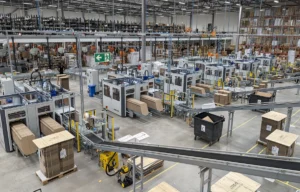
For the majority of motion-control applications, standard servodrives remain the most suitable and economically viable solution. These off-the-shelf units are designed to meet broad industry requirements, offering a balance of performance, reliability, and ease of implementation. Their inherent advantages include mass production economies of scale, leading to lower unit costs and quicker procurement times. Moreover, standard drives often come with extensive documentation, well-established support networks, and compatibility with common industrial communication protocols (e.g., CANopen, EtherCAT), simplifying integration into existing control architectures. They typically feature robust internal protection mechanisms, such as over-temperature monitoring and current limiting, developed over years of engineering experience and often incorporating features that were once custom requests into standard offerings. For example, ElectroCraft, a prominent supplier, builds comprehensive protection into its standard products as a matter of good engineering practice, ensuring a baseline of reliability and safety. These units are ideal for applications where physical space is ample, environmental conditions are benign, power requirements fall within predefined ranges, and basic control functionalities (e.g., standard velocity, torque, or basic positioning) are sufficient. Industries such as general manufacturing, packaging, and basic material handling frequently leverage standard servodrives to achieve efficient and reliable operations without incurring the additional costs and lead times associated with custom development.
When Customization Becomes Imperative: Addressing Unique Challenges
While standard servodrives form the backbone of industrial automation, certain specialized applications present unique challenges that mandate a customized approach. The decision to pursue a custom solution is often driven by critical performance gaps or integration hurdles that cannot be overcome with off-the-shelf components. This strategic pivot typically occurs when the long-term benefits of optimization—such as enhanced performance, increased efficiency, extended lifespan, or compliance with stringent regulatory standards—outweigh the initial investment in design and development. Industry analysts suggest that the demand for customized motion control solutions is growing significantly in niche markets like medical devices, aerospace, defense, and high-precision robotics, where standard products simply cannot meet the rigorous specifications.

Physical and Environmental Extremes
One of the primary drivers for custom servodrives stems from the need to operate within challenging physical and environmental constraints. Standard servodrives are commonly available in panel-mounted or PCB-mounted formats, suitable for conventional enclosures. However, specialized equipment, particularly in compact or mobile systems, often presents severely limited real estate for electronics, rendering standard shapes or sizes impractical. To address this, some suppliers offer board-only versions of standard products for high-volume OEM design engineers who don’t require the full connectors and functionality of an enclosed unit. These bare boards can then be paired with custom heat sinks, delivering comparable performance to standard solutions but in significantly smaller packages, reducing the overall footprint by up to 30-40% in some cases.
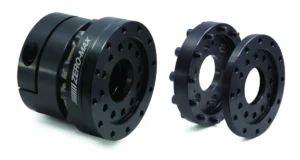
Beyond mere size, the form factor itself can be a constraint. For systems unable to accommodate typical rectangular enclosures, customized options include embedded drives (integrated directly with the motor) or round drives that mount directly onto motor ends. Other innovations include ultra-compact PCB assemblies or adapted standalone chassis mounts designed to conform to specific enclosure geometries or mounting schemes. These mechanical modifications ensure that the servodrive can physically integrate seamlessly into the application without compromising overall system design or functionality.
Harsh operating environments also frequently necessitate custom solutions. To protect against contaminants like dust, moisture, chemicals, or extreme temperatures, drives can be enhanced with specialized ruggedization techniques. These include conformal circuit-board coatings, which provide a protective layer against environmental ingress, or even complete encasement in potting compound for total contamination prevention. Such modifications are crucial in demanding sectors such as food and beverage processing, where hygiene and washdown procedures are critical; industrial machinery exposed to debris and lubricants; and agricultural automation, where equipment operates in varied and often severe outdoor conditions. The IP (Ingress Protection) rating system provides a standardized measure for such protection, with higher ratings indicating superior resistance to solids and liquids.

A compelling example of environmental ruggedization involves an IP69K-rated drive-motor package developed for an agricultural application. In this scenario, up to fifty drives and motors were mounted onto a tractor implement, tasked with automatically controlling seed or fertilizer dispensing for each row in a field. The custom solution involved taking a standard drive board and motor and integrating them into a sealed enclosure with waterproof cables and connectors. The resulting IP69K rating is critical, signifying the assembly’s ability to withstand high-pressure, high-temperature washdowns—a common requirement in agricultural machinery maintenance—as well as extreme vibration and wide temperature fluctuations encountered in outdoor farming operations. Engineers involved in such projects often emphasize the need for materials science expertise to ensure long-term durability in corrosive environments.
Another notable instance involves a custom drive integrated into the joystick of a steering system requiring haptic force feedback. This drive was engineered to meet stringent MIL-SPEC requirements (e.g., MIL-STD-810 for environmental engineering considerations and laboratory tests) for shock, vibration, temperature, and ingress protection. This was achieved through a conformally-coated board housed within a sealed package, ensuring reliable operation in critical military or aerospace applications where environmental resilience is non-negotiable. These examples underscore how custom engineering directly contributes to the operational integrity and longevity of systems in challenging conditions, where failure is not an option.
Precision Power Delivery and Performance Optimization
Matching drive power precisely to a motor’s duty cycle and size often exceeds the fixed operating ranges of standard servodrives. Standard units offer predefined ranges of operating voltages and output currents, which may not align perfectly with the specific needs of an application. For instance, if an application requires current or voltage levels that fall between standard specifications—such as an output precisely between the continuous currents of two standard models, or a very specific voltage for optimal motor efficiency—a custom unit becomes essential. This fine-tuning can lead to energy savings of 5-10% in high-volume applications, according to some studies on motor efficiency.

The duty cycle and torque requirements are also critical considerations. High-acceleration applications, often referred to as pulse-duty operations, demand substantial peak current to generate the necessary peak torque for rapid starts and stops. While many standard drives allow peak current values that are double the continuous rating for short durations (e.g., a few seconds), this might not be sufficient for rapidly accelerating heavy loads or for applications with frequent, aggressive motion profiles. If the required peak and continuous currents consistently exceed a standard drive’s capabilities, a custom solution is imperative to prevent thermal damage, premature wear, and system failure. ElectroCraft, for example, offers standard drives scaled at 6-A, 12-A, 24-A, 40-A, and 50-A continuous, with the largest drive capable of 100-A peak. However, for end users needing specific current ratings between these values, custom configurations are readily available, highlighting the flexibility required in high-performance applications.
A practical illustration of this occurred when a large OEM in laboratory diagnostics required a drive to control a NEMA 34-frame BLDC motor in a low-current application (only 3 to 4 A). The specification also demanded a universal AC line-input capability, meaning the drive needed to accept 85 to 264 Vac anywhere in the world and convert it to DC to run the motor without any jumper settings or physical adjustments. The customized solution incorporated an integrated power factor controller (PFC). This advanced feature not only reduced harmonics on the AC line but also allowed for operation at universal voltages, similar to a modern laptop power supply. This eliminates the need to size electronics for the highest voltage (e.g., 220 V) when operating at lower voltages (e.g., 120 V), thereby avoiding over-engineering and unnecessary costs. The PFC draws current in phase with the line voltage, producing constant DC power and ensuring the motor runs efficiently at the appropriate stepped-down voltage, regardless of regional power variations. Manufacturers frequently report that this type of power optimization is crucial for global product deployment and compliance with international electrical standards.
Don’t Forget Regenerative Braking
Applications involving regenerative braking represent another significant scenario where standard drives may prove insufficient. When motors decelerate under load—a common occurrence in robotics, automated guided vehicles (AGVs), and electronics manufacturing—they generate kinetic energy that is converted back into electrical energy, flowing into the drive’s DC bus. Many standard drives manage this energy using an onboard shunt regulator that dissipates the excess energy as heat, thereby preventing the DC bus voltage from rising to unsafe levels.

However, standard drives have fixed limits on the amount of regenerative power their internal shunt can safely handle. Applications with high-inertia loads, such as large gantry systems, or vertical axes, like elevators or lift mechanisms where gravity assists downward motion, can generate substantially more regenerative power than a standard shunt can dissipate. When the continuous or peak regenerative power exceeds these built-in limits, the DC bus voltage can spike, potentially leading to drive damage or system shutdown. In such cases, a custom drive with enhanced regenerative capabilities—perhaps featuring a larger, more robust internal shunt—or a standard drive augmented with an external shunt resistor module becomes necessary to safely manage the additional energy and protect the system. Quality drives, such as those from ElectroCraft, often include built-in electromagnetic brake control, a crucial feature for vertical-axis and safety-critical applications, further emphasizing the importance of specialized features and robust safety protocols. The proper handling of regenerative energy is not just about performance, but also about the longevity of the drive and the overall safety of the machinery.
Mastering Complex Motion: Advanced Control Algorithms
Standard servodrives typically come equipped with preconfigured control algorithms that are well-suited for a broad range of typical applications. Many include advanced Field-Oriented Control (FOC) for brushless DC (BLDC) and closed-loop stepper motors, providing good dynamic response and acceptable torque ripple for most industrial use