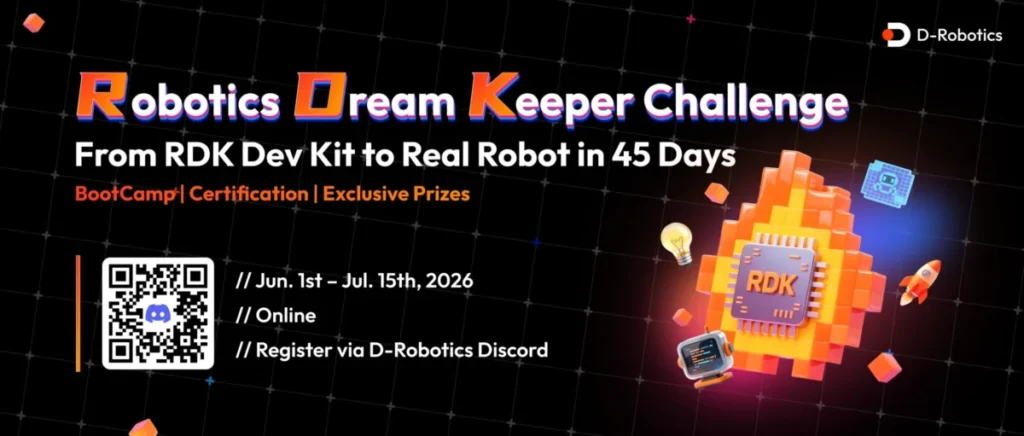
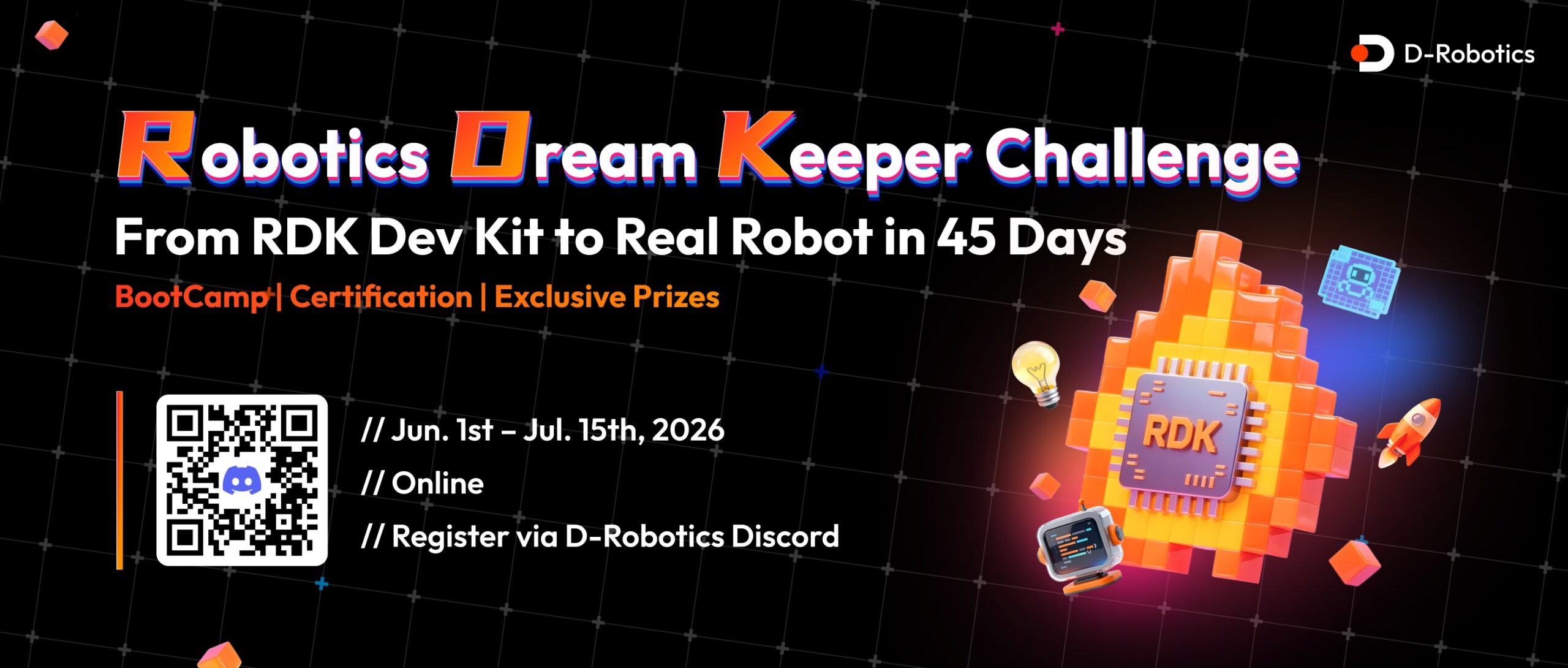
D-Robotics has officially launched the Robotics Dream Keeper Challenge (RDK Challenge), an ambitious initiative designed to lower the barrier to entry for intelligent robot development and empower a global community of makers, students, hobbyists, and experienced engineers. This program aims to transform abstract robot concepts into tangible realities by leveraging the capabilities of the RDK X5, a powerful yet accessible edge AI development board. The challenge seeks to dismantle common obstacles in robotics, such as complex wiring, convoluted software environments, and the perennial "where do I even start?" dilemma, which often sideline promising projects.
The Vision: Bridging the Robotics Gap
For decades, robotics has been a domain largely reserved for specialized academic institutions and well-funded industrial enterprises. The intricate fusion of hardware engineering, sophisticated software development, and advanced artificial intelligence algorithms often presented an insurmountable hurdle for individual innovators and smaller teams. However, the advent of increasingly powerful and affordable single-board computers, coupled with advancements in open-source software and AI frameworks, has begun to democratize access to these technologies. D-Robotics positions the RDK Challenge as a critical accelerator in this ongoing democratization, specifically targeting the burgeoning field of embodied AI – where artificial intelligence is integrated into physical robots that interact with the real world.
The company’s core philosophy revolves around making cutting-edge robotics accessible. A spokesperson for D-Robotics emphasized this commitment, stating, "We recognize that countless brilliant robot ideas remain confined to the minds of innovators due to technical complexities and lack of structured support. The RDK Challenge, powered by the RDK X5, is our answer to that. We want to cultivate a vibrant ecosystem where creativity in AI robotics can flourish, supported by robust tools and a collaborative community." This initiative is strategically timed to capitalize on the growing global interest in DIY electronics and intelligent systems, a trend highlighted by the consistent expansion of the maker movement worldwide. Reports indicate that the global robotics market, including consumer and service robots, is projected to grow significantly, with edge AI playing an increasingly vital role in enabling autonomous and intelligent functionalities directly on devices.
Introducing the RDK X5: Powering Edge AI Innovation
At the heart of the Robotics Dream Keeper Challenge is the RDK X5 development board. While described by D-Robotics as a "hidden gem," its specifications and demonstrated capabilities suggest it is poised to become a significant player in the edge AI hardware landscape. The RDK X5 is engineered for on-device AI performance, meaning it can process complex AI tasks directly on the board without constant reliance on cloud computing. This is crucial for real-time applications in robotics, offering lower latency, enhanced privacy, and reduced bandwidth requirements – factors that are paramount for autonomous navigation, object recognition, voice command processing, and real-time decision-making in robots.
The board’s design prioritizes ease of use for developers while not compromising on computational power. It is equipped with a dedicated Neural Processing Unit (NPU) or similar AI accelerator, which offloads AI inference tasks from the main CPU, allowing for efficient execution of machine learning models. This architectural choice makes it particularly well-suited for deploying deep learning models in embedded systems, a common requirement for intelligent robots. The "maker-friendly" aspect is further enhanced by comprehensive documentation, a robust software development kit (SDK), and compatibility with popular programming languages and AI frameworks, ensuring that developers can quickly transition from concept to prototype. The RDK X5 offers a compelling alternative to more resource-intensive cloud-based solutions or less capable traditional microcontrollers, carving out a niche for powerful, localized AI processing.
Inspiring Creations: Early Success Stories
To illustrate the RDK X5’s versatility and the potential it unlocks, D-Robotics has highlighted several innovative projects already brought to life using the platform. These early adopters demonstrate the breadth of applications possible, from complex robotic locomotion to creative interactive devices.

One such project is the OpenDuck Mini – RDK X5, developed by AI Researcher and Robotics Developer Frank Fu. This brilliant reinforcement-learning bipedal robot stands out for achieving "sim-to-real" walking. Sim-to-real (simulation-to-reality) is a critical challenge in robotics where AI models trained in virtual environments are successfully deployed on physical robots. The OpenDuck Mini’s ability to translate simulated gaits into stable, real-world locomotion underscores the RDK X5’s processing power and its capability to handle the intensive computations required for advanced control algorithms. This project serves as a beacon for aspiring roboticists interested in dynamic movement and advanced AI control.
Another captivating creation is "An Arc Reactor That Beats With My Heart," by MateoTechLab. This project transcends traditional robotic applications, showcasing the RDK X5’s creative potential in interactive art and personal expression. The device, a glowing replica of Tony Stark’s iconic Arc Reactor, synchronizes its pulsating light with the user’s heartbeat, detected via a smartwatch. This application demonstrates the RDK X5’s capacity for real-time data acquisition, processing, and output control, proving that its utility extends far beyond mere locomotion or object detection. It highlights the board’s flexibility as a general-purpose AI and control platform for innovative embedded systems.
Finally, the "Valentine’s Day AI Robot With RDK X5," created by Pro Know, exemplifies the board’s suitability for developing interactive, personality-driven companions. This adorable tiny robot features vision capabilities, touch sensors, sound reactions, and a charming personality, allowing it to engage with users in a meaningful way. Such a project underscores the RDK X5’s ability to integrate multiple sensor inputs (camera for vision, haptic sensors for touch, microphone for sound) and process them with AI to generate intelligent, context-aware responses, thereby creating truly interactive experiences. These projects collectively serve as powerful testimonials to the RDK X5’s robust on-device AI performance and its user-friendly nature, making advanced robotics more approachable. The live demonstrations of the RDK X5 during Make: YouTube channel livestreams further validate its practical capabilities in real-world scenarios.
A Structured Journey: The Three-Stage Build Path
Recognizing that many aspiring robot builders benefit from a structured learning environment, the RDK Challenge is meticulously designed across three progressive stages, spanning approximately 35-45 days. This modular approach ensures participants can steadily build their skills and confidence without feeling overwhelmed.

Stage 1: Ignite (5-10 Days)
The initial phase, "Ignite," focuses on foundational setup and basic AI deployment. The primary goal here is for participants to power on their robot’s "brain" – the RDK X5 board – and successfully execute their first AI demonstration. This involves unboxing the RDK X5, performing initial board setup, activating essential sensors, and deploying a simple AI task, such as object detection or image classification. D-Robotics aims to make this entry point as smooth as possible, providing clear guidelines and resources. The company notes that anyone familiar with basic embedded systems tasks, like flashing an SD card or establishing an SSH connection to a Raspberry Pi, will find this stage straightforward, indicating a low barrier to entry for those with some technical background.
Stage 2: Build (10-15 Days)
Moving beyond pre-built demonstrations, "Build" challenges participants to conceptualize and design their own intelligent robot system. This is where individual creativity and problem-solving skills come to the forefront. Participants are tasked with defining their project concept, architecting the AI pipeline (e.g., deciding which AI models to use, how data will flow), and finalizing their hardware setup. Crucially, this stage includes a mentorship component, where experienced guides provide feedback and help "sanity-check" participants’ plans. This structured review process is invaluable, preventing common pitfalls and ensuring that projects are technically feasible and well-conceived before significant effort is invested.
Stage 3: Launch (20 Days)
The final and most intensive stage, "Launch," culminates in the development of a working, demo-ready AI robot. This phase is dedicated to integration, optimization, and presentation. Participants wire up all the components, integrate their software, and optimize AI inference using the RDK X5’s BPU acceleration capabilities to ensure efficient real-time performance. The ultimate deliverable is a polished, shareable project package – a functional robot accompanied by documentation and, ideally, a compelling video demonstration. This "portfolio piece" is designed to be a tangible achievement that participants can showcase in job interviews, academic presentations, or community events, providing a strong testament to their skills in modern robotics and AI. The detailed task guidelines are made available on the D-Robotics GitHub repository, ensuring transparency and accessibility.
Cultivating a Community: Beyond the Code
A cornerstone of the RDK Challenge is its emphasis on community and support, distinguishing it from traditional high-pressure competitions. D-Robotics has cultivated a "supportive, community-driven journey" through various channels and resources. Free bootcamps, led by experts, offer in-depth tutorials and practical guidance on various aspects of AI robotics, from hardware interfacing to AI model deployment. Weekly events provide platforms for learning, collaboration, and problem-solving, fostering a sense of shared progress among participants. The availability of dedicated mentors ensures that individual questions are addressed, and technical roadblocks are navigated efficiently, preventing common frustrations that can derail projects.

The D-Robotics Discord community is meticulously structured as a "growth ecosystem," guiding members through progressive roles: Explorer, Builder, Creator, and Core Developer. This tiered system acknowledges different skill levels and provides a clear path for advancement, encouraging continuous learning and peer-to-peer support. Newcomers (Explorers) can find assistance and inspiration, while experienced members (Creators and Core Developers) can contribute their expertise, mentor others, and potentially influence the future development of the RDK X5 platform and D-Robotics’ ecosystem. This approach transforms the challenge from a solitary endeavor into a collaborative learning experience, maximizing the chances of success for all participants.
Incentivizing Innovation: Rewards and Opportunities
To further motivate and reward participants’ dedication, D-Robotics has assembled a comprehensive package of incentives. The most immediate and universally appealing reward is a full cash rebate on the purchase of the RDK X5 and accessory kits for those who successfully complete all three challenge stages. This effectively makes the development hardware free for committed participants, significantly lowering the financial barrier to entry. Beyond the rebate, the challenge offers substantial recognition and monetary prizes. The most outstanding project will be awarded a $1,000 grand prize, acknowledging exceptional innovation, technical execution, and project presentation. Additionally, top community advocates – individuals who actively contribute to the Discord community, provide support, and share their knowledge – can win an extra $500 cash reward, emphasizing the value D-Robotics places on collaborative engagement.
Looking ahead, D-Robotics has hinted at a series of "surprises" that will be gradually unveiled, further enhancing the value proposition for participants. These potential opportunities include the chance to work directly with the D-Robotics team on future projects, interviews with global developers that can boost professional profiles, participation in the annual D-Robotics Developers Conference, and even a chance to win a visit to the Robot Innovation Center in Shenzhen, a global hub for hardware innovation. These long-term incentives are designed not only to reward immediate success but also to foster career development and deeper engagement with the cutting-edge of robotics.
Participation Logistics: How to Engage

Joining the Robotics Dream Keeper Challenge is a streamlined process designed for accessibility. Prospective participants are encouraged to:
- Join the lively Discord community: This serves as the primary hub for interaction, support, and announcements.
- Submit the quick application form: A simple registration process to officially enter the challenge.
- Download RDK Studio and register: RDK Studio is the integrated development environment and toolkit provided by D-Robotics, essential for working with the RDK X5.
To embark on their robot building journey, participants will need to acquire the necessary hardware. The RDK X5 development board and various accessory kits are available through D-Robotics’ official partnered channels and distributors, ensuring reliable access to the core components required for any project. Information regarding official distributors and available accessories is readily accessible on the D-Robotics website.
Broader Implications: Shaping the Future of Personal Robotics
The Robotics Dream Keeper Challenge represents more than just a competition; it is a strategic investment in the future of accessible AI robotics. By providing a powerful yet user-friendly hardware platform, a structured learning path, and a supportive community, D-Robotics is poised to significantly impact the maker movement and beyond.
For the maker community, this challenge democratizes access to sophisticated AI and robotics capabilities that were previously out of reach, empowering individuals to create innovative solutions for personal, educational, or small-business applications. It fosters a new generation of "AI-fluent" makers who can integrate advanced intelligence into their physical projects.

In education, the RDK Challenge offers an invaluable practical learning experience. The structured stages and mentorship provide a real-world project-based curriculum, teaching not just coding and electronics, but also project management, problem-solving, and collaborative skills relevant to the rapidly evolving fields of AI and robotics. This could inspire more students to pursue STEM careers and provide them with a tangible portfolio.
For D-Robotics, the challenge serves multiple strategic purposes. It introduces the RDK X5 to a broader audience, solidifying its position as a key player in the edge AI development board market. By fostering a strong community and showcasing diverse projects, the company generates valuable user feedback and identifies potential future applications and improvements for its technology. This grassroots approach helps D-Robotics build a loyal user base and potentially discover future collaborators or employees.
Ultimately, the RDK Challenge contributes to the broader advancement of embodied AI. By enabling more individuals to experiment with and build intelligent robots, it accelerates innovation, potentially leading to breakthroughs in areas such as assistive robotics, personal companions, specialized industrial tools, and educational aids. The "Dream Keeper" moniker aptly reflects the ambition to transform nascent ideas into functional, intelligent machines that can interact with and enrich our daily lives.
This initiative is a rare opportunity for both novices and seasoned developers to dive into the exciting world of modern robotics and embodied AI with robust guidance and tangible incentives. The RDK X5 is still early in its journey, and those who participate in this challenge now will undoubtedly play a pivotal role in shaping its community and future applications, creating compelling narratives of innovation. The message from D-Robotics is clear: it is time to stop observing and start building.