In a landmark study published in the prestigious journal Analytical Chemistry, researchers at Lawrence Livermore National Laboratory (LLNL) have unveiled critical insights into the formation of nuclear fallout, suggesting that long-standing models used for safety assessments and nuclear forensics may require significant revisions. By utilizing a sophisticated plasma flow reactor to recreate the extreme conditions of a nuclear fireball, the team discovered that the "thermal history"—the specific path of cooling and the duration of heat exposure—fundamentally alters the chemical composition and physical structure of fallout particles. This research marks a pivotal shift from theoretical assumptions toward empirical, measurement-based modeling, providing a more accurate framework for understanding the aftermath of nuclear detonations or reactor accidents.
The formation of nuclear fallout is one of the most complex phenomena in atmospheric science and nuclear physics. When a nuclear device detonates, it releases an astronomical amount of energy in less than a microsecond, creating temperatures that exceed tens of millions of degrees. This heat instantly vaporizes everything in the immediate vicinity, including the device itself, the surrounding air, and any terrestrial materials such as soil, concrete, or water. As this "fireball" expands and rises, it begins to cool, and the vaporized elements undergo a rapid transition back into solid form. These microscopic solids, known as fallout, carry the chemical and isotopic signatures of the event, serving as a "black box" for scientists attempting to reconstruct the details of a nuclear explosion.
The Mechanics of the Nuclear Fireball and Condensation
To understand the significance of the LLNL study, one must first grasp the environment the researchers sought to replicate. A nuclear fireball is not merely a fire; it is a state of high-energy plasma. In this environment, atoms are stripped of electrons, and chemical bonds are non-existent. However, as the fireball expands and its density drops, temperatures fall into a range where chemistry begins to occur—roughly between 5,000 and 1,000 degrees Celsius.
Historically, fallout models have operated on the assumption that different elements condense independently based on their individual boiling and melting points. This "independent condensation" theory suggests that refractory (high-boiling-point) elements like uranium would solidify first, followed by more volatile (low-boiling-point) elements like cesium, which would coat the surface of the already-formed particles. However, the LLNL team, led by scientist Rakia Dhaoui, hypothesized that the reality is far more interactive and dependent on the duration the materials spend at specific high-temperature intervals.
Methodology: Replicating the Unthinkable in a Laboratory
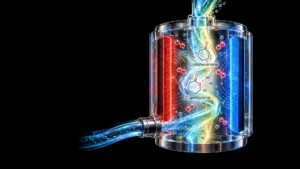
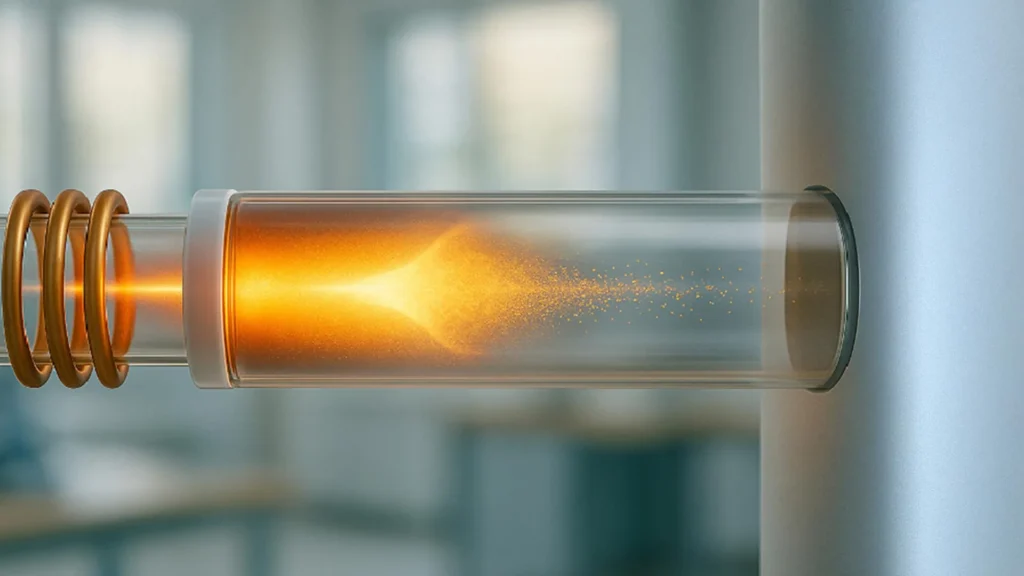
The primary challenge in fallout research is the inability to conduct atmospheric nuclear tests, which have been banned by international treaties for decades. Consequently, scientists must rely on laboratory-scale experiments that can simulate the relevant physics. The LLNL team utilized a plasma flow reactor, a specialized device capable of generating temperatures comparable to the cooling phases of a nuclear fireball.
The experiment involved injecting specific ratios of uranium, cerium, and cesium into the plasma. Uranium was selected as the primary benchmark because it is the core component of most nuclear fuels and weapons. Cerium was utilized as a chemical surrogate for plutonium; because plutonium is highly radioactive and difficult to handle, cerium—which sits in the same f-block of the periodic table and shares similar oxidation states—provides a safe but accurate proxy for how plutonium behaves during condensation. Cesium was included as the representative "volatile" element, known for its high mobility and long-term radiological impact on the environment.
The researchers subjected these materials to two distinct "thermal histories":
- Linear Cooling: A steady, gradual decline in temperature as the material moved through the reactor.
- Extended Isothermal Heating: A scenario where the materials were held at a high temperature for a longer duration before being subjected to a rapid "quench" or cooling phase.
By collecting samples at various points along the flow tube, the team could effectively take "snapshots" of the particle formation process in real-time, observing how the elements transitioned from gas to solid.
Critical Findings: The Role of Chemical Speciation
The results of the study challenged the simplicity of existing models. While uranium and cerium—the more refractory elements—did condense early as expected, their internal chemistry changed based on the cooling rate. More importantly, the behavior of cesium was radically altered by the thermal history.
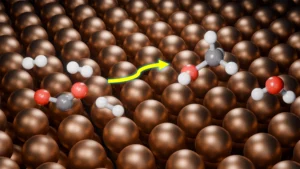
In the scenario where materials remained at high temperatures for a longer period, cesium did not simply coat the outside of the particles. Instead, it mixed extensively with the uranium and cerium. This suggests that at high temperatures, chemical reactions occur between the elements while they are still in the vapor phase or in a semi-molten state, leading to the formation of complex mineral phases rather than simple, layered spheres.
"Changing how long materials remain at high temperature can alter chemical reactions and how volatile elements like cesium are incorporated into particles," Dhaoui explained. This finding is significant because it implies that the "chemical speciation"—the specific chemical form of an element—in fallout is not just a function of what elements are present, but the exact temperature path the fireball took as it rose through the atmosphere.
A Chronology of Fallout Science and Modeling
The LLNL study represents the latest chapter in a scientific journey that began in the 1940s. Understanding the timeline of this field provides context for why these new findings are so disruptive:
- 1945–1963: The era of atmospheric testing. During the Manhattan Project and subsequent Cold War tests (such as Operation Crossroads and Castle Bravo), scientists collected physical samples of fallout. This led to the development of the first empirical models, which were largely based on observations rather than a deep understanding of the underlying chemistry.
- 1960s–1980s: The development of the DELFIC (Defense Land Fallout Interpretive Code). This became the gold standard for predicting where fallout would land. However, DELFIC and similar codes relied on "simplified chemistry," treating elements as non-interacting entities.
- Post-Cold War: With the end of atmospheric testing, the focus shifted to "Nuclear Forensics." The goal became attribution: if a "dirty bomb" or improvised nuclear device were detonated, could scientists analyze the fallout to determine where the nuclear material originated?
- 2020s: The current era focuses on high-fidelity mechanistic models. As computing power has increased, the demand for more accurate chemical data has grown. The LLNL plasma flow reactor experiments are designed to provide the high-resolution data that these modern supercomputer simulations require.
Supporting Data and Implications for Public Safety
The data produced by the LLNL team has immediate implications for radiological protection and public health. Cesium-137, for instance, is one of the most concerning isotopes in a nuclear accident (as seen in Chernobyl and Fukushima) because it has a 30-year half-life and is easily absorbed by biological systems.
If current models assume cesium is only on the surface of fallout particles, they might predict that the cesium would be easily washed away by rain or absorbed by soil. However, if the LLNL findings are correct and cesium is "trapped" or chemically bonded within the interior of uranium-rich particles due to specific thermal histories, its environmental mobility and bioavailability would be entirely different. This could change how emergency responders calculate the "stay-time" for evacuated zones or how they model the long-term contamination of the food chain.
Furthermore, the study’s data on cerium (the plutonium surrogate) is vital for national security. Plutonium’s behavior in a fireball determines how it is dispersed. If the thermal history of a blast causes plutonium to form larger, heavier particles, it will fall closer to the "ground zero" site. If it forms smaller, lighter particles, it could be carried hundreds of miles by high-altitude winds.
Official Perspectives and Future Research Directions
While the LLNL researchers have focused on the technical aspects of the study, the broader scientific community views this as a major step toward "predictive forensics." By understanding the "how" of particle formation, experts can work backward from a collected sample to determine the "what" and "where" of an event.
The LLNL team has indicated that this study is only the beginning. The next phase of research involves introducing more "realistic" environmental materials into the plasma flow reactor. In a real-world detonation, the fireball doesn’t just contain uranium and cesium; it contains billions of tons of soil, steel from buildings, and silicon from glass. These "environmental matrices" will likely further complicate the chemical reactions observed in the lab.
"By studying these processes in a controlled system, we can replace assumptions with measurements," Dhaoui noted, highlighting the laboratory’s shift toward empirical rigor. The ultimate goal is to integrate this data into the next generation of fallout codes, ensuring that when decision-makers are faced with a nuclear crisis, their actions are based on the most accurate science available.
Conclusion: The Impact on Global Nuclear Security
The LLNL research published in Analytical Chemistry serves as a reminder that even decades after the first nuclear explosion, the fundamental science of fallout is still being decoded. By proving that the thermal history of a fireball dictates the chemical destiny of its debris, the study provides a new lens through which to view nuclear safety and forensics.
As geopolitical tensions remain a concern and the risk of nuclear accidents persists, the ability to accurately model the invisible particles that follow a detonation is more than an academic exercise—it is a cornerstone of national and international security. The work at Lawrence Livermore National Laboratory ensures that if the unthinkable happens, the scientific community will not be relying on the simplified assumptions of the past, but on the precise, measured realities of the present.