The rapid evolution of artificial intelligence (AI) is fundamentally reshaping expectations for electronic systems, ushering in an era where unprecedented computational performance must harmoniously coexist with stringent demands for energy efficiency, robust cybersecurity, and unwavering long-term reliability. As AI workloads proliferate across critical sectors such as industrial automation, transportation, healthcare, and energy infrastructure, electronics designers face escalating pressure to innovate solutions that meet these multifaceted requirements. These pivotal themes are slated to be the central focus at electronica 2026, the world’s leading trade fair for electronics, scheduled to take place in Munich, Germany, from November 10th to 13th. The event will serve as a global platform for exhibitors to unveil the foundational technologies driving the transition towards the ambitious vision of the All Electric Society.
The Transformative Impact of AI on Electronics Design
Modern AI applications, encompassing sophisticated functionalities like advanced speech recognition, real-time computer vision, proactive predictive maintenance, and complex autonomous control systems, are intrinsically reliant on groundbreaking advancements across several key technological domains. These include cutting-edge semiconductor technology, powerful embedded computing platforms, highly sensitive sensors, and high-speed, low-latency connectivity solutions. Together, these elements form the indispensable bedrock of intelligent systems, empowering them to process colossal volumes of data with remarkable speed and accuracy, even when operating within dynamic and often challenging real-world environments. The increasing deployment of AI at the edge, closer to the data source rather than solely in centralized cloud data centers, further intensifies the need for highly optimized, self-contained processing units capable of executing complex AI algorithms with minimal power draw. This distributed intelligence paradigm demands a new generation of microprocessors, specialized AI accelerators (like NPUs – Neural Processing Units), and custom application-specific integrated circuits (ASICs) designed from the ground up for AI inference and, increasingly, on-device training.
However, the accelerating adoption of AI across various industries also introduces a new spectrum of engineering challenges. Foremost among these is the imperative for systems to deliver significantly higher computational throughput without succumbing to excessive power consumption. The energy footprint of AI models, particularly large language models and advanced neural networks, has become a significant concern, pushing the boundaries of traditional power management strategies. Furthermore, these increasingly interconnected and intelligent systems must remain resilient against an ever-evolving landscape of sophisticated cyber threats, which target both the software algorithms and the underlying hardware infrastructure. According to recent findings by the German Economic Institute, the integration of AI technologies continues its upward trajectory across the industrial landscape, with approximately two-thirds of large companies already leveraging AI in their operations. While medium-sized businesses are also demonstrating commendable progress in AI adoption, the penetration rate among smaller organizations, though growing, still lags behind, highlighting a potential digital divide and the varying levels of investment capacity across enterprise sizes. This disparity underscores the need for scalable, accessible, and cost-effective AI solutions that can democratize access to these transformative technologies.
The Dual Pillars: Energy Efficiency and Cyber Resilience
As AI systems continue to grow in capability and complexity, power consumption has unequivocally emerged as a paramount design consideration. The sheer computational demands of deep learning algorithms can lead to substantial heat generation, necessitating innovative thermal management solutions alongside intrinsically energy-efficient electronic hardware. Designers are tasked with providing greater processing capability per watt, ensuring optimal performance even under demanding thermal conditions that characterize many industrial, automotive, and medical applications. This push for efficiency extends beyond merely the processor; it encompasses power delivery networks, memory subsystems, and even the choice of materials and packaging technologies. The concept of "green AI" or "sustainable AI" is gaining traction, encouraging developers to consider the environmental impact of their AI models throughout their lifecycle, from training to deployment. This includes optimizing algorithms for efficiency, leveraging low-power hardware, and exploring renewable energy sources for data centers. The industry is witnessing a surge in research and development into novel computing paradigms, such as neuromorphic computing, which mimic the human brain’s energy-efficient processing, and quantum computing, which, while still nascent, holds the promise of solving complex problems with potentially revolutionary energy profiles.
Concurrently, cybersecurity has transitioned from a peripheral concern to a central, system-level requirement. The proliferation of connected devices, often referred to as the Internet of Things (IoT) and Industrial IoT (IIoT), means that an unprecedented volume of data is exchanged across networks. These devices frequently receive software updates, patching vulnerabilities and adding new features, and are often designed for extended service lifetimes, sometimes spanning decades in critical infrastructure. This extended operational lifespan and constant connectivity significantly amplify the importance of embedding security into products from the earliest stages of development – a principle known as "security by design." Proactive measures, rather than reactive patching, are essential to mitigate risks posed by increasingly sophisticated cyber threats, including state-sponsored attacks, ransomware, and supply chain compromises.
The introduction of the EU Cyber Resilience Act (CRA) further solidifies this proactive approach, placing a heightened emphasis on secure product design and lifecycle management for digital products. The CRA mandates that hardware, software, communications interfaces, and update mechanisms must all be meticulously engineered to work in concert, thereby supporting long-term cyber resilience. This legislative framework compels manufacturers to assess cybersecurity risks, implement appropriate safeguards, and provide ongoing support for security vulnerabilities throughout a product’s expected lifespan. Non-compliance could result in substantial penalties, pushing manufacturers to integrate robust security measures as a core business imperative rather than an optional feature. This regulatory push is expected to drive significant investment in secure hardware enclaves, trusted execution environments, secure boot mechanisms, and comprehensive vulnerability management programs across the electronics supply chain. Industry stakeholders, including security experts and legal professionals, anticipate the CRA will become a global benchmark, influencing similar legislation in other jurisdictions and raising the overall bar for product security.
From Discrete Components to Holistic System Architectures

The contemporary landscape of electronics development is progressively shifting its focus beyond the mere selection of the most powerful individual processor, the most sensitive sensor, or the most advanced module. Instead, a profound paradigm shift is underway, compelling manufacturers to concentrate on designing and implementing complete system architectures. These intricate architectures seamlessly integrate hardware, proprietary and open-source software, operating systems, diverse connectivity options, and comprehensive security features into scalable, resilient, and future-proof platforms. This strategic evolution reflects a fundamental change in customer expectations. Modern products are no longer just expected to perform their primary function; they are anticipated to integrate rapidly into existing ecosystems, scale effortlessly to meet evolving demands, and remain fully updatable throughout their entire operational lifespan. This necessitates a holistic approach where the synergy between components, software, and services is paramount.
Consequently, system design, intricate software development, and meticulous lifecycle management have ascended in importance, becoming just as critical to a product’s success as the raw performance metrics of its individual components. This involves complex considerations such as interoperability standards, API development, cloud integration strategies, and the creation of robust development toolchains. The emphasis on modularity, reusability, and open standards facilitates quicker time-to- market and reduces development costs, while also allowing for greater flexibility in adapting to future technological advancements. This shift also encourages stronger collaboration between hardware and software engineers, fostering a more integrated development pipeline where system-level optimization is prioritized from the initial conceptualization phase. The rise of platform-as-a-service (PaaS) and software-defined hardware further underscores this trend, offering developers standardized environments and abstracting away much of the underlying hardware complexity, allowing them to focus on application development and innovation.
electronica 2026: A Confluence of Global Innovation
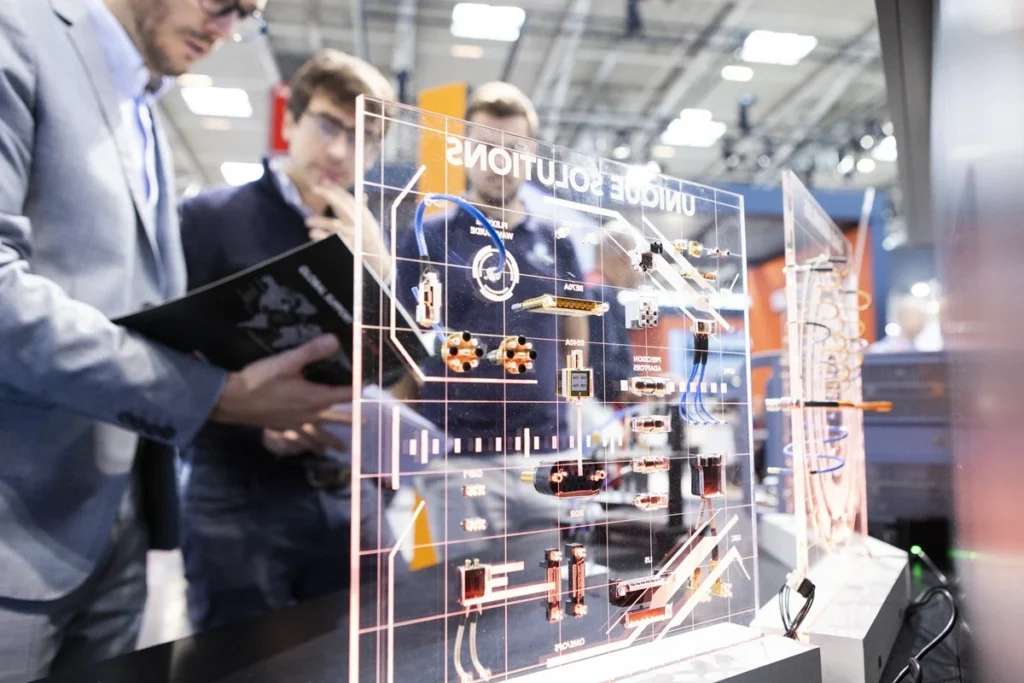
electronica 2026 is poised to reinforce its position as the preeminent global gathering for the electronics industry, attracting an estimated 3,500 exhibitors from approximately 60 countries. The expansive exhibition floor will comprehensively cover the entire electronics supply chain, ranging from foundational individual components and raw materials to highly integrated intelligent systems and sophisticated manufacturing technologies. The event’s robust infrastructure, coupled with its reputation for fostering groundbreaking innovation, makes it an indispensable platform for industry leaders, engineers, researchers, and policymakers.
Artificial intelligence, energy efficiency, and cyber resilience are not merely allocated segments but will permeate the entire exhibition, serving as central themes woven through various showcases, product demonstrations, and interactive exhibits. Complementing the vast exhibition, a meticulously curated technical conference program will delve deep into the latest developments, research breakthroughs, and practical applications across these critical industry trends. This includes keynotes from visionary leaders, panel discussions featuring interdisciplinary experts, and technical sessions presenting cutting-edge research. Attendees will have unparalleled opportunities to engage with leading innovators, explore emerging technologies, and gain actionable insights into navigating the complexities of the modern electronics landscape. electronica’s long-standing history, dating back to 1964, establishes its legacy as a barometer for technological progress and a catalyst for future innovation in electronics. Its consistent growth and relevance reflect the dynamic nature of the industry it serves, constantly adapting to new technological waves and market demands.
Synergistic Co-location: SEMICON Europe
Adding further depth and value to the electronica experience, SEMICON Europe will once again be held concurrently. This strategic co-location provides invaluable additional coverage of the semiconductor manufacturing value chain, offering insights into the intricate processes and advanced technologies that underpin the development of future electronics. SEMICON Europe brings together key players from across the microelectronics ecosystem, including equipment manufacturers, materials suppliers, and design houses. Their focus on areas like advanced lithography, wafer processing, packaging technologies, and smart manufacturing directly contributes to the realization of the high-performance, energy-efficient, and secure components essential for AI and other advanced applications. The synergy between electronica’s system-level focus and SEMICON Europe’s emphasis on foundational semiconductor technologies creates a holistic view of the entire electronics innovation pipeline, from the atomic level of material science to the complex architecture of intelligent systems. This integrated approach ensures that attendees gain a comprehensive understanding of how breakthroughs in semiconductor manufacturing directly enable the transformative trends showcased at electronica.
Broader Implications for the All Electric Society
The convergence of AI, energy efficiency, and cyber resilience at electronica 2026 underscores their collective and profound impact on the trajectory of the global electronics market and the broader vision of the All Electric Society. This vision posits a future where electricity is the primary energy source for all aspects of life – industry, transport, heating, and daily living – powered predominantly by renewable sources. Achieving this ambitious goal hinges critically on the development of highly efficient, intelligent, and secure electronic systems that can manage, optimize, and distribute energy effectively. The economic implications are vast, driving demand for innovation in power electronics, smart grids, battery technologies, and advanced control systems. Manufacturers who can master the intricate balance between computational power and sustainable design will be at the forefront of this transformation.
Moreover, the escalating complexity of designing and securing these advanced systems presents a significant challenge in terms of talent development. The industry faces a growing skills gap, requiring engineers with interdisciplinary expertise spanning hardware, software, cybersecurity, and AI ethics. Educational institutions and industry training programs must adapt rapidly to cultivate a workforce capable of tackling these multifaceted engineering problems. Geopolitically, the race for technological leadership in AI and semiconductor manufacturing continues to intensify, with nations vying for strategic autonomy and economic advantage. Events like electronica serve as vital platforms for international collaboration, fostering open innovation while also highlighting areas of competitive distinction. The future of electronics, as illuminated by electronica 2026, is not merely about faster chips or more sophisticated algorithms; it is about building a sustainable, secure, and intelligently connected world, where every electronic system plays a vital role in powering the All Electric Society.