Microorganisms exhibit a remarkable array of biochemical capabilities, among the most vital of which is nitrogen fixation. This intricate biological process is indispensable for life on Earth, converting inert atmospheric nitrogen gas (N₂) into bioavailable forms that living organisms can utilize. Despite nitrogen constituting approximately 78 percent of Earth’s atmosphere, its direct uptake by plants and animals is impossible due to the extraordinary strength of the N₂ molecule’s triple covalent bond, which renders it chemically unreactive under typical biological conditions. This "nitrogen paradox" has driven a profound evolutionary imperative for life to develop mechanisms to overcome this elemental barrier.
Certain microbial lineages have, over eons, evolved sophisticated enzymatic machinery capable of surmounting this formidable chemical challenge. These specialized microorganisms possess the unique ability to cleave the exceptionally robust N₂ triple bond, transforming it into ammonia (NH₃), a precursor that can then be seamlessly incorporated into a myriad of essential biological molecules such as amino acids, proteins, and nucleic acids. One such extraordinary organism, recently brought into the scientific spotlight, is the deep-sea archaeon Methanocaldococcus infernus. This fascinating microbe thrives in the most inhospitable environments on our planet—volcanic marine hydrothermal vent systems, where superheated vent fluids can reach temperatures well above the boiling point of water, often exceeding 100°C due to immense hydrostatic pressure.
Unraveling Extremophile Biochemistry at the Max Planck Institute
The peculiar ability of Methanocaldococcus infernus to perform nitrogen fixation under such hyperthermophilic conditions presented a compelling scientific enigma. Researchers led by Dr. Tristan Wagner at the renowned Max Planck Institute for Marine Microbiology in Bremen, Germany, embarked on an ambitious quest to decipher the molecular mechanisms underpinning this remarkable feat. Their investigation aimed to understand not only how this archaeon sustains nitrogen fixation in extreme heat but also the specific characteristics of the enzyme responsible for breaking the N₂ triple bond under such demanding circumstances.
The initial hurdle involved cultivating and controlling this temperamental deep-sea inhabitant in a laboratory setting. Methanocaldococcus infernus is a thermophilic methanogen, meaning it produces methane as a metabolic byproduct and thrives at high temperatures, typically between 80°C and 100°C, with an optimal temperature around 90°C. Replicating the extreme pressures and anaerobic conditions of its natural habitat while maintaining the necessary thermal environment is a significant technical challenge. Despite these difficulties, Wagner’s team successfully "tamed" the microbe, establishing stable laboratory cultures capable of actively fixing atmospheric nitrogen at temperatures consistently above 90°C. This breakthrough allowed for controlled experimental investigation into the organism’s unique biochemistry, pushing the boundaries of what was previously thought possible for biological processes.
"How do they manage this, in such intense heat? And critically, how can the enzyme responsible for splitting the N₂ triple bond maintain its structural integrity and catalytic activity under conditions where most proteins would rapidly denature and cease to function?" Dr. Wagner articulated, highlighting the core questions driving their research. This inquiry touched upon fundamental principles of enzyme stability and adaptation in extremophiles, organisms that hold invaluable lessons for understanding the limits of life and the potential for biotechnological innovation.
Nitrogenase: The Molecular Key to Life’s Building Blocks
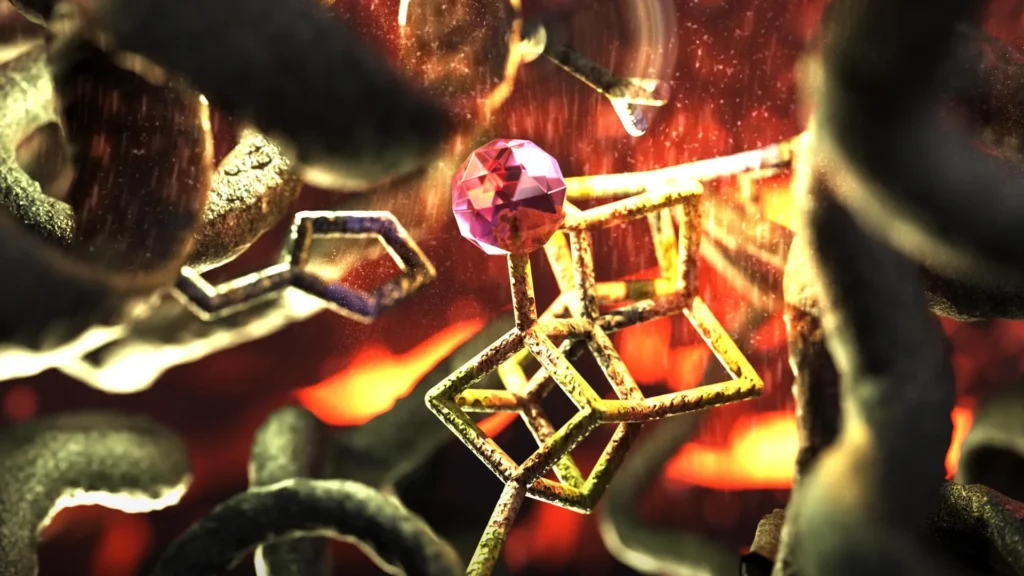
At the heart of biological nitrogen fixation lies the enzyme complex known as nitrogenase. This intricate molecular machine is celebrated in biochemistry for containing what is widely regarded as the most complex metallocofactor known in biology. Metallocofactors are specialized, metal-containing helper molecules that bind tightly to enzymes, serving as essential catalytic centers for their activity. In the case of nitrogenase, these metal clusters are directly responsible for interacting with and reducing the N₂ molecule.
The most extensively characterized and highest-performing nitrogenases found in nature typically harbor a molybdenum-based metallocofactor, often referred to as FeMo-cofactor. However, nature has evolved alternative versions; some nitrogenases employ vanadium (FeV-cofactor), while others rely solely on iron (FeFe-cofactor). The precise mechanistic differences between these distinct nitrogenase classes, and the exact roles played by their unique metal centers in facilitating the cleavage of the exceptionally strong N₂ triple bond, remain subjects of intensive scientific inquiry. Understanding their evolutionary relationships and shared catalytic principles is crucial for a comprehensive grasp of nitrogen fixation across the biosphere.
A Nitrogenase Forged in Fire: Adaptations for Extreme Heat
The nitrogenase identified in Methanocaldococcus infernus presented itself as a truly remarkable variant, exhibiting an intriguing combination of traits previously associated with the distinct molybdenum, vanadium, and iron-only forms. "This particular type of nitrogenase could very well represent a glimpse into a common nitrogenase ancestor, the ancient system from which all modern forms evolved," Dr. Wagner posited, underscoring the potential evolutionary significance of their discovery. "Therefore, studying it could reveal universal principles governing the nitrogenase reaction across all its diverse forms." This hypothesis suggests that understanding this archaeal enzyme could provide a foundational blueprint for how life initially solved the nitrogen fixation problem billions of years ago.
To delve deeper, the research team successfully isolated the nitrogenase directly from the cultivated Methanocaldococcus infernus cells. What they uncovered was unprecedented: the enzyme displayed an extraordinary resistance to heat. While most proteins begin to unfold and lose their function (denature) at temperatures far below the boiling point of water—think of an egg white solidifying when cooked—this archaeal nitrogenase showed remarkable resilience. Its protein structure only began to visibly break apart at temperatures exceeding 90°C, and astonishingly, a significant portion of it remained intact and functional even at a searing 98°C. This level of thermostability is exceptional, even among enzymes from other extremophiles.
"This unequivocally demonstrates that this enzyme is meticulously designed to function under conditions where the vast majority of proteins would rapidly degrade, much like the irreversible cooking of an egg white in hot water," stated Dr. Nevena Maslać, the study’s first author and a researcher at the Max Planck Institute for Marine Microbiology. She further elaborated on its unique thermal profile: "Intriguingly, it exhibits minimal activity at room temperature. Instead, our research unequivocally shows that it primarily produces ammonia only at high temperatures, precisely matching the physiological conditions of its native habitat. This extreme stability was a tremendous asset, allowing us to capture and study various structural and functional states of the nitrogenase that are typically fleeting and exceedingly difficult to observe in less stable enzymes." This insight is critical for understanding how life adapts its molecular machinery to thrive in the most extreme corners of our planet.
Near-Atomic Resolution: A Glimpse into the Enzyme’s Core
To fully comprehend the molecular architecture and function of this exceptional enzyme, the researchers did not need to return to the deep-sea vents. Instead, they employed a sophisticated, multidisciplinary approach, seamlessly integrating microbial physiology, advanced native enzyme purification techniques, detailed biochemical assays, and cutting-edge structural biology. A crucial aspect of their methodology involved meticulously maintaining strictly oxygen-free conditions throughout every experimental step. This was paramount because the delicate metallocofactors within nitrogenase are notoriously sensitive to oxygen, which can cause irreversible damage and render the enzyme inactive. This requirement alone adds a layer of complexity to working with nitrogenase enzymes in the lab, demanding specialized anaerobic chambers and handling protocols.
The team achieved a pivotal milestone by successfully crystallizing the purified nitrogenase enzyme. This crystalline form, where millions of identical enzyme molecules are arranged in a highly ordered lattice, allowed them to probe its structure with unparalleled precision. The subsequent structural analysis was conducted at the Institut de Biologie Structurale (IBS) in Grenoble, France, leveraging the powerful capabilities of the European Synchrotron Radiation Facility (ESRF), one of the world’s most intense X-ray sources. A synchrotron is a circular particle accelerator that generates brilliant X-ray beams by accelerating electrons to near the speed of light. These high-energy X-rays are then directed at the enzyme crystals, and the diffraction patterns produced are used to reconstruct the three-dimensional atomic structure of the molecule.
Using this advanced X-ray crystallography technique, the researchers were able to determine the molecular structure of the M. infernus nitrogenase at an impressive near-atomic resolution. The structural revelations were profound: this archaeal nitrogenase turned out to be the simplest known example of the enzyme studied to date. Yet, paradoxically, it also combined distinct structural features from all three major nitrogenase families—molybdenum, vanadium, and iron-only forms. This unique hybrid architecture provides compelling evidence supporting the hypothesis that ancient nitrogenases, predating the divergence of bacterial and archaeal life, might have more closely resembled this simpler, composite archaeal enzyme than the more complex bacterial nitrogenases we typically study today. It suggests a potential evolutionary pathway where simpler, more robust forms adapted to early Earth’s harsh conditions.
Following the structural elucidation, the researchers undertook the challenging task of confirming the presence and specific characteristics of the molybdenum metallocofactor within the enzyme. "Our quest to definitively identify and characterize the molybdenum center was technically exceptionally demanding," Dr. Wagner recounted, emphasizing the cutting-edge nature of the work. "It required the highly specialized experts at the synchrotron facility to push their sophisticated instruments to their absolute limits of detection and resolution." This involved advanced spectroscopic techniques, such as X-ray absorption spectroscopy, which can identify specific elements and their local chemical environment.
A Universal Mechanism: The Unexpected "Turnover State" Discovery
The meticulous measurements indeed confirmed the expected molybdenum signal, validating the presence of the crucial metal cofactor. However, the data also yielded an astonishing and entirely unexpected discovery. "We were absolutely stunned to observe a previously unseen state in a molybdenum-containing nitrogenase!" exclaimed Dr. Wagner, highlighting the serendipitous nature of scientific discovery.
Researchers had previously observed this specific molecular configuration, termed a "turnover" state, exclusively in vanadium and iron-only nitrogenases. A turnover state refers to an intermediate stage in the enzyme’s catalytic cycle, a transient configuration the enzyme adopts as it binds to and processes its substrate (in this case, N₂). Observing such a state provides invaluable insights into the dynamic chemical transformations occurring at the enzyme’s active site. The significance of finding this identical turnover state in a molybdenum-containing enzyme for the first time is immense. It strongly suggests that, despite their structural and metal cofactor differences, all forms of nitrogenase may fundamentally employ a common underlying mechanistic pathway to achieve the formidable task of breaking the nitrogen molecule apart. This points towards a conserved catalytic core that transcends evolutionary divergence.
From Deep-Sea Microbes to Future Biotechnology and Sustainable Agriculture
The implications of understanding nitrogen fixation extend far beyond the extreme environments of deep-sea hydrothermal vents. Nitrogen-fixing microorganisms, including methanogens like Methanocaldococcus infernus, play a pivotal role not only in the global nitrogen cycle but also in the Earth’s carbon cycle. These archaea, for instance, are significant contributors to the production of methane, a potent greenhouse gas, accounting for roughly half of the methane found in Earth’s atmosphere. Their metabolic activities are thus intrinsically linked to global climate regulation.
Looking to the future, the insights gleaned from these deep-sea extremophiles could catalyze transformative biotechnological advancements. Researchers envision a future where these organisms, or their engineered enzymatic systems, could serve as biological platforms for converting readily available gases into valuable industrial products. This includes the sustainable production of ammonia, a cornerstone of modern agriculture, and methane, a crucial energy carrier. Such processes could be powered by "green hydrogen," produced from renewable energy sources, thereby creating a truly sustainable bioeconomy. Green hydrogen refers to hydrogen produced by splitting water molecules using electrolysis powered by renewable electricity, resulting in zero carbon emissions.
Dr. Wagner further speculated on a truly revolutionary agricultural paradigm: "What if, one day, staple crops could directly obtain their nitrogen from abundant atmospheric N₂?" Such an advancement would represent a monumental leap forward, fundamentally altering global food production systems. It could drastically reduce agriculture’s current heavy reliance on industrial nitrogen fertilizers, which are primarily produced through the energy-intensive Haber-Bosch process.
The Haber-Bosch process, developed in the early 20th century, revolutionized agriculture by enabling the large-scale synthesis of ammonia from atmospheric nitrogen and hydrogen. While credited with feeding billions by vastly increasing crop yields, it is an extraordinarily energy-demanding industrial process, consuming approximately 1-2% of the world’s total energy supply annually. This process relies on high temperatures (400-500°C) and immense pressures (150-250 atmospheres) to force the reaction, making it a significant contributor to global greenhouse gas emissions, primarily carbon dioxide. Furthermore, the overuse and runoff of synthetic nitrogen fertilizers from agricultural fields contribute substantially to environmental degradation, including eutrophication of aquatic ecosystems (leading to oxygen depletion and "dead zones"), groundwater contamination, and increased emissions of nitrous oxide (N₂O), another potent greenhouse gas. Developing biological alternatives that operate at ambient temperatures and pressures would offer immense environmental and economic benefits.
"For the present, this study provides something even more fundamental," Dr. Wagner concluded, reflecting on the immediate impact of their research: "an updated, near-atomic molecular view of one of biology’s most remarkable and essential chemical reactions." This deeper understanding of nitrogenase, particularly from an ancient, heat-resistant archaeal variant, not only sheds light on the evolutionary history of life but also opens new avenues for bio-inspired catalyst design and sustainable chemical synthesis. The journey from deep-sea vents to potentially greener fields has just begun, driven by the extraordinary chemistry of the smallest organisms.