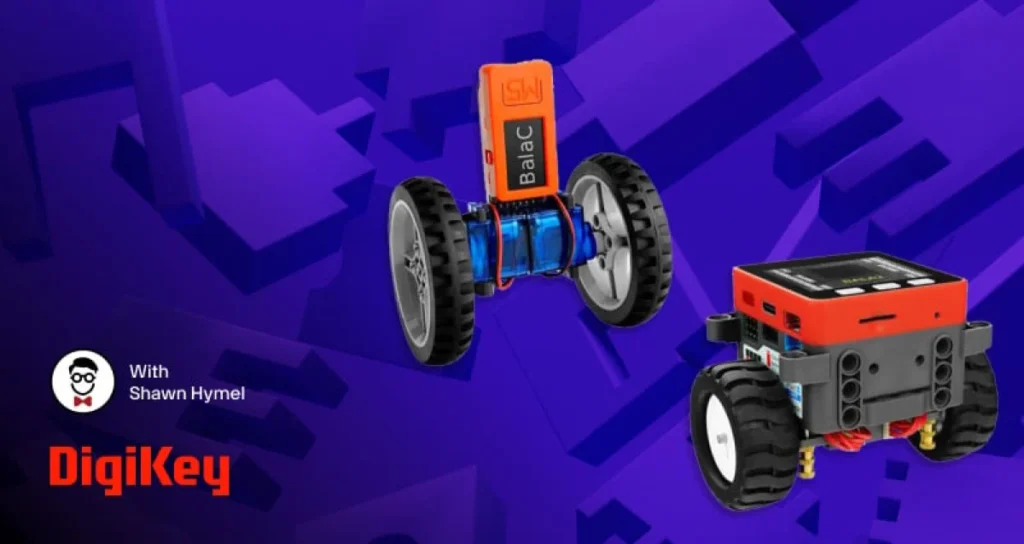
Global electronic components distributor DigiKey has announced a significant educational initiative, partnering with acclaimed engineering instructor and content creator Shawn Hymel to host a free, in-depth webinar exploring the practical application of reinforcement learning (RL) in robotics. Titled "Train a Balance Bot with Reinforcement Learning," this 90-minute virtual workshop is scheduled for Thursday, August 13, 2026, at 10 am CDT, aiming to equip engineers with the foundational knowledge and hands-on experience required to train and deploy a self-balancing robot. The event is complemented by an extensive six-part educational video series and a written tutorial, forming a comprehensive learning ecosystem designed to demystify advanced robotic control for a broad audience.
The Convergence of AI and Robotics: Understanding Reinforcement Learning
Reinforcement learning stands as a pivotal subfield within machine learning, distinguished by its methodology where an "agent" learns optimal decision-making strategies through iterative interaction with an "environment." Unlike supervised learning, which relies on labeled datasets, or unsupervised learning, which seeks patterns in unlabeled data, RL agents are guided by a "reward signal." This signal incentivizes desired behaviors and penalizes undesirable ones, allowing the agent to discover complex control policies without explicit programming for every possible scenario. For the rapidly evolving field of robotics, RL offers a transformative paradigm, enabling robots to acquire sophisticated control behaviors such as dynamic balancing, efficient locomotion (walking, running), object manipulation, and robust recovery from unexpected disturbances or falls. This learning process is typically initiated and refined within simulated environments, a critical step that mitigates the risks and costs associated with training directly on physical hardware. Once a robust policy is learned in simulation, it can then be transferred and fine-tuned on real-world robotic platforms, a process known as the "sim-to-real" pipeline.
The adoption of reinforcement learning has surged dramatically in recent years, driven by advancements in computational power, algorithmic innovations, and the availability of rich simulation tools. Major research institutions and industrial leaders, including Google DeepMind, OpenAI, and Boston Dynamics, have demonstrated RL’s capabilities in developing highly agile quadruped robots, dexterous robotic hands, and autonomous navigation systems. According to a 2023 report by MarketsandMarkets, the global AI in robotics market is projected to grow from USD 2.6 billion in 2023 to USD 14.5 billion by 2028, at a Compound Annual Growth Rate (CAGR) of 41.2%, with reinforcement learning playing an increasingly crucial role in this expansion. This growth underscores the imperative for engineers to acquire proficiency in RL, making initiatives like DigiKey’s webinar particularly timely and relevant.
Webinar Focus: From Simulation to Physical Deployment
During the "Train a Balance Bot with Reinforcement Learning" workshop, Shawn Hymel will provide attendees with a practical, step-by-step demonstration of the sim-to-real pipeline. The session will focus on the M5Stack Bala-C self-balancing robot, a popular and accessible platform for robotics enthusiasts and developers. Hymel will guide participants through the process of importing a detailed 3D model of the robot into the MuJoCo physics simulator. MuJoCo (Multi-Joint dynamics with Contact) is a widely respected physics engine known for its accuracy and efficiency in simulating complex robotic interactions, making it an ideal choice for training RL agents.
The core of the training process will involve using a multi-phase Proximal Policy Optimization (PPO) curriculum to train a neural network policy. PPO is a state-of-the-art reinforcement learning algorithm, celebrated for its balance of performance, stability, and sample efficiency compared to earlier methods. Hymel’s curriculum-based approach implies a structured learning progression, where the agent masters simpler tasks before advancing to more complex balancing challenges, thereby accelerating and stabilizing the learning process. Once the "actor network" (the trained neural network that dictates the robot’s actions) has achieved a satisfactory level of performance in simulation, Hymel will demonstrate its deployment onto an ESP32 microcontroller using the Arduino integrated development environment. The ESP32 is a low-cost, low-power system-on-a-chip (SoC) with integrated Wi-Fi and Bluetooth, making it an excellent choice for embedded robotics applications. This segment of the workshop is crucial, offering attendees a direct look into the critical final step of transferring learned intelligence from the virtual world to tangible hardware.
Shawn Hymel articulated the significance of this shift: "Almost every major robotics lab has turned to reinforcement learning to build robust, AI-powered control and decision-making for their robots, from quadrupeds to bipeds." He further acknowledged the inherent challenges, noting that "reinforcement learning can remain difficult to approach, with policy training potentially requiring millions of simulation steps and careful development of the reward function." This candid observation highlights the value of structured educational content like this webinar, which aims to demystify these complexities and provide actionable insights.
A Comprehensive Learning Ecosystem
To ensure maximum accessibility and depth of learning, DigiKey and Shawn Hymel have developed a multi-faceted educational ecosystem beyond the live webinar. This includes a six-part YouTube video series and a corresponding written tutorial published on DigiKey’s Maker.io platform.

The YouTube series serves as a more detailed, self-paced introduction to robotics and reinforcement learning, covering the complete development process from foundational concepts to hardware deployment. The episodes are meticulously crafted to guide viewers through each stage, allowing them to follow along and build their own remote-controlled balance bot. The learning outcome is ambitious: by the end of the series, viewers will have constructed a functional balance bot leveraging a control policy learned through trial and error in simulation. The first episode of this series is already available, providing an immediate starting point for eager learners. The accompanying written tutorial on Maker.io offers an alternative learning modality, catering to those who prefer text-based instructions or wish to reinforce their understanding through reading. This blend of live instruction, video tutorials, and written guides caters to diverse learning styles and schedules.
Engineers who intend to actively participate in the workshop’s hands-on aspects are encouraged to use either the M5Stack Bala-C Balance Bot or the M5Stack Bala2 Fire Self-Balancing Robot. These platforms are recommended due to their compatibility with the workshop’s tools and their robust open-source communities, which provide additional support. For those unable to attend the live session on August 13, 2026, registration remains valuable, as DigiKey will provide the webinar recording to all registrants after the event, ensuring that no one misses out on the valuable content.
DigiKey’s Commitment to Engineering Education and Innovation
DigiKey’s ongoing partnership with content creators like Shawn Hymel and its investment in educational resources underscore its broader strategic vision. Beyond its primary role as a global distributor of electronic components, DigiKey has positioned itself as a crucial knowledge hub and enabler of innovation within the engineering community. Through platforms like Maker.io, comprehensive design tools, and educational webinars, DigiKey aims to lower the barrier to entry for complex technologies, fostering a new generation of engineers proficient in cutting-edge fields such as AI and robotics.
A representative from DigiKey, while not quoted directly in the initial announcement, would likely emphasize the company’s commitment to empowering engineers. "Our mission extends beyond providing components; we strive to provide the knowledge and tools that fuel innovation," a spokesperson might state. "Partnering with experts like Shawn Hymel on topics as critical as reinforcement learning ensures that our community has access to the most relevant and impactful educational content, preparing them for the challenges and opportunities of tomorrow’s technological landscape." This proactive approach aligns with the growing industry demand for skilled professionals capable of integrating AI into embedded systems and developing autonomous solutions.
Broader Implications and Future Outlook
The initiative by DigiKey and Shawn Hymel carries significant implications for the broader engineering and robotics landscape. Firstly, it represents a crucial step in the democratization of advanced AI techniques. Reinforcement learning, traditionally confined to specialized research labs and large corporations, is being made accessible to individual engineers, students, and small development teams. This accessibility fosters a more diverse and innovative ecosystem, potentially leading to breakthroughs from unexpected quarters.
Secondly, the focus on the "sim-to-real" pipeline addresses one of the most persistent challenges in applied robotics. Bridging the gap between simulated success and real-world performance is critical, and by providing a practical framework, the webinar directly equips engineers with the skills to navigate this complex transition. This will accelerate development cycles and reduce the iterative costs associated with hardware-based experimentation.
Thirdly, this educational push contributes directly to workforce development. As industries increasingly adopt automation and smart systems, there is a growing demand for engineers skilled in machine learning, particularly in its application to physical systems. Initiatives like this help to upskill the existing workforce and prepare new entrants for these high-demand roles, addressing a critical talent gap. The integration of AI into embedded systems, such as the ESP32 microcontroller, is a burgeoning trend that will define the next generation of smart devices and IoT applications.
Finally, DigiKey’s commitment to providing free, high-quality educational content solidifies its role as more than just a component supplier. It reinforces its position as a thought leader and an essential partner in the engineering journey, fostering a loyal community of innovators. As the field of robotics continues its rapid evolution, driven by advances in AI, the foundational knowledge imparted through such programs will be instrumental in shaping the future of autonomous systems, from industrial automation to consumer robotics and beyond. While challenges related to data efficiency, algorithmic complexity, and the ethical considerations of autonomous systems persist, platforms like this webinar are vital in preparing the engineering community to tackle these complexities head-on.
Registration for the free webinar is open and accessible directly through DigiKey’s event page, offering a valuable opportunity for engineers, students, and enthusiasts to delve into the fascinating world of reinforcement learning for robotics.