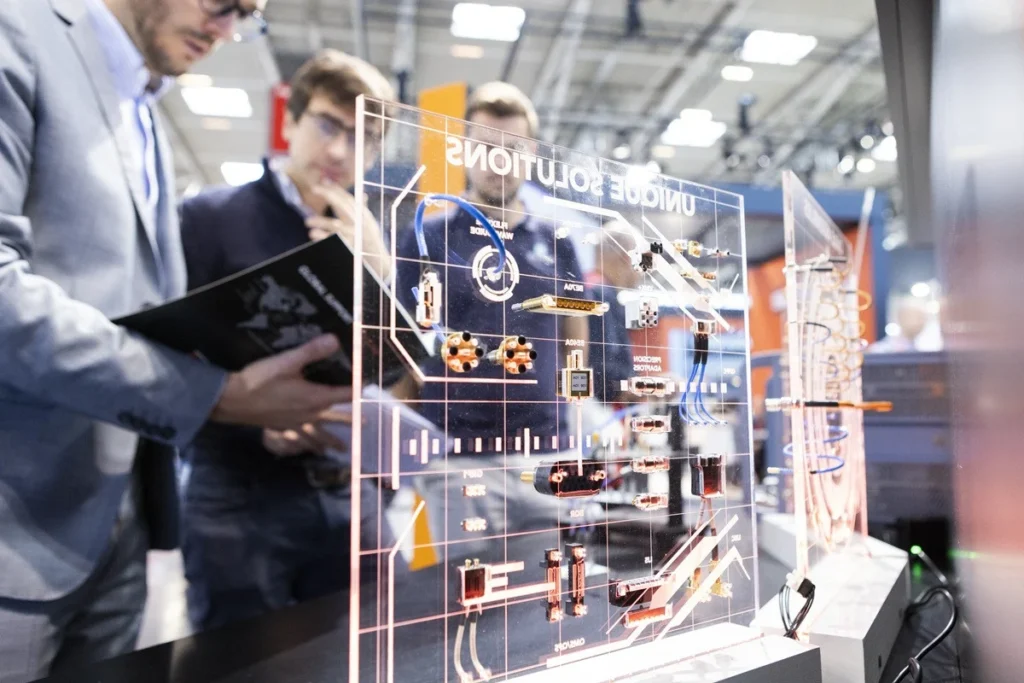
The global electronics industry stands at a pivotal juncture, grappling with unprecedented demands for computational power, sustainable operation, and robust digital defenses. This dynamic landscape, profoundly shaped by the pervasive integration of artificial intelligence (AI), will form the bedrock of discussions and innovations showcased at electronica 2026. Slated to take place in Munich from November 10th to 13th, this biennial event will serve as a critical platform for nearly 3,500 exhibitors from approximately 60 countries, converging to explore the foundational technologies enabling the transition towards an "All Electric Society."
electronica: A Legacy of Innovation and Foresight
electronica, organized by Messe München, has established itself over decades as the world’s leading trade fair for electronics, consistently reflecting and shaping the industry’s trajectory. Since its inception in 1964, the event has grown exponentially, evolving from a regional gathering into a global nexus where the entire electronics value chain—from components and systems to applications and services—is presented. Its biennial cycle allows for significant technological advancements to mature between editions, ensuring that each installment offers a fresh perspective on the most pressing challenges and promising solutions. The 2026 edition, following the momentum of electronica 2024 (implied from the original source’s date reference, though not explicitly stated as the prior event), is particularly poised to highlight the convergence of AI with core engineering principles, underpinning the shift towards more intelligent, efficient, and secure electronic systems.
AI’s Ubiquitous Influence Reshaping Electronics Design Paradigms
The rapid ascent of artificial intelligence is fundamentally redefining expectations for electronic systems. AI workloads are no longer confined to specialized research labs but are becoming commonplace across an increasingly diverse array of sectors, including industrial automation, advanced transportation systems, critical healthcare infrastructure, and energy management. This widespread adoption places immense pressure on designers and engineers to meticulously balance escalating computing performance requirements with stringent demands for energy efficiency, impenetrable cybersecurity, and unwavering long-term reliability.
Modern AI applications, spanning sophisticated speech recognition, high-precision computer vision, proactive predictive maintenance, and autonomous control systems, are inextricably linked to breakthroughs in semiconductor technology. The relentless pursuit of higher transistor density, novel architectures like neuromorphic computing, and advanced packaging techniques are directly fueling AI’s capabilities. Concurrently, embedded computing platforms are becoming more powerful and compact, while advanced sensor technologies are providing the vast datasets AI models require. High-speed connectivity, encompassing 5G, Wi-Fi 6E, and future standards, ensures that these intelligent systems can process and transmit massive volumes of data in real-time, operating seamlessly within complex real-world environments.
However, this burgeoning AI adoption is not without its engineering complexities. The exponential increase in computational demands for AI inference and training models necessitates electronic systems capable of delivering unprecedented processing power without incurring prohibitive energy consumption. For instance, the energy footprint of large language models (LLMs) and deep learning networks can be substantial, posing significant challenges for edge devices and sustainable data centers alike. According to a 2023 report by the German Economic Institute (IW), AI adoption continues to gain traction across the industrial landscape, with approximately two-thirds of large German companies already leveraging AI technologies. Medium-sized enterprises are also making considerable strides, though integration rates remain comparatively lower among smaller organizations, indicating a persistent need for accessible and scalable AI solutions. Globally, the AI chip market alone is projected to reach hundreds of billions of dollars by the end of the decade, underscoring the monumental investment and innovation occurring in this space.
The Dual Imperatives: Energy Efficiency and Cyber Resilience
As AI systems become more sophisticated and integrated into critical infrastructure, two non-negotiable requirements have emerged as core design principles: energy efficiency and cyber resilience.
The escalating power consumption of advanced AI systems has become a critical design consideration, often referred to as the "power wall." Electronic hardware must provide superior processing capabilities while operating efficiently under increasingly demanding thermal conditions. This imperative is driven not only by environmental sustainability goals but also by operational costs, battery life constraints in mobile and edge devices, and the physical limits of heat dissipation. Innovations in materials science, such as Gallium Nitride (GaN) and Silicon Carbide (SiC) power semiconductors, are playing a crucial role in enabling more efficient power conversion. Furthermore, advancements in low-power AI accelerators, specialized neuromorphic chips, and efficient data processing architectures are vital to mitigate the energy demands of pervasive AI. The industry is witnessing a significant shift towards designing "green AI" hardware, optimizing algorithms for energy consumption, and implementing advanced thermal management solutions.
Simultaneously, cybersecurity has transcended being an afterthought to become a system-level concern, ingrained from the earliest stages of product development. Connected devices, often forming vast Internet of Things (IoT) networks, exchange larger volumes of sensitive data than ever before. These devices typically receive frequent software updates throughout their operational lifespan and are expected to remain in service for many years, sometimes decades, particularly in industrial and critical infrastructure applications. This extended lifecycle and continuous connectivity expose them to an ever-evolving landscape of sophisticated cyber threats.

The introduction of the European Union’s Cyber Resilience Act (CRA) marks a significant regulatory milestone, reinforcing the imperative of secure product design across the entire lifecycle. The CRA, which is expected to come into full effect in the coming years, places stringent obligations on manufacturers, importers, and distributors of connected products, requiring them to ensure cybersecurity "by design" and "by default." This includes rigorous assessments of hardware, software, communication interfaces, and update mechanisms, all of which must work cohesively to support long-term cyber resilience. Non-compliance could result in substantial fines, driving a proactive shift towards security-first engineering. Beyond the CRA, global standards such as NIST Cybersecurity Framework and IEC 62443 are also guiding the development of secure industrial control systems, further underscoring the industry’s commitment to robust digital defenses. The market for embedded security solutions, including secure microcontrollers, hardware security modules (HSMs), and secure boot mechanisms, is experiencing rapid growth as companies invest heavily in protecting their digital assets and consumer trust.
From Individual Components to Integrated System Architectures
The trajectory of electronics development is increasingly moving beyond the optimization and selection of individual components, be it the latest processor, a highly sensitive sensor, or a specialized communication module. Instead, a paradigm shift is occurring where manufacturers are prioritizing the development of complete system architectures. These comprehensive platforms seamlessly integrate hardware, sophisticated software stacks, operating systems, diverse connectivity options, and robust security protocols into scalable and adaptable solutions.
This evolution directly reflects changing customer expectations. Modern products are no longer merely functional devices; they are expected to integrate quickly into existing ecosystems, scale effortlessly to meet varying demands, and remain perpetually updatable throughout their operational life. This requirement for agility and longevity has elevated the importance of holistic system design, intricate software development, and diligent lifecycle management to a level commensurate with, if not exceeding, the performance metrics of individual components. Companies are investing heavily in platform engineering, DevOps methodologies, and over-the-air (OTA) update capabilities to deliver products that remain relevant and secure in a rapidly changing technological landscape. This integrated approach fosters greater innovation, reduces time-to-market, and enhances the overall user experience, while also simplifying the complex task of ensuring long-term security and functionality.
Broader Impact and Implications for the Global Electronics Ecosystem
The transformative forces of AI, energy efficiency, and cybersecurity carry profound implications across the entire global electronics ecosystem. Research and Development (R&D) budgets are being reallocated to prioritize advanced materials, novel chip architectures, secure software development, and system integration. This shift necessitates a significant investment in talent development, addressing potential skill gaps in areas such as AI engineering, embedded security, and full-stack system design. Universities and vocational training programs are adapting curricula to meet these emerging demands.
Economically, these trends are driving new market segments and fostering unprecedented collaboration between hardware manufacturers, software developers, and cybersecurity experts. The global market for AI in electronics is projected to experience compound annual growth rates (CAGRs) exceeding 20% in the coming years, while the demand for energy-efficient components and robust cybersecurity solutions is similarly robust. Supply chains are also undergoing scrutiny, with an increased focus on the provenance and security of components, especially in light of geopolitical considerations and the need for trustworthy hardware roots of trust.
Societally, the promise of the "All Electric Society" – a vision where energy is efficiently generated, stored, and consumed, underpinned by intelligent electronic systems – offers immense benefits in terms of sustainability, improved quality of life, and enhanced industrial productivity. However, it also presents challenges related to data privacy, algorithmic bias, and the ethical deployment of autonomous systems, all of which require ongoing dialogue and regulatory foresight.
electronica 2026: A Catalyst for Collaboration and Future Vision
electronica 2026 is uniquely positioned to serve as a pivotal forum for addressing these multifaceted challenges and opportunities. Its comprehensive exhibition halls will showcase everything from cutting-edge semiconductors and passive components to advanced embedded systems, sensors, and test & measurement solutions. The event’s robust technical conference program will delve deeply into these central themes, featuring keynotes from industry luminaries, expert panels, and technical sessions exploring the latest research and development across the industry. Attendees can expect to witness live demonstrations of AI-powered edge devices, novel energy harvesting solutions, and state-of-the-art secure elements designed to protect critical data.
Crucially, SEMICON Europe will once again be co-located with electronica, providing invaluable additional coverage of the semiconductor manufacturing value chain. This synergy offers a holistic view, connecting the upstream processes of chip design and fabrication with the downstream applications and systems showcased at electronica. The combined event creates an unparalleled opportunity for cross-industry collaboration, fostering the exchange of ideas and driving innovation from the foundational silicon level all the way to complex intelligent systems.
In essence, electronica 2026 will not merely be an exhibition of current technologies but a forward-looking barometer for an industry in rapid transformation. It will highlight the strategic imperative for electronics companies to embrace AI, champion energy efficiency, and embed cybersecurity as non-negotiable pillars of their product development strategies, charting a course towards a more intelligent, sustainable, and secure technological future.






