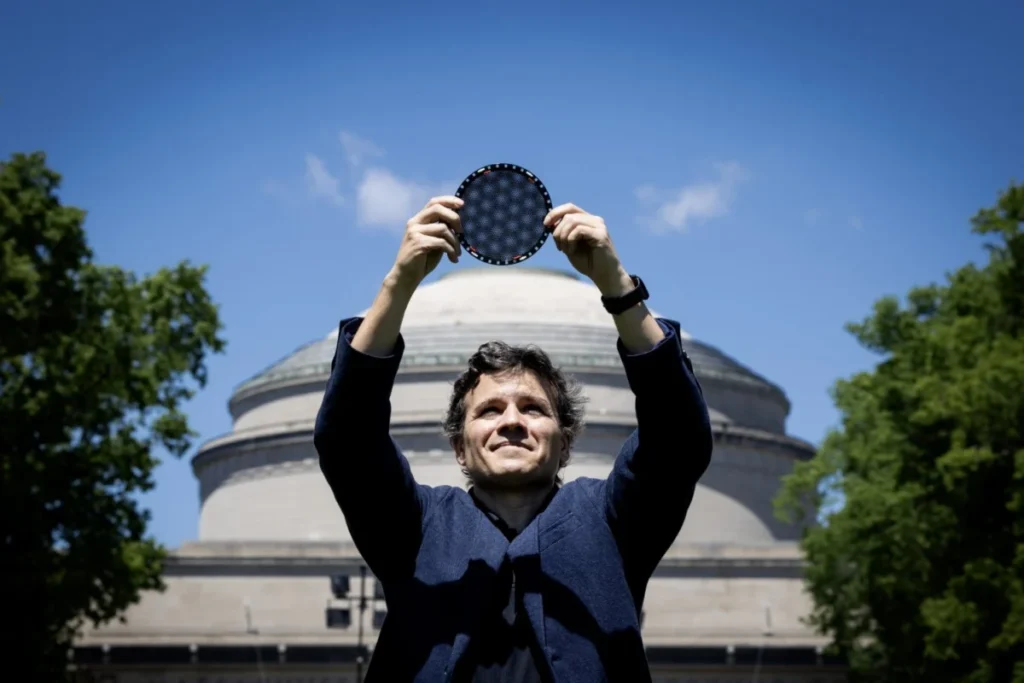
The Norwegian Academy of Science and Letters has officially announced that Pablo Jarillo-Herrero, the Cecil and Ida Green Professor of Physics at the Massachusetts Institute of Technology (MIT), is a co-recipient of the 2026 Kavli Prize in Nanoscience. This prestigious international award recognizes Jarillo-Herrero for his foundational contributions to the development of "twistronics," a transformative field in condensed matter physics. He shares the honor and a $1 million prize with two other distinguished physicists: Professor Eva Y. Andrei of Rutgers University and Professor Allan MacDonald of the University of Texas at Austin. The three laureates are being celebrated for their combined theoretical and experimental work that has revolutionized the way scientists manipulate the electronic properties of two-dimensional materials.
The Kavli Prize, established in 2008 through a partnership between the Norwegian Academy of Science and Letters, the Norwegian Ministry of Education and Research, and the Kavli Foundation, is awarded biennially. It honors researchers whose breakthroughs in the fields of astrophysics, nanoscience, and neuroscience have significantly advanced the human understanding of the "big, the small, and the complex." Jarillo-Herrero’s selection marks a significant milestone for the MIT Department of Physics and underscores the global impact of his research into the quantum behavior of matter.
The Birth of Twistronics: A New Paradigm in Materials Science
To understand the magnitude of the work recognized by the 2026 Kavli Prize, one must look at the unique properties of graphene—a single layer of carbon atoms arranged in a hexagonal, honeycomb-like lattice. Since its discovery and isolation in 2004, graphene has been lauded for its extraordinary strength, conductivity, and flexibility. However, for over a decade, its electronic properties were largely considered fixed by its chemical and atomic structure.
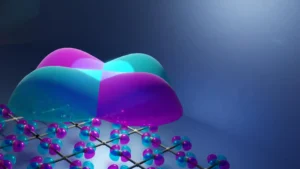
The field of twistronics changed this assumption by introducing a new degree of freedom: the "twist angle." By stacking two layers of graphene on top of one another and rotating them at a specific, precise angle, researchers discovered they could fundamentally alter the way electrons move through the material. This creates a moiré pattern—a complex interference design that emerges when two periodic structures are overlaid at an angle.
The Kavli Prize committee noted that the three laureates provided the essential "theoretical foundation and experimental validation" for this field. Through twistronics, properties such as superconductivity (the ability to conduct electricity with zero resistance) and magnetism can be engineered into materials that do not naturally possess them. This shift from chemical modification to geometric control represents a landmark achievement in nanoscience.
A Chronology of Discovery: From Theory to Observation
The emergence of twistronics was not an overnight success but rather the result of nearly two decades of incremental breakthroughs by the three 2026 laureates. The timeline of their contributions illustrates the synergy between experimental observation and theoretical modeling.
The journey began in 2009 when Professor Eva Y. Andrei and her research group at Rutgers University utilized scanning tunneling microscopy and spectroscopy to study graphene. Her team demonstrated that even minute variations in the twist angle between graphene layers could profoundly modify the material’s electronic structure. This was the first clear evidence that the geometry of the stack—rather than its chemical composition—could be the primary driver of its physical properties. Andrei’s work effectively launched the experimental pursuit of what would later be termed twistronics.
In 2011, Professor Allan MacDonald of the University of Texas at Austin provided the mathematical and theoretical framework necessary to understand these observations. He and his colleagues published a seminal paper predicting that at certain "magic angles," the electronic bands of twisted bilayer graphene would become "flat." In these flat bands, the kinetic energy of electrons is suppressed, forcing them to interact more strongly with one another. MacDonald’s quantitative explanation of these discrete magic angles served as a roadmap for experimentalists, guiding the search for new quantum phases of matter.
The most dramatic experimental confirmation of these theories came in 2018. Pablo Jarillo-Herrero’s group at MIT achieved what many in the field thought was nearly impossible due to the extreme precision required. By cooling twisted bilayer graphene to temperatures near absolute zero and maintaining a precise "magic angle" of approximately 1.1 degrees, Jarillo-Herrero observed two distinct phenomena: the material acted as a "correlated insulator" (where electron-electron interactions prevent current flow) and, with a slight adjustment of the electric field, it became a superconductor.
This discovery, often referred to in the scientific community as the "magic-angle revolution," proved that a simple stack of carbon atoms could be tuned to exhibit complex quantum behaviors that are usually only found in much more complicated, rare-earth-based materials.
Institutional Recognition and Professional Impact
The announcement of the Kavli Prize has been met with widespread acclaim within the MIT community and the broader scientific world. Nergis Mavalvala, the dean of the MIT School of Science and the Curtis and Kathleen Marble Professor of Astrophysics, praised Jarillo-Herrero’s dedication and the fundamental nature of his work.
"Pablo’s groundbreaking research has once again been given well-deserved recognition," Mavalvala stated. "Pablo and his co-recipients have pioneered twistronics, very fundamental scientific research that has opened up a new field with myriad possibilities for novel quantum materials."
Deepto Chakrabarty, head of the MIT Department of Physics and the William A. M. Burden Professor in Astrophysics, highlighted the broader implications for the future of technology. "Pablo’s research has helped spark a revolution in condensed matter physics and nanoscience, inspiring physicists worldwide to explore superconductivity and other emergent phenomena in engineered quantum materials," Chakrabarty said. He noted that the work could eventually pave the way for the creation of room-temperature superconductors, which would have an "enormous technological impact" on everything from power grids to high-speed transportation.
For Jarillo-Herrero, the award is a reflection of the importance of curiosity-driven research. In an essay describing his journey, he expressed humility in sharing the prize with Andrei and MacDonald. He also emphasized the necessity of societal support for basic science. "Although it often doesn’t have a direct near-term application, in the long run it happens to be the most transformative and impactful in society," he wrote.
Technical Analysis: Why the "Magic Angle" Matters
The core of Jarillo-Herrero’s contribution lies in the extreme sensitivity of the material at the 1.1-degree mark. In physics, the behavior of electrons is usually governed by their kinetic energy—their tendency to move around. In most conductors, this energy is high enough that electrons rarely "see" or interact with each other in significant ways.
However, at the magic angle, the moiré pattern created by the twisted layers creates a specific environment where the electrons slow down significantly. When their movement is restricted, their mutual repulsion (Coulomb interaction) becomes the dominant force. This leads to "correlated electronic states."
By using a gate voltage to "tune" the number of electrons in the system, Jarillo-Herrero’s team showed they could flip the material’s state from an insulator to a superconductor. This level of tunability is unprecedented. In traditional superconductors, the chemical structure is fixed during the manufacturing process. In magic-angle graphene, the properties can be changed with the flick of a switch, making it a "universal playground" for studying quantum physics.
The Growing Legacy of the Kavli Prize at MIT
With the inclusion of Pablo Jarillo-Herrero, the total number of MIT faculty members who have received the Kavli Prize has risen to nine. This record reflects MIT’s sustained leadership across the three categories of the award:
- Neuroscience: Nancy Kanwisher (2024) and Ann Graybiel (2012).
- Nanoscience: Bob Langer (2024), Mildred Dresselhaus (2012), and now Pablo Jarillo-Herrero (2026).
- Astrophysics: Sara Seager (2024), Rainer Weiss (2016), Alan Guth (2014), and Jane Luu (2012).
The recurring presence of MIT researchers among the Kavli laureates highlights the institute’s role as a hub for high-risk, high-reward fundamental research. Jarillo-Herrero’s work, in particular, bridges the gap between pure theoretical physics and the future of nanotechnology.
Future Implications: From Quantum Computing to Energy Efficiency
The long-term implications of twistronics extend far beyond the laboratory. While the initial experiments required cryogenic temperatures, the insights gained from magic-angle graphene are being applied to other "moiré materials," including transition metal dichalcogenides and other 2D crystals.
One of the most ambitious goals in modern physics is the realization of room-temperature superconductivity. If scientists can understand the mechanisms of "unconventional" superconductivity observed in twisted graphene, they may be able to design new materials that operate at higher temperatures. This would eliminate the need for expensive cooling systems (like liquid helium), potentially revolutionizing energy transmission by allowing electricity to flow across continents without any loss of power.
Furthermore, the "tunability" of twistronics is of great interest to the field of quantum computing. The ability to precisely control quantum states within a relatively simple material platform could lead to more stable qubits (the building blocks of quantum computers) or the development of new types of topological quantum sensors.
Conclusion
The 2026 Kavli Prize in Nanoscience recognizes a profound shift in how we approach the design of matter. By honoring Pablo Jarillo-Herrero, Eva Andrei, and Allan MacDonald, the Norwegian Academy of Science and Letters has acknowledged the birth of a field that treats the arrangement of atoms as a programmable variable.
Jarillo-Herrero’s journey—from the conceptually straightforward but experimentally grueling task of twisting atomic layers to the discovery of new quantum phases—serves as a testament to the power of experimental persistence. As the scientific community continues to explore the "magic" of twisted materials, the foundation laid by these three laureates will undoubtedly serve as the cornerstone for the next generation of quantum technologies. The recognition of Jarillo-Herrero not only honors his past achievements but also signals the beginning of a new era in nanoscience where the limits of material properties are defined only by the angles at which we choose to view them.