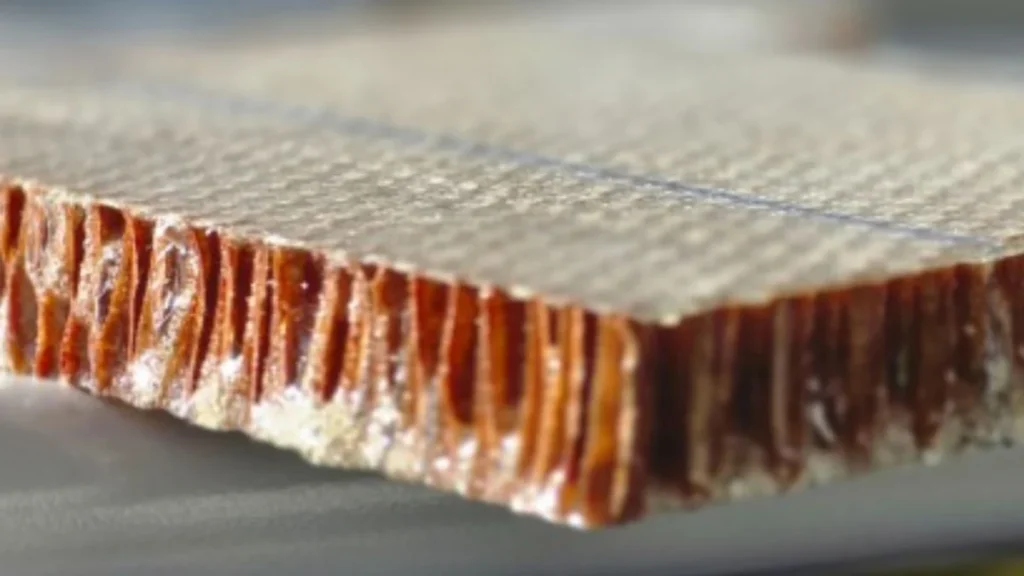
A groundbreaking flame-retardant epoxy composite, developed by researchers at Empa, the Swiss Federal Laboratories for Materials Science and Technology, in collaboration with industrial partner Elantas, a part of the German specialty chemicals group ALTANA, is poised to revolutionize the sustainability of lightweight fiber-reinforced materials. This innovation directly addresses one of the most significant environmental and economic challenges facing industries reliant on advanced composites: their disposal and recyclability at the end of their operational life. The new material system, developed through an Innosuisse-supported project, successfully combines essential properties such as fire safety, robust mechanical strength, and low weight with unprecedented recyclability, a combination particularly critical for high-performance applications like aircraft and train interiors.
The Critical Need for Sustainable Composites in Modern Transportation
The global demand for lightweight materials has surged across various sectors, most notably in aerospace, automotive, and rail transportation. Fiber-reinforced polymer (FRP) composites, with their superior strength-to-weight ratio, corrosion resistance, and design flexibility, offer significant advantages over traditional metals. For instance, in aviation, lightweighting directly translates to reduced fuel consumption, lower operational costs, and decreased carbon emissions. The International Air Transport Association (IATA) continually pushes for efficiency gains, and material innovation is a key driver. Similarly, in the rail sector, lighter trains consume less energy, reduce wear on infrastructure, and can accelerate and decelerate more efficiently.
However, the widespread adoption of these materials has been accompanied by a growing environmental dilemma. Conventional epoxy-based composites, while offering exceptional performance, pose a significant challenge at their end-of-life. Unlike thermoplastics, which can often be melted and reshaped, thermoset epoxies undergo an irreversible curing process, forming a rigid, cross-linked polymer network that makes them notoriously difficult to recycle. This inherent property has historically led to the vast majority of composite waste – estimated to be in the millions of tons globally each year – being incinerated or consigned to landfills. Such practices not only represent a loss of valuable resources, including expensive carbon and glass fibers, but also contribute to environmental pollution and greenhouse gas emissions. The economic implications are also substantial, as the energy and material costs embedded in these complex structures are simply discarded.
A Recyclable Alternative: The Science Behind the Breakthrough
The Empa and Elantas collaboration specifically targeted a common composite structure used extensively in transport applications: a multilayer "sandwich" composite. This typically consists of an aramid honeycomb core, renowned for its high strength-to-weight ratio, flanked by woven glass or carbon-fiber layers, all bound together by an epoxy resin. This specific construction provides an optimal balance of structural integrity and minimal mass, making it ideal for components such as aircraft cabin floors or interior panels in high-speed trains.
The core of the Empa innovation lies in a novel phosphorus-containing additive. This additive is incorporated directly into the epoxy resin during the manufacturing process. Its ingenious design addresses two critical shortcomings of conventional epoxy simultaneously. Firstly, it imbues the material with superior flame-retardant properties, a non-negotiable requirement for aircraft and train interiors where safety standards are exceptionally stringent. Aviation regulations, such as FAR 25.853 (Flammability Requirements for Aircraft Cabin Interiors) by the FAA, mandate that materials must be self-extinguishing and exhibit low heat release and smoke density. Achieving this without compromising mechanical performance is a significant feat.
Secondly, and perhaps more crucially for sustainability, the additive fundamentally alters the chemical behavior of the cured epoxy. Under specific conditions of heat and pressure, the otherwise rigid, cross-linked polymer network can be softened and reshaped. This mechanism enables what the researchers term "thermomechanical recycling." While not a full chemical de-polymerization, it allows for the re-processing of the epoxy component, a capability previously largely confined to thermoplastics. This marks a profound shift from the linear "take-make-dispose" model towards a more circular approach for thermoset composites.
Breaking the "Sandwich" Apart: Component Recovery and Economic Value
The researchers and Elantas did not stop at simply making the epoxy thermomechanically recyclable. They advanced their work to demonstrate a process for the complete deconstruction of the complex sandwich composite, allowing for the recovery of its individual components. This is a critical step towards true circularity, moving beyond mere resin reshaping to material reclamation.
The process involves the application of an appropriate solvent in conjunction with heat. This carefully calibrated combination effectively dissolves the modified epoxy resin, allowing the separation of the composite into its constituent parts: the aramid honeycomb core and the woven glass or carbon-fiber layers. The ability to recover these high-value materials is where the economic and environmental benefits truly become apparent. Materials like carbon fiber, for instance, are exceptionally energy-intensive and costly to produce, with prices often ranging from $20 to $50 per kilogram for aerospace-grade fibers, and aramid honeycomb is similarly expensive. Reclaiming these materials significantly reduces the demand for virgin production, thereby lowering the associated energy consumption, greenhouse gas emissions, and raw material costs. Empa has indicated that future research will also investigate the potential for recovering the epoxy itself from the solvent solution, further closing the loop.
According to Sabyasachi Gaan, a lead researcher on the project, the resulting recycled material retains nearly the same advantageous mechanical properties as conventional, non-recyclable epoxy composites. This retention of performance is paramount, as any compromise in strength or durability would negate the benefits of recyclability for critical applications. The material also fully complies with relevant fire-safety requirements, underscoring the success in balancing multiple, often conflicting, material properties.
Collaboration and Future Outlook: Scaling Up and Broader Applications
The development of this innovative composite system is a testament to the power of collaborative research between academia and industry. Empa, a leading institution in materials science, brings deep scientific expertise, while Elantas, a global leader in specialty chemicals, provides the industrial knowledge and capability for scaling up production. The project’s support from Innosuisse, the Swiss Innovation Agency, highlights its strategic importance for Swiss industry and its potential to contribute to a more sustainable economy. Innosuisse’s mission is to promote science-based innovation that benefits society and the economy, making this project a perfect fit.
While the project has successfully demonstrated the technology’s potential at an industrial application level, the next crucial steps involve scaling up both the production of the modified epoxy resin and the associated recycling processes. This transition from laboratory proof-of-concept to industrial-scale implementation often presents new challenges related to efficiency, cost-effectiveness, and process optimization. The researchers are actively pursuing these scaling efforts to make the technology commercially viable and widely accessible.
Beyond its immediate relevance to aerospace and rail interiors, the Empa-Elantas team is also investigating the broader applicability of this recyclable, flame-retardant epoxy. The inherent advantages of lightweight, high-strength, and fire-safe materials, coupled with their newfound recyclability, could open doors to numerous other sectors. Potential applications include:
- Energy Sector: Wind turbine blades, which are massive composite structures currently posing significant disposal challenges. A recyclable epoxy could transform their end-of-life management.
- Construction Sector: Lightweight, fire-resistant panels and structural elements could benefit from easier end-of-life processing.
- Automotive Industry: Further reducing vehicle weight while addressing crash safety and fire protection requirements.
- Marine Industry: Composites are increasingly used in boat building; recyclability would address environmental concerns for marine waste.
Towards a Circular Economy for Advanced Composites
The significance of this development extends far beyond making individual aircraft or train components recyclable. It represents a crucial step towards establishing a circular economy for advanced composite materials, a goal that has long eluded researchers and industry leaders. Historically, the very complexity and high performance that make fiber-reinforced composites so attractive have also been their Achilles’ heel when it comes to sustainability. Their heterogeneous nature – multiple materials bonded together – has made separation and recovery economically and technically prohibitive.
This new material system directly addresses that fundamental barrier. By preserving the performance advantages that drive composite adoption while simultaneously enabling the separation and recovery of its valuable components, Empa and Elantas are paving the way for a paradigm shift. If successfully scaled, this technology could significantly reduce the environmental footprint of industries reliant on composites, minimize waste sent to landfills and incinerators, and foster the creation of new recycling industries. It offers a tangible pathway to integrate sustainability from a material’s conception through its entire lifecycle, turning a major waste problem into an opportunity for resource recovery and environmental stewardship. The innovation underscores a growing global commitment to sustainable engineering and circular economy principles, promising a future where advanced materials are not only high-performing but also inherently responsible.






