Researchers at the École Polytechnique Fédérale de Lausanne (EPFL) have developed a groundbreaking 3D printing technique that overcomes the long-standing limitations of existing vat photopolymerization methods, paving the way for the creation of exceptionally strong and intricate metal and ceramic objects. This innovative approach, detailed in a recent publication in the esteemed journal Advanced Materials, promises to redefine additive manufacturing by enabling material selection to occur after the printing process, a significant paradigm shift in the field.
The Challenge of Traditional Vat Photopolymerization
Vat photopolymerization, a widely used 3D printing technology, begins with a vat of liquid, light-sensitive resin. A laser or ultraviolet light then selectively solidifies these photopolymers layer by layer, building a three-dimensional object. While this method offers high resolution and the ability to create complex geometries, its practical applications have been largely confined to polymers due to the inherent nature of the light-curable resins.
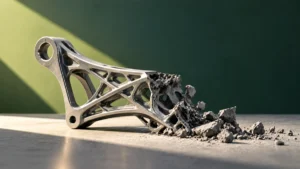
For years, scientists have sought to bridge this gap by developing methods to transform these printed polymer structures into more robust materials like metals and ceramics. However, these prior attempts have been plagued by significant drawbacks. Daryl Yee, who leads the Laboratory for the Chemistry of Materials and Manufacturing at EPFL’s School of Engineering, explained the core issues: "These materials tend to be porous, which significantly reduces their strength, and the parts suffer from excessive shrinkage, which causes warping." These inherent weaknesses have severely limited the performance and reliability of metal and ceramic components produced through these earlier additive manufacturing routes.
A Novel Approach: Building Frameworks, Then Infusing
The EPFL team’s breakthrough lies in a fundamental re-imagining of the printing process. Instead of attempting to incorporate metal or ceramic precursors directly into a light-curable resin, they first 3D print a structural framework using a simple, water-based gel known as a hydrogel. This hydrogel acts as a scaffold, providing the initial shape and integrity of the final object.
Following the initial printing of the hydrogel template, the researchers introduce a sophisticated infusion process. The "blank" hydrogel structure is then submerged in a solution containing metal salts. Through a series of carefully controlled chemical reactions, these metal salts are converted into tiny, metal-containing nanoparticles. These nanoparticles then permeate and become uniformly distributed throughout the hydrogel matrix.
This infusion process is not a one-time event. The researchers found that repeating this cycle of soaking in metal salts and subsequent chemical conversion multiple times is crucial. Each "growth cycle," as the team refers to them, significantly increases the concentration of metal within the hydrogel. This iterative approach allows for the creation of composites with exceptionally high metal content, a critical factor in achieving the desired material properties.
From Gel to Dense Metal: The "Growth Cycles"
The efficacy of this multi-step process is underscored by the "growth cycles." Typically, between five and ten such cycles are employed. After these cycles, the hydrogel, having served its purpose as a temporary scaffold and nanoparticle carrier, is removed. This is achieved through a simple heating process, which evaporates the water and breaks down the hydrogel structure, leaving behind a solid, dense metal or ceramic object.
A key advantage of this method is its precision. The final metal or ceramic object faithfully replicates the intricate shape of the original printed gel. Furthermore, because the metal salts are introduced after the printing of the hydrogel template, the same hydrogel framework can be utilized to produce a diverse array of materials. This flexibility means that a single printed gel can be transformed into objects made of different metals, ceramics, or even complex composite materials, depending on the specific metal salt solution used.
"Our work not only enables the fabrication of high-quality metals and ceramics with an accessible, low-cost 3D printing process; it also highlights a new paradigm in additive manufacturing where material selection occurs after 3D printing, rather than before," Yee elaborated, emphasizing the transformative potential of their discovery.
Demonstrating Advanced Architectures and Unprecedented Strength
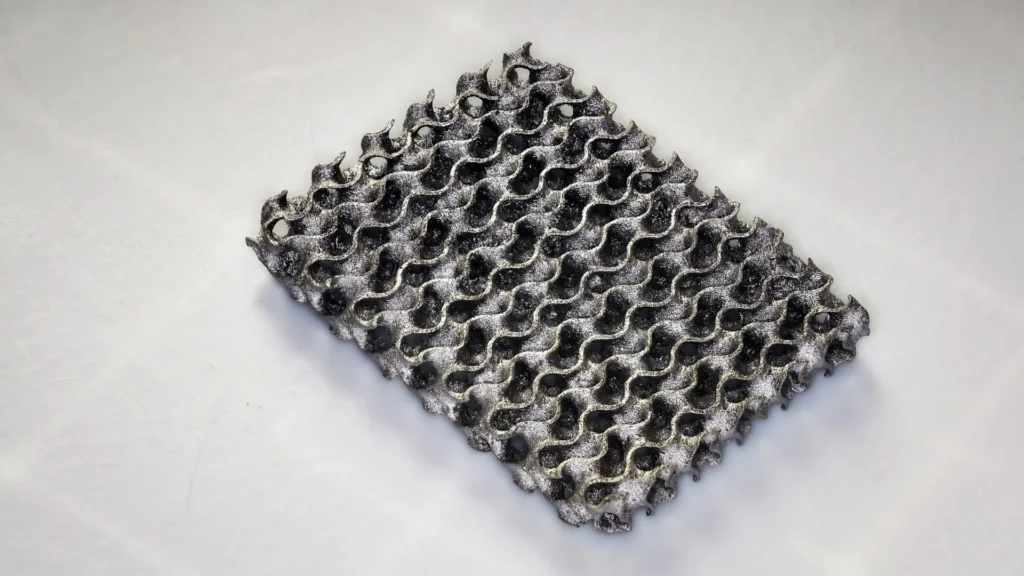
To validate their novel technique, the EPFL team focused on fabricating complex, mathematically defined lattice structures known as gyroids. These intricate geometries were produced using iron, silver, and copper, showcasing the method’s capability to render not only robust materials but also highly sophisticated designs.
The strength of these newly fabricated materials was rigorously tested using a universal testing machine, a standard instrument for measuring mechanical properties. By applying increasing pressure to the gyroid structures, the researchers were able to quantify their load-bearing capacity.
The results were remarkable. Yiming Ji, a PhD student and the first author of the Advanced Materials paper, stated, "Our materials could withstand 20 times more pressure compared to those produced with previous methods, while exhibiting only 20% shrinkage versus 60-90%." This stark contrast in performance highlights the significant improvement in material density and structural integrity achieved by the EPFL team’s approach. The drastically reduced shrinkage also means that parts retain their intended dimensions, minimizing post-processing and enhancing dimensional accuracy, a critical factor in engineering applications.
Implications for High-Tech Industries and Future Directions
The implications of this advanced 3D printing technique are far-reaching, particularly for industries that demand materials that are simultaneously strong, lightweight, and geometrically complex. Potential applications span a wide range of advanced technologies, including:
- Sensors: Intricate, porous structures are often ideal for sensor applications, offering large surface areas for interaction with analytes.
- Biomedical Devices: The ability to create biocompatible metals and ceramics with precise geometries opens doors for advanced implants, scaffolds for tissue engineering, and microfluidic devices.
- Energy Conversion and Storage: Devices such as catalysts, essential for converting chemical energy into electricity, often rely on high-surface-area materials. Similarly, advanced battery components and thermal management systems could benefit from these novel materials. For example, metal catalysts are crucial for enabling reactions that convert chemical energy into electricity, and this new method could lead to more efficient and durable catalysts.
- Aerospace and Automotive: Lightweight yet strong components are paramount in these sectors, and this technology could enable the production of novel structural elements and functional parts.
- Cooling Technologies: High-surface-area metals with advanced cooling properties could be instrumental in developing more efficient thermal management solutions for various electronic and mechanical systems.
Looking to the future, the EPFL team is actively pursuing strategies to further enhance their process and facilitate its adoption by industry. One key area of focus is increasing material density even further, which would lead to even greater strength and potentially reduce material usage.
Another significant objective is to accelerate the manufacturing speed. While the repeated infusion steps are essential for achieving high material content, they do add to the overall processing time, making the method slower compared to some other polymer-to-metal 3D printing techniques. "We are already working on bringing the total processing time down by using a robot to automate these steps," Yee revealed, indicating a commitment to optimizing the workflow for industrial scalability. This automation is expected to streamline the repetitive infusion stages, a critical bottleneck for rapid production.
The successful development of this technique represents a significant leap forward in additive manufacturing. By decoupling material selection from the printing process and addressing the inherent limitations of traditional methods, the EPFL researchers have unlocked the potential for creating a new generation of high-performance metal and ceramic components with unprecedented complexity and strength. This innovation is poised to drive advancements across a multitude of technological frontiers, underscoring the continuous evolution and transformative power of 3D printing.