As the United States approaches its 250th anniversary, a pivotal debate continues to shape its economic future: what truly constitutes competitive product manufacturing on American soil in the 21st century? This question, increasingly urgent in a post-pandemic world grappling with supply chain fragilities and geopolitical shifts, is being answered by a growing number of companies demonstrating that domestic production is not only viable but can be a significant strategic advantage. Among these trailblazers, DECKED, a manufacturer of heavy-duty storage systems for pickup trucks and cargo vans, stands out as a compelling case study, showcasing how a blend of automation, localized supply chains, and manufacturing agility can redefine competitiveness.
The broader landscape of American manufacturing has undergone a significant transformation over the past decade. Following a period of extensive offshoring that began in the late 20th century, a discernible trend of reshoring and nearshoring has gained momentum. Data from the Reshoring Initiative, a non-profit organization dedicated to bringing manufacturing jobs back to the U.S., indicates a dramatic increase in announced reshoring and foreign direct investment (FDI) job creation, with projections for 2023 exceeding 300,000 jobs. This shift is largely driven by a confluence of factors including rising overseas labor costs, increasing freight expenses, intellectual property concerns, and, critically, the profound supply chain disruptions witnessed during the COVID-19 pandemic. Geopolitical tensions and a renewed emphasis on national economic security have further propelled this movement, with government initiatives like the CHIPS and Science Act and the Inflation Reduction Act offering substantial incentives for domestic production, particularly in strategic sectors.
Companies like GE Appliances have already provided a robust demonstration of this new paradigm. Their strategic investments in reshoring efforts, coupled with the integration of advanced automation and AI-driven manufacturing processes, have yielded tangible improvements in productivity and operational flexibility. By bringing production closer to their primary customer base, GE Appliances has been able to reduce lead times, respond more swiftly to market changes, and enhance product quality control, proving that advanced manufacturing technologies can offset traditional cost disadvantages associated with domestic production. This success story serves as an inspiration and a practical blueprint for other American manufacturers seeking to re-establish a competitive edge.
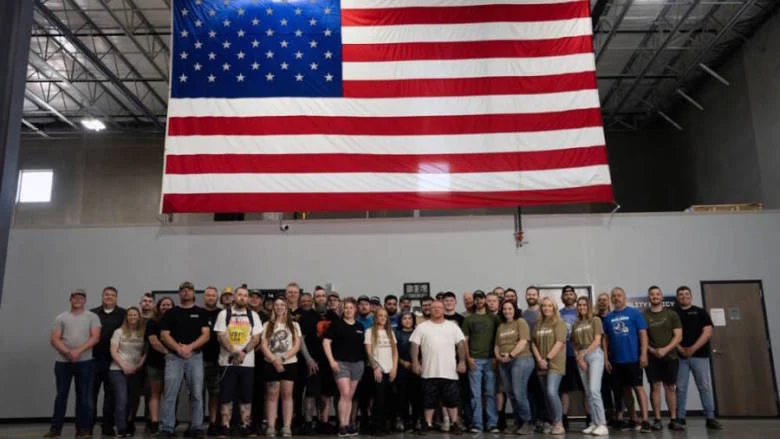
DECKED, headquartered in Ketchum, Idaho, is pursuing a remarkably similar, yet uniquely tailored, strategy. The company has consciously centered its operational philosophy on automation, domestic supply chains, and manufacturing agility to remain highly responsive to customer demand while strategically scaling its production capabilities within the United States. For DECKED, the decision to invest heavily in domestic manufacturing was not merely a patriotic gesture but a calculated business imperative to foster resilience and drive innovation.
A cornerstone of DECKED’s strategy is its impressive commitment to a localized manufacturing footprint. The company has meticulously built a manufacturing operation that is now roughly 95 percent domestic. This dedication extends beyond mere assembly, encompassing significant investments in in-house production capabilities, cutting-edge robotics, and the infrastructure for rapid product iteration. This high degree of domestic integration provides DECKED with unparalleled control over its production processes and supply chain, a critical advantage in an increasingly volatile global economy.
Bill Banta, CEO of DECKED, articulates one of the most significant benefits of manufacturing domestically: the ability to rapidly respond to customer feedback and operational challenges without the debilitating delays often inherent in extended overseas supply chains. The traditional model of offshore manufacturing frequently involves lead times measured in weeks or even months for design changes or defect resolution, a timeline that can be catastrophic for market responsiveness and customer satisfaction. In contrast, DECKED has cultivated a tight, continuous feedback loop. The company rigorously monitors trends and field performance data, allowing for the swift identification of issues, immediate modification of tooling, and the rapid deployment of manufacturing changes directly into the production line.
Banta vividly recounts an instance involving cracking issues on specific portions of the company’s drawer system. "We found out pretty quickly exactly where the problem was," he explains. The ability to diagnose the issue internally, without waiting for overseas communication, shipping samples back and forth, or coordinating with external manufacturers, proved invaluable. The company leveraged its in-house capabilities to modify the tooling and rapidly deployed the revised components across its production line. "It was basically fixed overnight," Banta states, underscoring the extraordinary speed of resolution. This incident powerfully illustrates the competitive advantage derived from a vertically integrated and domestically focused operation. "Having that really tight feedback loop between the customer, our in-house production, and our supply chain allows us to be really responsive to what the customer’s seeing in the field," he adds, highlighting the symbiotic relationship between customer satisfaction and manufacturing agility.
Automation has emerged as another pivotal element in DECKED’s growth strategy and its broader vision for competitive domestic manufacturing. Banta emphasizes that strategic investments in automation have not only dramatically improved productivity but have also enhanced manufacturing flexibility. This flexibility is crucial for adapting to fluctuating market demands and accommodating product variations efficiently. Far from leading to job displacement, DECKED’s embrace of automation has enabled the company to continue investing in workforce development, upskilling its employees to manage advanced machinery and perform higher-value tasks, thereby fostering a more skilled and engaged labor force.
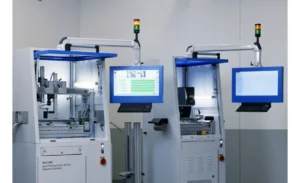
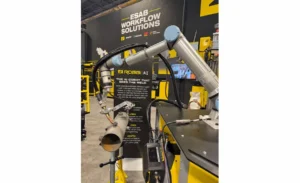
Over time, DECKED has proactively expanded its in-house manufacturing capabilities, strategically bringing more operations under its direct control. This vertical integration reduces reliance on external vendors for critical processes and components. "That’s meant investments in robotics on the assembly line," Banta confirms, detailing the integration of advanced robotic systems that handle repetitive or precision tasks, freeing human operators for more complex oversight and quality control. Beyond robotics, the company has also invested in sophisticated CNC machining, welding, and injection molding capabilities, transforming its facilities into comprehensive, state-of-the-art production hubs. These investments not only streamline production but also embed critical expertise and intellectual property within the company, reinforcing its competitive edge.
The meticulously curated domestic supply chain, which Banta confirms is approximately 95 percent U.S.-based, serves as a formidable bulwark against the volatility that has plagued global supply networks in recent years. This localized network significantly reduces lead times for raw materials and components, providing DECKED with greater predictability and responsiveness, particularly during periods of economic or logistical disruption. "Having that supply chain here in the U.S. and controlling a large portion of that in-house at DECKED really allows us to do that effectively," Banta notes, underscoring the strategic benefit of geographical proximity and direct oversight.
Supplier collaboration has also become an increasingly vital aspect of DECKED’s operational philosophy as the company continues to scale its manufacturing operations. Banta describes a relationship built on transparency and open dialogue with their supply base. "We’ve got a really open, transparent conversation and dialogue going back and forth with our supply base," he states. This collaborative approach ensures that suppliers are integrated into DECKED’s innovation cycle and can adapt quickly to evolving production requirements or design changes. Such close partnerships foster mutual growth and resilience, creating a robust ecosystem of domestic manufacturing partners.
Banta credits some of this sophisticated operational philosophy to invaluable lessons learned during his tenure at companies like Apple. During his time there, manufacturing and supplier teams maintained exceptionally tight integration throughout the product development lifecycle. This experience instilled in him the profound importance of a seamless feedback loop between design and production. "There’s a really great feedback loop and crosstalk between what’s pushing the edge of the technological and manufacturing limits and what that team is trying to achieve from a design perspective," Banta explains. This principle of concurrent engineering, where design and manufacturing considerations are integrated from the outset, is now deeply embedded in DECKED’s operational DNA, enabling faster, more efficient, and more innovative product development cycles.
The implications of DECKED’s success extend far beyond its balance sheet, offering a compelling narrative for the broader American manufacturing sector. Economically, companies committed to domestic production contribute significantly to job creation, not just within their own facilities but also across their localized supply chains. This fosters local economic stimulus, generates tax revenues, and contributes to the vitality of communities. Furthermore, by reducing reliance on foreign supply chains for critical goods, domestic manufacturing enhances national economic security and resilience, particularly in sectors deemed strategically important. The ability to innovate and rapidly iterate products domestically also positions the U.S. at the forefront of technological advancement, attracting further investment in research and development. From an environmental perspective, shorter supply chains can potentially reduce the carbon footprint associated with long-distance transportation, though this benefit must be balanced with the energy intensity of advanced manufacturing processes.
Looking ahead, Banta firmly believes that automation, coupled with supply chain stability and sustained manufacturing agility, will remain paramount for companies striving to compete effectively in the domestic market. The narrative that U.S. manufacturing is inherently uncompetitive is being systematically dismantled by companies like DECKED. "There’s really a lot of incredible manufacturing capability, a lot of great knowledge here in the U.S.," Banta asserts. His conviction is that this latent potential, when strategically harnessed and empowered by modern technologies and agile practices, can yield extraordinary results. "If you can find it and put it to work, you can build some pretty incredible stuff," he concludes, offering a powerful testament to the enduring potential and ingenuity of American industry as the nation prepares to celebrate its quarter-millennium milestone. DECKED’s journey stands as a vibrant example of how innovative strategies, combined with a commitment to domestic excellence, can not only overcome perceived disadvantages but transform them into a formidable competitive advantage in the global marketplace.