The Raspberry Pi Foundation, in collaboration with Google DeepMind and the non-profit organization Digital Moment, has officially launched a new suite of free, themed educational resources designed to integrate artificial intelligence (AI) literacy across the global school curriculum. Aimed at students aged 8 to 16, this initiative marks a significant shift in pedagogical strategy, moving AI education out of the exclusive domain of computer science and into subjects as diverse as geography, art, and the humanities. The program, titled Experience AI, seeks to equip the next generation with the critical thinking skills necessary to navigate a world increasingly governed by algorithmic decision-making.
The release of these resources comes at a pivotal moment for global education. As generative AI tools and recommendation engines become staples of adolescent life, educators face the dual challenge of managing AI’s presence in the classroom while preparing students for an AI-integrated workforce. By focusing on themes such as the environment, ethics, and critical thinking, the Raspberry Pi Foundation aims to provide a flexible framework that can be adapted to various national curricula and classroom contexts.
A New Framework for Interdisciplinary AI Literacy
The foundational philosophy behind the new Experience AI resources is that AI literacy is no longer an optional technical skill but a fundamental requirement for modern citizenship. The developers argue that because AI technologies impact nearly every facet of society—from how news is consumed to how environmental disasters are predicted—the technology should be explored through multiple academic lenses.
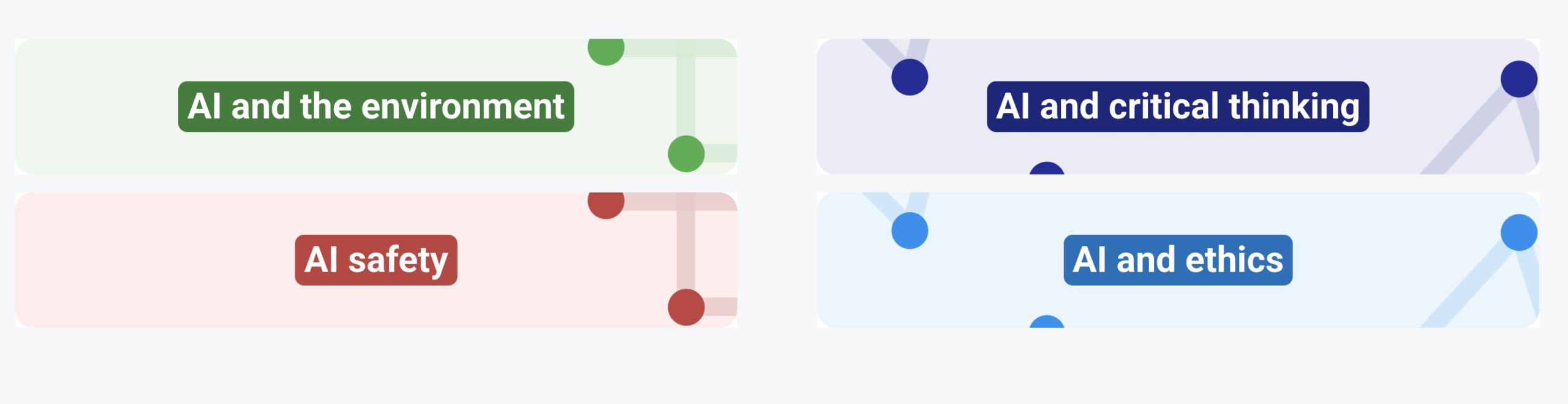
The resources are organized into three primary themes:
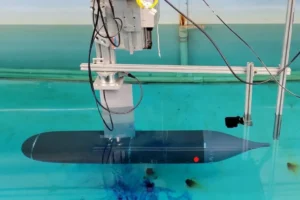
- The Environment: This unit explores how AI is utilized to tackle global ecological challenges. Students investigate real-world applications, such as using machine learning to forecast floods or monitoring biodiversity through satellite imagery and sensor data. This theme bridges the gap between data science and geography, allowing students to see AI as a tool for planetary stewardship.
- Critical Thinking: Focused on the mechanics of social media and information consumption, this theme demystifies the algorithms that determine what content young people see online. By understanding the feedback loops between user data and content delivery, students learn to evaluate the reliability of digital information.
- Ethics: This unit addresses the societal implications of AI, including bias, privacy, and the cultural impact of automated systems. It encourages students to ask deep questions about who builds these technologies and whose interests they serve.
By moving away from a strictly subject-based organization, the program allows educators to integrate AI into existing lesson plans without the need to carve out space for an entirely new subject. This flexibility is critical for schools operating under rigid state or national standards.
Chronology of Development and Global Collaboration
The development of the Experience AI themed resources followed a multi-stage process involving international collaboration and rigorous field testing. The initiative began as a joint venture between the Raspberry Pi Foundation and Google DeepMind, two organizations with a shared interest in democratizing technical education.
In the initial phase, the teams explored creating materials for specific subjects like mathematics or physics. However, feedback from a global network of educators suggested that a theme-based approach would be more effective. Curricula vary significantly between regions; however, the challenges posed by AI—such as its ethical use and its role in climate change—are universal.
In early 2024, the Raspberry Pi Foundation partnered with Digital Moment, a Canadian social enterprise dedicated to digital literacy, to pilot the resources. This testing phase involved educators in Canada who integrated the materials into their daily teaching. The feedback from these classrooms was instrumental in refining the final versions of the resources, ensuring they were accessible to non-specialist teachers and engaging for students with varying levels of prior technical knowledge.
The final collection includes materials co-developed by Google DeepMind and the Raspberry Pi Foundation, as well as independent units created by the Foundation with support from Digital Moment.
Expert Perspectives on Cross-Curricular Integration
The move to embed AI across the curriculum has received strong support from academic and professional organizations. Experts suggest that limiting AI education to STEM (Science, Technology, Engineering, and Mathematics) subjects provides an incomplete picture of the technology’s impact.
Dr. Becky Kitchen, Head of Professional Development at the Geographical Association, emphasized the importance of this interdisciplinary approach. After reviewing the resources, she noted that they allow pupils to develop geographical knowledge while exploring the concrete role AI plays in the field. "Pupils are increasingly coming into contact with AI, and so it’s vital that they are taught how to harness its power in an effective and critical way," she stated.

From the perspective of the arts and humanities, Professor Geoff Cox of London South Bank University highlighted that these subjects are uniquely equipped to handle the deeper cultural questions raised by AI. According to Cox, leaving AI literacy solely to computer science ignores the opportunity to ask human-centric questions. He praised the resources for moving between visual analysis, practical activity, and critical reflection, asserting that such a combination is essential for true literacy.
Insights from the Classroom: The Canadian Pilot Program
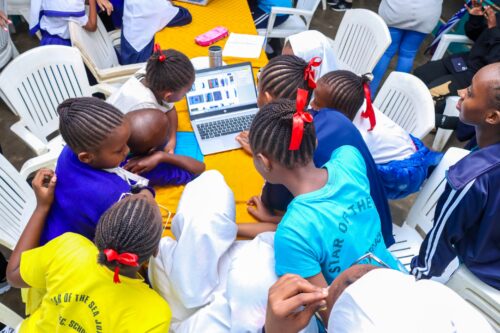
The real-world efficacy of the Experience AI resources was demonstrated during the pilot program in Canada. Educators like Sandra Theobald, a Grade 8 teacher, utilized the "AI and Social Media" unit to engage students who were already habitual users of platforms like TikTok and Instagram.
Theobald reported that while her students were familiar with the interface of social media, they lacked an understanding of the underlying algorithmic structures. The activity prompted them to make connections between their personal data and the content they were served. A key takeaway from Theobald’s experience was the empowerment of the students; they transitioned from passive consumers to informed users, often taking their newfound knowledge home to discuss with their families.
Another educator, Colin McKenzie, implemented the unit with Grade 7 and 8 students using "Somekone," a closed social media simulation designed for classroom use. This tool allowed students to experiment with account creation and behavior without the privacy risks associated with commercial platforms. McKenzie found that the simulation captured student attention by allowing them to see "behind the scenes" of an algorithm. He noted that the resources were "powerful and easy" for teachers to use, specifically because they tied into existing lessons on online safety and digital citizenship.

Analysis of Implications: Bridging the Digital Divide
The launch of these free resources addresses a growing concern among educational policy analysts: the "AI Divide." As AI becomes a prerequisite for many high-paying careers, there is a risk that only students in well-funded schools with dedicated computer science departments will receive adequate training. By providing high-quality, free resources that any teacher can use, the Raspberry Pi Foundation is attempting to level the playing field.
Furthermore, the initiative addresses "teacher anxiety" regarding AI. Many educators feel overwhelmed by the pace of technological change and may feel unqualified to teach AI. The Experience AI framework is designed so that teachers can "learn alongside their students." This approach reduces the barrier to entry for educators and ensures that AI literacy can be introduced in schools that lack specialized technical staff.
The long-term implications of this program extend to the workforce. Industry analysts suggest that future employees will not necessarily need to know how to code AI, but they will certainly need to know how to work with it, evaluate its outputs, and understand its limitations. By fostering these skills in middle and secondary school, the Experience AI program is preparing a workforce that is both technically capable and ethically grounded.
Future Outlook for AI in Education
As AI technology continues to evolve at an exponential rate, the Raspberry Pi Foundation has committed to updating and expanding its resource library. The current collection serves as a foundation, but the organization acknowledges that the contexts in which young people encounter AI will continue to shift.

The success of the Experience AI program will likely depend on its adoption rate among non-STEM teachers. If geography, art, and history teachers embrace these tools, it could signal a permanent change in how digital literacy is defined. The goal is a future where a student in an art class understands the ethical implications of AI-generated imagery just as clearly as a student in a computing class understands the code that creates it.
In conclusion, the Experience AI themed resources represent a strategic effort to demystify one of the most transformative technologies of the 21st century. By providing teachers with the tools to explore AI through the issues that matter—the environment, ethics, and critical thinking—the Raspberry Pi Foundation and its partners are ensuring that AI literacy becomes a standard component of a well-rounded education.