Published: August 28th, 2026
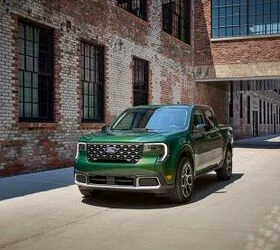
Ford is implementing a series of strategic adjustments to its popular Maverick compact pickup truck lineup, focusing on optimizing profitability and aligning with evolving customer preferences. These changes, set to take effect for the 2027 model year, include significant tweaks to engine availability and a recalibration of pricing across various trims. While Ford is positioning these alterations as a price reduction for certain higher-end models, a closer examination reveals a more complex picture of market positioning and potential shifts in customer segmentation.
The overarching narrative surrounding the Maverick since its 2022 debut has been one of consistent evolution. Ford has navigated the small truck segment by introducing new configurations and refining its offerings. However, the initial affordability that characterized the Maverick’s launch has been steadily eroded. The base MSRP, which stood at a competitive $22,500 (including destination fees) at its inception, has now climbed to approximately $30,000. This escalation is partly due to the introduction of more premium and feature-rich trims, which have effectively expanded the upper echelon of the Maverick’s price range by as much as $15,000 in just a few years. It is these more opulent variants that are now slated to receive the touted price reductions. This strategic pivot comes at an interesting juncture, particularly in light of ongoing discussions about the diminishing availability of affordable pickup trucks in the American market, a topic recently highlighted in industry analyses.
Engine Availability Reconfigured for 2027
A key change for the 2027 model year involves the strategic reallocation of the turbocharged engine option. Ford plans to discontinue the availability of the 2.0-liter EcoBoost turbo engine on the base XL and the mid-tier Lariat trims. This decision has a direct impact on the entry-level segment, effectively removing the most potent powertrain option from the most budget-conscious iteration of the Maverick. The automaker appears to be consolidating the turbocharged engine into its more expensive trims, simultaneously lowering the starting MSRPs of these models.
This move suggests a deliberate strategy to position the turbo engine as a premium feature, accessible only on higher-spec configurations. For instance, the Maverick Lobo, a trim level that has seen significant attention and upgrades, will now commence with a starting MSRP of $32,155 (excluding destination charges), representing a reduction of approximately $3,800 compared to its 2026 pricing. The Lobo High variant, which offers a more extensive suite of standard features, will experience an even more substantial price cut, becoming nearly $4,300 more affordable.
Even the off-road oriented Tremor trim, appealing to a different segment of buyers seeking enhanced capability, is set to benefit from this pricing adjustment. Tremor models will now have a starting price of $37,155, a decrease of about $3,500 from its previous pricing.
The Turbocharged Engine’s Elevated Entry Point
While these adjustments aim to make certain higher-end Mavericks more accessible, they concurrently raise the barrier to entry for those specifically seeking the turbocharged engine. With the XL and Lariat trims no longer offering the 2.0-liter turbo, the most economical pathway to this more powerful option will be through the all-wheel-drive XLT model. Factoring in the optional engine and destination fees, this configuration is projected to start around $33,000. This effectively translates to a price increase of a few thousand dollars for customers who desire the turbocharged performance, even if they are technically acquiring a more feature-laden vehicle than they would have with a previous XL turbo model.
The rationale behind these strategic shifts remains a subject of industry speculation. One plausible factor is the anticipation of increased competition in the compact pickup segment, with manufacturers like Toyota reportedly preparing to introduce their own offerings next year. Furthermore, it is conceivable that Ford had previously priced certain higher-trimmed Mavericks beyond what the market would bear. With Lobo and Lariat models already approaching or exceeding the $40,000 mark once additional options and fees were applied, these price reductions might be a response to lower-than-anticipated sales volumes for these premium configurations.
Strategic Positioning and Powertrain Choices
Ford appears to be attempting to maintain the Maverick’s perception as a budget-conscious vehicle, particularly when focusing on lower trims equipped with the hybrid powertrain. However, the overall trajectory of the Maverick’s pricing since its launch indicates a trend toward increased cost. The automaker’s current strategy seems to involve leveraging the turbocharged engine as a means to guide customers toward more expensive trims, while simultaneously adjusting the MSRPs of these higher-end models to enhance their market appeal.
This brings into focus the fundamental decision consumers face: the choice between the hybrid and turbocharged powertrains. While Toyota has established a reputation for hybrid reliability, Ford’s track record with hybrid technology is somewhat varied depending on the specific model. Hybrid variants of the Fusion and Escape have generally demonstrated reliability comparable to their non-hybrid counterparts. However, Ford’s larger hybrid models have encountered a more mixed reception. For instance, early iterations of the F-150 PowerBoost hybrid were flagged by Consumer Reports for significant electrical issues relative to competitors.
Ford’s more recent hybrid truck offerings appear to have addressed some of these concerns. Nevertheless, many of these models have not been on the market long enough for a comprehensive assessment of their long-term powertrain durability. In the context of the Maverick, the choice between the hybrid and turbo engine presents a series of compromises with no definitive "best" option for all buyers.
Performance and Efficiency: A Tale of Two Powertrains
The turbocharged 2.0-liter inline four-cylinder engine, producing 250 horsepower and 377 lb-ft of torque, offers brisk acceleration and is paired with a conventional 8F35 eight-speed automatic transmission. The Lobo trim also offers an optional seven-speed automatic transmission. Historically, the 4,000-pound towing package was exclusive to turbocharged models, but Ford has since expanded its availability to hybrid variants. Standard payload capacity remains at 1,500 pounds, with a towing capacity of 2,000 pounds for non-towing-package equipped models.
In contrast, the 2.5-liter Atkinson-cycle hybrid powertrain delivers a combined 191 horsepower, which is perfectly adequate for a compact truck. However, it is noticeably less responsive than the turbo model when demanding spirited acceleration. The primary advantage of the hybrid lies in its presumed lower operational stress and superior fuel economy. Ford claims that hybrid models equipped with all-wheel drive can achieve an impressive 40 mpg in the city and 34 mpg on the highway.
A potential drawback for some consumers is the hybrid’s continuously variable transmission (CVT). While both the CVT and the 8F35 automatic have received some minor criticisms, the CVT has experienced limited reports of software-related issues and intermittent power delivery interruptions, particularly after extended towing. The eight-speed automatic, on the other hand, has garnered some complaints regarding its perceived fragility for owners who frequently utilize the vehicle’s maximum payload and towing capacities. These issues primarily revolve around premature wear and hesitation in lower gears. However, anecdotal evidence from online forums suggests that proactive transmission fluid changes, deviating from factory recommendations, may mitigate these concerns.
Trim Level Decisions and Future Implications
Ultimately, the decision between the hybrid and turbocharged powertrains hinges on individual priorities: comfort with specific mechanical components and a preference for either brisk performance or optimal fuel efficiency.
The final layer of decision-making involves the trim level. Currently, the Lobo and Tremor trims are exclusively offered with the 2.0-liter turbo engine. The recent pricing adjustments make these models somewhat more accessible, but their appeal remains largely tied to aesthetics and performance enhancements. The Lobo trims, with their lowered stance and refined handling, cater to a specific taste, while the Tremor, with its distinctive appearance package, increased ground clearance, and off-road tires, is geared towards light off-road excursions.
While the base-model Maverick XL may no longer represent the exceptional value it did at launch, it still offers a reasonable proposition in today’s inflated automotive market. However, with the higher trims becoming more affordable and the turbo option being removed from the XL, Ford appears to be strategically guiding a larger segment of its customer base toward the more premium end of the Maverick spectrum for the 2027 model year. This maneuver aims to enhance the profitability of the Maverick line while potentially broadening its appeal to a slightly more affluent demographic.
[Images: Ford]
Become a TTAC insider. Get the latest news, features, TTAC takes, and everything else that gets to the truth about cars first by subscribing to our newsletter.