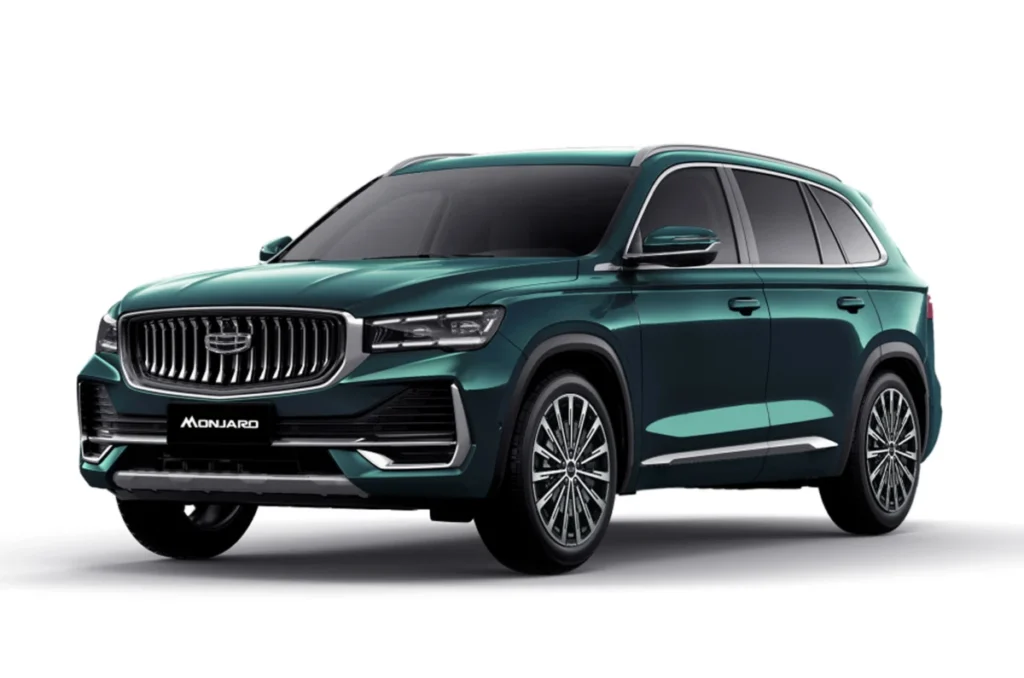
China’s automotive giant Geely is poised to make a significant impact on the global D-segment SUV market with the upcoming launch of its Monjaro model, specifically engineered to challenge established players like the Peugeot 5008 and Skoda Kodiaq. This ambitious move signals Geely’s escalating commitment to international expansion and its strategy to offer compelling plug-in hybrid (PHEV) alternatives in a rapidly evolving automotive landscape. The Monjaro, already known as the Xingyue L in its domestic Chinese market, is a substantial 4770mm-long crossover that will leverage the advanced EM-i hybrid powertrain technology, a system previously showcased in the smaller Geely Starray.
The initial rollout for the Monjaro is slated for Egypt in August, marking a strategic entry point into a key emerging market. This will be followed by a "steadily expanding into global markets" strategy, with a European debut anticipated soon after. The United Kingdom is expected to receive the Monjaro sometime next year, a timeline that will allow Geely to gauge market reception and refine its offerings based on early feedback. This phased global launch approach is a common tactic employed by automotive manufacturers to manage resources, adapt to regional regulations, and build momentum for a new model.
H2: Unpacking the EM-i Hybrid Powertrain
A central pillar of the Monjaro’s appeal will be its EM-i hybrid system, a significant technological advancement for the model in its international guise. While the Monjaro is not currently offered with PHEV power in other global markets, Geely has confirmed its intention to deploy this sophisticated powertrain for its worldwide debut. Specific details regarding the powertrain’s exact specifications for the Monjaro are still forthcoming from Geely, but insights can be drawn from its application in the Starray.
The Starray EM-i, a precursor and technological sibling, utilizes a naturally aspirated 1.5-litre petrol engine paired with an electric motor to generate a combined output of 258 brake horsepower (bhp). This powertrain is designed for efficiency and performance, offering a competitive power figure that aligns with the demands of the D-segment. Crucially, the EM-i system incorporates a sizable battery pack, with the larger of two available options providing an impressive engine-off range of up to 81 miles. This substantial electric-only capability is a key differentiator for PHEVs, allowing for emission-free commuting and reduced reliance on fossil fuels for daily journeys.
A notable distinction for the Monjaro’s PHEV powertrain, compared to the front-wheel-drive Starray, is its anticipated all-wheel-drive (AWD) configuration. This move towards a dual-motor, all-wheel-drive setup for the Monjaro is a strategic decision that enhances its appeal in markets where AWD is a desirable feature for its enhanced traction, stability, and perceived robustness, particularly in diverse weather conditions. This AWD capability will undoubtedly bolster its competitiveness against rivals that often offer AWD as an optional upgrade.
H2: Strategic Positioning in a Competitive Arena
The Monjaro enters a burgeoning segment of the automotive market, one that is witnessing a significant influx of Chinese manufacturers vying for market share. In the UK alone, the Monjaro will face formidable competition from a growing roster of Chinese D-segment hybrid SUVs. This includes the closely related Omoda 9 and Jaecoo 8, both of which are also poised to enter the market with hybrid powertrains. Beyond these direct competitors, the Monjaro will also contend with established and emerging models such as the MG HS, BYD Seal-U, and Leapmotor C10.
This crowded competitive landscape underscores Geely’s confidence in the Monjaro’s capabilities and its strategic intent to capture a significant portion of this growing market. The D-segment SUV category has seen robust growth globally, driven by consumer demand for versatility, family-friendly practicality, and increasingly, fuel efficiency and reduced environmental impact offered by hybrid and electric powertrains.
While Geely has not yet disclosed specific pricing for the UK market, industry analysts project a starting price in the low £40,000s. This pricing strategy would position the Monjaro squarely above the more affordable Starray, signaling its premium aspirations and aligning it competitively with its key rivals. A price point in this range would reflect the advanced technology, larger size, and hybrid powertrain of the Monjaro, while remaining accessible to a broad spectrum of consumers looking for a feature-rich and efficient SUV.
H2: Geely’s Global Ambitions and the Monjaro’s Role
Geely’s strategy with the Monjaro extends beyond simply introducing a new model; it is about establishing a benchmark for quality and performance within the D-SUV hybrid segment. The company has articulated its vision for the Monjaro as a "global advanced handling and quality benchmark," a statement that signals a commitment to exceeding regional expectations and competing on a global scale. This ambition is further reinforced by the Monjaro’s designation as the flagship model for Geely’s expanding global lineup.
This flagship status implies that the Monjaro will serve as a showcase for Geely’s latest technological innovations, design language, and manufacturing prowess. It will be the vehicle through which the brand aims to build its reputation and cultivate brand loyalty in new international territories. For Geely, the Monjaro represents a crucial step in its long-term strategy to transition from a predominantly domestic player to a globally recognized automotive powerhouse.
H2: Background and Chronology of Geely’s Global Expansion
Geely’s journey to this point has been marked by strategic acquisitions and organic growth. Founded in 1986, Geely Auto began as a manufacturer of scooters before venturing into automobile production in the late 1990s. Its transformative growth accelerated in the 2010s with a series of high-profile acquisitions, including Volvo Cars (2010), Lotus Cars (2017), and a significant stake in Daimler AG (2018). These strategic moves provided Geely with access to advanced engineering expertise, established brand recognition, and extensive global distribution networks.
The development and introduction of models like the Monjaro, equipped with advanced hybrid powertrains, are a direct result of this sustained investment in research and development and its commitment to diversification beyond traditional internal combustion engine (ICE) vehicles. The EM-i hybrid system, for instance, is part of Geely’s broader electrification strategy, aiming to offer a comprehensive range of electrified vehicles across its various brands.
The timeline for the Monjaro’s global rollout, beginning with Egypt in August and followed by Europe and the UK, reflects a calculated approach to market entry. This phased expansion allows Geely to:
- Test the Waters: Egypt provides a less regulated and potentially more forgiving environment to introduce the new model and gather initial market feedback.
- Build Momentum: A successful launch in a key emerging market can generate positive press and consumer interest, paving the way for more demanding European markets.
- Adapt and Refine: The time between launches allows for any necessary adjustments to product specifications, marketing strategies, or after-sales support based on early market performance.
- Leverage Existing Structures: Geely’s ownership of brands like Volvo has provided it with valuable experience in navigating European regulations and consumer preferences, which can be indirectly applied to the Monjaro’s launch.
H2: Supporting Data and Market Trends
The global automotive market is undergoing a significant transformation, with SUVs continuing their reign as the dominant vehicle type. Within this segment, the D-segment offers a balance of size, practicality, and affordability, making it a crucial battleground for manufacturers. The increasing consumer demand for fuel efficiency and reduced emissions is driving the adoption of hybrid and electric vehicles.
- Global SUV Market Growth: Projections from market research firms consistently indicate continued growth in the SUV segment, with some estimating it to account for over 50% of global vehicle sales in the coming years.
- Hybrid Vehicle Adoption: The demand for hybrid vehicles, particularly PHEVs, is on the rise. Governments worldwide are implementing stricter emissions regulations, incentivizing the purchase of lower-emission vehicles. Data from organizations like the International Energy Agency (IEA) shows a significant year-on-year increase in the sales of electrified vehicles, including PHEVs. For example, PHEV sales have seen double-digit growth in key markets like Europe and China.
- Competitive Landscape: The proliferation of Chinese automotive brands in international markets, especially in Europe and Southeast Asia, is a significant trend. These brands are increasingly offering vehicles that rival established manufacturers in terms of technology, design, and perceived quality, often at competitive price points.
The Monjaro’s positioning as a PHEV in the D-segment SUV category directly addresses these prevailing market trends. Its combination of size, practicality, advanced hybrid technology, and potential for competitive pricing makes it a compelling proposition for consumers seeking an environmentally conscious yet versatile vehicle.
H2: Analysis of Implications and Broader Impact
Geely’s aggressive push into the D-segment SUV market with the Monjaro carries several significant implications:
- Increased Competition: The arrival of the Monjaro will intensify competition, potentially leading to more competitive pricing and greater innovation from all manufacturers operating in this space. Established players like Peugeot and Skoda will need to demonstrate the continued value and advancements of their offerings to retain market share.
- Shifting Market Dynamics: The success of the Monjaro could further accelerate the shift towards Chinese brands as credible global competitors, challenging the long-held dominance of European, Japanese, and American automakers. It signifies a maturation of China’s automotive industry, moving beyond budget-friendly vehicles to sophisticated, technology-driven products.
- Electrification Acceleration: By introducing a strong PHEV offering, Geely contributes to the broader acceleration of electrification in the automotive sector. This can encourage other manufacturers to expedite their own electrification strategies and invest further in hybrid and electric vehicle technology.
- Consumer Choice Expansion: For consumers, the increased competition translates into a wider array of choices. The Monjaro’s offering of a large PHEV SUV at a potentially attractive price point could appeal to a broad demographic, from families to environmentally conscious individuals.
- Technological Advancement: Geely’s emphasis on the EM-i hybrid powertrain suggests a commitment to developing proprietary and advanced hybrid technologies. The success of this system in the Monjaro could lead to its integration into other Geely brands and further advancements in hybrid and potentially full-electric powertrain development.
In conclusion, Geely’s Monjaro represents a significant strategic move designed to disrupt the D-segment SUV market. Armed with advanced plug-in hybrid technology and a clear global ambition, the Monjaro is poised to challenge established benchmarks and redefine consumer expectations for Chinese-made vehicles on the international stage. Its success will not only be a testament to Geely’s engineering and manufacturing capabilities but also a significant indicator of the evolving global automotive landscape.